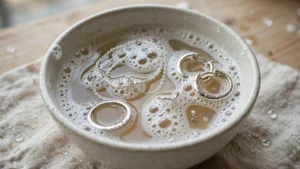
Platinum jewellery is famously low-maintenance, but low-maintenance is not the same as no maintenance. Soap, lotion, and everyday grime build up on the surface just as they do on gold or silver, and a ring that looked bright in the shop can look dull after a few months of daily wear. The good news is that cleaning platinum at home is simple, gentle, and safe for most pieces.
The key thing to understand is that platinum itself is very hard to damage with soap and water. What needs care is everything around it: the stones in the setting, the prongs that hold them, and any softer materials such as pearls or enamel. A cleaning routine that is safe for a plain platinum band may not be safe for a platinum ring set with an emerald or a pearl, so the first step is always to look at the piece and know what you are cleaning.
Below are nine steps to clean platinum jewellery properly in 2027, from the first inspection to safe storage. Each step explains what to do, what to avoid, and how long it takes, so you can keep your platinum bright without risking the stones or the setting.
Key takeaways
- Platinum itself is hard to damage with soap and water, but the stones and settings in a piece need gentler care.
- A mild soap solution and a soft brush are enough for most platinum jewellery; harsh chemicals and abrasive cleaners are not.
- Never soak pieces with soft stones, pearls, or enamel, and never use ultrasonic cleaners on them without a jeweller’s advice.
- Dry platinum completely after cleaning, because water left in settings can leave spots and loosen stones over time.
- Platinum does not tarnish, so a dull look usually means surface dirt or patina, both of which a jeweller can polish away.
What cleaning platinum jewellery actually means
Cleaning platinum jewellery means removing the film of soap, skin oils, lotion, and dust that builds up on the surface during normal wear. That film is what makes a bright piece look dull, and it is also what hides the fine scratches that form the patina. A proper clean removes the film without removing metal, and it leaves the piece looking the way it did when you bought it.
It does not mean restoring the original mirror shine. The patina that develops on platinum is a change in the surface texture, not dirt, and it will not wash off with soap and water. If you want the bright, high-polish finish back, a jeweller can restore it with a professional polish, which removes a tiny amount of surface metal and smooths the scratches away.
It also does not mean cleaning every piece the same way. A plain platinum band can be soaked and brushed without worry, while a platinum ring set with a soft stone needs a gentler touch, and a platinum pendant with a pearl should never be soaked at all. Knowing the difference is the whole point of a careful routine.
The film is not only cosmetic. Left in place, it can make stones look smaller and duller, and it can trap moisture against the setting. That is why a monthly clean is worth the ten minutes it takes, even though platinum itself will never tarnish.
What you need and what to look for
You need very little: a small bowl, lukewarm water, a few drops of mild dish soap or hand soap, a soft-bristled toothbrush or a jewellery brush, and a soft, lint-free cloth. Avoid anything abrasive, including baking soda pastes, toothpaste, and scouring pads, because they will scratch the surface and make the patina worse rather than better.
Before you start, look at the piece closely under good light. Check that the stones are secure by touching each one gently with a fingertip; if a stone moves or rattles, do not clean the piece at home and take it to a jeweller instead. Check the clasp on a necklace or bracelet, and check the prongs on a ring for any that look bent or worn thin. A guide to cleaning gold jewellery covers the same first inspection in more detail, and the habit is worth building for every metal you own.
Finally, choose a safe place to work. Clean over a bowl on a table, never over an open sink, and plug the drain if you must work near one. A small stone that comes loose during cleaning is easy to lose down a drain, and a platinum piece dropped on a hard floor can chip a stone even though the metal itself will not break.
The 9 steps to clean platinum jewellery properly
Look at the piece before it touches water
What to do: Hold the piece under a bright light and check every stone, prong, and clasp. What to avoid: Cleaning a piece with a loose stone or a damaged setting. Best For: Every platinum piece, every time. Time Needed: 2 minutes. Standout Tip: If a stone moves when you touch it, stop and see a jeweller.
This step takes two minutes and prevents most cleaning accidents. A loose stone can fall out during a soak, and a bent prong can snag and break further under a brush. If everything looks secure, you can clean with confidence.
Wash your hands and lay out a soft cloth
What to do: Wash your hands with soap, dry them, and lay a soft cloth on the table as your work surface. What to avoid: Working on a hard surface where a dropped piece can chip a stone. Best For: Rings, necklaces, and earrings. Time Needed: 2 minutes. Standout Tip: A light-coloured cloth makes small stones easy to see if one comes loose.
Clean hands matter because the oils on your fingers are part of what you are trying to remove. The cloth gives you a soft landing for the piece and a clean surface for drying it later.
Mix a gentle soap solution
What to do: Fill a small bowl with lukewarm water and add two or three drops of mild dish soap or hand soap. What to avoid: Hot water, harsh detergents, bleach, or ammonia-based cleaners. Best For: All solid platinum pieces. Time Needed: 1 minute. Standout Tip: Lukewarm water is enough; hot water does not clean better and can stress some stones.
Stir the water gently until the soap dissolves. You want a light, soapy solution, not a bowl full of foam. A few drops are enough, and more soap will only leave a film that you then have to rinse away.
Soak solid platinum for ten minutes
What to do: Place solid platinum pieces in the solution and leave them for ten minutes. What to avoid: Soaking pieces with pearls, opals, emeralds, or enamel. Best For: Plain bands, chains, and diamond-set pieces. Time Needed: 10 minutes. Standout Tip: Set a timer; longer soaks do not clean better.
The soak loosens the film of soap and oils so the brush can remove it easily. Ten minutes is enough for most pieces. If the water turns cloudy, that is the film coming off, which is exactly what you want to see. If a piece is very dirty, a second short soak after brushing works better than one long soak.
Clean around the stones with a soft brush
What to do: Lift the piece out and brush gently around the stones and under the setting with a soft brush. What to avoid: Pressing hard, or using a stiff brush that can scratch the metal. Best For: Diamond and sapphire set pieces. Time Needed: 3 minutes. Standout Tip: Brush the back of the setting too, where grime collects unseen.
Most of the dirt on a ring sits behind the stone, where lotion and soap collect out of sight. A soft brush reaches those places without scratching the metal. Use short, gentle strokes and let the soapy water do the work.
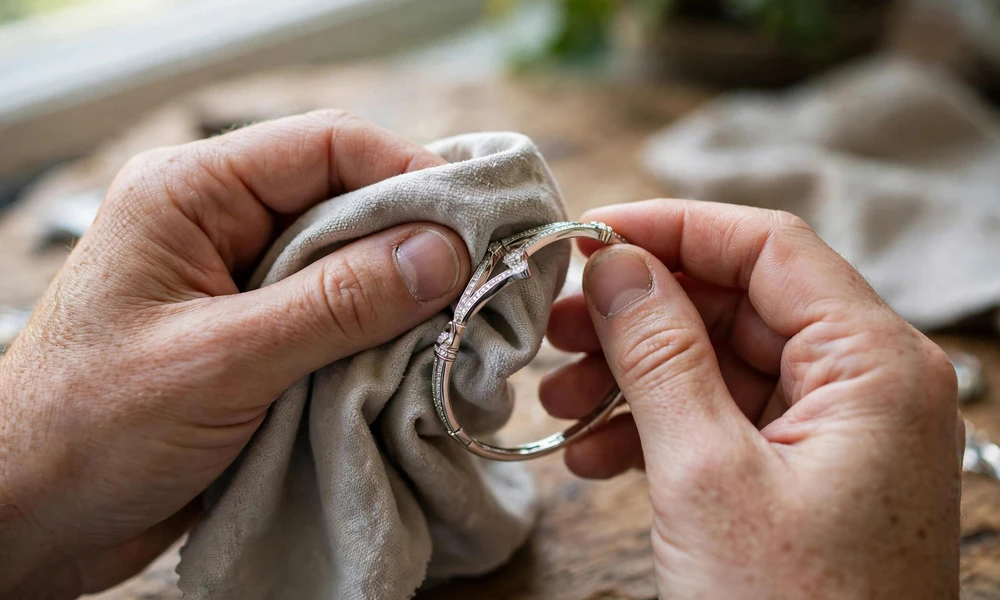
Polish with a soft jewellery cloth
What to do: Rub the piece gently with a soft, lint-free jewellery cloth to lift the remaining film. What to avoid: Polishing cloths with abrasive compounds, which can scratch platinum. Best For: Plain bands and chains. Time Needed: 2 minutes. Standout Tip: A plain microfibre cloth is safer than a treated polishing cloth.
This step restores the shine that the soak and brush have loosened. Rub in one direction rather than in circles, and do not press hard. If the piece still looks dull after polishing, the cause is probably patina, not dirt, and only a professional polish will restore the mirror finish.
Rinse under lukewarm running water
What to do: Rinse the piece under lukewarm running water to remove all soap. What to avoid: Rinsing over an open drain, or using very hot water. Best For: Every piece you have soaked. Time Needed: 1 minute. Standout Tip: Hold the piece in a small sieve if you are worried about dropping it.
Soap left on the surface dries into a cloudy film that undoes the cleaning, so rinse thoroughly. Turn the piece over in the water and make sure the rinse reaches behind the stones and inside the setting.
Dry it completely, never leave it damp
What to do: Pat the piece dry with a soft cloth, then leave it on the cloth for a few minutes to air-dry fully. What to avoid: Putting a damp piece straight into a jewellery box. Best For: Every platinum piece. Time Needed: 5 minutes. Standout Tip: Water trapped behind a stone can leave spots and loosen the setting over time.
Drying matters more than most people realise. Water left in a setting evaporates slowly and leaves mineral spots, and damp storage encourages tarnish on any silver pieces stored nearby. Take the time to dry properly.
Store it clean, dry and separate
What to do: Store each piece in its own compartment or soft pouch, with chains fastened and clasps closed. What to avoid: Tossing pieces together in a drawer, where they scratch each other. Best For: All platinum jewellery. Time Needed: 2 minutes. Standout Tip: A lined jewellery box with separate compartments is the simplest good storage.
Platinum is hard, but it can still scratch softer jewellery stored beside it, and it can be scratched by harder stones such as diamonds. Separate storage protects every piece in the box, not just the platinum one.
Which cleaning method is right for your platinum
For a plain platinum band or chain, the soap-and-water routine above is all you need, and you can repeat it as often as once a month. It is gentle, cheap, and safe, and it keeps the piece looking bright without any specialist equipment.
For platinum set with diamonds or sapphires, the same routine works, with one addition: pay extra attention to the back of the setting, where grime collects. A guide to cleaning diamond jewellery explains the same steps from the stone’s point of view, and the two routines fit together well if you own both kinds of piece.
For platinum set with soft stones, pearls, or enamel, skip the soak entirely. Wipe the piece with a damp, soft cloth, dry it immediately, and take it to a jeweller for anything more. Ultrasonic cleaners are useful for plain platinum and diamond pieces, but they should never be used on soft stones, and a jeweller can advise you before you buy one.
The caveats that matter
Platinum is forgiving, but cleaning still has limits. Harsh chemicals such as bleach and chlorine can damage the alloys in platinum and should never be used. Abrasive cleaners scratch the surface and make the patina worse. Ultrasonic cleaners are safe for many pieces but risky for soft stones and for pieces with loose settings, so check first.
| Detail | What is known |
|---|---|
| Best routine | Lukewarm water, mild soap, soft brush, ten-minute soak |
| What to avoid | Bleach, chlorine, ammonia, abrasive pastes, toothpaste |
| Soft stones | Never soak pearls, opals, emeralds, or enamel pieces |
| Ultrasonic cleaners | Safe for plain platinum and diamonds, risky for soft stones |
| Patina | Soap and water will not remove it; a jeweller’s polish will |
| How often | Once a month for daily-worn pieces, less often for occasional wear |
| Drying | Dry completely before storing, to avoid spots and loose settings |
| When to see a jeweller | Loose stones, bent prongs, deep scratches, or a dull finish that cleaning does not fix |
If a piece does not look brighter after a proper clean, the cause is usually patina or a worn finish, not dirt. A jeweller can polish platinum back to a bright shine, and can also check the settings and prongs at the same time. A professional polish is quick and inexpensive, and most jewellers will do it while you wait. Ask them to check the prongs and the clasp at the same time, since a polish visit is the easiest moment to catch a worn setting before a stone is lost. For valuable pieces, a professional clean once a year is worth the cost.
Checklist: cleaning platinum jewellery honestly
Use these checks before you clean, and again after the piece is dry.
- Check the stones: touch each one gently and stop if any moves or rattles.
- Check the setting: look for bent prongs, worn claws, or a loose clasp.
- Check the soap: mild dish soap or hand soap only, no bleach or ammonia.
- Check the brush: soft bristles only, never a stiff or wire brush.
- Check the rinse: rinse thoroughly, so no soap film is left behind.
- Check the storage: dry completely, then store each piece separately.
Frequently asked questions
Can I clean platinum jewellery with baking soda?
It is best not to. Baking soda pastes are mildly abrasive and can scratch platinum, making the patina worse. Mild soap and water clean just as well without the risk.
Does platinum tarnish if I do not clean it?
No, platinum does not tarnish. A dull look usually means a film of soap and oils on the surface, or the natural patina that develops from fine scratches. Cleaning removes the film; only a polish removes the patina.
Can I use an ultrasonic cleaner on platinum jewellery?
Yes, for plain platinum and for platinum set with diamonds or sapphires, as long as the settings are secure. Never use one on pieces with pearls, opals, emeralds, or enamel, and ask a jeweller first if you are unsure about a particular piece.
How often should I clean platinum jewellery?
Once a month is a good rhythm for rings and earrings worn every day, and less often for pieces worn occasionally. Pieces worn only on special occasions may need cleaning just two or three times a year. If a piece looks dull, clean it; there is no need to clean on a strict schedule.
Can I wear platinum jewellery in the shower or pool?
Showering is fine, but pools are not ideal. Chlorine can affect the alloys in platinum over time, and soap film builds up faster with daily showering. Rinse the piece in clean water after swimming, and take rings off before handling strong cleaning chemicals.
How should I store platinum jewellery after cleaning?
Dry it completely, then store each piece in its own compartment or soft pouch, with chains fastened and clasps closed. A guide to storing jewellery properly covers the full routine, and the same habits protect platinum, gold, and silver pieces alike.
The bottom line
Cleaning platinum jewellery is one of the simplest care routines in fine jewellery. Warm water, a few drops of mild soap, a soft brush, and ten minutes of patience are enough for most pieces, and the routine is safe to repeat as often as you need it. The only real rule is to know what you are cleaning: plain platinum is forgiving, but soft stones and delicate settings are not.
Clean your daily-worn pieces once a month, check the settings while you do it, and see a jeweller once a year for a professional clean and a check of the prongs and clasps. That is all it takes to keep platinum bright, secure, and ready to wear for decades.