Gold vermeil jewellery looks like solid gold, feels substantial in the hand, and costs a fraction of the price, which is exactly why it has become one of the most searched jewellery terms of 2027. It sits in that tempting middle ground between cheap gold-plated fashion jewellery and solid gold, and shoppers are right to ask what it really is before they buy. The answer is simple, but the details matter, because not everything labelled vermeil meets the standard.
True gold vermeil is a thick layer of gold bonded over sterling silver. That combination is what separates it from ordinary gold plating, which is usually a whisper-thin coating over brass or copper. The silver base gives vermeil its weight and its cool, solid feel, while the thick gold layer gives it the colour and shine of a much more expensive piece. When it is made properly, vermeil is a sensible way to wear gold every day without paying a solid-gold price.
This guide explains what gold vermeil jewellery is, how the standard works, and how to spot a genuine piece before you spend anything.
Key takeaways
- Gold vermeil is a thick layer of gold, at least 2.5 microns, bonded over sterling silver.
- It looks and feels close to solid gold, but it costs far less because the core is silver, not gold.
- The gold layer will wear over time, especially on rings and bracelets that take daily knocks.
- It is usually a better choice than gold plating, which uses a much thinner coating over a cheaper base.
- Vermeil is not solid gold, it is not waterproof, and no piece lasts forever without care.
What gold vermeil jewellery actually is
The word vermeil comes from French, and it describes a specific construction: gold layered over sterling silver. For a piece to be sold as vermeil in the United States, the gold layer must be at least 2.5 microns thick, which is roughly a hundred times thicker than a typical flash plating. The base must be sterling silver, meaning silver that is 92.5 percent pure, and the gold used is usually 10 karat or higher. Those three conditions, thick gold, silver base, and real gold, are what make vermeil a category of its own rather than just another kind of plating.
That thickness is the whole point. A 2.5-micron layer of gold is thick enough to polish, to survive normal daily wear for years, and to be re-plated if it eventually thins. A flash-plated piece, by contrast, can lose its colour in weeks because the gold is barely there. The silver underneath also matters.
Most vermeil on sale today is made in yellow gold, rose gold, or white gold over silver, and it is used for necklaces, earrings, rings, and bracelets in the mid-price range. Our comparison of gold vs silver jewellery explains how the two metals behave side by side, which helps when you are deciding whether a silver-based piece like vermeil suits you. Vermeil is not a new idea, silversmiths have made it for centuries, but it has become far more visible as shoppers look for gold looks at prices that make sense for everyday wear.
How to tell real vermeil from gold plating
The first check is the stamp. Genuine vermeil is usually marked with the silver content, most often 925, sometimes alongside a gold mark such as 14k or 18k. A piece with no stamp at all is not necessarily fake, small pieces are hard to mark, but a reputable seller should be able to tell you the base metal and the gold thickness in writing. If a listing says only “gold plated” or “gold tone” and never mentions silver, it is not vermeil, whatever the price suggests.
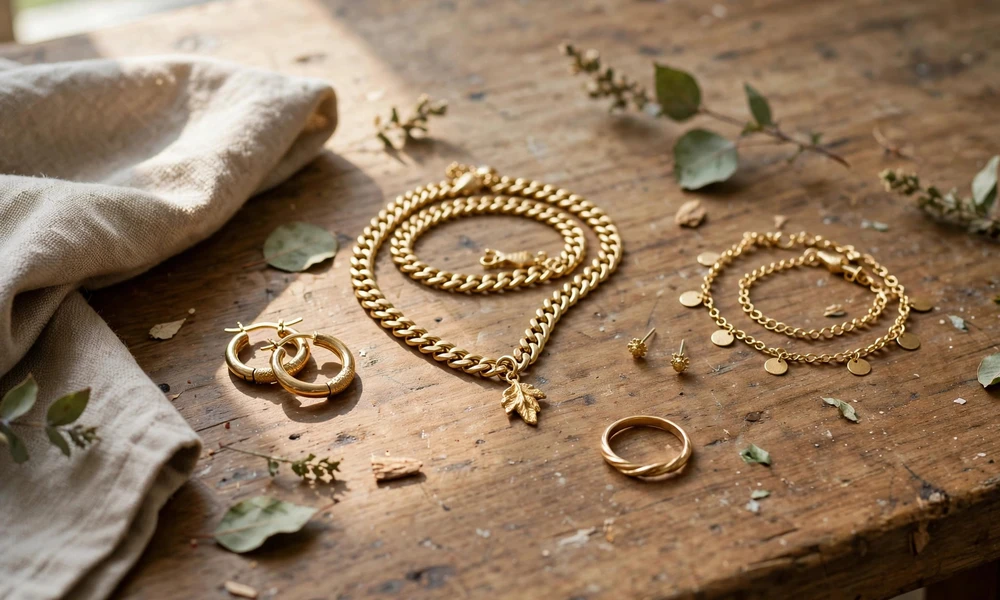
Colour is the third check. Vermeil has the warm, deep tone of real gold because it is real gold, while cheap plating often looks slightly brassy or orange, and can show the base metal through thin spots within weeks.
Price is the last check, and it works in both directions. Vermeil should cost more than plated brass jewellery, because silver and a thick gold layer cost more to make, but far less than a solid gold piece of the same size. If a “vermeil” ring costs the same as a plated one, be suspicious. If it costs nearly as much as solid gold, you are paying for a brand name, not for the metal. Ask for the gold thickness in microns and the karat of the gold before you buy, and buy from a seller who answers plainly.
The 9 facts about gold vermeil that matter
The gold layer must be at least 2.5 microns thick
What it shows: The 2.5-micron minimum is the legal and trade standard for vermeil in the United States, and it is what separates vermeil from ordinary gold plating, which is often under 0.5 microns. What to consider: Some sellers use the word vermeil loosely, so ask for the thickness in writing rather than trusting the label alone. Best for: Anyone who wants a gold look that lasts longer than fashion plating. Material: Gold, 10k or higher, over sterling silver. Price range: Mid-range, well below solid gold. Standout feature: A gold layer thick enough to polish and re-plate.
The base is always sterling silver
What it shows: Vermeil is defined by its base. Sterling silver, 92.5 percent pure silver, is the only base that qualifies, and it gives the piece its weight, its cool feel, and its underlying value. What to consider: A gold-coated brass or copper piece is gold plated, not vermeil, however thick the coating. Best for: Buyers who want a precious-metal core under the gold. Material: Sterling silver, stamped 925. Price range: Higher than plated brass, lower than solid gold. Standout feature: A silver core that keeps value even if the gold wears.
Vermeil is heavier and cooler than plated jewellery
What it shows: The sterling silver core makes vermeil noticeably heavier than a plated brass piece of the same size, and the metal feels cool when you first pick it up. What to consider: Weight alone is not proof, but it is a useful first test alongside the stamp and the seller’s description. Best for: Anyone comparing two similar pieces in a shop. Material: Sterling silver with a thick gold layer. Price range: Mid-range. Standout feature: A solid, cool weight that feels like fine jewellery.
It looks like solid gold at a fraction of the price
What it shows: Because the outer layer is real gold, vermeil has the same colour, shine, and warmth as solid gold, and most people cannot tell the difference by looking. What to consider: The resemblance is only skin deep, and the price gap reflects the silver core, not a trick. Best for: Everyday gold looks, gifts, and trying a style before committing to solid gold. Material: Real gold over sterling silver. Price range: Typically a tenth or less of the solid-gold equivalent. Standout feature: A genuine gold finish without the solid-gold price.
The gold can wear away with time and hard use
What it shows: No coating lasts forever. The gold layer on vermeil thins slowly where it rubs against skin, clothing, and other jewellery, and rings and bracelets wear fastest because they take the most knocks. What to consider: With normal wear and gentle care, vermeil can look good for years, but daily wear on a ring will show sooner than occasional wear on a pendant. Best for: Necklaces and earrings, which take less friction than rings. Material: Gold over sterling silver. Price range: Mid-range, with re-plating available. Standout feature: A layer thick enough to be re-plated when it thins.
Vermeil suits sensitive skin better than most plated jewellery
What it shows: The sterling silver base is nickel-free in good-quality vermeil, and the thick gold layer keeps skin away from the base metal, which makes reactions less likely than with plated brass. What to consider: People with a silver allergy should still be careful, and cheap vermeil can contain nickel in the gold alloy, so check the description. Best for: Sensitive ears and skin that reacts to fashion jewellery. Material: Sterling silver with a gold layer. Price range: Mid-range. Standout feature: A thick gold barrier between skin and base metal.
It needs gentler care than solid gold
What it shows: Vermeil should be cleaned with a soft cloth and mild soap, never with abrasive polishes, ultrasonic cleaners, or harsh chemicals, which can strip the gold layer. What to consider: Perfume, lotion, and sweat all speed up wear, so put vermeil on last and take it off before swimming or showering. Best for: Owners willing to follow a simple care routine. Material: Gold over sterling silver. Price range: Mid-range, with low care costs. Standout feature: Easy care, as long as it stays gentle.
Real vermeil is stamped and sold with clear labelling
What it shows: A genuine vermeil piece is usually stamped 925 for the silver, often with a gold karat mark, and the seller should state the gold thickness and karat in the product description. What to consider: Very small pieces may not be stamped, and some countries use different rules, so a missing stamp alone is not proof of a fake. Best for: Buyers who want to verify what they are paying for. Material: Sterling silver, stamped 925, with a gold layer. Price range: Mid-range. Standout feature: Clear marks and an honest description.
Vermeil is a smart way to try gold before buying solid
What it shows: Vermeil lets you wear a gold style every day, learn whether you like the colour and the weight, and decide whether a solid-gold version is worth the investment later. What to consider: It is a stepping stone, not a substitute, and it will never have the resale value or the permanence of solid gold. Best for: First gold pieces, gifts, and trend-led styles. Material: Gold over sterling silver. Price range: Mid-range. Standout feature: A low-risk way into wearing gold.
Which gold vermeil piece is right for you
Start with the pieces that wear best in vermeil. Necklaces and pendants are the safest choice, because they take the least friction and the gold layer lasts longest there. Earrings are close behind, especially studs and small hoops, which barely rub against anything. Bracelets and rings wear faster, so choose them when you are happy to re-plate every few years, or save them for occasions rather than daily wear.
Think about your skin tone and your wardrobe as well. Yellow gold vermeil suits warm skin and classic styling, rose gold vermeil suits neutral and warm skin and a softer look, and white gold vermeil suits cool skin and a more modern feel. A single vermeil chain or a pair of vermeil studs is often the best first piece, because you will wear it often enough to learn whether you like the feel of it.
Finally, match the piece to your habits. If you swim, shower, or work out in your jewellery, vermeil will wear faster than it should, and solid gold or plain silver may suit you better. If you are happy to take jewellery off before water and wipe it with a soft cloth after wearing, vermeil will reward you with years of good looks. The best gold jewellery for everyday wear is the kind you can care for without thinking too hard about it, and vermeil fits that description for most people.
The caveats that matter
Vermeil is honest jewellery when it is sold honestly, but the market is full of loose language, and that is where most buyers get caught out. The biggest risk is not the metal itself but the labelling: a piece sold as vermeil that is really thin plating over brass will look fine on arrival and disappoint within weeks. Buy from sellers who state the base metal, the gold karat, and the thickness, and keep the receipt and the product description in case you need them.
| Detail | What is known |
|---|---|
| What vermeil is | Gold, at least 2.5 microns thick, bonded over sterling silver |
| Base metal | Sterling silver, 92.5 percent pure, usually stamped 925 |
| Gold used | Usually 10k or higher, in yellow, rose, or white gold |
| How long it lasts | Years with gentle care; rings and bracelets wear fastest |
| How to clean it | Soft cloth, mild soap, lukewarm water; no abrasives or ultrasonic cleaners |
| What to avoid | Perfume, lotions, chlorine, salt water, and rough handling |
| When to re-plate | When the gold thins or the silver shows through, usually after years |
| What it is not | Not solid gold, not waterproof, and not the same as gold plating |
Care is the other caveat. Vermeil is not a wear-and-forget metal. It needs to be kept dry, wiped after wearing, and stored away from other jewellery so it does not scratch. Our guide to how to clean gold jewellery covers the gentle methods that work for vermeil too. That is a small routine, but it is a routine, and if you want jewellery you can swim in and forget about, solid gold or plain silver will serve you better.
Checklist: buying gold vermeil honestly
Use these checks before you buy, and again when the piece arrives.
- Check the stamp: look for 925 for sterling silver, and a gold karat mark where possible.
- Check the description: the seller should state the base metal, the gold karat, and the thickness in microns.
- Check the weight: vermeil should feel noticeably heavier than a plated brass piece of the same size.
- Check the price: it should cost more than plated fashion jewellery and far less than solid gold.
- Check the return policy: a reputable seller will accept a return if the piece is not as described.
- Check your habits: if you swim or shower in jewellery, vermeil will wear faster than you want.
Frequently asked questions
Is gold vermeil real gold?
Yes, the outer layer is real gold, usually 10k or higher, bonded over sterling silver. The piece is not solid gold, because the core is silver, but the gold you see and touch is genuine.
How long does gold vermeil last?
With gentle care, vermeil can look good for several years. Necklaces and earrings last longest, while rings and bracelets wear faster because they take more friction. When the gold thins, a jeweller can re-plate the piece.
Can I wear gold vermeil every day?
Yes, if you care for it. Take it off before swimming, showering, or exercising, keep it away from perfume and lotion, and wipe it with a soft cloth after wearing. Daily wear on a ring will show wear sooner than daily wear on a pendant.
Does gold vermeil tarnish?
The gold layer does not tarnish, but if it wears thin, the sterling silver underneath can tarnish where it is exposed. Keeping the piece dry and storing it in a closed box or pouch slows this down. Our guide to gold jewellery for everyday wear covers storage that works for vermeil too.
Is vermeil better than gold plated jewellery?
In most cases, yes. Vermeil uses a much thicker gold layer over a precious-metal base, so it lasts longer, feels more substantial, and can be re-plated. Gold plating is thinner, usually over brass, and wears away much faster.
Can gold vermeil be re-plated?
Yes. A jeweller can add a fresh gold layer over the silver base, which restores the colour and shine. Re-plating is a routine job and costs far less than replacing the piece.
The bottom line
Gold vermeil is a sensible middle ground: real gold, thick enough to last, over a sterling silver core, at a price that makes everyday gold realistic. It is not solid gold, and it should never be sold as though it were, but for necklaces, earrings, and well-chosen rings and bracelets, it is one of the best-value ways to wear gold in 2027. The key is buying genuine vermeil, with a 925 stamp and a stated gold thickness, from a seller who describes it plainly.
Choose one piece, wear it for a few weeks, and judge it on how it looks and feels rather than on the label. If it still looks good after a month of normal wear, you have found a piece worth keeping, and you will know whether gold suits you well enough to invest in a solid piece one day.