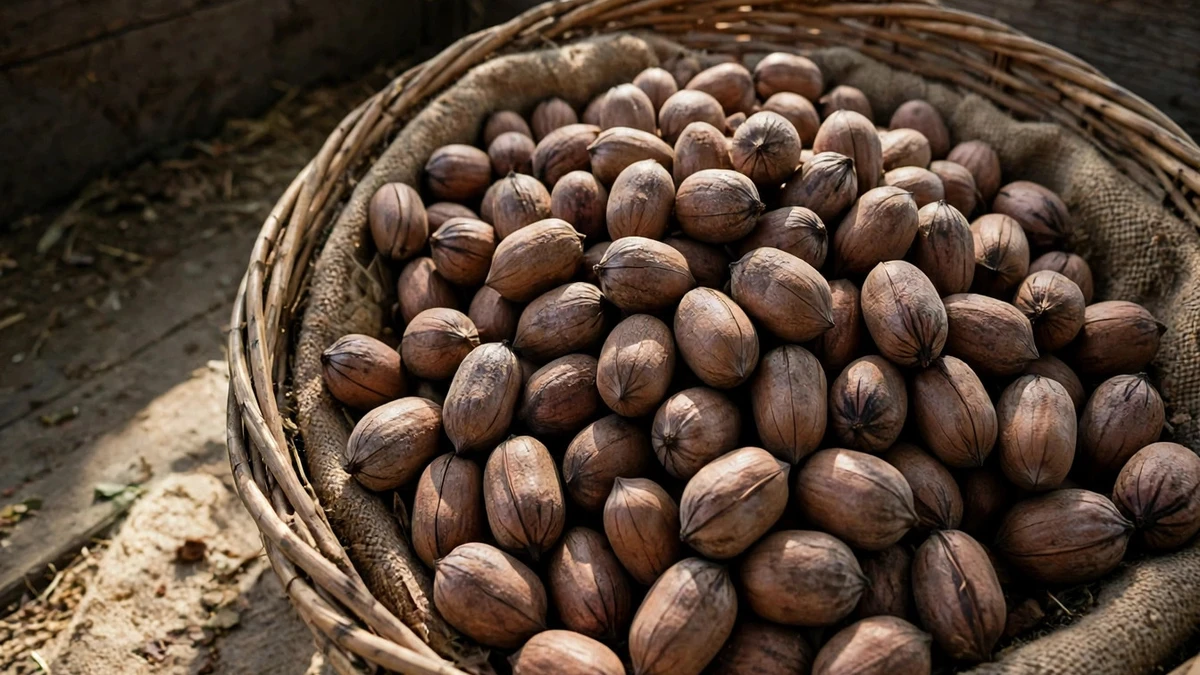
A pecan farm escape is not a normal holiday with a farm theme. It is a stay on a working orchard, where the day is shaped by the trees, the harvest, and the kitchen, and where the best moments are often the unplanned ones: a walk through the rows at dawn, a conversation with the grower, a plate of pecans that were in their husks that morning.
Planning one well is mostly about timing and honesty. The harvest season is short, the smallest farms take only a few guests, and the weather can move the whole schedule.
This guide walks through the nine steps that matter, from choosing your harvest window to sorting out the small print before you pay. Each step is written for a first-time orchard traveller, and each one is meant to save you a mistake that is easy to make and hard to undo once you are there. Our guide to planning a macadamia farm escape covers the same kind of trip for a different nut, if you want to compare orchard holidays before you commit.
Key takeaways
- Start with the harvest window, not the flight: northern hemisphere pecans ripen from October to December, southern hemisphere pecans from April to June.
- Choose a farm where the guest rooms sit inside the orchard, so the trees and the work are part of the stay rather than a drive away.
- Book three to six months ahead for harvest weeks, because the smallest and best farms take only a handful of guests at a time.
- Plan your transport early: a car is needed at almost every pecan farm, and orchard country has very little public transport.
- No farm can promise an exact picking day months in advance, because the harvest moves with the weather, so treat any such promise as a warning sign.
What a pecan farm escape looks like
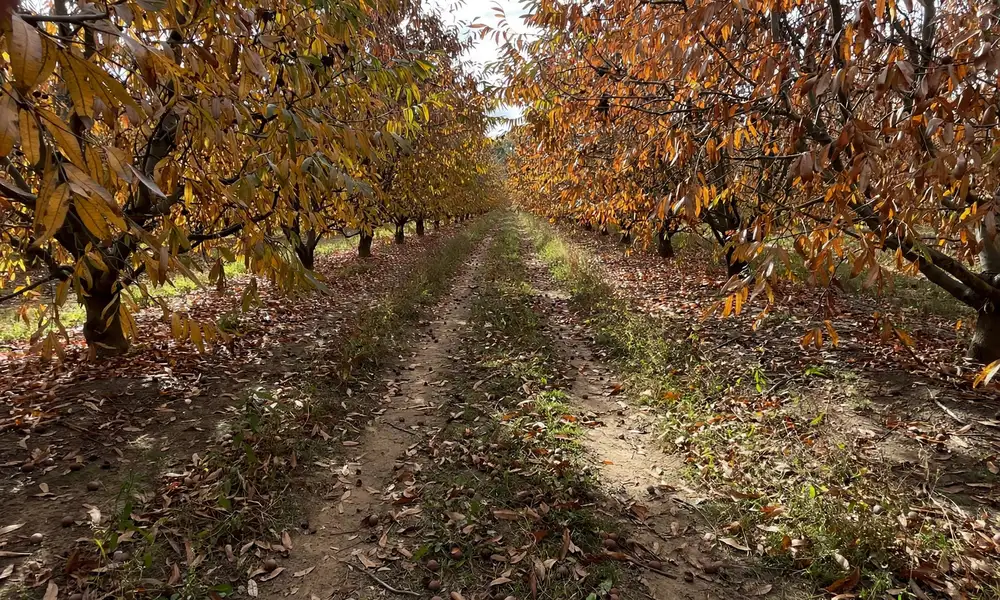
A typical day starts early. The farm crew is out before the heat, the dew is on the grass, and the orchard is at its quietest. Guests who rise with the farm get the best of it: a walk through the rows with the manager, a look at the harvesters at work, and a breakfast that uses the farm’s own pecans.
The middle of the day is slower. There may be a shelling demonstration, a tasting of different pecan varieties, a cooking session, or simply time to sit on the veranda and read. The farms that do this well do not fill every hour. They leave space for the orchard itself, which is the reason you came.
Evenings are usually communal. A long table, a meal built around the harvest, and conversation with the other guests and the farm family. If you want good food and unhurried evenings, it will suit you very well.
Planning it well starts here
The single most useful thing you can do is talk to the farm before you book. A short email or call will tell you more than any website: when the harvest usually falls, what the rooms are like, what is included in the price, and how the farm handles bad weather or a late season. A farm that answers clearly is a farm that runs its guest stays properly.
Be honest about what you want from the trip. If you want to join the harvest, say so. If you want to watch but not work, say that too. If you have allergies, dietary needs, or mobility concerns, raise them early, in writing, so the farm can give you a straight answer rather than a guess on arrival.
Finally, keep the plan simple. One farm, one region, enough nights to settle in. It is a slow stay in one place, and the people who enjoy it most are the ones who let the farm set the pace.
The 9 steps to a good pecan farm escape
Let the harvest dates set your trip
What to do: Decide whether you are travelling in the northern season, October to December, or the southern season, April to June, then ask your chosen farm for its usual window within that season. What to avoid: Booking flights first and hoping the harvest fits around them. Best For: Travellers whose dates are flexible enough to follow the trees. Time Needed: An hour of research and one email to the farm. Standout Tip: Ask how the farm tells guests if the season moves, and whether they offer a date change.
The harvest is the reason for the trip, so it has to come first. Everything else, the flights, the room, the car, is easier to arrange once the dates are anchored to the orchard.
Pick a working orchard, not a hotel with trees
What to do: Look for farms that list their orchard size, their varieties, and their harvest activity, and that show photographs of the work, not just the bedrooms. What to avoid: A property that calls itself a farm stay but cannot say how many trees it has or what happens at harvest. Best For: Travellers who want the real work of the farm, not a theme. Time Needed: An evening of reading farm websites and reviews. Standout Tip: A farm that names its pecan varieties is usually a farm that knows its orchard.
Sleep on the farm itself
What to do: Book a room on the property, within walking distance of the orchard rows, so the mornings and evenings belong to the farm. What to avoid: Staying in a nearby town and driving in for a day visit, which turns the orchard into a sightseeing stop. Best For: Travellers who want the early mornings and the long evenings. Time Needed: A few minutes checking the room’s location on the farm map. Standout Tip: Ask how far the nearest orchard row is from your door, and whether you can walk it before breakfast.
The best part of a farm stay is often the hour before breakfast, when the orchard is quiet and the light is low. You only get that hour if you are sleeping on the farm.
Find out which harvest jobs are open to guests
What to do: Ask the farm exactly what guests can do during the harvest: walk the rows, gather fallen nuts, watch the shakers, join the shelling, or simply observe. What to avoid: Assuming you will be picking nuts all day, when most farms limit guest participation for safety and quality reasons. Best For: Travellers who want to take part rather than just watch. Time Needed: One email, and a clear answer before you book. Standout Tip: Ask what a typical harvest morning looks like, hour by hour.
Harvest participation varies widely from farm to farm, and the farms that explain it clearly are the ones that have thought about guests properly. A vague promise of harvest fun is worth less than a plain description of the day.
Line up a car before you travel
What to do: Check the drive time from the nearest airport, book a car early, and confirm the farm’s directions, because orchard roads are often unmarked and poorly covered by maps. What to avoid: Relying on taxis or rideshares in orchard country, where they are scarce or absent. Best For: Travellers arriving by air into a rural region. Time Needed: Half an hour to check routes and book a car. Standout Tip: Save the farm’s phone number and a paper map, because signal can be weak among the trees.
Wear sturdy shoes and layers for orchard ground
What to do: Pack closed shoes with grip, layers for cool mornings and warm afternoons, a hat, and something you do not mind getting dusty. What to avoid: White clothes, open sandals, or anything you would wear to a resort pool, because orchard ground is uneven, dusty, and sometimes muddy. Best For: Travellers who plan to walk the rows every day. Time Needed: Ten minutes packing, once you know the forecast. Standout Tip: Bring a light jacket even in warm regions, because orchard mornings are cooler than the afternoons.
The right clothes make the difference between a comfortable morning among the trees and a short, dusty walk back to the room. Pack for the farm, not for the photograph.
Find out what the kitchen cooks with pecans
What to do: Ask what the farm cooks with its own pecans, whether meals are communal, and how the kitchen handles allergies and dietary needs. What to avoid: Assuming every meal will be pecan-heavy, or that the farm can improvise around a serious allergy without warning. Best For: Food lovers and anyone with dietary needs. Time Needed: One email to the farm, in writing, before you book. Standout Tip: Ask for a sample menu from harvest week, which shows what the kitchen really does.
Food is often the quiet highlight of a farm stay, and the farms that take it seriously will be glad to talk about it. A farm that cannot describe its kitchen is telling you something about its priorities.
Leave the afternoons unscheduled
What to do: Keep your afternoons free for the slow parts: a tasting, a shelling demonstration, a walk, or simply time on the veranda. What to avoid: Filling every hour with activities, excursions, and day trips, which turns a farm stay into a schedule. Best For: Travellers who want to rest as well as explore. Time Needed: No time at all, just the decision not to over-plan. Standout Tip: Plan one activity a day at most, and let the farm fill the rest.
Know what happens if the harvest moves
What to do: Read the cancellation terms, ask what happens if the harvest moves, and check whether your travel insurance covers a farm stay. What to avoid: Paying a deposit before you know the terms, or assuming a normal hotel policy applies to a harvest-week booking. Best For: Anyone booking harvest weeks, which are short and popular. Time Needed: Twenty minutes reading the terms and one email if anything is unclear. Standout Tip: Get the harvest-moves answer in writing, because it is the term most likely to matter.
Harvest weeks are the shortest and most popular dates on a farm’s calendar, so the terms are often stricter than a normal stay. Knowing them before you pay is the simplest way to avoid an expensive surprise.
Picking the right region and the right season
The United States grows most of the world’s pecans, and Georgia, Texas, New Mexico, and Arizona are the natural starting points for a first trip. Mexico’s Chihuahua is the food-lover’s choice, with pecans woven into regional cooking in ways that surprise first-time visitors.
The southern hemisphere offers the opposite season. Australia’s Riverland, Argentina’s Entre Ríos, and Brazil’s Rio Grande do Sul all harvest in the southern autumn, roughly April to June, which suits travellers whose free weeks fall in the northern spring. The orchards are just as real, and the pace is often slower.
Choose by your calendar first, then by the kind of trip you want. A first-time orchard traveller will be happy in Georgia or Riverland. A food lover will be happiest in Chihuahua or the Mesilla Valley. A traveller who wants wildlife as well as orchards should look at the Lowveld. Our guide to planning a pistachio farm escape makes the same point about matching the region to the traveller, because the pattern holds across every orchard trip.
The caveats that matter
A pecan farm escape is a farm stay, and that shapes everything about it. The ground is uneven, the work starts early, the weather decides more than the itinerary does, and the internet is often slow. If you want a polished resort with a strict schedule, you will be disappointed. If you want fresh air, good food, and time among the trees, you will be glad you came.
| Detail | What is known |
|---|---|
| Best months, north | October to December, peaking in November in the United States and Mexico |
| Best months, south | April to June in Australia, South Africa, Argentina, and Brazil |
| How far ahead to book | Three to six months for harvest weeks; a month or two for shoulder weeks |
| Transport | A car is needed at almost every farm; public transport is thin in orchard country |
| Typical stay | Three to five nights is enough to settle in without rushing the harvest |
| What to pack | Closed shoes with grip, layers, a hat, and clothes you do not mind getting dusty |
| Allergies | Tell the farm in writing before you book; a pecan orchard is full of tree nuts |
| What to confirm first | The harvest window, what is included, and the cancellation terms |
Travel insurance deserves a proper look before you book. Check that it covers a farm stay, a rural location, and a date change if the harvest moves.
Checklist: before you book
Use these checks before you pay, and again a week before you travel.
- Check the harvest window: confirm the farm’s usual dates, and how they will tell you if the season moves.
- Check the room: confirm it is on the farm itself, and how far the orchard rows are from your door.
- Check what the price covers: the room, breakfast, and orchard activities are usually covered, but dinners and guided sessions may cost extra.
- Check the journey: confirm the drive time from the nearest airport, and book a car early.
- Check the food: tell the farm about allergies or dietary needs in writing, and ask for a sample harvest-week menu.
- Check the small print: read the cancellation terms, and get the harvest-moves answer in writing.
Frequently asked questions
When is the best time to visit a pecan farm?
In the northern hemisphere, October to December, peaking in November. In the southern hemisphere, April to June. The exact weeks move with the weather each year, so confirm the farm’s usual window when you book, and ask how they will tell you if it moves.
Do I need a car for a pecan farm escape?
Almost certainly yes. Orchard country has very little public transport, and the farms are spread across rural roads. Book a car early, confirm the farm’s directions, and save the farm’s phone number in case the signal is weak among the trees.
Are pecan farm retreats suitable for children?
Often yes, especially the smaller family farms, where children can join the harvest walks and the shelling demonstrations.
How many nights should I stay on a pecan farm?
Three to five nights is a good length. It is enough to settle into the farm’s rhythm, join a harvest morning, and have a slow afternoon or two, without the stay feeling rushed. Shorter stays work, but they tend to feel like a visit rather than a proper escape.
What do I wear for a morning among the trees?
Closed shoes with grip, layers for cool mornings and warm afternoons, a hat, and clothes you do not mind getting dusty. Orchard ground is uneven and sometimes muddy, so open sandals and white clothes are a poor choice.
Can I join the harvest?
It depends on the farm. Some let guests gather fallen nuts and join the shelling, others limit guests to watching for safety and quality reasons. Ask the farm exactly what guests can do, and get the answer before you book, so you know what to expect. Our guide to planning a hazelnut farm escape covers the same question, because harvest participation varies on every kind of orchard.
The bottom line
A good pecan farm escape starts with the harvest window, not the flight. Fix the season, choose a working orchard with rooms on the farm, sort out the car, and leave the middle of the day open. Book three to six months ahead for harvest weeks, tell the farm about allergies and dietary needs in writing, and read the cancellation terms before you pay.
Do that, and the orchard will do the rest. The mornings among the trees, the meals built around the harvest, and the slow evenings on the veranda are what make a pecan farm stay worth planning properly, and they are the parts no itinerary can quite capture in advance.