Chervil is a kitchen herb first, and a perfume note a distant second. Most people meet it in French cooking, as one of the fines herbes, the feathery leaves snipped over omelettes, soups and salads at the last minute, tasting of mild parsley with a whisper of anise. Almost no one connects the kitchen herb with perfume, yet it is among the rarest green notes a perfumer can use. Only four perfumes in a major fragrance database carry chervil as a named note.
The note itself is gentle. It smells of fresh parsley and a little liquorice, sweet and slightly peppery, with none of the punch of its louder cousins. In a perfume it behaves like a breath of spring air rather than a statement, so it suits light, green, aquatic compositions and disappears in heavy, sweet ones.
Below is the full picture: the plant, the smell, the reason for its rarity, and the bottles that actually carry it. It also clears up the confusions: chervil is not parsley, it is not tarragon, and the wild chervil in two other perfumes is a different plant.
Key takeaways
- Chervil is Anthriscus cerefolium, a feathery herb in the carrot family, also called French parsley or garden chervil.
- It smells of mild parsley with a whisper of anise and liquorice, sweet and slightly peppery, a light green note, not a loud one.
- Only four perfumes in Parfumo’s index carry a chervil note, from Monsieur 2 in 1993 to Green Thumb in 2026.
- Chervil usually appears at the top of a perfume, beside blackcurrant, aquatic greens, or garden herbs.
- Three of the four are discontinued or hard to find, so sample before you hunt for a bottle, and check the note list rather than trusting a green accord.
What chervil actually is
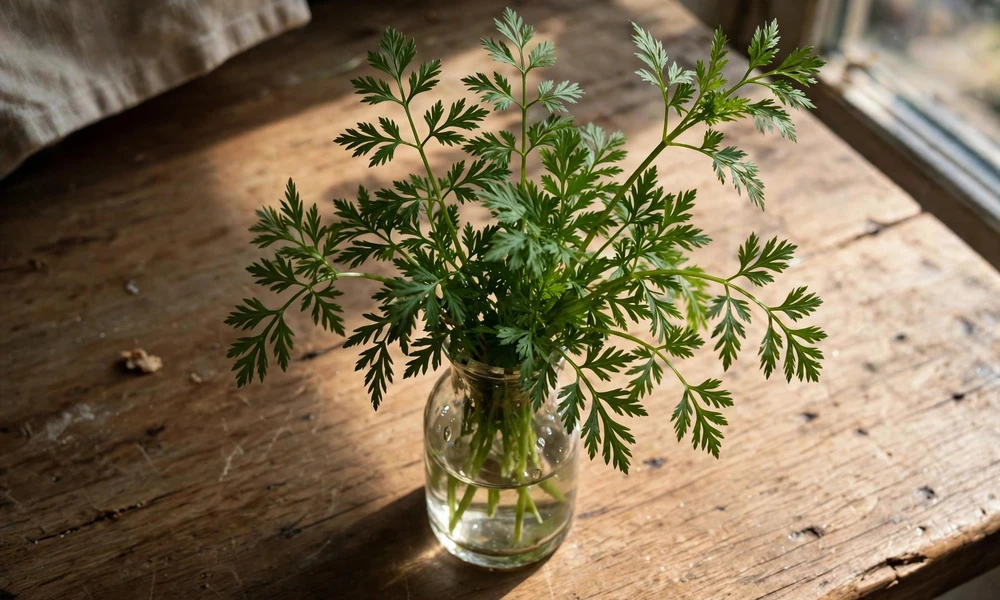
Chervil, Anthriscus cerefolium, is a small annual herb in the Apiaceae family, the carrot family, and one of the classic fines herbes of French cooking, alongside parsley, chives and tarragon. Its leaves are light green and finely divided, almost fern-like, a more delicate version of flat-leaf parsley. It likes mild, cool weather, and European kitchen gardens have grown it for centuries.
That gentleness is the point. A cook adds chervil at the very end of cooking, because heat drives its flavour away, leaving a fresh, spring-like taste with a mild anise edge. The same restraint applies in perfumery: chervil is not a note that shouts. It is a note that suggests.
Chervil’s family explains a lot. The carrot family is full of aromatic plants, and several have become perfume notes: tarragon, dill, lovage, fennel, caraway, coriander and angelica. Chervil is the quietest of the group, with the softest anise and the lightest touch.
How to read a chervil note list
A chervil listing only makes sense beside its neighbours, because the surrounding notes show what the chervil is there to do. Next to blackcurrant and cumin, as in Fischersund No. 101, it is a green herbal lift over a dark, spicy base. Next to aquatic notes and thyme, as in Monsieur 2, it is part of a fresh green opening of crushed leaves and cool water.
The pyramid position matters too. In the two perfumes with published pyramids, chervil is listed at the top, so you will smell it in the first minutes. Parfumo’s note page adds a useful detail: chervil often occurs throughout the entire fragrance, not only in the opening, so it should keep colouring the scent as it dries down.
Finally, do not confuse a chervil note with a green accord. A perfume can smell green without containing chervil. The test is simple: the word chervil should be on the list. Tarragon is the closest comparison, and our guide to the tarragon perfume explains why its anise speaks far more loudly than chervil’s ever does.
Nine things worth knowing about chervil in perfume
Chervil is Anthriscus cerefolium, a feathery herb in the carrot family
What it shows: The note comes from a real plant with a long kitchen history, not a lab-built accord. What to consider: When a list names chervil it means the plant, not a flavouring or a fantasy accord.
The plant is a small annual, native to the Caucasus and western Asia and naturalised across Europe, grown in kitchen gardens for centuries. Its leaves are light green, lacy and finely divided, and they bruise easily, which is why cooks handle them gently and add them last.
The smell is mild parsley with a whisper of anise and liquorice
What it shows: Chervil reads as a soft green note, leafy and herbal on first spray rather than floral or sweet. What to consider: The anise is a whisper, not a shout, so anyone expecting the bold liquorice of star anise will find chervil surprisingly quiet.
Its anise character is slight, closer to a suggestion than to a flavour, and tarragon is the nearest comparison, though tarragon says the same thing far more forcefully. The aroma is often described as mild parsley and liquorice, sweet and slightly peppery, fresh and spring-like.
Only four perfumes in Parfumo’s index carry a chervil note
What it shows: Four bottles in thirty years is a real figure, not a sales story, and it explains why chervil lives in niche and vintage releases. What to consider: Big houses build for crowds, and a faint note few buyers will notice is a poor fit, so a designer chervil perfume is unlikely any time soon.
Parfumo, one of the largest fragrance databases, knows four perfumes that contain the note chervil, first in 1993 and last in 2026. In more than thirty years, only four perfumes have named it, a striking figure beside tarragon, which appears in hundreds.
Monsieur 2 gave chervil an aquatic green opening in 1993
What it shows: Chervil’s first appearance in perfume was in a classic men’s aromatic green, at the top of the composition. What to consider: The bottle is long discontinued, so it is a collector’s piece now, and secondary-market prices vary widely.
Givenchy’s Monsieur 2, launched in 1993, lists chervil among its top notes, beside a green aquatic note, ivy, thyme, orange blossom and basil. The heart runs to saffron, cardamom, mimosa, marigold and benzoin, and the base settles on cedar, sandalwood and lentiscus. Chervil adds a fresh herbal edge to the opening, a hint of the garden before the spice and woods take over.
No. 101 pairs blackcurrant and chervil at the top
What it shows: A modern niche house can still build a perfume around chervil, and the pairing with blackcurrant works because the fruit gives the herb something to lift. What to consider: No. 101 is the only one of the four currently easy to buy, so it is the natural first bottle for anyone curious about the note.
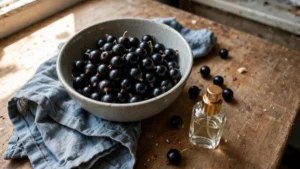
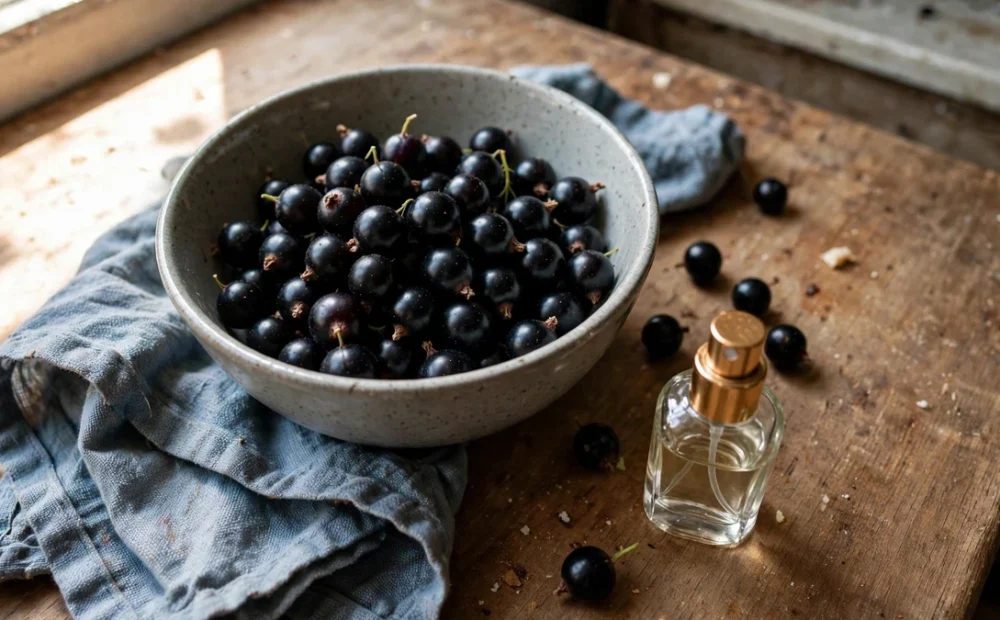
Fischersund No. 101, released in 2022, opens with black currants and chervil, moves through a heart of cumin, cypriol and lily, and dries down to limbwood, musk and vanilla. Wearers catch the chervil at the first spray, with the cypriol and lily arriving as it settles.
Two niche bottles hide chervil in a garden of strange notes
What it shows: Chervil also turns up in small-batch, artisanal perfumes, where it sits among herbs, woods and earthy notes rather than leading the composition. What to consider: Both bottles are hard to find, and one is listed as discontinued, so treat them as collector’s items rather than everyday buys.
The Norns’ Farmhouse, from Black Phoenix Alchemy Lab’s Neil Gaiman’s American Gods collection (2017), lists chervil among apple blossom, ash, chamomile, dust, horehound, mugwort, nettle, sage, viper’s bugloss and woods. Green Thumb, from Cardinal Scents (2026), lists it beside beetroot, corn silk, dirt, a mist note, rubber and tomato vine.
Wild chervil is a different plant, with two perfumes of its own
What it shows: A note called wild chervil belongs to a separate species, and it should not be confused with garden chervil, even though the names look alike. What to consider: If a list says wild chervil, expect a wilder, greener character, and do not count the bottle as a chervil perfume in the strict sense.
Wild chervil, Anthriscus sylvestris, also known as cow parsley, is a different plant, listed as a separate note. Two perfumes carry it: Brown Flowers by D.S. & Durga (2025), which opens with dried citron, wild chervil and akebia; and Aqua 358 Thunderball by Max Joacim, an ozonic scent built to smell like a Finnish thunderstorm, created by Max Perttula.
Cool Water’s chervil listing is disputed, and the dispute is instructive
What it shows: Note lists disagree, and a single source is not enough to call a perfume a chervil perfume. What to consider: If you buy Cool Water expecting chervil, you may not find it: the two largest databases do not list it.
Davidoff Cool Water, the 1988 classic, is sometimes listed with chervil in its heart, beside jasmine, geranium, orris and violet, in Perfume Intelligence. But neither Fragrantica nor Parfumo includes chervil in their note lists for it, and Parfumo’s count of four does not include it. When a note is this rare, check two sources before believing a listing.
Tarragon shouts the anise note that chervil only whispers
What it shows: The two are related, but they smell different and play different roles. What to consider: Tarragon lovers will find chervil familiar, but they should expect a whisper of anise where tarragon gives a statement.
Both plants sit in the carrot family, and both lend a perfume something green, herbal and faintly aniseed. The difference is in the volume. Tarragon is bold, its aniseed warmth leading the note, and it turns up in hundreds of perfumes. Chervil stays gentle, the parsley character leading while the anise stays only just audible, and it appears in four. For a third cousin, see our guide to the lovage perfume, which sits between the two in character, greener than tarragon and heavier than chervil.
Which chervil perfume is right for you
New to the note? Begin with Fischersund No. 101, the only one of the four currently available at retail. It shows the note clearly in the opening, against blackcurrant and cumin. Try a sample on two different days, and notice the opening above all, because that is where chervil does its work.
If you already wear green perfumes and enjoy a hunt, Monsieur 2 is the next step, but go in with your eyes open. It is a 1993 release, long discontinued, and you will be buying on the secondary market, where condition and storage matter as much as price. Check the seller and the batch, and do not pay a collector’s price for an unsmelled bottle.
The two remaining bottles are for collectors rather than beginners. The Norns’ Farmhouse is a piece of a literary collection, built around herbs and dust and woods, and Green Thumb is a 2026 curiosity built around a vegetable garden. If either crosses your path at a fair price, take the sample first, and decide with your nose rather than with the rarity. Our roundup of the best angelica perfumes covers another Apiaceae cousin that is far easier to buy, a good place to go next if the chervil hunt leaves you empty-handed.
The caveats that matter
Start with the faintness. Chervil is a quiet note, and it can be hard to pick out. If you spray No. 101 and smell only blackcurrant and cumin, that does not mean the chervil is absent. It means the note is doing its job quietly, lifting the green rather than leading it.
Availability is the next problem. Three of the four chervil perfumes are discontinued or hard to find at retail, and the fourth is a niche release with limited distribution. Availability moves quickly here: a bottle on sale today can be out of stock by the time you decide.
| Detail | What is known |
|---|---|
| Plant | Anthriscus cerefolium, a feathery annual herb in the carrot family, also called French parsley |
| Material used | The herb, listed as chervil, usually in the top of the pyramid |
| What it smells like | Mild parsley with a whisper of anise and liquorice, sweet and slightly peppery |
| How rare it is | Four perfumes in Parfumo’s index carry the note, first in 1993 and last in 2026 |
| Best-known bottles | Givenchy Monsieur 2 (1993) and Fischersund No. 101 (2022) |
| Closest relatives | Tarragon, parsley, dill, lovage, fennel and angelica, all in the same plant family |
| Who should sample first | Everyone, because chervil is faint and three of the four are hard to find |
| What it does not do | It does not lead a loud or long-lasting perfume, and it does not suit heavy sweet bases |
Anyone with a known sensitivity to celery, parsley or carrot should try a chervil perfume on a small patch of skin first, before wearing it on the neck or wrists. All four plants are cousins, so a reaction to one can occasionally mean a reaction to another.
Checklist: buying a chervil perfume without regrets
Work through these before you spend anything, and again after two wearings.
- Begin with a sample or a decant, not a full bottle, since chervil is faint and three of the four bottles are scarce.
- Check that chervil is named on the note list, not only suggested by a green accord.
- Check the notes around it: blackcurrant and cumin, or aquatic greens and thyme, are good signs.
- Check availability before you fall in love with a bottle: three of the four are discontinued or hard to find.
- Wear it twice, once by day and once in the evening, because chervil shows itself differently as it settles.
- Spray on skin, not paper: a blotter makes chervil smell sharper than it does on a warm wrist.
Frequently asked questions
Could you mistake chervil for parsley?
No, although it is often called French parsley. Chervil is Anthriscus cerefolium, a separate species with lacy, feathery leaves and a mild anise edge that parsley does not have. The two are cousins, and they can stand in for each other in a kitchen, but in a perfume they are different notes.
Does chervil bring an aniseed smell to a perfume?
Only faintly. Chervil carries a slight hint of anise, closer to a whisper than to the bold liquorice of star anise or the punch of tarragon. If you want a strong anise perfume, chervil is the wrong note to chase. If you want a green perfume with a quiet anise edge, it is right.
Is chervil simply too faint to sell?
Because the note is faint, the material is costly to use well, and its profile is hard to place commercially. A mainstream house has little reason to build a perfume around a note most buyers will not notice, so chervil has stayed in niche and vintage bottles.
Can I still buy Monsieur 2 or The Norns’ Farmhouse?
Only on the secondary market, and with care. Monsieur 2 was released in 1993 and discontinued long ago, and The Norns’ Farmhouse was a limited collection release from 2017. Check the seller and the storage, and expect to pay a collector’s price for a well-kept bottle.
Is chervil a spring scent, or does it work all year?
Spring, and cool weather generally. Chervil reads fresh and green in cool air, and its spring-like character suits the season it grows in. In high summer it can feel too light, and in deep winter it can disappear under heavier clothes and warmer scents.
Should I patch-test a chervil perfume if celery bothers my skin?
Yes. Chervil, celery, parsley and carrot all belong to the same plant family, and a sensitivity to one can sometimes extend to another. Apply a small amount to your inner arm, wait a day, and wear it more widely only if your skin stays calm.
The bottom line
Chervil is the rarest kind of perfume note: a real plant, a gentle smell, and almost no bottles to show for it. Four perfumes in a major database name it, three are hard to buy, and the fourth is a niche release most shops will never stock. That is a reason to approach it properly, with a sample in hand and no hurry.
Begin with No. 101, wear it twice, and let the note show itself before you judge it. If the whisper of parsley and anise wins you over, the search for the older bottles becomes a pleasure in its own right. If it does not, you will still have learned how perfumers use the quietest notes, and that is worth knowing too.