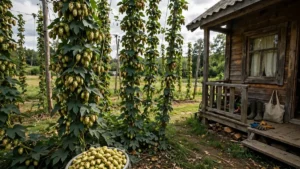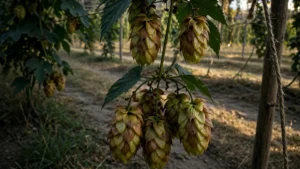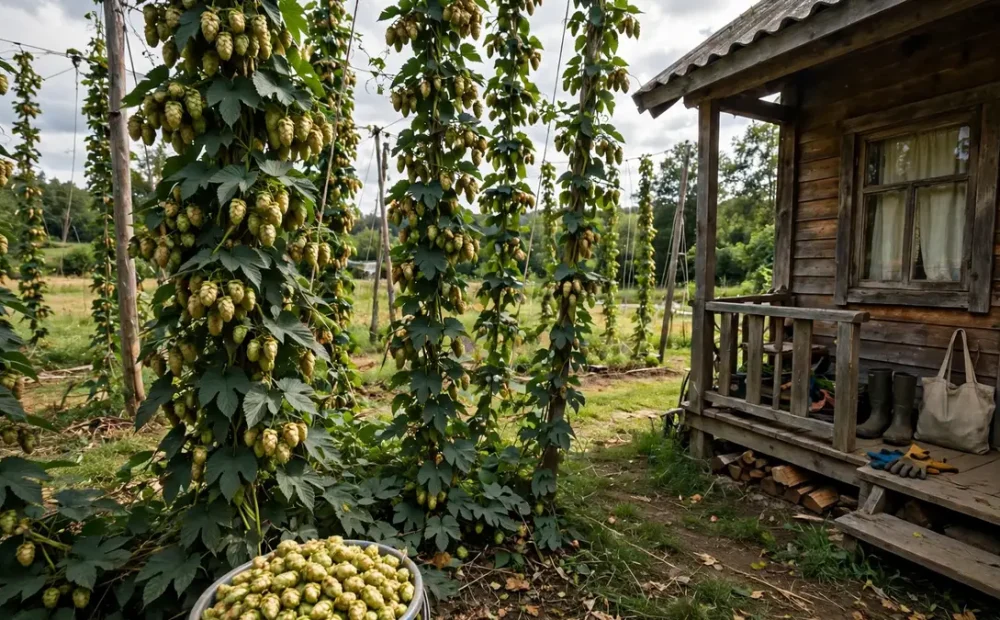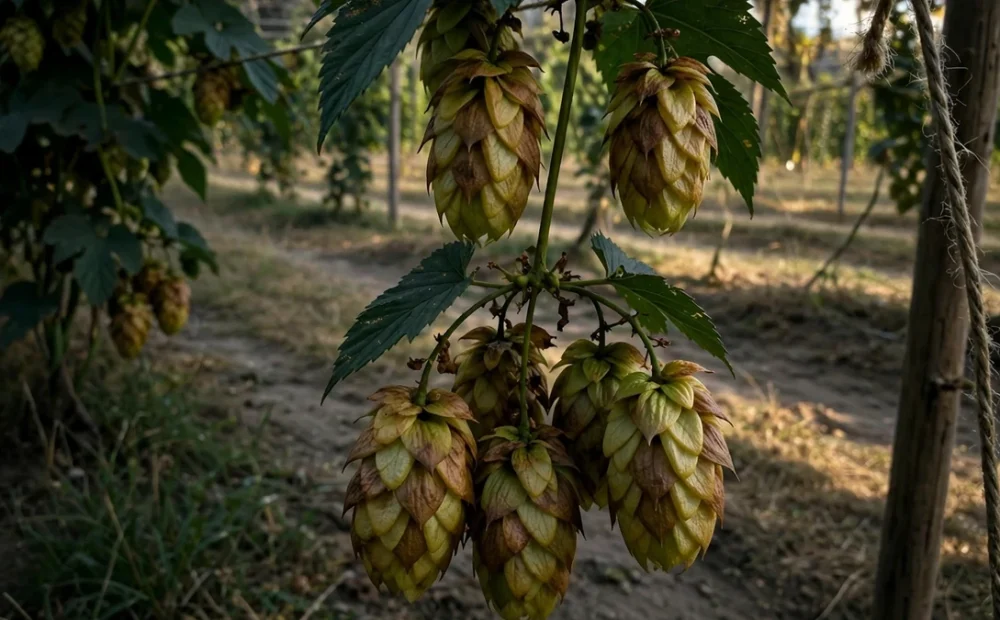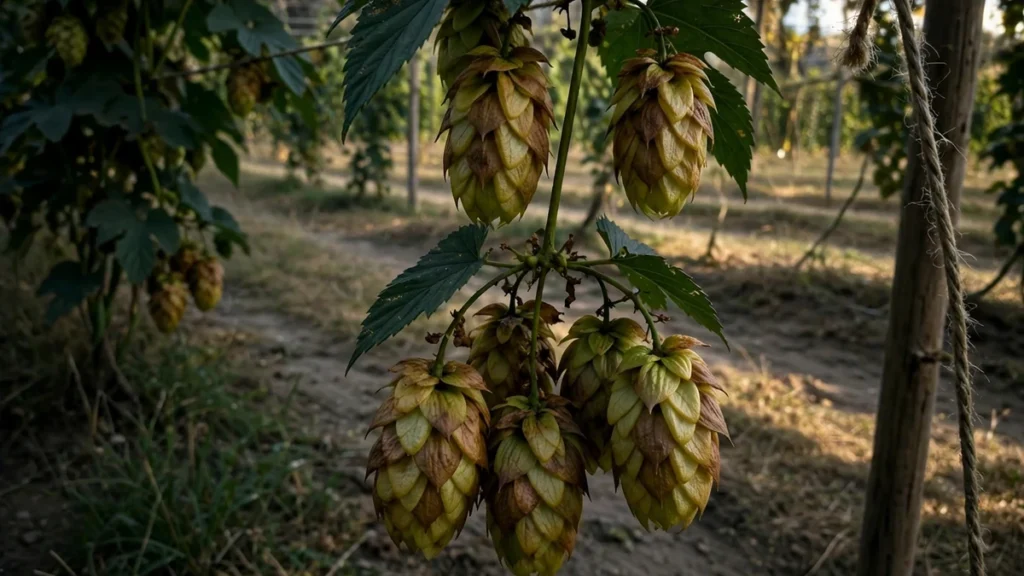
Hops are the green cones that give beer its bitterness and its scent. They grow on tall bines that run up wires seven metres high, and at harvest the cones are picked, dried in a kiln, and baled for the brewery. Without them, beer would be sweet malt water; with them, it is a Pilsner, a lager, an ale.
A hop farm retreat puts you on a small farm where those bines still grow, when the cones turn papery and smell of citrus, pine and spice. You sleep in a farmhouse room, eat from the farm kitchen, walk the hop gardens at dawn, and taste beer brewed from the cones cut that week. The farms run from the Hallertau in Bavaria to the valleys of Patagonia, and the hop is the thread that ties them together.
Below are nine hop farm retreats worth considering in 2027, from the largest hop fields in the world to a small valley in the south of England. Each of the nine is judged on its strengths, its limits and the traveller it suits best, so the choice turns on how you like to travel, not on the map.
Key takeaways
- Hops are the cones of a climbing bine, Humulus lupulus, and they give beer its bitterness and aroma, so ask the farm which varieties it grows before you book.
- The noble hops are Saaz, Hallertau Mittelfrüh, Tettnang and Spalt, and each one flavours a different beer, so a farm that grows Saaz will pour a different glass from one that grows Tettnang.
- The northern harvest falls in late August and September, and the southern cutting runs in February and March, and the exact week moves with the rain, so confirm it before booking flights.
- Most hop farms are small and take only a few guests, so expect plain rooms, shared meals and dust on your boots.
- Harvest dates are a guess, not a promise: a stay planned around one picking day can end with the cones still green on the bine.
What a hop farm retreat actually is
A hop farm retreat means three to five nights on a working farm that grows hops, with the hop harvest as the reason for the trip. Guests sleep in a farmhouse room or a converted barn, eat from the farm kitchen, and join the season’s work, walking the hop gardens and seeing the cones picked, dried in the kiln and baled for the brewery.
Hops have been grown for beer for centuries, and the great hop regions took shape around the breweries they served. The Hallertau fed the lager brewers of Bavaria, Saaz fed the Pilsner brewers of Bohemia, Tettnang fed the brewers of Lake Constance, and the Wye Valley fed the ale brewers of England.
Most of these farms sit in open country, with tall hop gardens and a drying kiln beside the barn. The days move at a farm’s pace rather than a hotel’s, supper is served at one long table, and the best stays let you join the picking instead of watching it.
How we picked these stays, and what to ask first
We began with where hops truly grow, not where they sell best. A genuine hop farm offers gardens to walk through, cones to stand among at harvest, and a kiln, a brewery or a tasting room working with its own hops. A farm that buys its cones in and brews with them is not a hop farm, whatever the website says.
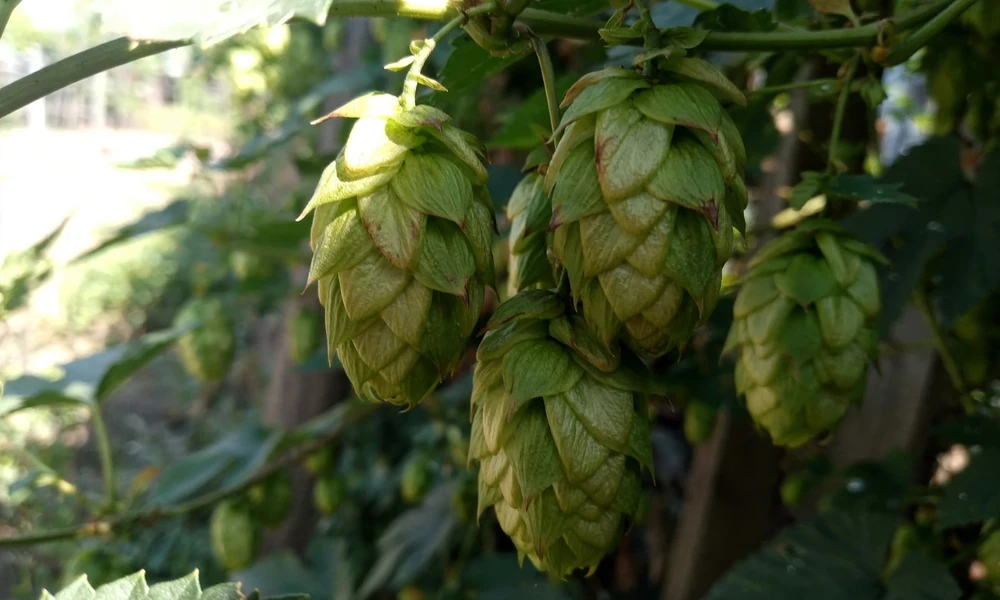
The strongest farms keep guest numbers small, so the picking stays real work instead of a show for visitors. They also set out plainly what the nightly rate covers, with meals, the ride in from the nearest town and walks through the gardens included rather than billed on arrival. A farm that talks plainly about the harvest, the drying and the bitterness usually looks after its guests well too.
The 9 best luxury hop farm retreats of 2027
Hallertau, Bavaria, Germany — Hops on the Largest Hop Fields
What we like: Hops in the Hallertau, the largest hop region in the world, where the bines run in long green rows to the horizon and the farm brews its lager from its own Hallertau Mittelfrüh. The kitchen serves pork, dumplings and dark bread, and the beer garden fills at dusk.
What to consider: The Hallertau is flat, so the scenery is the least striking on this list, and the harvest days are long and dusty.
Style: Bavarian hop farm stay. Best for: Travellers who want hops where the lager story began. Price range: $65–$95 per night. Standout feature: Lager brewed from the farm’s own Hallertau Mittelfrüh cones.
Žatec, Bohemia, Czech Republic — Saaz Hops in the Pilsner Country
What we like: Hops in Žatec, home of the Saaz hop, where the cones grow on red soil and the farm pours a Pilsner brewed from them. The town keeps its hop museum and its old hop warehouses, and the kitchen serves goulash and dumplings with the farm beer.
What to consider: The town is small and the farms are plain, so the rooms are simple, and the harvest week is short.
Style: Bohemian hop town farm stay. Best for: Travellers who want the Pilsner hop at its source. Price range: $100–$130 per night. Standout feature: Pilsner brewed from Saaz cones grown on the farm’s own red soil.
Tettnang, Baden-Württemberg, Germany — Tettnang Hops by the Lake
What we like: Hops in Tettnang, where the Tettnanger hop grows beside Lake Constance and the farm brews a pale lager from it. The lake lies below the hop gardens, the evenings are mild, and the kitchen serves fish from the lake with the farm beer.
What to consider: The gardens are smaller than the Hallertau, the harvest is short, and the lake towns fill in summer.
Style: Lake Constance hop farm stay. Best for: Travellers who want hops with a lake below them. Price range: $135–$165 per night. Standout feature: Pale lager brewed from Tettnanger cones grown above the lake.
Nelson, South Island, New Zealand — Nelson Sauvin Hops in the Sun
What we like: Hops in Nelson, where the Nelson Sauvin hop grows in the sunniest corner of New Zealand and the farm brews a pale ale bursting with passionfruit and grape. The gardens run between the hills and the sea, and the kitchen serves lamb and green-lipped mussels with the farm beer.
What to consider: The harvest falls in February and March, the opposite season to Europe, so the trip needs planning a year ahead.
Style: New Zealand coastal hop farm stay. Best for: Travellers who want hops in the southern summer. Price range: $170–$200 per night. Standout feature: Pale ale brewed from Nelson Sauvin cones cut that week.
Poperinge, West Flanders, Belgium — Belgian Hops and the Hop Festival
What we like: Hops in Poperinge, the hop town of Flanders, where the farms grow hops for the Belgian ales and the town keeps its hop festival and its hop museum. The kitchen serves Flemish stew and fries with mayonnaise, and the farm pours a blond ale brewed from its own cones.
What to consider: The country is flat and the farms are small, so the journey in takes most of a day, and the festival years are crowded.
Style: Flemish hop town farm stay. Best for: Travellers who want hops with Belgian ale. Price range: $205–$235 per night. Standout feature: Blond ale brewed from the farm’s own hops, poured in the hop town itself.
Hersbruck, Franconia, Germany — Hersbrucker Hops in the Hills
What we like: Hops in Hersbruck, where the Hersbrucker hop grows on the hills of Franconia and the farm brews a mild lager from it. The town keeps its timbered houses and its small breweries, and the kitchen serves Franconian sausages and sauerkraut with the farm beer.
What to consider: The hills are steep and the farms are small, so the walking is hard, and the harvest falls late.
Style: Franconian hill farm stay. Best for: Travellers who want hops with small breweries. Price range: $240–$270 per night. Standout feature: Mild lager brewed from Hersbrucker cones grown on the farm’s own hills.
Walla Walla, Washington, United States — Hops in the Wheat Country
What we like: Hops in Walla Walla, where the bines grow in the wheat country of eastern Washington and the farm brews an American pale ale from its own cones. The valley is wide, the Blue Mountains stand over the fields, and the kitchen serves farm beef and sweet onions with the farm beer.
What to consider: The valley is hot in harvest season and the farm is far from the towns, so the field work is best at dawn.
Style: Washington valley hop farm stay. Best for: Travellers who want American hops in wide country. Price range: $275–$305 per night. Standout feature: American pale ale brewed from the farm’s own cones in the wheat country.
El Bolsón, Patagonia, Argentina — Hops at the Foot of the Andes
What we like: Hops in El Bolsón, where the bines grow at the foot of the Andes and the town keeps its craft breweries and its hop festival. The mountains run to the horizon, the farm brews a golden ale from its own cones, and the kitchen serves lamb and trout with the farm beer.
What to consider: The harvest falls in February and March, the opposite season to Europe, and the town is a long drive from the nearest city.
Style: Patagonian mountain hop farm stay. Best for: Travellers who want hops under the Andes. Price range: $310–$340 per night. Standout feature: Golden ale brewed from cones grown at the foot of the Andes.
Wye Valley, England — Hops in the Old Hop Gardens
What we like: Hops in the Wye Valley, where the bines grow in the old hop gardens of the English border country and the farm brews a bitter ale from Fuggles and Goldings. The river runs below the gardens, the oast houses stand over the fields, and the kitchen serves roast beef and ale pie with the farm beer.
What to consider: The valley is the dearest stay on this list, and the harvest falls early, so the picking week is short and easy to miss.
Style: English border hop farm stay. Best for: Travellers who want hops at the far end of the map. Price range: $345–$380 per night. Standout feature: Bitter ale brewed from Fuggles and Goldings grown in the old hop gardens.
Which hop region fits your trip
If you want hops where the beer story runs deepest, start with the Hallertau or Žatec, where the noble hops have been grown the longest and the brewing runs to lager and Pilsner. Both make an easy first trip, with short walks and long table meals.
If you want scenery with your hops, Nelson and El Bolsón put the gardens in wild country, Tettnang puts them above a lake, and Walla Walla puts them in a broad American valley. Nelson is the sunniest of the nine, while Poperinge is the easiest to reach.
If you want the grain that goes with the hops, our guide to the barley farm retreats covers the malt every beer on this list is built on, and the truffle farm retreats offer a different harvest altogether, with dogs and oak woods instead of bines and kilns.
The caveats that matter
Hop farming answers to the weather: farms give a best guess, never a promise, and a trip pinned to one picking day gambles on the rain. The real warning is the bitterness, easy to overlook on a gentle country stay.
| Detail | What is known |
|---|---|
| Best time to visit | Late August into September in the north, February into March in the south, once the cones turn papery; the precise week shifts with the rain |
| What the work involves | Walking the hop gardens, watching the cones picked, and seeing them dried in the kiln and baled |
| How long a stay runs | Three to five nights, timed to the late-summer picking weeks |
| Who should take care | Guests who do not drink beer, because the tasting is the heart of the stay, and anyone unused to strong sun or hop dust |
| What the kitchen serves | Farm stews, sausages, bread and cheese, usually with the farm beer poured beside the plate |
| Gluten note | Most beer is brewed from barley and carries gluten, so coeliac travellers should ask the farm what it can safely serve |
| What to pack | Sturdy closed shoes, a sun hat, a warm layer for cold hill nights, and clothes you can wash by hand |
| What it does not do | No promised picking day, no fixed menu, and no hotel-style service on a working farm |
If coeliac disease, a condition that heat worsens, or a reason not to drink applies, speak to the farm before booking. One question about the kitchen and the beer can save you a hard stay, and a farm that answers it plainly is usually worth visiting. The emmer farm retreats carry a similar warning, since emmer is a wheat with gluten in each kernel.
Checklist: booking a hop farm stay honestly
Run through these checks before you pay, and once more the week before you travel.
- Get the farm’s picking window in writing, and ask what the plan is if the cones are still green on arrival.
- Make sure supper, the ride in from the nearest town and the garden walks are all covered by the nightly rate.
- Ask whether the drying and baling happen in the farm kiln, and whether the kitchen can serve a meal without beer.
- See the bedroom before you pay: the rooms are plain, so check the bed, the water and the heating.
- Pack for fierce sun and dusty paths: closed shoes, a hat, a layer for cold evenings, and clothes you can wash by hand.
- Hold a spare day for the nearest town, so a harvest that moves still leaves you a good trip.
Frequently asked questions
What is a hop, and why does beer need it?
A hop is the cone of a climbing bine, giving beer its bitterness and its scent. Without hops, beer would be sweet malt water; with them it is a Pilsner, a lager or an ale. The cones carry resins that bitter the beer and oils that scent it.
Hallertau, Saaz or Tettnang: what sets the noble hops apart?
The noble hops are Saaz, Hallertau Mittelfrüh, Tettnang and Spalt, each flavouring a different beer. Saaz gives a Pilsner its soft herbal bitterness, Hallertau Mittelfrüh gives a lager its clean spice, and Tettnang gives a pale lager its mild floral note.
How long does hop picking last, and when does it start?
The northern harvest falls in late August and September, the southern cutting runs in February and March, and the picking itself takes a week or two at most farms. The precise week moves with the rain, so ask the farm for its picking window rather than a single date, and wait for the window before booking flights.
What does a hop cone smell of?
A ripe hop cone smells of citrus, pine and spice, with a green edge. Saaz smells herbal and soft, Nelson Sauvin smells of passionfruit and grape, and a fresh cone rubbed between the palms gives off yellow lupulin dust.
Where should a first-time hop traveller start?
The Hallertau is the easiest first trip: the hop fields are at their largest there, the farms are used to guests, and the lager best shows what hops can do. If you want the story as well as the beer, Žatec puts you in the town where the Pilsner hop was born.
Do hop farms suit travellers who do not drink?
Partly. The gardens, the kilns and the harvest are worth the trip alone, and the kitchens serve good food, but the tasting is the heart of the stay. Ask the farm what a non-drinking guest can do, and book the picking week rather than the festival week.
The bottom line
A hop farm retreat suits travellers who prefer tall green bines, kiln-dried cones and beer from the farm’s own fields to a hotel. The cones are papery, the beer is bitter and fresh, and the finest stays feed you from land they farmed themselves.
Fix the harvest week before the travel dates, and hold a spare day at the end. When the hops ripen on time you will drink beer from cones cut that week, and when they do not, the hills, the rivers and the old towns will still carry the trip.