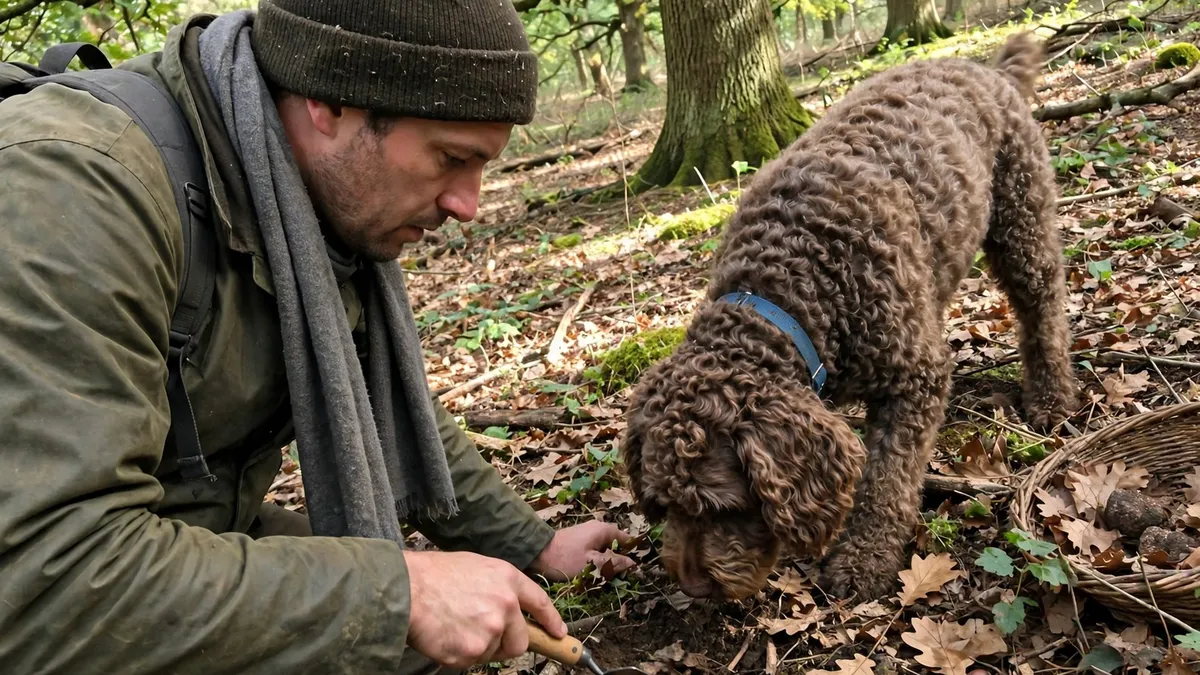
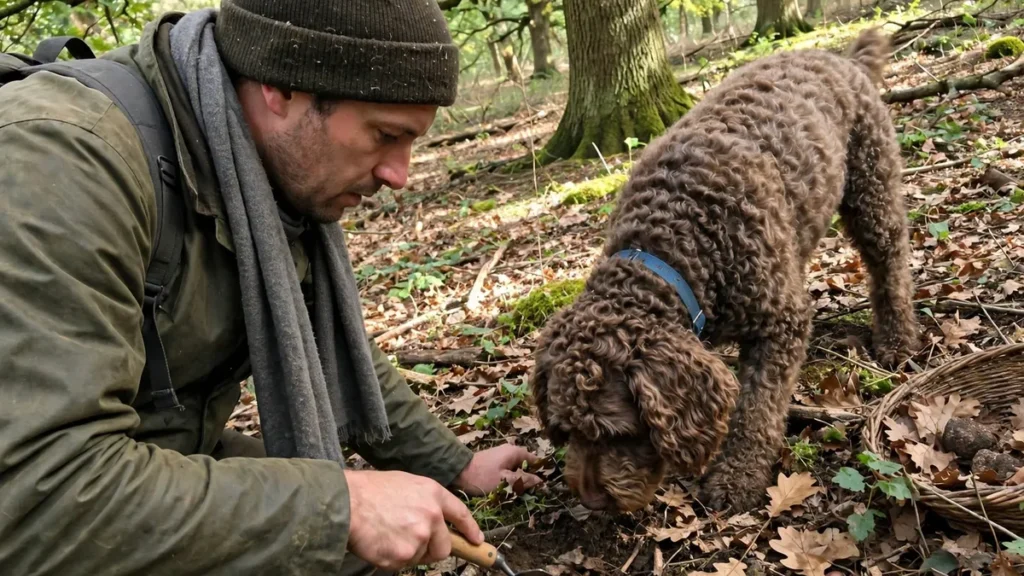
A truffle farm retreat is a stay built around a fungus that grows underground, cannot be farmed in the ordinary sense, and is found by a dog trained to smell it through a foot of soil. You sleep in a farmhouse or a small lodge at the edge of an oak wood, you walk out with a hunter and a dog at dawn, and by lunch the thing you watched being dug up is shaved over eggs, pasta or risotto.
The truffle world splits into two seasons and two prices. Black truffles, led by the Périgord black truffle, are hunted through the winter and are dear but reachable. White truffles, led by the Alba white truffle, appear for a few autumn weeks, are rarer, and can cost ten times as much by weight.
Below are nine luxury truffle farm retreats for 2027, from a sixty-five-dollar night in Périgord to a three-hundred-and-eighty-dollar night in Waikato. For each one you will find its strengths, its limits, and the traveller it suits best.
Key takeaways
- Truffle season decides everything: white truffles run for a few autumn weeks, black truffles through the winter, and a farm outside its season is just a farm.
- A real truffle hunt uses a trained dog; ask before you book, because a hunt without a dog is a woodland walk with a story attached.
- Black truffle retreats are the better first trip — dear, but the season is long and the prices are steady.
- Book the hunt as well as the room, since the best farms limit each hunt to a handful of guests.
- No farm can promise a truffle will be found on your morning, and a truffle allergy or a mushroom allergy needs a word with the kitchen first.
What a truffle farm retreat actually is
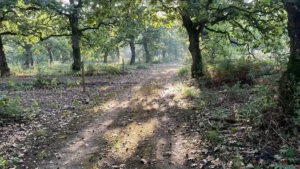
A truffle farm is an oak woodland planted for a crop that never shows itself. The farmer plants oak, hazel or hornbeam saplings whose roots have been inoculated with truffle spores, then waits — five to ten years before the first harvest, and longer before the yields are steady.
The hunt itself is short and quiet. A trained dog — usually a Lagotto Romagnolo, a spaniel or a mixed-breed with a good nose — works the ground in widening circles while the hunter watches its body language. When the dog signals, the hunter digs with a small trowel, lifts the truffle, and rewards the dog with a piece of cheese or sausage. The whole thing takes an hour or two, and the truffle goes straight to the kitchen.
What you pay for is the scarcity and the skill. A kilo of white truffle can sell for thousands of dollars at auction, and even black truffles are dear enough that farms guard their woodlands and limit their hunts. The retreat price covers the room, the hunt, the tasting menu and the guide, and the best farms keep groups small so the dog is not working a crowd. Expect mud, cold mornings, and a lunch that justifies both.
How we picked these stays, and what to ask first
We picked farms that hunt on their own ground, with their own dogs, and that cook what they find. So we asked every farm where its woodland sits and whether the hunt is led by the farmer or a hired guide. Our einkorn farm retreat roundup makes the same point about working farms: the stay is only as honest as the ground it stands on.
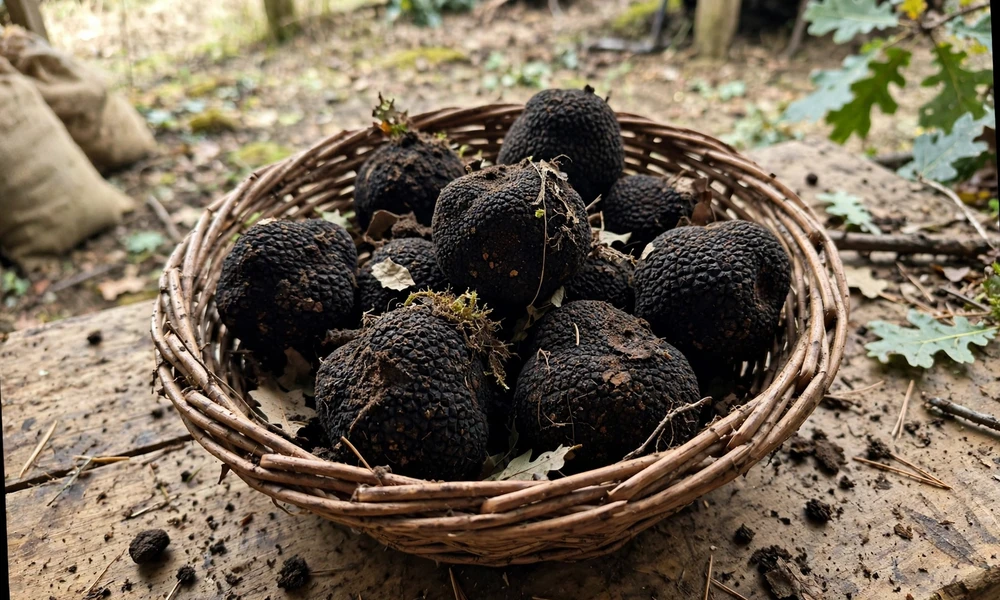
Ask next about the season. White truffle farms run from late September to December, black truffle farms from November to March, and summer truffle farms from May to August. Our spelt farm retreat roundup covers the same season-first logic, because a grain harvest and a truffle hunt both fall when they fall, not when you arrive.
Last, ask about the group size and the kitchen. A hunt with more than eight guests turns into a queue behind the dog, and a kitchen that does not cook the morning’s find is wasting the trip. Our kamut farm retreat roundup applies the same test to its mill and its bakery: the farm should feed you what it grows.
The 9 best luxury truffle farm retreats of 2027
Périgord, France — Truffle in the Black Diamond Country
What we like: The classic black truffle country, where the Périgord truffle has been hunted for centuries and the farms are old stone houses with oak woods out the back. The hunts are unhurried, the dogs are superb, and the market at Lalbenque is a short drive away.
What to consider: Book the hunt on arrival, not the night before.
Best For: A first truffle trip that wants the real thing without the white truffle price. Style: Stone farmhouse with an oak wood. Price Range: $65–$95. Standout Feature: The oldest black truffle hunting tradition in the world.
Alba, Piedmont, Italy — Truffle in the White Truffle Capital
What we like: The white truffle capital, where the autumn fair fills the town and the farms in the surrounding hills hunt the most prized truffle on earth.
What to consider: White truffle season is short and the prices spike with it — a small white truffle at the fair can cost more than your room. Book months ahead and treat the hunt as the splurge, not the base price.
Best For: A once-in-a-lifetime splurge on the world’s most famous truffle. Style: Hillside farmhouse above the Tanaro valley. Price Range: $100–$130. Standout Feature: The Alba white truffle fair and its dawn auctions.
Istria, Croatia — Truffle in the Motovun Forest
What we like: The Motovun forest holds some of the largest white truffles ever found, and the farms here are small, family-run places with dogs that know every slope.
What to consider: Istria is less set up for visitors than Alba, so English is thinner on the ground and the farms are harder to reach without a car. The white truffle season is just as short here.
Best For: White truffle hunting without the Alba crowds or prices. Style: Family farmhouse at the forest edge. Price Range: $135–$165. Standout Feature: The Motovun forest, home of record-breaking white truffles.
Norcia, Umbria, Italy — Truffle in the Black Truffle Heartland
What we like: Norcia is the black truffle town of Umbria, and its farms hunt the scorzone and the prized black truffle through the winter in the Sibillini foothills.
What to consider: Norcia is still rebuilding after the 2016 earthquake, so some stays are newer than they look and the town is quieter than it was. Winter in the Apennines is cold, and the roads can close in snow.
Best For: A long winter black truffle season with a serious food town attached. Style: Restored stone farmhouse in the foothills. Price Range: $170–$200. Standout Feature: Norcia’s black truffle and cured-meat tradition.
Lalbenque, Quercy, France — Truffle in the Market Town
What we like: Lalbenque holds the most famous truffle market in France, a Tuesday-morning affair where growers sell from baskets under the plane trees, and the farms around it hunt the same black truffle. Stay on a farm, hunt at dawn, then watch the market set the price of what you just dug up.
What to consider: The market runs only in season and only on Tuesday mornings, so a short stay can miss it entirely.
Best For: Travellers who want the market as well as the hunt. Style: Stone farmhouse near the market square. Price Range: $205–$235. Standout Feature: The Tuesday truffle market under the plane trees.
Manjimup, Western Australia — Truffle in the Southern Forests
What we like: Manjimup is the black truffle capital of the southern hemisphere, where the season runs June to August — winter in Australia, summer in Europe — so it fills the gap when the northern farms are quiet.
What to consider: It is a long way from anywhere, the winter is wet, and the flights into Perth plus the drive south make it a longer trip than the price suggests. Book the hunt and the room together, since the farms are small.
Best For: A northern-summer truffle hunt in the southern winter. Style: Modern lodge at the karri forest edge. Price Range: $240–$270. Standout Feature: Southern-hemisphere black truffles in June and July.
Teruel, Aragon, Spain — Truffle in the High Plateaus
What we like: Teruel province grows more black truffle than anywhere else in Spain, on high, dry plateaus where holm oak and truffle have been planted together for decades.
What to consider: Teruel is one of the least-visited provinces in Spain, so the farms are remote and the English is limited.
Best For: Serious black truffle hunting away from the tourist routes. Style: Working truffle orchard with a farmhouse stay. Price Range: $275–$305. Standout Feature: Spain’s largest black truffle orchards.
Grevena, Greece — Truffle in the Pindus Foothills
What we like: Grevena is the truffle town of Greece, where black and summer truffles grow wild in the Pindus foothills and the local hunters have turned a foraging tradition into farm stays.
What to consider: The farms are small and the season is informal, so the hunt depends on the weather and the hunter’s judgement rather than a fixed timetable.
Best For: A wild-truffle hunt in mountain country at a gentle price. Style: Mountain farmhouse in the Pindus foothills. Price Range: $310–$340. Standout Feature: Wild truffles hunted in the Pindus mountains.
Waikato, New Zealand — Truffle in the Volcanic Hills
What we like: Waikato’s truffle orchards grow Périgord black truffles in volcanic soil, and the farms pair the hunt with New Zealand hospitality — long lunches, local wines, and dogs that work the rows with obvious joy.
What to consider: New Zealand is the farthest trip on this list, the orchards are young by European standards, and a bad winter can cut the harvest short.
Best For: A far-flung truffle hunt paired with a New Zealand road trip. Style: Orchard lodge in the volcanic hills. Price Range: $345–$380. Standout Feature: Black truffles grown in volcanic soil.
Which truffle region fits your trip
Start with the truffle, not the country. If you want white truffle, the choice is Alba or Istria, and the choice between them is price and crowds: Alba is the famous one with the fair and the auctions, Istria is the quieter one with the same truffle and a lower bill. If you want black truffle, the choice is wider — Périgord, Norcia, Teruel and Lalbenque are all black truffle country, and the differences are the food, the landscape and the language rather than the truffle itself.
Then think about the season. White truffle means autumn, black truffle means winter, and the southern-hemisphere farms in Manjimup and Waikato flip the calendar so you can hunt in June and July. A traveller who can only travel in summer should look at the summer truffle farms or book the southern hemisphere; a traveller who can travel in winter has the whole of Europe open to them.
Finally, think about how far you want to go for it. Périgord, Alba and Lalbenque are easy trips from a European city, while Manjimup, Waikato and Grevena are journeys in themselves.
The caveats that matter
A truffle farm retreat is a working farm in a woodland, not a hotel with a theme. The hunt depends on the dog, the weather and the season, and no farm can promise a find on your morning.
| Detail | What is known |
|---|---|
| Best season for white truffle | Late September to December, with October and November at their peak |
| Best season for black truffle | November to March in Europe; June to August in Australia and New Zealand |
| How the hunt works | A trained dog signals the spot; the hunter digs with a small trowel |
| What to ask before booking | Whether the woodland is the farm’s own, and whether the dog is the farm’s own |
| Group size to look for | Eight guests or fewer on a hunt, so the dog is not working a crowd |
| What the price covers | Room, hunt, tasting menu and guide; the truffle itself is part of the meal |
| Who should take care | Anyone with a mushroom or truffle allergy should tell the kitchen first |
| What no farm can promise | A truffle on your morning — the dog, the weather and the season decide |
If you have a mushroom allergy, speak to the kitchen before you book, since truffle is a fungus and the tasting menu will be built around it. The farms on this list can usually cook a parallel menu, but only if they know in advance.
Checklist: booking a truffle farm stay honestly
Use these checks before you book, and again before you pay the deposit.
- Check the season: white truffle in autumn, black truffle in winter, southern hemisphere in June to August.
- Check the dog: ask whether the hunt uses the farm’s own trained dog.
- Check the woodland: ask whether the hunt takes place on the farm’s own ground.
- Check the group size: eight or fewer on a hunt is the honest number.
- Check the kitchen: ask whether the morning’s find is cooked for lunch.
- Check the market day: if you want Lalbenque or Alba, plan around the market, not around it.
Frequently asked questions
When is truffle season, and does it change by region?
Yes, and it changes a lot. White truffles run from late September to December in Alba and Istria. Black truffles run from November to March across France, Italy and Spain. In Australia and New Zealand the black truffle season is June to August, which is winter there. Summer truffles run from May to August in Europe.
Black truffle or white truffle: which should a first trip chase?
Black truffle, for most first trips. The season is longer, the prices are steadier, and the farms are easier to book. White truffle is the more famous and more fragrant of the two, but the season is short, the prices spike, and the best farms book out months ahead.
Why does a truffle hunt cost more than a farm walk?
Because the crop is scarce and the skill is rare. A truffle orchard takes five to ten years to produce, the dog takes years to train, and the truffle itself can sell for hundreds of dollars a kilo. The hunt price covers the dog, the hunter, the small group, and the tasting menu that follows.
Can I eat truffle if I have a mushroom allergy?
Ask your doctor first, and tell the kitchen before you book. Truffles are fungi, and people with mushroom allergies can react to them. Most farms can cook a parallel menu without truffle, but only if they know in advance.
What does a fresh truffle taste of?
Black truffle tastes earthy, musky and a little like damp woodland, with a flavour that deepens when it is warmed in butter or cream. White truffle is sharper and more perfumed, with notes of garlic, cheese and honey that fill a room as soon as it is shaved.
Which truffle farm suits a first trip best?
Périgord, for most people. The black truffle season is long, the prices are the lowest on this list, the hunting tradition is the oldest, and the food around it — duck, walnuts, market vegetables — is as good as the truffle itself.
The bottom line
The best luxury truffle farm retreat in 2027 is the one that hunts on its own ground, with its own dog, in the right season, and cooks what it finds. Périgord is the best first trip, Alba is the grandest splurge, and Istria is the smartest white truffle value. The southern-hemisphere farms in Manjimup and Waikato are the answer for anyone who can only travel in the northern summer.
Book the hunt as well as the room, ask about the dog and the woodland before you pay, and go in the right season. If the farm is honest about the odds and the kitchen cooks the morning’s find, the truffle will take care of the rest — and the lunch will be the part you remember longest.