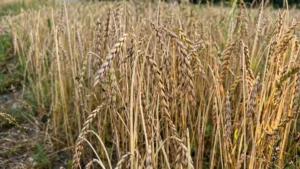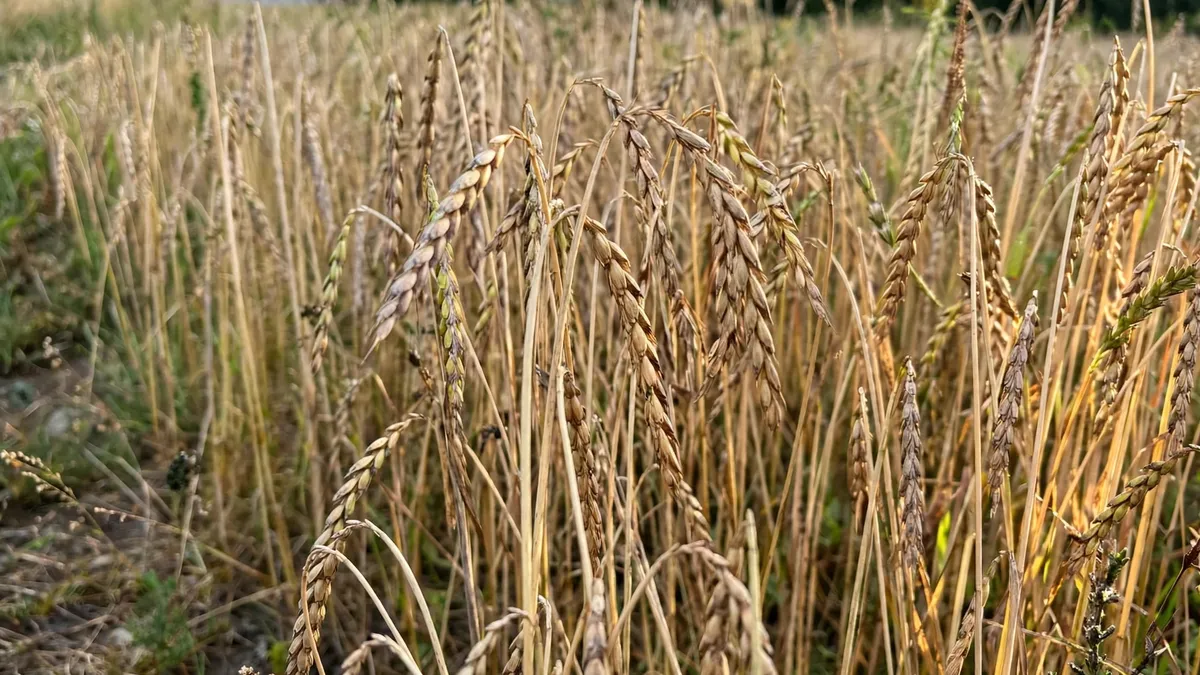

Spelt is wheat with its coat still on. The grain grows inside a tough husk that has to be hulled before milling, and that extra step is the reason it survived in mountain valleys and old farming country long after modern wheat took over the flat plains. In Germany it is called dinkel, in France épeautre, in Spain escanda, and in each place it means the same thing: an old wheat with long awns, a nutty crumb, and a loaf that stays moist for days.
A spelt farm retreat takes you to the fields where that wheat still grows, in the high summer when the ears turn gold and the combines move slowly through the valleys. You sleep in a farmhouse room or a converted barn, eat spelt bread from the farm oven and pasta rolled that afternoon, and watch the grain threshed, hulled and stone-milled where it grew. Some farms stand on the Swabian Alb, others in the Tyrol, in the Asturian hills, or on the farms of Ontario, and the grain is only half the reason to go.
Below are nine spelt farm retreats worth considering in 2027, from the Swabian Alb to the Ardennes. Each stay is weighed on its strengths, its drawbacks, and the traveller it suits, so you can pick by how you travel rather than by the map.
Key takeaways
- Spelt is an ancient hulled wheat, and the names dinkel, épeautre and escanda all describe the same grain, so ask the farm which variety it actually grows.
- Spelt contains gluten, so it is not a gluten-free grain, and anyone with coeliac disease or a wheat allergy should ask the farm what the kitchen can safely serve.
- The northern harvest falls in July and August, and the precise cutting week shifts with the rain, so confirm it before booking flights.
- Most spelt farms are working farms first, so expect plain rooms, shared meals, early starts and dust on your shoes.
- Harvest dates are a guess, not a promise: a stay planned around one cutting day can end with the spelt still green in the field.
What a spelt farm retreat actually is
A spelt farm retreat means three to five nights on a working spelt farm, with the grain harvest as the reason for the trip. Guests sleep in a farmhouse room or a converted barn, eat bread and pasta from the farm’s own grain, and join the season’s work, walking the fields, watching the combines cut the tall stalks, and seeing the berries hulled and stone-milled in the farm’s mill room.
Spelt is one of the oldest wheats still grown for food, a hulled wheat that farmers kept alive in the hills of central Europe while modern wheat took over the lowlands. It became the grain of dark bread in Swabia, of escanda flatbread in Asturias, and of épeautre loaves in the Ardennes.
Most of these farms sit in open, hilly country, with wide fields of gold grain and a stone mill by the barn door. Days move slower than a hotel stay, meals come from one shared table, and the best stays treat the harvest as honest work rather than a show for guests.
How we picked these stays, and what to ask first
We began with where spelt truly thrives, not where it is sold best. A genuine spelt farm offers fields to walk through, grain to stand among at harvest, and a mill, a bakery or a pasta table working with its own flour. A farm that buys its flour in and bakes with it is not a spelt farm, whatever the website says.

The strongest farms take only a few guests at once, so the harvest remains honest work instead of a show for visitors. They also spell out what the nightly rate covers, with meals, the lift in from the nearest town and guided walks included rather than billed on arrival. A farm that answers questions about the harvest, the hulling and the gluten openly is usually a farm that treats its guests well.
The 9 best luxury spelt farm retreats of 2027
Swabian Alb, Germany — Spelt on the Dinkel Hills
What we like: Spelt grown on the limestone hills of the Swabian Alb, the home of dinkel, where the grain ripens under wide skies and the farm sits within an easy drive of old market towns. The kitchen bakes dinkelbrot in a wood oven each morning.
What to consider: The Alb is high and exposed, so the wind can be sharp on the ridge, and the farm is a working one, with early starts and mud on the tracks after rain.
Style: Swabian hill-country farm stay. Best for: Travellers who want spelt at its source. Price range: $65–$95 per night. Standout feature: Dinkelbrot from the farm’s wood oven, with the limestone hills on the horizon.
Lower Franconia, Germany — Spelt in the Vineyard Villages
What we like: Spelt fields that run between the vineyards of the Main valley, where the grain shares the slopes with Silvaner vines. The table serves spelt noodles with the local wine, and the baker grinds the flour the same morning it is used.
What to consider: The harvest here is short and the cutting week is fixed late, so a stay booked for the wrong week can miss the combines entirely, and the village rooms are small.
Style: Franconian vineyard farm stay. Best for: Travellers who want grain and wine in one trip. Price range: $100–$130 per night. Standout feature: Spelt noodles served beside Silvaner from the neighbouring vines.
Tyrol, Austria — Spelt Below the Alpine Peaks
What we like: Spelt grown on steep Alpine meadows, where the grain is cut by hand on the slopes too sharp for a combine and carried down in baskets. The farmhouse is old timber and stone, the bread is dense and dark, and the peaks stand over the fields at dusk.
What to consider: The slopes are steep and the work is physical, so guests with sore knees will spend more time at the table than in the field, and the mountain weather turns fast.
Style: Alpine farm stay in old timber. Best for: Travellers who like mountains with their grain. Price range: $135–$165 per night. Standout feature: Hand-cut spelt from slopes too steep for the combine.
Valais, Switzerland — Spelt in the Rhône Valley
What we like: Spelt on the sunny terraces of the Rhône valley, where the grain grows between the vineyards and the irrigation channels, and the farm presses its own flour in a mill powered by mountain water.
What to consider: Valais is dear, and the nightly rate climbs quickly once meals and the ride in from the station are added, so check the full bill before you book.
Style: Swiss valley farm stay with a water mill. Best for: Travellers who want spelt with mountain views. Price range: $170–$200 per night. Standout feature: Flour ground in a mill turned by mountain water.
Alsace, France — Spelt on the Wine Road
What we like: Épeautre on the Alsace wine road, where the spelt fields sit between half-timbered villages and the farmhouse kitchen bakes the grain into tarte flambée dough and dark loaves. The harvest walks run through the vines at golden hour, and the cellar tastings follow the field work.
What to consider: The wine road is busy in summer, so the farm books out early, and the village lanes are narrow, with little room to park.
Style: Alsatian wine-road farm stay. Best for: Travellers who want grain, wine and old villages together. Price range: $205–$235 per night. Standout feature: Épeautre dough baked as tarte flambée in the farm kitchen.
Spello, Umbria, Italy — Spelt in the Town That Named the Grain
What we like: Spelt in the Umbrian hills around Spello, the town whose name comes from the grain itself, where the farmhouse kitchen cooks the berries into soup with beans and wild herbs.
What to consider: The Umbrian summer is hot, and the midday field work is heavy, so guests spend the hot hours indoors, and the town fills with visitors during the flower festival weeks.
Style: Umbrian hill-town farm stay. Best for: Travellers who want the grain’s history with their stay. Price range: $240–$270 per night. Standout feature: Spelt soup cooked in the town that gave the grain its name.
Asturias, Spain — Escanda in the Green North
What we like: Escanda on the green hills of Asturias, where the spelt grows in small plots beside the cider orchards and the farm grinds it in a water mill below the house. The table serves escanda bread with Asturian cheese and cider, and the rain keeps the hills emerald all summer.
What to consider: The north is wet, so pack for rain even in July, and the plots are small, which means the harvest is quick and a late arrival can miss it.
Style: Asturian hillside farm stay with a water mill. Best for: Travellers who want spelt with cider and green hills. Price range: $275–$305 per night. Standout feature: Escanda bread served with Asturian cheese and cider from the farm’s own orchard.
Ardennes, Belgium — Épeautre in the Forest Valleys
What we like: Épeautre in the forested valleys of the Ardennes, where the grain grows in clearings between the pines and the farmhouse brews its own beer with the spelt malt.
What to consider: The Ardennes are quiet and far from the cities, so the journey in takes most of a day, and the evenings are cool even in high summer.
Style: Ardennes forest farm stay with a brewery. Best for: Travellers who want spelt with forests and beer. Price range: $310–$340 per night. Standout feature: Spelt beer brewed on the farm from its own malted grain.
Ontario, Canada — Spelt on the Northern Farms
What we like: Spelt on the rolling farms of southern Ontario, where the grain is grown by families who kept it alive through the twentieth century and the farmhouse bakes it into dense loaves for the farmers’ market. The fields are wide and the lakes are near.
What to consider: Ontario is a long way from everywhere else on this list, so the flights are the dearest part of the trip, and the harvest falls early, before the Canadian summer has properly warmed.
Style: Ontario family farm stay near the lakes. Best for: Travellers who want spelt on a North American farm. Price range: $345–$380 per night. Standout feature: Dense spelt loaves baked for the farmers’ market from the farm’s own grain.
Which spelt region fits your trip
If you want spelt at its oldest, start with the Swabian Alb or Spello, where the grain has been grown the longest and the baking traditions run deepest. Both are gentle introductions, with short walks and long table meals.
If you want scenery with your grain, the Tyrol and Valais put the fields under the peaks, and the Ardennes puts them in deep forest. The Tyrol is the most physical of the nine, with steep slopes and hand cutting, while Valais is the easiest to reach by train.
If you want a grain without gluten, spelt is the wrong trip, and our guide to the teff farm retreats of Ethiopia covers a grain that is naturally free of it. The fonio farm retreats of West Africa offer the same, with a smaller grain and a hotter climate. Spelt’s charm is the opposite: an old wheat that tastes of the hills it grew in, eaten warm from the farm oven.
The caveats that matter
Spelt farming answers to the weather: farms give a best guess, never a promise, and a trip pinned to one cutting day gambles on the rain. The larger warning is the gluten, easy to overlook when a grain is sold as ancient and wholesome.
| Detail | What is known |
|---|---|
| Best time to visit | Late July into August across the north, once the ears turn gold; the precise week shifts with the rain |
| What the work involves | Walking the fields, watching the combines take the spelt, and seeing the berries hulled and ground in the farm mill |
| How long a stay runs | Three to five nights, timed to the high-summer cutting weeks |
| Who should take care | Guests with coeliac disease or a wheat allergy, because spelt carries gluten, and anyone unused to strong heat |
| What the kitchen serves | Spelt loaves, pasta, soups and porridge, usually with beans, garden herbs and olive oil |
| Gluten note | Spelt carries gluten and is no gluten-free grain, whatever a health-food packet claims |
| What to pack | Sturdy closed shoes, a sun hat, a warm layer for cool hill nights, and clothes that rinse clean |
| What it does not do | No promised cutting day, no fixed menu, and no hotel-style service on a working farm |
If coeliac disease, a wheat allergy, or a condition that heat worsens applies to you, speak to the farm before booking. A single question about the kitchen and the flour can save a hard stay, and a farm that answers it plainly is usually worth the visit. The kamut farm retreats carry the same warning, since kamut is another old wheat with gluten in every kernel.
Checklist: booking a spelt farm stay honestly
Run through these checks before you pay, and once more the week before you travel.
- Ask for the cutting week in writing, with a second plan if the grain is still green.
- Check the price covers supper, the lift in from town and the walks, so nothing extra lands on the bill.
- Ask if the hulling and milling happen on the farm, and whether the kitchen can cook a meal with no wheat in it.
- See the bedroom before paying: farmhouse rooms are plain, so check the bed, the water and the heating first.
- Pack for strong sun and dusty lanes: closed shoes, a hat, a night layer, and clothes that wash easily.
- Keep one spare day for the nearest town, so a shifted harvest still leaves a good trip.
Frequently asked questions
Is there gluten in spelt?
Yes. Spelt is a wheat, and every kernel carries gluten, so it is not a gluten-free grain. Anyone with coeliac disease or a wheat allergy should not eat from the farm kitchen, and should ask the farm before booking whether any meal can be made without wheat at all.
How is spelt different from farro?
Farro is a family name for several old wheats, and spelt is one member of that family, alongside emmer and einkorn. The three look alike in the field but bake differently: spelt gives a soft, nutty crumb, emmer a firmer one.
Why does spelt bread cost more than wheat bread?
Spelt yields less per field than modern wheat, and every kernel must be hulled before milling, which adds a step the farm pays for. The grain also grows best on poor hillside soils, where the harvest is smaller, so the loaf on the table costs more than a loaf from the lowlands.
When is the spelt harvest, and how long does it last?
The northern harvest falls in July and August, and the cutting itself takes a week or two on most farms. The exact week moves with the rain, so ask the farm for its cutting window rather than a single date, and hold your flights until the window is set.
What will spelt taste like on my first visit?
Spelt tastes nutty and faintly sweet, with a softer crumb than wheat bread and a smell that reminds many people of hazelnuts. The pasta holds its bite, the porridge is mild, and the grain itself, cooked whole, eats like a chewy barley.
Where should a first-timer go for spelt?
The Swabian Alb is the easiest first trip: the grain is at its oldest there, the farms are used to guests, and the baking is the best introduction to what spelt can do. If you want the story as well as the bread, Spello in Umbria puts you in the town that gave the grain its name.
The bottom line
A spelt farm retreat suits travellers who prefer tall grain, stone-milled flour and cooking from the farm’s own fields to a hotel. The ears are gold, the loaves are dark and nutty, and the best stays feed you from ground they farmed themselves.
Fix the harvest week before the travel dates, and keep a spare day at the end. When the spelt ripens on time you will eat bread from grain cut that week, and when it does not, the hills, the rivers and the old towns will still carry the trip.