Best Vintage Jeans for Men 2027: 9 Picks Worth Trying
Vintage jeans have a look that new jeans cannot fake: an uneven wash, denim softened over years of wear, and a cut from an era when jeans were built to last. That is the appeal, and also the problem — a genuine vintage pair is a gamble on size and condition.
The nine pairs below solve that gamble. Each is a new pair made to look and feel like a good vintage find, from heritage repro brands that rebuild 1940s and 1950s patterns stitch by stitch, to high-street names that fade modern cuts until they read as thirty years old. You get the broken-in colour and honest cotton denim, without the moth holes and the mystery sizing.
Below are nine vintage jeans for 2027, from a Lee heritage cut at just over a hundred dollars to a Japanese repro pair at just over four hundred. For each pair, you will find its strengths and its limits.
Key takeaways
- Vintage jeans mean a faded wash, a higher rise, and a straight or tapered leg — not a pair that is actually old.
- Heritage repro brands rebuild 1940s and 1950s patterns; high-street pairs copy the wash at a lower price.
- Buy your usual waist size in a vintage wash, but check the rise, because a 1950s cut sits higher than a modern one.
- A faded wash hides wear well.
- No new pair is a true vintage find.
What vintage jeans actually are
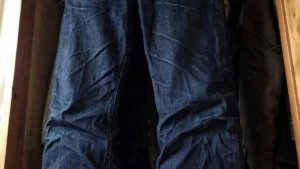
A vintage pair is defined by three things: the wash, the cut, and the cloth. The wash is faded and uneven, lighter at the thighs and seat where decades of wear would have taken the indigo away. The cut is older — a higher rise, a straighter leg, and a roomier seat than the slim fits of the last fifteen years. The cloth is usually a heavier cotton denim, sometimes with a slight slub.
There are two ways to buy into that look. The first is a genuine vintage pair from a thrift shop or a specialist dealer, which carries real history and real risk: the label size is rarely your size, the denim may be thin at the knees, and a repair can cost more than the jeans. The second is a vintage-style pair made new, which is what this list covers. Repro brands study originals down to the rivets; mainstream brands wash a modern pattern until it looks old. Both give you the look with a warranty and a size you can trust.
The difference shows up in the price and the detail. A repro pair from Full Count or Sugar Cane costs three hundred dollars or more because the denim is woven on old shuttle looms and the construction copies a 1947 pattern exactly. A pair from Lee or Flint and Tinder costs a third of that because the wash is applied to a modern cut. Neither is wrong.
How we chose these nine pairs
We started with the wash. Every pair here has to look genuinely faded rather than merely light blue, which rules out most pairs labelled vintage that are really just a pale rinse. A real vintage wash has variation, and we kept only pairs where the fading looks like wear, not like a printed pattern.

Next we checked the cut against the era it claims. A 1950s repro should have a high rise and a straight leg; a 1990s-inspired pair should sit lower with a wider leg. Pairs that mixed eras were dropped, because the result looks confused rather than vintage. Our dark wash jeans roundup applies the same test, since a wash that fights the cut never settles on the body.
Last, we checked the cloth and the price. Every pair here is at least 98 per cent cotton, because a vintage look needs denim that creases and fades. Prices run from just over a hundred dollars to just over four hundred, with no two pairs sharing a band.
The 9 best vintage jeans for men in 2027
Lee 101 Rider Vintage Jeans
What we like: Lee’s heritage 101 line rebuilds the Rider cut of the mid-twentieth century: a high rise, a straight leg, and a faded indigo that looks worn rather than bleached. It is the cheapest honest repro here.
What to consider: The straight leg is cut generously through the thigh, so slim men may find it reads baggy.
Best For: A first step into vintage jeans on a sensible budget. Material: 100% cotton denim. Price Range: $105–$120. Standout Feature: The most authentic heritage cut under $125.
Flint and Tinder 365 Vintage Wash Jeans
What we like: Huckberry’s house brand takes its reliable 365 fit — a straight leg with a touch of stretch — and gives it a vintage wash that is soft at the edges without looking distressed. The stretch makes it the most forgiving fit here for men who sit all day.
What to consider: The stretch means the denim will not age the way a rigid pair does, so the fades you see now are close to the fades you will always have.
Best For: All-day comfort in a vintage wash. Material: 98% cotton, 2% elastane. Price Range: $128–$142. Standout Feature: The only stretch pair here, and the most comfortable from day one.
Dawson Denim Slim Fit Vintage Wash Jeans
What we like: Dawson Denim is a small Brighton workshop that cuts its jeans in England from Japanese and Turkish denim, and the slim fit vintage wash is its most wearable pair: a tapered leg, a mid-high rise, and a hand-finished fade that is different on every pair.
What to consider: Small-batch sizing runs true but the range is narrow, so tall or heavily built men may find the leg too short, and stock sells through quickly.
Best For: A small-batch pair with a hand-finished fade. Material: 100% cotton Japanese denim. Price Range: $165–$180. Standout Feature: A hand-finished fade, different on every pair.
RRL Slim Fit Vintage Wash Jeans
What we like: Ralph Lauren’s RRL line is built around vintage Americana, and this slim fit pair is the clearest expression of it: a sun-faded indigo, a slim leg that is not skinny, and details copied from 1960s workwear, from the copper rivets to the selvedge-style outseam.
What to consider: The slim fit is cut close through the seat, so men with larger thighs should size up, and the premium price buys atmosphere more than durability.
Best For: The most convincing vintage look at a glance. Material: 100% cotton denim. Price Range: $195–$215. Standout Feature: 1960s workwear details, down to the copper rivets.
Levi’s Vintage Clothing 1955 501 Jeans
What we like: Levi’s Vintage Clothing rebuilds the 501 as it was sold in 1955: a high rise, a straight leg, a button fly, and a stiff 12-ounce denim that softens and fades with wear. The red tab, the arcuate stitching, and the paper patch are all period-correct.
What to consider: The denim starts stiff and the fit is uncompromising, so expect a month of breaking in, and buy the waist size that fits on day one.
Best For: The benchmark 1950s repro, built to age with you. Material: 100% cotton 12-ounce denim. Price Range: $240–$260. Standout Feature: Period-correct 1955 construction, down to the button fly.
OrSlow 107 Ivy Fit Vintage Wash Jeans
What we like: OrSlow’s 107 is an Ivy League-inspired tapered cut, and the vintage wash version is the softest pair here: the denim is garment-washed until it feels like a pair you have owned for a decade, with a gentle fade that suits a shirt and jacket as well as a T-shirt.
What to consider: The wash is deliberately gentle, so men looking for a hard, sun-bleached fade will find this pair too polite.
Best For: A vintage pair that works with a jacket. Material: 100% cotton denim. Price Range: $275–$295. Standout Feature: The softest hand-feel of any pair here.
Full Count 0105 Vintage Wash Jeans
What we like: Full Count wove its own denim in 1992 because nothing on the market matched the vintage pairs its founders collected, and the 0105 is still cut from that cloth: a Zimbabwe cotton denim with a slub texture you can see and feel, and a vintage wash that lets the slub show through.
What to consider: The slub texture is not for everyone — it reads as uneven up close — and the straight leg is cut full, so it suits a looser silhouette.
Best For: Denim lovers who want a visible slub texture. Material: 100% Zimbabwe cotton denim. Price Range: $310–$330. Standout Feature: A slub-textured denim woven for this exact pair.
Sugar Cane 1947 Vintage Wash Jeans
What we like: Sugar Cane is the Japanese repro house that other repro houses copy, and the 1947 model is its signature: a straight-leg cut taken from a post-war pair, and a denim woven with sugar-cane fibre for a slightly coarse hand. It is the closest thing to wearing a 1947 pair without the risk.
What to consider: The 1947 cut is high-waisted and roomy, which can look old-fashioned rather than vintage if the rest of the outfit is modern.
Best For: The most faithful post-war repro on the market. Material: Cotton and sugar-cane fibre denim. Price Range: $350–$380. Standout Feature: A denim woven with sugar-cane fibre for a period-correct hand.
Warehouse 1001xx Vintage Wash Jeans
What we like: Warehouse & Co. builds its 1001xx on the 1947 pattern it has refined for decades, and the vintage wash version is the most complete package here: a high rise, a straight leg, a 13.5-ounce denim that is stiff on arrival and beautifully faded within a year. Our mid wash jeans roundup makes the same point about heavy denim — it rewards the man who wears it hard.
What to consider: The denim is the heaviest here, so the first month is a commitment.
Best For: The fullest heritage package, built to fade for years. Material: 100% cotton 13.5-ounce denim. Price Range: $395–$425. Standout Feature: The heaviest denim here, and the longest fade journey.
Which vintage jeans suit your build
Start with the rise, because it decides everything else. A high-rise repro sits at or above the natural waist, which lengthens the leg and suits shorter men, but it can feel restrictive if you are used to a low rise. A mid-rise pair, like the Flint and Tinder or the Dawson, is the safer first buy.
Then think about the leg. A straight leg is the most faithful vintage shape and the most forgiving across builds. A tapered leg, like the OrSlow 107 or the Dawson slim fit, suits slimmer men and works better with trainers. A full straight leg, like the Full Count 0105 or the Sugar Cane 1947, suits men who want room, and it pairs best with boots rather than slim shoes.
Finally, consider the wash against your wardrobe. A hard sun-bleached fade is a statement — it wants simple tops and plain shoes, because anything else competes with it. A gentle wash, like the OrSlow or the Flint and Tinder, is a workhorse. Our light wash jeans roundup covers the same question.
The caveats that matter
A vintage wash is a finish, not a guarantee. The fading is applied in the factory, so it will not deepen the way a raw pair’s fades do — what you see in the shop is close to what you will have in a year. That is a strength if you want a stable look, and a disappointment if you were hoping the jeans would keep changing. Rigid repro pairs are the exception, and even their fades deepen only slowly.
| Detail | What is known |
|---|---|
| What vintage means here | A new pair made to look and feel like an old one — faded wash, older cut, cotton denim |
| Best budget entry | Lee 101 Rider at $105–$120, a heritage cut with a real vintage wash |
| Best repro | Levi’s Vintage Clothing 1955 501 at $240–$260, the benchmark 1950s rebuild |
| Heaviest denim | Warehouse 1001xx at 13.5 ounces, stiff at first and slow to break in |
| What to avoid | Pairs labelled vintage that are only a flat pale blue, with no variation in the fade |
| How to size | Buy your usual waist size, but check the rise — a 1950s cut sits higher than a modern one |
| How to wash | Cold water, inside out, as rarely as you can — every wash softens the vintage fade |
| What vintage cannot fix | A poor fit, a thin cloth, or a wash that was printed on rather than worn in |
If the jeans feel tight across the seat on day one, they will not stretch enough to save you — vintage cuts are rigid by design. And if the fade looks identical on every pair in the shop, it was printed rather than washed. Buy the pair whose fade varies, and whose rise you can sit in comfortably.
Checklist: buying vintage jeans honestly
Use these checks before you buy, and again after a month of wear.
- Check the fade: it should vary across the leg, lighter at the knees and seat, not flat.
- Check the rise: sit down in the jeans — a vintage rise should feel secure, not tight.
- Check the cloth: at least 98 per cent cotton, with a hand that feels like denim, not plastic.
- Check the details: rivets, stitching, and pocket shape should match the era the pair claims.
- Check the price band: a repro under $100 is usually a wash on a modern cut, not a rebuild.
- Check the return policy: a rigid repro needs a month of wear before you know it fits.
Frequently asked questions
Are vintage jeans the same as second-hand jeans?
No. A vintage-style pair is new, made to look old, with a reliable size and a return policy. A genuine second-hand pair is actually old, which means real history and real risk: the label size is rarely your size, and the denim may be thin at the knees.
How is a vintage wash different from a light wash?
A light wash is evenly pale across the whole leg. A vintage wash is uneven — lighter at the knees and seat, darker at the seams — because it copies the wear pattern of a pair that was actually worn for years. A light wash is a colour; a vintage wash is a story told in fading.
Will vintage jeans keep fading after I buy them?
Slowly, and mostly on rigid repro pairs. The factory wash has already removed much of the surface indigo, so the change is gradual: creases behind the knees will deepen, and the seat will lighten over a year or two. Pairs with stretch will change very little.
What goes on top of vintage jeans?
Keep it simple. A plain white T-shirt, a work shirt, or a chore jacket suits the era the jeans come from, and none of them fights the fade. Avoid loud prints and logos — a vintage wash is already doing the talking.
Can vintage jeans pass in a smart office?
A gentle wash can, if the rest of the outfit is tidy: a dark vintage wash, a tucked shirt, and clean leather shoes will pass in most creative workplaces. A hard sun-bleached fade will not, because it reads as casual at a glance. Choose the OrSlow 107 or the Flint and Tinder if the office is the goal.
How do I wash vintage jeans without losing the fade?
As rarely as you can, in cold water, turned inside out, and hung to dry. Every machine wash softens the vintage fade a little, and a hot wash will do it quickly. Spot-clean marks between washes.
The bottom line
The best vintage jeans for men in 2027 are the ones that match the era you actually like, not the ones with the most famous label. If you want a daily pair, start with the Lee 101 or the Flint and Tinder. If you want the real repro experience, the Levi’s Vintage Clothing 1955 501 is the benchmark, and the Japanese pairs above it are for men who care about the cloth itself.
Start with one pair, wear it for a month, and judge it by how the fade sits and how the rise feels when you sit down. If the wash still looks like wear rather than a print, and the jeans feel like yours rather than a costume, you have the right pair. If not, try a different era.