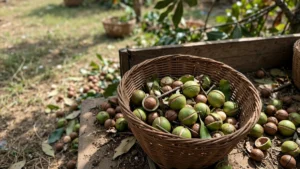
A macadamia farm escape is a trip built around an orchard that is still working. You are not visiting a garden or a museum. You are staying on a farm where nuts are falling, drying, cracking, and being packed, and the rhythm of the place follows that work. Plan the trip around the farm, and it rewards you. Plan it like a hotel break, and the orchard will feel like a long way from anywhere.
Macadamia trees grow in warm, frost-free country with deep soil and reliable rain, which puts the best farm stays in Australia, Hawaii, South Africa, Brazil, Kenya, Guatemala, Portugal, New Zealand, and southern China. The farms differ in size, style, and how much they involve guests, but they share one trait: the orchard sets the schedule, and the weather can change it. That is part of the appeal, as long as you arrive ready for it.
This guide walks through how to plan a macadamia farm escape in 2027, from matching your dates to the harvest to packing for orchard ground and rural roads. Follow the nine steps in order, and you will arrive with the right dates, the right stay, and realistic expectations about what a working farm can offer.
Key takeaways
- Match your dates to the farm’s harvest window first, because the harvest is the reason to go, and the windows differ by hemisphere.
- Book the farm stay itself rather than a hotel nearby, so the orchard walks, tastings, and farm meals are part of the price.
- Most macadamia farms need a hire car, so confirm the drive from the nearest airport before you book flights.
- Pack for orchard ground: closed shoes, a sun hat, layers for cool mornings, and a light rain jacket.
- No farm escape guarantees a harvest on your dates, and rural stays often have stricter cancellation terms, so read them before you pay.
What a macadamia farm escape actually involves
A macadamia farm escape is a stay of two to four nights on a producing orchard. Your days are shaped by the farm’s work: a morning walk through the rows, a look at how nuts are husked and dried, a tasting of fresh kernels, and a meal that uses the farm’s own oil and nuts. Between those activities there is free time, and the best farms protect it, because orchards are quiet places and the calm is part of what you came for.
The stay itself varies. Some farms offer simple cottages with shared bathrooms and a communal kitchen. Others offer private suites, a pool, and a farm table dinner cooked by a resident chef. The price range reflects that spread, and neither end is better on its own. A simple farmhouse suits travellers who want to meet the growers, while a polished lodge suits those who want comfort alongside the orchard.
What makes the trip different from a resort stay is that the farm is not performing for you. The harvest crew starts early, the machinery is loud when it runs, and rain can move an outdoor walk indoors. A good farm explains that honestly before you book, and a good plan leaves room for the day to change.
The farm table deserves a mention before you book, because it shapes the stay more than the room does. Most farms cook with their own oil and nuts, and the menu follows what the kitchen can buy locally that week. Dinners are often shared at one long table, which suits travellers who enjoy talking to strangers, and less so those who want privacy at every meal. Ask how meals work before you choose a farm, and say so early if you eat a restricted diet.
How to choose the right farm and the right dates
Start with the harvest calendar. Southern hemisphere farms harvest roughly from March to September, while northern hemisphere farms harvest later in the year, so the same month can mean a busy harvest in Australia and a quiet orchard in Portugal. Ask the farm for its harvest dates, not just the region’s general season, because varieties and altitudes shift the window by weeks.
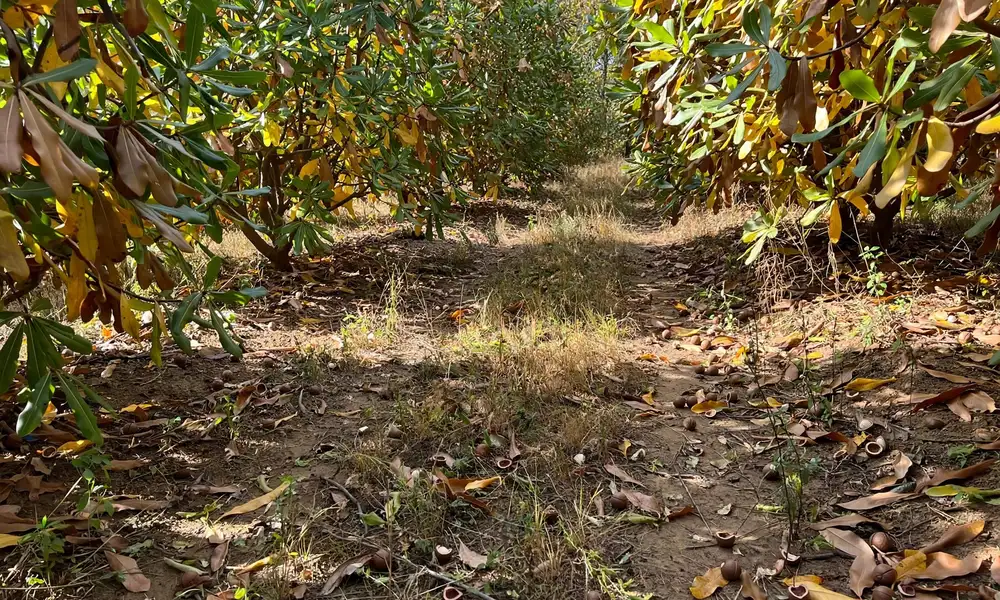
Then look at how the farm involves guests. Some farms let you join the harvest, crack nuts at a communal table, and press oil with the team. Others keep guests to guided walks and tastings. Our guide to planning a pistachio farm escape draws the same line, because the gap between watching and doing is the biggest difference between farm stays. Decide which side of that line you want before you choose a farm.
Finally, check the journey honestly. Orchard country is spread out, buses are scarce, and driving yourself is usually the simplest way in. Confirm the drive time from the nearest airport, the condition of the final road into the farm, and whether the farm can arrange a transfer if you would rather not drive.
The 9 steps to planning a macadamia farm escape
Plan the dates by the picking season
What to do: Ask each farm for its harvest dates and book inside that window, so you see nuts falling, drying, and being cracked. What to avoid: Booking on a region’s general season alone, because varieties and altitude shift the window by weeks. Best For: Travellers who want the harvest itself, not just the orchard. Time Needed: One afternoon of research before you book anything. Standout Tip: Southern hemisphere farms harvest roughly March to September; northern farms harvest later in the year.
Sleep where the trees are
What to do: Choose a farm stay on the property itself, so the walks, tastings, and farm meals are part of the stay rather than add-ons. What to avoid: Booking a hotel in the nearest town and treating the farm as a day trip, because you will miss the early mornings and the farm table. Best For: Travellers who want the orchard from waking to sleeping. Time Needed: One evening comparing farm stays against nearby hotels. Standout Tip: Ask whether the farm meals and tastings are included in the nightly rate or charged separately.
Plan the final stretch to the farm
What to do: Confirm the drive time from the nearest airport, the road surface on the final stretch, and whether the farm offers a transfer. What to avoid: Arriving after dark on an unsealed farm road you have never driven, with no phone signal and no directions saved offline. Best For: Travellers who would rather drive in daylight than navigate rural roads at night. Time Needed: Thirty minutes with a map and the farm’s directions. Standout Tip: Download offline maps, because orchard country often has patchy mobile coverage.
Pack for orchard ground and changing weather
What to do: Pack closed shoes with grip, a sun hat, layers for cool mornings, and a light rain jacket, because orchard mornings are cool and afternoons are warm. What to avoid: Packing only resort clothes, because orchard ground is uneven, dusty, and sometimes muddy after rain. Best For: Travellers who want to walk the rows comfortably in any weather. Time Needed: Twenty minutes packing, once you know the farm’s conditions. Standout Tip: A small daypack carries water, sunscreen, and a layer without slowing you down on a walk.
Tell the farm about allergies and dietary needs early
What to do: Tell the farm about any tree nut allergy and any dietary needs before you pay a deposit, so the farm can say honestly whether a stay is safe. What to avoid: Arriving with an allergy unmentioned, because a macadamia farm is full of nut dust, oil, and kernels. Best For: Travellers with allergies, and anyone with a restricted diet. Time Needed: One email before booking. Standout Tip: Ask what the farm table serves on your dates, not just whether it can adapt.
Plan the farm table into your budget
What to do: Find out whether farm meals are included, how many run during your stay, and what they cost if they are not. What to avoid: Assuming every meal is included, because some farms charge separately for the farm table dinner, which is often the best meal of the trip. Best For: Food-focused travellers who want the farm table to be the centre of the stay. Time Needed: One email to the farm, or ten minutes on the booking page. Standout Tip: The farm table dinner is worth booking on your first night, while the trip still feels new.
Keep the afternoons deliberately empty
What to do: Keep one activity per half-day and leave the rest open, so the orchard has room to be quiet. What to avoid: Filling every hour with tours, tastings, and drives, because the trip will feel like a schedule rather than a stay. Best For: Travellers who want the calm as much as the activities. Time Needed: No time at all, just the decision to stop planning. Standout Tip: The best farm memory is often an unplanned hour under a tree, not a booked activity.
Take home kernels and oil from the farm shop
What to do: Buy roasted kernels, macadamia oil, and macadamia butter from the farm shop or the growers’ cooperative before you leave. What to avoid: Buying in bulk without checking your home country’s import rules, because some countries restrict bringing nuts across borders. Best For: Travellers who want a souvenir that tastes of the farm. Time Needed: Twenty minutes at the farm shop on your last morning. Standout Tip: Farm-gate prices are usually better than shops, and the oil is freshest at the source.
Check the cancellation terms before you pay
What to do: Read the farm’s cancellation and weather policy before you pay a deposit, and ask what happens if the harvest shifts or the weather cancels an activity. What to avoid: Paying a non-refundable deposit without knowing the terms, because rural farm stays often have stricter terms than hotels. Best For: Every traveller, and especially those booking months ahead. Time Needed: Fifteen minutes reading the terms. Standout Tip: Ask whether the farm offers a date change rather than a refund if the harvest moves.
When to go and how long to stay
Two to four nights is the right length for a macadamia farm escape. Two nights gives you a full day of orchard walks, a tasting, and a farm meal. Four nights gives you time to slow down, explore the surrounding area, and let the farm’s rhythm settle in. Longer than four nights suits travellers who want a genuinely quiet break, but most visitors will have seen the farm properly by then.
The season matters more than the length. Harvest time is the busiest and most rewarding window, with the crew at work, the sheds running, and fresh kernels at every tasting. Outside the harvest, the orchard is quieter and the farm is calmer, which suits travellers who want the setting without the activity. Our guide to planning a hazelnut farm escape makes the same point, because every orchard trip is shaped more by the season than by the itinerary.
Weekdays are usually calmer than weekends, especially at farms near a city, where local visitors arrive on Saturday. If your dates are flexible, a midweek stay gives you the farm team to yourself and a quieter orchard, and the price is often lower too.
Book early if your dates are fixed, because the best farm stays have few rooms and the harvest window is short. A farm with six cottages can sell out months ahead for the peak harvest weeks, while the quiet weeks either side of the season are far easier to book. If you are flexible, those shoulder weeks are often the better trip anyway, with the orchard to yourself and the farm team free to talk.
The caveats that matter
A macadamia farm escape is a working farm stay, and working farms are not always comfortable. Harvest machines are noisy, the paths are rough, and a shower can move a walk indoors with little warning. A good farm will have a wet-weather plan, usually a longer tasting or a cooking session indoors, but it is worth asking what that plan is before you book.
| Detail | What is known |
|---|---|
| Ideal stay length | Two to four nights, with two nights as the minimum |
| Best season, southern hemisphere | March to September, with harvest activity peaking mid-season |
| Best season, northern hemisphere | September to December, depending on altitude and variety |
| Getting there | Most farms need a hire car; transfers are rare and should be booked ahead |
| What to pack | Closed shoes, a sun hat, layers for cool mornings, and a light rain jacket |
| Food | Farm tables cook with macadamia oil and nuts; confirm dietary needs in advance |
| Allergies | Tree nut allergies are a real risk on a macadamia farm; tell the farm before arrival |
| Cancellation | Farm stays often have stricter terms than hotels; read them before paying |
Allergies deserve a direct mention. A macadamia property is thick with kernels, nut dust, and pressed oil, so anyone with a tree nut allergy should contact the farm before booking and ask whether a stay is safe at all. A few farms can host you with careful preparation, but others will suggest you stay away, and that suggestion is worth heeding. A cherry farm escape is a safer orchard alternative if nuts are a problem, because the allergy risk is far lower.
Checklist: planning a macadamia farm escape honestly
Use these checks before you book, and again before you travel.
- Check the harvest dates: confirm the farm’s harvest window matches your trip, not just the general region.
- Confirm the inclusions: orchard walks, tastings, and farm meals ought to be spelled out, not taken for granted.
- Confirm the journey: check the driving time from the closest airport and whether you need a hire car.
- Flag allergies: let the farm know about any tree nut allergy before you hand over a deposit.
- Check the terms: read the cancellation and weather policy before paying a deposit.
- Check the packing list: closed shoes, a sun hat, layers, and a light rain jacket cover most orchard days.
Frequently asked questions
How many nights should I stay on a macadamia farm?
Two to four nights is right for most travellers. Two nights gives you a full day of walks, a tasting, and a farm meal. Four nights gives you time to slow down and explore the area. Longer stays suit travellers who want a genuinely quiet break.
Do I need a car for a macadamia farm escape?
Usually, yes. Most orchards lie in quiet countryside where buses are rare and farm pickups are unusual. Your own car lets you arrive when it suits you and wander the nearby area between farm activities.
When does the macadamia harvest happen?
It depends on the hemisphere. Farms south of the equator pick from about March to September, while farms in the north pick later in the calendar. Ask the farm for its exact dates, because varieties and altitude shift the window by weeks.
Are macadamia farm escapes suitable for children?
Plenty are, above all farms with animals, wide open ground, and easy activities such as cracking nuts. Look at the farm’s age advice first, since harvest machines, rough paths, and long walks do not suit toddlers.
What should I wear on a farm walk?
Sturdy closed shoes, a wide hat, and layers you can peel off as the morning warms. The canopy gives shade but the paths are rough, and mornings stay cool even where days are warm. A thin waterproof jacket earns its place in the bag in almost every season.
Is a macadamia farm escape worth the price?
It can be, when the landscape and the cooking matter to you as much as the bedroom. Farm stays fold orchard entry, tastings, and shared meals into one rate, so weigh the whole experience against a hotel plus booked tours before choosing. Two nights is a sensible trial if you are unsure whether the farm format fits you.
The bottom line
A macadamia farm escape works when you plan around the farm rather than around a hotel schedule. Match your dates to the harvest, book a stay inside the orchard, sort the drive before the flights, and leave room in the day for the quiet that makes orchards worth visiting.
Two to four nights, a hire car, and a confirmed harvest window are the three things that matter most. Get those right, and the farm will do the rest.