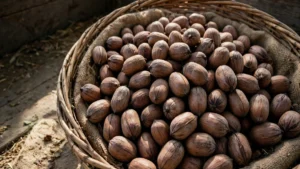
Pecan trees do not hurry. A good orchard takes years to settle, the nuts ripen slowly through autumn, and the harvest is gathered from the ground, not pulled from the branch. A stay among the trees is quiet, open-skied, and built around the work of the farm rather than around a spa menu or a lobby bar.
A pecan farm retreat is a working orchard that also takes guests. You sleep on the property, walk the rows at first light, watch the harvesters at work, and eat pecans that were in their husks a few days earlier. Some farms are grand old estates with white-columned houses, others are small family orchards with a handful of guest rooms and a long table for dinner. The best of them share one thing: the farm comes first, and the stay is shaped around it.
Below are nine pecan farm retreats worth considering in 2027, spread across the United States, Mexico, South America, Australia and South Africa. Each one is described by what it does well, what to watch for, and who it suits best, so you can choose by the kind of trip you want, not just by the prettiest photograph. Our guide to luxury macadamia farm retreats follows the same idea for a different nut, if you want to compare orchard trips side by side.
Key takeaways
- Pecan harvest runs roughly October to December in the northern hemisphere, and around April to June in the southern hemisphere, so the right month depends on which side of the equator you choose.
- The best retreats sit inside working orchards, with guest rooms on the property and real harvest activity to watch or join, not just a few trees near a hotel.
- Expect to pay around $230 to $730 a night for a luxury pecan farm stay, with most of that covering the room, meals, and orchard activities together.
- Book the harvest weeks early, because the most interesting dates are also the shortest season, and the smallest farms take only a handful of guests at a time.
- Harvest dates move with the weather and the trees, so no farm can promise an exact picking day months ahead, and a retreat that does promise one is overselling.
What a pecan farm retreat actually offers
A pecan farm is not a resort that happens to grow nuts. The orchard is the business, and the guest stay is built around its rhythms. In the morning you might walk the rows with the farm manager while the dew is still on the grass, learning how a grafted tree differs from a seedling and why some varieties crack cleanly while others shatter.
Pecan orchards are wide and open, with long rows of tall trees that turn gold in autumn, and the farms that do this well give you space to be outside for hours. Look for stays that list orchard walks, harvest participation, and farm meals as part of the stay, not as extras you pay for one by one.
Meals are often the quiet highlight. Pecans appear in everything from breakfast breads to evening desserts, and the farms that take food seriously use the nuts within days of shelling, when the flavour is at its sweetest.
How we chose these nine retreats
We started with the pecan regions that genuinely grow the nut at scale, then looked for farms inside those regions that take guests on the property, run real orchard activity, and publish honest information about their season, their rooms, and their prices.
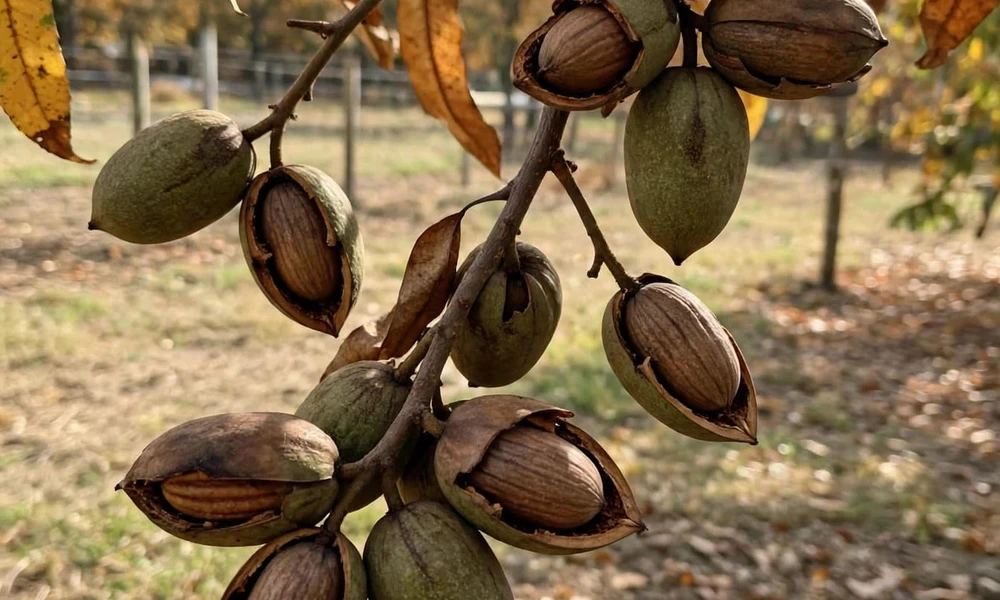
Each retreat below was judged on the same four points: whether the stay is inside a working orchard, whether guests can join or watch the harvest, whether meals use the farm’s own pecans, and whether the price is clear before you book.
Price ranges below are per night for two people, based on the farm’s published rates for 2027, and they generally include the room, breakfast, and orchard activities.
The 9 best luxury pecan farm retreats of 2027
Albany, Georgia, USA
What we like: Albany sits in the heart of Georgia pecan country, with old orchards, wide river-bottom land, and some of the most experienced growers in the United States. The retreats here are gracious and unhurried, with big porches, long farm tables, and harvest mornings that start before the sun is properly up.
What to consider: Autumn is the busy season, and the best weeks sell out months ahead. The weather can turn warm even in November, so pack light layers. Best For: First-time orchard travellers who want the classic American pecan experience. Style: Classic Southern estate with working orchards. Price Range: $230–$410 a night. Standout Feature: Guided harvest mornings with the farm’s own crew.
San Saba, Texas, USA
What we like: San Saba calls itself the pecan capital of the world, and the town takes the claim seriously. The orchards along the river are old and beautiful, the guest farms are small and personal, and the local pecan pie is worth the journey on its own.
What to consider: This is a small town, so dining and shopping beyond the farm are limited. A car is essential, and the summer heat is serious. Best For: Travellers who like small towns and deep local food traditions. Style: Small family orchards with a strong local food scene. Price Range: $270–$450 a night. Standout Feature: River-bottom orchards and a town built around the pecan trade.
San Saba suits people who enjoy talking to growers and eating well. The farms are modest in scale but rich in knowledge, and the pace of the place is slow in the best sense of the word.
Mesilla Valley, New Mexico, USA
What we like: The Mesilla Valley pairs pecan orchards with desert light, adobe buildings, and the food culture of southern New Mexico. The contrast is striking: green orchard rows against dry mountains, and pecan dishes next to chile on the same table.
What to consider: The valley is spread out, so distances between farms, towns, and restaurants are longer than they look on a map. Evenings can be cool in late autumn. Best For: Travellers who want orchards plus desert scenery and bold regional cooking. Style: Adobe farm stays in a high-desert valley. Price Range: $310–$490 a night. Standout Feature: Orchard rows set against desert mountains, with chile and pecan cooking together.
Tucson, Arizona, USA
What we like: Tucson’s pecan orchards sit in the Sonoran Desert, watered by wells and ringed by saguaro and mountain ranges. The farm stays here are comfortable and design-led, with pools, shaded patios, and orchard walks at dawn before the heat arrives.
What to consider: The harvest season is short and the best rooms go quickly. Daytime temperatures in early autumn can still be high, so plan outdoor time for the morning. Best For: Design-minded travellers who want desert comfort with their orchard stay. Style: Modern desert farm stays with shaded outdoor living. Price Range: $350–$530 a night. Standout Feature: Dawn orchard walks followed by slow desert afternoons.
Tucson works well as a first pecan trip for people who also want a proper holiday. The city is close, the food scene is strong, and the orchards feel like a world apart once you are among the trees.
Riverland, South Australia
What we like: Riverland is Australia’s pecan heartland, with orchards along the Murray River and a harvest that falls in the southern autumn, around April to June. The farm stays are relaxed and river-focused, with boat trips, riverside dinners, and long golden evenings.
What to consider: The season is the opposite of the northern hemisphere, so check your dates carefully. Riverland is a drive from Adelaide, and public transport is thin. Best For: Travellers who want a southern-hemisphere harvest and river scenery. Style: Relaxed riverside orchard stays with boat trips. Price Range: $390–$570 a night. Standout Feature: A southern-autumn harvest on the Murray River.
Andalusia, Spain
What we like: Andalusia grows pecans in sun-warmed hills, where the orchards sit beside olive groves and white villages, and the harvest arrives with warm autumn days and long evenings. The farm stays are welcoming and food-focused, with pecans appearing in everything from breakfast breads to evening desserts.
What to consider: The orchards are spread across the hills, so a car is essential, and the harvest weeks are short. Spanish is the working language on most farms. Best For: Travellers who want pecan orchards with Spanish food and hill scenery. Style: Sun-warmed hill orchards with a Spanish kitchen. Price Range: $430–$610 a night. Standout Feature: Pecan orchards beside olive groves and white villages.
Andalusia is the pick for travellers who want orchards with a Mediterranean feel. The hills, the food, and the warm autumn light make it a generous and easy place to spend a week.
Chihuahua, Mexico
What we like: Chihuahua is Mexico’s pecan centre, with vast orchards in the high desert and a food culture that uses pecans in ways most visitors have never tried, from savoury sauces to sweet breads. The farm stays are warm, family-run, and deeply rooted in the region.
What to consider: English is less widely spoken on the farms than in the big resort towns, so some Spanish helps. The region is large, and the orchards are spread across long distances. Best For: Food-loving travellers who want pecans in a Mexican kitchen. Style: Family-run high-desert orchards with regional cooking. Price Range: $470–$650 a night. Standout Feature: Pecan dishes from a Mexican kitchen, on a working high-desert farm.
Chihuahua is the most food-driven choice on this list. If you like the idea of learning how a region cooks with its own harvest, this is the farm stay to choose.
Entre Ríos, Argentina
What we like: Entre Ríos is Argentina’s river province, with pecan orchards among citrus groves and yerba mate fields, and a harvest that arrives with the southern autumn. The farm stays are calm and green, with river walks, long lunches, and a strong sense of rural Argentine life.
What to consider: The province is best explored by car, and the harvest season is short. Spanish is the working language on most farms. Best For: Travellers who want a green, riverine South American orchard stay. Style: Green riverside estancias with mixed orchards. Price Range: $510–$690 a night. Standout Feature: Pecan orchards beside citrus groves and the Paraná River.
Rio Grande do Sul, Brazil
What we like: Rio Grande do Sul grows pecans in rolling green hills, with orchards near vineyards and small towns that still feel genuinely rural. The farm stays are welcoming and food-focused, and the southern-autumn harvest brings the whole region to life.
What to consider: The region is best reached by car from Porto Alegre, and the harvest weeks are short. Portuguese is the working language on the farms. Best For: Travellers pairing a pecan harvest with Brazilian wine country. Style: Rolling-hill farm stays near vineyards. Price Range: $550–$730 a night. Standout Feature: Pecan orchards and vineyards in the same green hills.
Rio Grande do Sul is the pick for travellers who want orchards and wine in one trip. The hills, the food, and the harvest season make it a warm and generous place to spend a week.
When to go: pecan harvest seasons by region
The northern hemisphere harvest, in Georgia, Texas, New Mexico, Arizona, and Chihuahua, generally runs from October into December, with the peak usually in November. The southern hemisphere harvest, in Australia, South Africa, Argentina, and Brazil, generally runs from April into June. That split is useful, because it means there is a pecan season somewhere in the world for most of the year.
Within those windows, the exact weeks move every year. A wet spring can push the harvest later, a dry summer can bring it forward, and a single storm can change a farm’s plans in a day.
Shoulder weeks are often the best time to visit. Our guide to luxury pistachio farm retreats makes the same point about shoulder weeks, because the pattern holds across almost every nut harvest.
The caveats that matter
A pecan farm retreat is a farm first, and that shapes the whole stay. The ground is uneven, the work starts early, and the weather decides more than the itinerary does. If you want fresh air, good food, and time among the trees, it will suit you well.
| Detail | What is known |
|---|---|
| Best harvest months, north | October to December, peaking in November in the United States and Mexico |
| Best harvest months, south | April to June in Australia, South Africa, Argentina, and Brazil |
| Typical price | $230 to $730 a night for two, usually including room, breakfast, and orchard activities |
| How far ahead to book | Three to six months for harvest weeks; the smallest farms fill first |
| Getting there | A car is needed at almost every farm on this list; public transport is thin in orchard country |
| Who it suits least | Travellers who want a strict schedule, polished resort service, or a city break |
| What to confirm first | The harvest window, what is included in the price, and the cancellation terms |
| What no farm can promise | An exact picking day months ahead, because harvest dates move with the weather |
Allergies deserve a direct conversation with the farm before you book. A pecan orchard is full of tree nuts, and the kitchen will be using them heavily. If anyone in your party has a nut allergy, tell the farm in writing, ask how they handle it, and take their answer seriously.
Checklist: booking a pecan farm retreat honestly
Use these checks before you pay, and again a week before you travel.
- Check the harvest window: ask for the farm’s usual dates, and how they will tell you if the season moves.
- Check what is included: room, breakfast, and orchard activities are usually in the price, but dinners and guided sessions may be extra.
- Check the room: ask whether it is on the farm itself, and how far the orchard rows are from your door.
- Check the journey: confirm the drive time from the nearest airport, and whether you need a car for the whole stay.
- Check the food: tell the farm about allergies or dietary needs in writing, and ask how the kitchen handles them.
- Check the cancellation terms: harvest weeks are short and popular, so the terms are often stricter than a normal hotel stay.
Frequently asked questions
Which pecan farm retreat should I try first?
Albany, Georgia, is the easiest first choice. The orchards are vast, the growers are experienced, the season is straightforward, and the region is well set up for visitors.
Which pecan farm retreat is best for families?
San Saba and the Mesilla Valley both work well for families, because the farms are small, the pace is gentle, and children can join the harvest walks and the shelling demonstrations.
When is pecan harvest season?
In the northern hemisphere, the harvest generally runs from October to December, peaking in November. In the southern hemisphere, it generally runs from April to June.
Are pecan farm retreats good for couples?
Yes, and they are often at their best for couples. The days are quiet and outdoors, the evenings are slow, and the farms on this list are small enough that the stay feels personal rather than crowded. Tucson and Rio Grande do Sul are particularly good choices for a couples trip.
How much does a pecan farm retreat cost?
Expect $230 to $730 a night for two people, usually including the room, breakfast, and orchard activities. Dinners, tastings, and guided harvest sessions are sometimes extra, so check what is included before you compare farms.
How early should I book a pecan farm stay?
For harvest weeks, yes. Three to six months ahead is sensible, and the smallest farms fill first. Our guide to luxury hazelnut farm retreats follows the same booking pattern, because harvest seasons are short everywhere.
The bottom line
The best pecan farm retreat in 2027 is not the most expensive or the most famous. It is the one whose harvest window fits your calendar, whose farm is genuinely working, and whose pace suits the way you like to travel. Albany is the classic first trip, San Saba the small-town choice, the Mesilla Valley and Tucson the desert options, and the southern-hemisphere farms the answer if your free weeks fall in April or May.
Pick one region, confirm the harvest window and what is included, book early if you want the peak weeks, and leave room in your days for the slow parts. The orchards reward patience, and a pecan farm stay is at its best when you let the farm set the pace.