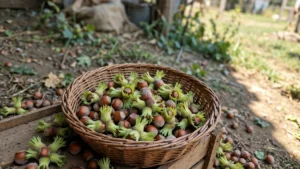
A hazelnut farm retreat is a stay inside a working nut orchard, where the crop grows on shrubs rather than tall trees and the harvest happens on the ground, not on a ladder. The bushes, the drying shed full of husks, the sack of nuts by the farmhouse door, and the kitchen turning the morning’s crop into praline are all part of the farm, not a backdrop. You arrive expecting a quiet orchard walk and you leave knowing why the hazelnut has the strangest year of any orchard crop, flowering in the middle of winter and dropping its nuts to the ground in autumn.
Hazelnuts do not behave like other fruit. They flower in January and February, when the bare branches carry dangling yellow catkins and tiny red tufts no bigger than a match head, and the nuts ripen eight months later, in September and October, when they fall from their leafy husks and are gathered from the orchard floor.
Below are nine hazelnut farm regions worth considering in 2027, from Turkey’s Black Sea hills to Piedmont, Catalonia, Oregon, Tasmania, and the cobnut country of Kent.
Key takeaways
- A hazelnut farm retreat is a stay on or beside a working orchard, with orchard walks, winter catkins, an autumn harvest gathered from the ground, and meals built around hazelnuts, from praline to gianduja.
- The hazelnut year has two peaks, catkins in January and February and harvest in September and October, so plan around one peak or the other, since the dates shift a little with the weather every year.
- Turkey grows most of the world’s hazelnuts, while Italy’s Piedmont grows the most prized, the Tonda Gentile delle Langhe, and the best farms grow named varieties rather than mixed nuts.
- Stay on the farm or a short drive away, because orchard lanes are slow and the harvest starts early, when the air is cool and the ground is still damp.
- Hazelnuts are tree nuts, so anyone with a nut allergy should check with the farm before booking, and a birch pollen allergy can cross-react with hazelnut, so the orchards are not for everyone.
What a hazelnut farm retreat actually is
A hazelnut farm retreat keeps the hazelnut at the heart of the stay. The farm grows named varieties for eating, roasting, and grinding into paste, and part of its land has become guest rooms, a small lodge, or a restored farmhouse. The orchard decides how each day runs, and the meals, walks, and tastings follow what the farm is doing.
The shrub surprises most visitors. A hazelnut grows as a multi-stemmed bush rather than a single-trunk tree, so the orchard is a maze of low branches and leafy husks, and in winter the same bushes carry catkins that dust the air with pollen while the ground is still cold.
How we chose these retreats and what to look for
We chose regions rather than hotels, because what makes a hazelnut farm stay good is the farming, and the rooms come second. Every region below grows hazelnuts on a serious scale, opens its working orchards to visitors, and puts a bed minutes from the bushes.

Start with the varieties. One commercial variety can still make a farm worth visiting, but several, such as a round Tombul, a sweet Tonda Gentile, a small Negret, and a large Barcelona, make for a far better tasting. The best luxury cherry farm retreats run on the same idea, that a farm stay is only worth the trip when the farm itself is worth watching.
Then comes the practical side. Orchard floors are damp in autumn, the slopes can be steep, and the harvest starts early, before the rain builds. A good retreat gives you boots, a basket, and a guide who sets the pace.
The 9 best luxury hazelnut farm retreats of 2027
The Black Sea Hazelnut Hills of Ordu and Giresun, Turkey
What we like: Ordu and Giresun, on Turkey’s Black Sea coast, grow most of the world’s hazelnuts, and the steep green hills above the sea are covered in small family orchards, where the Tombul hazelnut is gathered by hand from the ground in late August and September. What to consider: The slopes are steep and the autumn rain is real, so the visit is about hard farming on hard ground, and the best farms are small and Turkish-speaking. Best For: Travellers who want the hazelnut at its biggest scale, on the hills that feed the world’s chocolate makers. Style: Village guesthouses and small farm stays above the Black Sea. Price Range: About $195 to $405 a night. Standout Feature: A harvest morning on a steep Black Sea slope, with the nuts gathered by hand and the sea in view below.
The Alta Langa Hills of Piedmont, Italy
What we like: The Alta Langa, in the hills of Piedmont, grows the Tonda Gentile delle Langhe, the sweet, round hazelnut behind gianduja and the chocolate of nearby Alba, with orchards between the vineyards and the truffle woods. What to consider: The harvest is in September, the farms are small and family-run, and the best stays book out early for the harvest weeks. Best For: Travellers who want the finest hazelnut in the world, with chocolate makers, wine, and truffles a short drive away. Style: Farm guesthouses and small agriturismi among the hazel bushes. Price Range: About $230 to $440 a night. Standout Feature: Tasting Tonda Gentile hazelnuts beside the chocolate workshops of Alba, with the Langa hills rolling away below.
Reus and the Negret Hazelnuts of Tarragona, Spain
What we like: Reus, in the hills of Tarragona, is the home of the Negret hazelnut, a small, sweet nut the region turns into turron, romesco sauce, and hazelnut oil, with orchards between the dry hills and the Mediterranean coast. What to consider: The hills bake in summer, the orchards lie far apart, and a car is a must. Best For: Travellers who want Catalan hazelnut country, with turron makers, vermouth bars, and the sea close by. Style: Farm guesthouses and small rural hotels in the hill towns. Price Range: About $170 to $370 a night. Standout Feature: Warm Negret hazelnuts with romesco sauce, eaten in the orchard where they grew.
The Willamette Valley Hazelnut Orchards, Oregon
What we like: The Willamette Valley, in western Oregon, grows nearly all of America’s hazelnuts, and the orchards around Salem and Eugene stretch between the rivers and the Coast Range, with the large Barcelona variety gathered from the ground in October. What to consider: The valley is damp in autumn, the best farms are working orchards first, and the harvest is short. Best For: Travellers who want American hazelnut farming, with wineries, river towns, and the Oregon coast nearby. Style: Farm guesthouses and small inns in the valley towns. Price Range: About $210 to $410 a night. Standout Feature: A harvest morning in October, with the nuts gathered from the orchard floor and the Coast Range in view.
Giffoni and the Tonda di Giffoni, Campania
What we like: Giffoni, in the hills of Campania, grows the Tonda di Giffoni, a round, sweet hazelnut protected by its own IGP mark, with orchards between the Picentini mountains and the Salerno coast. What to consider: September is harvest time, the farms are small and family-run, and the best rooms go early in harvest week. Best For: Travellers who want southern Italian hazelnut country, with the Amalfi Coast and the Cilento a short drive away. Style: Farm guesthouses and small agriturismi tucked among the bushes. Price Range: About $185 to $390 a night. Standout Feature: Tasting Tonda di Giffoni hazelnuts in the hills above Salerno, with the sea in the distance.
The Hazelnut Farms of Tasmania, Australia
What we like: Tasmania grows hazelnuts in the cool south, with orchards in the Huon Valley and the north-west, and the harvest runs in March and April, when the northern hemisphere is still in winter. What to consider: The season is in the southern autumn, the farms are small, and the island needs planning to reach. Best For: Travellers who want hazelnuts in March, with cool-climate wine, wild rivers, and empty beaches around them. Style: Farm guesthouses and small cottages beside the orchards. Price Range: About $155 to $330 a night. Standout Feature: A harvest morning in March, in the cool of the Tasmanian autumn, while the northern hemisphere is mid-winter.
Samegrelo and the Hazelnut Coast of Georgia
What we like: Samegrelo, on Georgia’s Black Sea coast, grows hazelnuts on the humid lowlands below the Caucasus, and its small farms dry and roast the nuts the old way, with the crop sold in the markets of Zugdidi and Poti. What to consider: The region is quiet and rural, the best farms are small and Georgian-speaking, and the harvest is in late summer. Best For: Travellers who want Georgian hazelnut country, with Black Sea beaches, mountain villages, and supra feasts nearby. Style: Farm guesthouses and small family stays in the coastal villages. Price Range: About $130 to $310 a night. Standout Feature: Roasted hazelnuts at a village supra, eaten with the Black Sea in view and the Caucasus behind.
Kent and the Cobnuts of England
What we like: Kent, the garden of England, grows cobnuts, the old English name for cultivated hazelnuts, in orchards and platts around the Weald, with the nuts gathered in September and sold green, fresh from the husk. What to consider: The harvest is short, the orchards are small, and the best farms are family-run. Best For: Travellers who want English cobnut country, with country pubs, hop gardens, and the Kent coast close by. Style: Farm guesthouses and small cottages in the Weald villages. Price Range: About $140 to $330 a night. Standout Feature: Green cobnuts cracked open in the orchard, eaten fresh from the husk in September.
Cervione and the Corsican Hazelnut, France
What we like: Cervione, on the east coast of Corsica, grows hazelnuts on the sunny slopes above the Tyrrhenian Sea, and its nuts carry their own IGP mark, with orchards between the maquis and the mountain villages. What to consider: The island is small and the farms are smaller, the harvest is in September, and a car is essential. Best For: Travellers who want Corsican hazelnut country, with maquis walks, mountain villages, and the sea a short drive away. Style: Farm guesthouses and small hotels in the hill villages. Price Range: About $250 to $470 a night. Standout Feature: A hazelnut tasting in a Cervione farmhouse, with Corsican honey and the maquis outside the door.
Matching a hazelnut region to the trip you want
If this is your first hazelnut farm trip, choose a region where you can watch the work up close and sleep well at night.
If food is what pulls you there, look for a region where the hazelnut runs through the whole menu.
The best luxury pear farm retreats make the same point in a different orchard, that the farm should sit at the centre of the trip and everything else should be a short drive.
The caveats that matter
Treat a hazelnut farm as a workplace before anything else, and the warnings stay practical rather than dramatic.
| Detail | What is known |
|---|---|
| Best time to go | January to February for catkins, September to October for harvest in the north and March to April in Tasmania, with the harvest lasting two to three weeks |
| How long to stay | Two or three nights, with one full morning among the bushes and a day to see the area |
| What to wear | Sturdy boots with grip, a waterproof jacket, long sleeves, and clothes you do not mind muddying |
| Who should take care | Anyone carrying a tree nut allergy should speak to the farm first, since hazelnut reacts with birch pollen for some people |
| What not to bring | Leave nuts and cuttings from other orchards at home, because pests and disease ride on plant material |
| Money and booking | Most small farms book direct and ask for a deposit, so get meals and tours confirmed in writing |
| Getting there | A car is the usual way in, and the orchard lanes run slow, so leave more time than the map allows |
| What it does not offer | This is a farm, not a resort, so expect early starts, farm cooking, and plain rooms rather than spa days |
Squirrels deserve a paragraph of their own. Hazelnut orchards attract squirrels, because the nuts are exactly what a squirrel wants, and a working farm can lose a share of its crop to them.
Checklist: choosing a hazelnut farm retreat honestly
Run through these checks before you book, and once more before you travel.
- Varieties first: ask the farm to name its hazelnuts, because a farm that grows Tombul, Tonda Gentile, or Negret by name will feed you far better than one that grows mixed nuts.
- Dates first: pin down the catkin weeks or the harvest weeks in writing, since both shift with the weather and neither lasts long.
- Sleep close: stay on the farm or minutes away, because the lanes are slow and the crews are out before sunrise.
- Included extras: ask whether meals, the orchard tour, and the catkin or harvest sessions come with the room, and get the answer before you pay.
- Weather: hope for a dry spell and still pack for mud, since a hazelnut harvest can turn wet in an afternoon.
- Allergy check: tell the farm about any nut allergy at booking, ask what the kitchen cooks with, and pack your medication.
Frequently asked questions
What share of the world’s hazelnuts comes from Turkey?
Turkey grows most of the world’s hazelnuts, about two-thirds of the crop, almost all of it on the Black Sea coast around Ordu and Giresun. Italy is second, with Piedmont’s Tonda Gentile the most prized, and the United States, Spain, and Georgia follow. A farm in any of them shows you a different side of the same nut.
How does a Tonda Gentile taste next to a Tombul?
A Tonda Gentile is round, sweet, and thin-skinned, with a soft, buttery bite, and it is the hazelnut behind gianduja and the chocolate of Alba. A Tombul is smaller and rounder, with a firmer bite, and it is the hazelnut most of the world eats in chocolate and spreads.
What month do hazelnut farmers start gathering?
Hazelnuts are gathered from the ground in September and October in the north and March and April in Tasmania. The nuts fall from their leafy husks when they are ripe, then they dry in the sun for a few days before the farm husks and grades them.
Am I allowed to gather the hazelnuts myself?
Most farms let you gather a basket of nuts from the orchard floor, and some let you help with the drying and husking, but the machines do the real work, because a whole orchard cannot be gathered by hand. Ask first, because the nuts drying on the ground are the farm’s crop. The best luxury plum farm retreats keep the same rule for their own fruit, since a farm’s harvest is its income.
Why do hazelnut orchards attract so many squirrels?
Squirrels love hazelnuts, because the nuts are rich, easy to carry, and simple to bury, so an orchard in autumn is a squirrel’s pantry. Farms lose a share of every crop to them, and some farms net the bushes or keep dogs in the orchard, which is why the guide may point out the squirrel damage as you walk.
Can a birch pollen allergy react to hazelnuts on a farm visit?
Hazelnut proteins resemble birch pollen proteins, so some people with a birch pollen allergy react to raw hazelnuts, with an itchy mouth or a swollen lip. Mention it at booking, check what the kitchen cooks with, and talk to your clinician first if you are unsure.
The bottom line
The honest pick for 2027 is the farm where the bushes are tended by hand, the varieties have names you can learn, and the host can tell you which row ripens first.
Spend two or three nights, walk the rows at dawn, try every variety on offer, and carry a sack home with the host’s advice on keeping the nuts dry. That is how a hazelnut farm retreat is meant to be enjoyed.