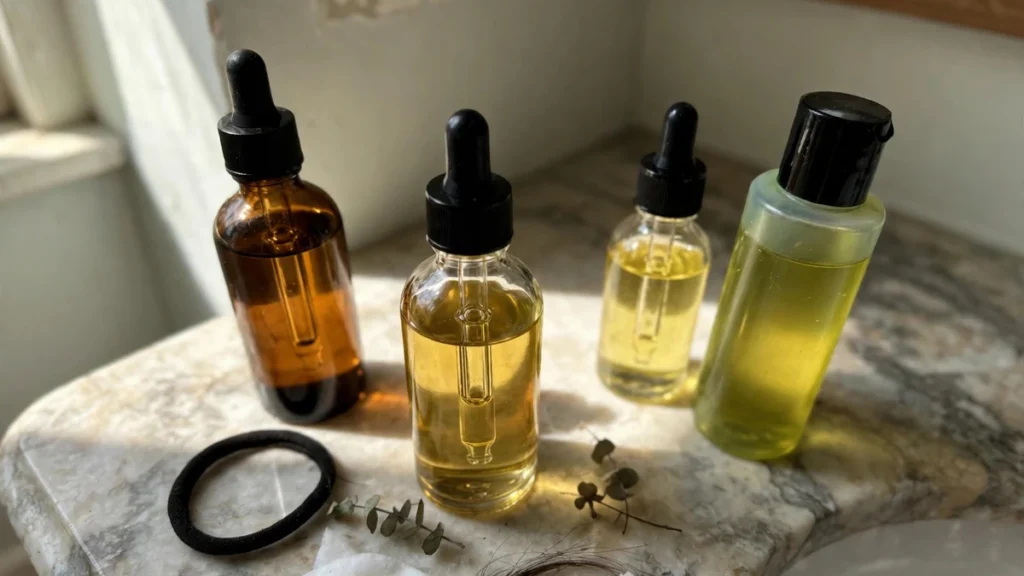
A silk press is one of the most satisfying things you can do with textured hair. Done well, it turns coils and curls into hair that swings, shines, and stays smooth for days. The difference is rarely the flat iron. It is almost always the oil, and how much of it you use, and when you put it on.
Oil plays two different jobs in a silk press, and confusing them is where most people go wrong. Before the iron, a light oil works as a heat buffer and a smoothing agent, helping each section glide through the plates without snagging or scorching. After the iron, a smaller amount seals the cuticle, adds shine, and keeps the ends from splitting apart as the week goes on. Too little, and the heat does the damage the oil was meant to prevent.
Below are nine oils that suit a silk press in 2027, from salon smoothing oils built for heat work to affordable argan blends that work as a finishing step. Each one is described by what it does well and who it suits best. The oils below were chosen for how they behave under heat, not just for how they smell or how they look in the bottle. One pick is a smoothing serum rather than a pure oil, and it is labelled as the closest match.
Key takeaways
- A silk press needs two kinds of oil work: a light heat-protectant oil before the flat iron, and a tiny amount of finishing oil after it.
- Lightweight, silicone-based smoothing oils give the sleekest finish, while heavier oils are best kept to the ends.
- One pea-sized amount per section is enough. More oil does not mean more protection, and it is the fastest way to make a fresh press go limp.
- Keep oil away from the roots on press day, and wrap your hair in silk at night.
- No oil makes a silk press humidity-proof or repairs heat damage, so heat settings and technique matter as much as the product.
What a silk press actually needs from an oil
A silk press is a straightening routine, not a single product. It starts with a clean, well-conditioned base, moves through a careful blow-dry, and finishes with a flat iron passed slowly through small sections. The oil is there to make each of those stages easier. That is why the same oil can work beautifully on one person and fail on another, and why the amount matters as much as the product itself. On dry hair before the iron, it lowers friction between the plates and the hair, which is what keeps the finish smooth instead of rough.
The most useful oils for this job share three traits. They tolerate heat, either because they contain silicones or because their base oils are stable at flat-iron temperatures. And they dry down to a light finish rather than sitting on the surface, which is what keeps the hair moving freely instead of clumping together.
Hair type changes the calculation. Fine hair needs the lightest oils, applied sparingly, because it has less mass to absorb them. Thick, coarse, or high-density hair can handle a richer oil, and often needs it, because there is simply more hair to smooth. A guide to hair oils for a wash and go covers the same problem from the opposite direction, because an oil that works well on a wash and go is often too heavy for a press, and vice versa.
How we chose these oils and what to look for
Look first at the base. Silicone-based smoothing oils and serums are the most reliable choice for a silk press, because silicones coat the hair shaft evenly, reduce friction under the iron, and give the glassy finish the style is named for. Plant oils such as argan, camellia, and jojoba can work well too, especially as a finishing step, but they vary more in weight, and a pure plant oil is rarely the best choice for the pre-iron stage on its own.
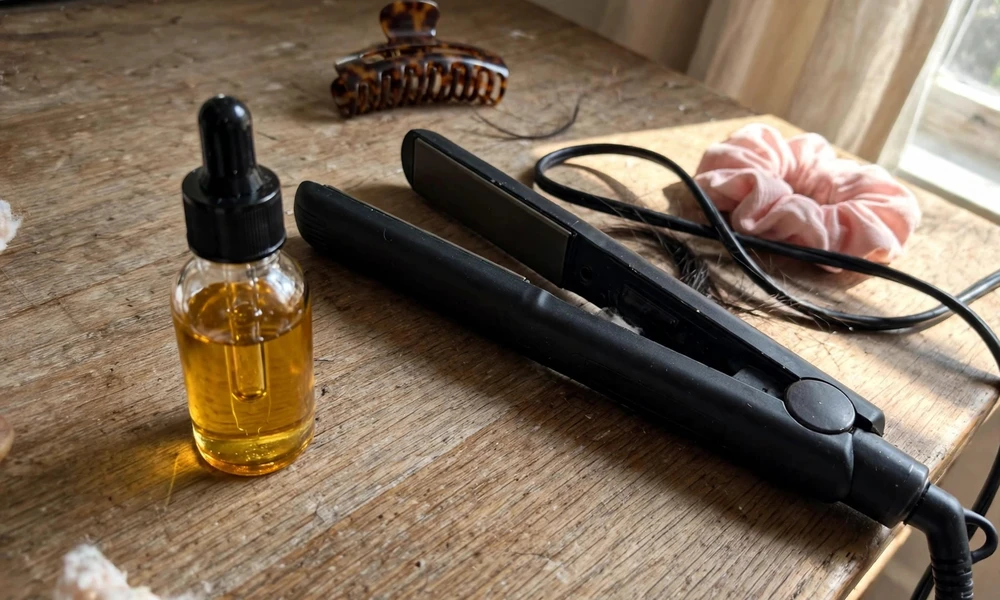
Look next at the heat claim. Some oils state a heat-protection temperature on the bottle, and that number is worth reading, because a silk press usually runs between 180 and 230 degrees Celsius. An oil that protects up to 230 degrees is a genuine help. An oil with no heat claim at all can still be used after the iron, but it should not be your only protection during it.
Consider the finish and the scent last. The best finishing oils disappear into the hair within a minute and leave a soft, light scent. A roundup of oils for roller sets makes the same point from a different angle, because a roller set also needs an oil that sets the style without weighing it down, and the finish you want from both is the same: smooth, light, and able to move.
The 9 best hair oils for a silk press in 2027
Redken Frizz Dismiss Instant Deflate Oil-in-Serum
What we like: An oil-in-serum that tames frizz and puffiness on humid days, with a light feel that does not flatten the press, and it doubles as a heat-protectant step before the iron.
What to consider: The texture is slightly thicker than a pure oil, and the scent is noticeable, so try it first if you are sensitive to fragrance. Best for: Frizzy, humidity-prone hair that puffs up after pressing. Material: Babassu oil and smoothing silicones. Price range: Around £20 to £26 for 100 ml. Standout feature: The deflate effect keeps volume down without making the hair stiff.
Reach for this one when humidity is the enemy. It keeps the press smooth through a damp day, which is the hardest test a silk press faces.
Pattern Palo Santo Hair Oil
What we like: A rich, warm-scented oil that smooths frizz and adds shine, with a weight that suits thick hair and a fragrance that lingers pleasantly after pressing.
What to consider: It is richer than a light smoothing oil, so fine hair should use it only on the ends, and the scent is strong. Best for: Thick, coarse hair that wants a rich finishing oil. Material: Palo santo, jojoba, and castor oils. Price range: Around £22 to £28 for 100 ml. Standout feature: The warm, woody scent is the most distinctive in this list.
Use this one after the iron on thick hair. A drop on the ends adds shine and a warm scent that lasts through the day.
Marc Anthony Strictly Curls Argan Oil
What we like: A light argan oil that smooths frizz and adds shine without weight, and it is thin enough for fine to medium hair.
What to consider: It is a general smoothing oil rather than a heat specialist, so use it after the iron rather than before it. Best for: Medium hair that wants a light argan finish without a heavy feel. Material: Argan oil. Price range: Around £6 to £9 for 50 ml. Standout feature: The small bottle and low price make it easy to try.
Keep this one for the finishing step. A drop on the ends each morning revives the press without weighing it down.
Kenra Platinum Silkening Gloss
What we like: A glossing serum that seals the cuticle after heat styling, with a clear, weightless finish and a subtle scent that fades quickly.
What to consider: It is a finishing product, not a pre-iron oil, so do not use it as your only heat protection. Best for: The final pass after flat ironing, on all hair types. Material: Silicone-based glossing serum. Price range: Around £20 to £26 for 100 ml. Standout feature: The finish is genuinely glassy, which is the look a silk press is named for.
This is the last step, not the first.
Maui Moisture Lightweight Curls + Flaxseed Oil
What we like: A light flaxseed oil that smooths without residue, with a fresh scent and a weight that suits pressed hair.
What to consider: It is marketed for curls, so the label will not mention pressing, but the light texture is exactly what a press needs. Best for: Hair that wants a light, non-greasy oil for daily use. Material: Flaxseed oil and aloe. Price range: Around £8 to £11 for 100 ml. Standout feature: The flaxseed base absorbs faster than most argan oils.
A good everyday oil for people who press often and want something light enough to use between washes.
Nexxus Oil Infinite
What we like: A blend of six oils, including argan and babassu, that smooths frizz and adds shine while staying light enough for regular use.
What to consider: The bottle dispenses generously, so pump it into your palm first and take what you need from there. Best for: Dry, frizzy hair that needs moisture as well as smoothing. Material: Six-oil blend with argan and babassu oils. Price range: Around £10 to £14 for 100 ml. Standout feature: The babassu oil gives it a lighter feel than a pure argan oil at a lower price.
One of the best value options in this list.
TIGI Catwalk Sleek Mystique Look-Lock Serum
What we like: A smoothing serum that seals the cuticle and holds the finish in place, with a clear, weightless feel that suits the final pass after ironing.
What to consider: It is a serum, not a pure oil, so it is the closest match in this list rather than a true oil. Use it as a finisher, not a pre-iron treatment. Best for: The final smoothing pass after flat ironing. Material: Silicone-based smoothing serum. Price range: Around £12 to £16 for 90 ml. Standout feature: The hold it gives the finish helps a press survive a humid evening.
Use this one last. It locks in the smoothness the iron created, which is what keeps a press looking fresh on day two.
Hask Keratin Protein Smoothing Shine Oil
What we like: A keratin-infused oil that smooths the cuticle and adds shine, at a price that makes it easy to replace often, with a light, non-greasy feel.
What to consider: The keratin claim is about smoothing the surface, not rebuilding damaged hair, so do not expect it to repair breakage. Best for: Budget-conscious routines and hair that needs a light smoothing oil. Material: Keratin protein and argan oil blend. Price range: Around £5 to £8 for 59 ml. Standout feature: It is the cheapest oil in this list that still gives a genuinely smooth finish.
A sensible choice if you press your hair every week and go through oil quickly.
Pantene Pro-V Smooth & Sleek Argan Oil
What we like: An affordable argan oil that tames flyaways and adds shine, widely available, and light enough to use as a daily finishing oil between presses.
What to consider: It is a general smoothing oil, not a specialist heat product, so use it after the iron rather than before it. Best for: Daily finishing and flyaway control after a press. Material: Argan oil blend with Pro-V nutrients. Price range: Around £5 to £7 for 100 ml. Standout feature: The price and availability make it the easiest oil here to keep stocked.
Keep this one for the days after the press.
Which oil is right for your hair type
Fine hair needs the lightest oils, and the least of them. A single pump of a camellia or moringa-based oil, spread across the lengths and kept well away from the roots, is usually enough. A roundup of oils for slicked-back hair makes the same point in reverse, because a slicked-back style wants weight at the roots, while a press wants the opposite.
Medium hair has the widest choice. Argan blends, silicone smoothing oils, and light glossing serums all work well, and the decision comes down to whether you want heat protection, shine, or both.
Colour-treated hair needs an oil that does not strip or dull the colour. Light, clear oils are the safest choice, and any oil with a strong yellow or orange tint should be used sparingly on blonde or lightened hair, because it can shift the tone over time.
The caveats that matter
Oil is not a substitute for heat protection, and it is not a repair treatment. An oil can reduce friction and add shine, but it cannot stop a flat iron set too high from damaging the hair, and it cannot rebuild hair that is already broken. Get the blow-dry right first, use the lowest iron temperature that gives you the finish you want, and let the oil work as a finishing layer rather than a rescue.
| Detail | What is known |
|---|---|
| Best oil type for a press | Lightweight silicone-based smoothing oils, or light argan and camellia blends |
| How much to use | One pea-sized amount per section before the iron, less after it |
| Heat protection | Check the bottle for a stated temperature; most presses run at 180 to 230 degrees |
| Where to apply it | Mid-lengths and ends; keep oil away from the roots on press day |
| Who should use the lightest oils | Fine hair, low porosity hair, and anyone whose press goes flat quickly |
| What to avoid | Heavy oils at the roots, too much product, and using oil as a substitute for a heat protectant |
| Night care | Wrap the hair in a silk scarf or bonnet to protect the press while you sleep |
| What oil does not do | It does not make a press humidity-proof, and it does not repair heat damage |
If your scalp is sensitive, irritated, or broken, keep oil off the scalp during a press and speak to a dermatologist before adding a new product.
Checklist: choosing a silk press oil honestly
Use these checks before you buy, and again after your first press with a new oil.
- Check the weight: it should spread thin and disappear into the hair within a minute, not sit on the surface.
- Check the heat claim: look for a stated protection temperature that covers your flat-iron setting.
- Check the amount: start with one pea-sized drop per section, and add more only if the hair still feels dry.
- Check the roots: keep oil off the roots on press day if you want the style to hold its volume.
- Check the finish: the hair should move freely and shine, not clump together or look wet.
- Check the next day: if the press has gone flat or greasy, the oil was too heavy or too much, not the wrong brand.
Frequently asked questions
For 4C hair, which oil gives the smoothest press?
A light silicone-based smoothing oil before the iron, with a richer oil on the ends after it. Use the heavier oil only from the mid-lengths down.
Do I need a heat protectant if my oil says it protects against heat?
Often yes, if the oil does not state a temperature. A separate heat protectant spray is still the safer choice if your iron runs hot or your hair is fine.
Is argan oil enough on its own for a silk press?
You can, as a finishing oil after the iron, and it gives a lovely shine. As a pre-iron oil it is less reliable, because it does not spread as evenly as a silicone blend. A blend is usually a better choice before the iron.
Does a heavy oil flatten a silk press on fine hair?
Yes, almost certainly. Use the lightest oil you can find, keep it off the roots, and use less than you think you need.
My press looks greasy after oiling — how do I fix it?
Use less oil, and apply it to the ends only. A greasy look after a press is almost always too much product, not the wrong product.
How is a silk press different from a blowout?
A blowout is done with a dryer and a brush, and keeps more volume and movement. A silk press uses a flat iron as well, which gives a flatter, sleeker, shinier finish that lasts longer, but it also puts more heat on the hair.
The bottom line
The best hair oil for a silk press in 2027 is the one that matches your hair type, protects against your iron temperature, and disappears into the hair instead of sitting on it. For most people, that is a light silicone-based smoothing oil before the iron and a single drop of finishing oil on the ends after it. A press built on the right oil lasts longer and needs less heat, which is the combination that keeps hair healthy over time.
Choose one oil, use a pea-sized amount per section, keep it off your roots, and wrap your hair in silk at night.