A cherry farm retreat is a working fruit farm with guests, not a hotel with an orchard view. The rows of trees, the ladders, the crates of dark red fruit, and the farmhouse a short walk away are all part of the farm, not a backdrop. You arrive expecting something sweet and gentle, and you leave knowing why the cherry has the shortest season of any orchard fruit, picked in a rush of weeks and gone before most travellers have thought about booking.
Cherries do not behave like other fruit. They never ripen after picking, so a hard cherry has no second chance, and one summer storm can split a whole crop on the tree, which is why growers watch the sky like sailors. A good retreat shows you that urgency up close, in the picking crews, the rain covers, and the nets that keep birds off the ripest fruit.
Below are nine cherry farm regions worth considering in 2027, from the American Pacific Northwest to Spain, Italy, Japan, and Tasmania.
Key takeaways
- A cherry farm retreat is a stay on or beside a working orchard, with orchard walks, picking, and meals built around cherries at their ripest, from sweet Bing to tart Montmorency.
- The cherry season is short, roughly six to eight weeks in early summer, so the best visits line up with picking weeks, and the dates move a little every year with the weather.
- Sweet cherries and sour cherries are different crops with different uses, and the best farms grow one or the other, or sit near a kitchen that knows both.
- Stay on the farm or a short drive away, because orchard roads are slow and picking starts at dawn, when the fruit is cool.
- Rain can split a cherry crop in a day, so follow the farm’s rules about ladders and nets, and leave alone any fruit the grower has marked.
What a cherry farm retreat actually is
A cherry farm retreat puts the cherry at the centre of the stay. The farm grows sweet cherries for eating fresh, and often sour cherries for pies, jams, and liqueurs, and part of its land has become guest rooms, a small lodge, or a restored farmhouse. The orchard leads, and the meals, walks, and tastings follow the trees.
The tree catches most visitors by surprise. A cherry tree can carry thousands of fruit on one branch, yet the whole crop ripens in a rush, and one variety can be picked out in a week. Every cherry is picked by hand, one at a time, stem and all, because a cherry without its stem spoils fast.
Sleep is the other half of the trip. The best cherry farm retreats are small, with a handful of rooms, a farm kitchen, and a host who actually farms. If the farm runs a picking session, find out who leads it, because a good guide shows you which cherries are ripe and which need another day.
How we chose these retreats and what to look for
We picked regions, not hotels, because a cherry farm retreat is judged by its farming before its rooms. Every region below grows cherries on a serious scale, opens its working orchards to visitors, and puts a bed minutes from the trees.
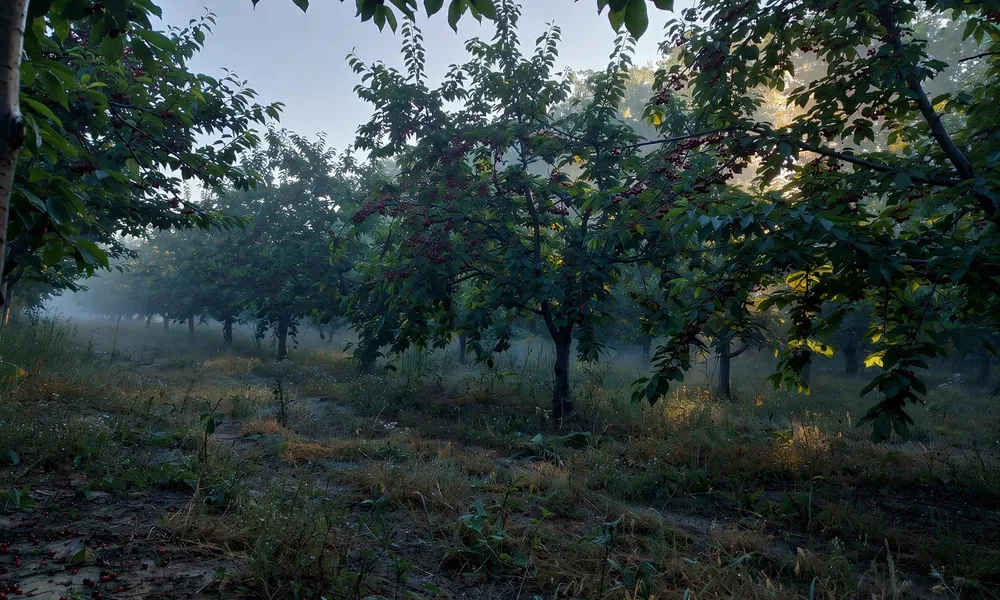
Start with the varieties. One commercial variety can still make a farm worth visiting, but several, such as a dark Bing, a pale Rainier, a crisp Lapins, and a tart Montmorency, make for a far better tasting. The best luxury pear farm retreats follow the same rule, that a farm stay is only as good as the farming it shows you.
Then comes the practical side. Orchard ladders are steep, the sun is strong between the rows, and picking starts early, before the heat builds. A good retreat gives you a picking bucket, a hat, and water, and sends a guide who sets the pace. If the farm makes cherry liqueur or jam, ask whether the kitchen is working during your stay.
The 9 best luxury cherry farm retreats of 2027
The Yakima Valley Cherry Orchards, Washington
What we like: The Yakima Valley is Washington’s fruit bowl, and cherry orchards stretch for miles along the river, with Bing, Rainier, and Lapins beside apples and pears in one of America’s most productive valleys. What to consider: This is a working farm valley, so the visit is about scale and skill, and the summer heat is no joke. Best For: Travellers who want cherry farming at its biggest scale, with other fruit farms nearby. Style: Farm guesthouses and small hotels around the valley towns. Price Range: About $150 to $330 a night. Standout Feature: A farm tour that moves from cherries to apples to pears in one morning, showing how a fruit valley works.
Traverse City and the Cherry Capital, Michigan
What we like: Traverse City calls itself the cherry capital of the world, and the orchards around Grand Traverse Bay grow sweet cherries on the hills and tart Montmorency on the peninsula, with the lake softening the climate for both. What to consider: The cherry festival fills the town in early July, so book early or come the week after, when the orchards are quiet. Best For: Travellers who want cherries plus a festival town, a bay, and a proper cherry pie. Style: Farm stays, lake cottages, and small inns around the bay. Price Range: About $180 to $400 a night. Standout Feature: Tasting a sweet Bing and a tart Montmorency within an hour, on farms a short drive apart.
The Okanagan Valley Cherry Orchards, British Columbia
What we like: The Okanagan Valley, between the lakes and dry hills of British Columbia, grows some of Canada’s finest cherries, with Lapins, Stella, and Sweetheart ripening in the long, warm days of early summer. What to consider: The season is short and the best farms are small, so book direct and confirm your dates in writing. Best For: Travellers who want Canadian cherry country, with lakes and wineries close by. Style: Farm guesthouses and small lodges beside the orchards. Price Range: About $190 to $420 a night. Standout Feature: Picking cherries in the morning and swimming in the lake that afternoon, on the same farm day.
Valle del Jerte Cherry Orchards, Spain
What we like: The Valle del Jerte, in the mountains of Extremadura, is Spain’s great cherry valley, and its steep terraces grow the Picota cherry, a stemless variety picked without its stalk and eaten by the handful. What to consider: The valley is steep and rural, the best farms are small and Spanish-speaking, and the harvest is in June. Best For: Travellers who want Spanish cherry country, mountain villages, and a cherry you cannot find anywhere else. Style: Farm guesthouses and small rural hotels in the valley villages. Price Range: About $140 to $320 a night. Standout Feature: A Picota cherry eaten straight from the terrace where it grew, with the valley falling away below.
The Cherry Orchards of Vignola, Italy
What we like: Vignola, in the hills south of Modena, is Italy’s cherry town, and its orchards grow the Mora di Vignola, a dark, sweet cherry the town has celebrated with a festival since the nineteenth century. What to consider: The harvest is in June, the farms are small and family-run, and the best stays book out early for festival week. Best For: Travellers who want Italian cherry country, with balsamic, parmesan, and pasta a short drive away. Style: Farm guesthouses and small agriturismi among the orchards. Price Range: About $160 to $360 a night. Standout Feature: A cherry festival in a hill town, with the Mora di Vignola at its sweetest and the whole town eating cherries.
The Dalles Cherry Orchards, Oregon
What we like: The Dalles, on the Columbia River in Oregon, grows cherries on the dry hills above the river, with Bing and Rainier ripening early, often before the rest of the Northwest. What to consider: The hills are hot and dry in summer, the orchards are spread out, and a car is essential. Best For: Travellers who want the earliest cherries of the season, with river country around them. Style: Farm guesthouses and small hotels in the river towns. Price Range: About $150 to $340 a night. Standout Feature: Tasting the first Rainier cherries of the year, pale gold with a red blush, picked that morning on the hillside.
Door County Cherry Orchards, Wisconsin
What we like: Door County, on the peninsula between Green Bay and Lake Michigan, grows tart Montmorency cherries in orchards cooled by the lake, and the county has turned its harvest into pies, jams, and a whole local food culture. What to consider: The season is short and the county is busy in summer, so book early and expect crowds at the farm markets. Best For: Travellers who want tart cherries, cherry pie, and a lakeside peninsula in one trip. Style: Farm stays, lake cottages, and small inns along the peninsula. Price Range: About $170 to $380 a night. Standout Feature: A slice of Door County cherry pie, made with Montmorency cherries from the orchard you walked that morning.
Yamagata Cherry Orchards, Japan
What we like: Yamagata, in northern Japan, grows the Sato Nishiki cherry, a pale, blushing fruit treated like a jewel, packed in small boxes and given as a gift, with orchards in the valleys below the mountains. What to consider: The season is short, the best farms take few guests, and the language barrier is real, so book through a farm that welcomes foreign visitors. Best For: Travellers who want Japanese cherry culture, with mountain towns and hot springs nearby. Style: Farm guesthouses and small ryokan in the orchard valleys. Price Range: About $200 to $450 a night. Standout Feature: A Sato Nishiki cherry eaten where it grew, pale gold and blushing red, at the peak of its short season.
Huon Valley Cherry Orchards, Tasmania
What we like: The Huon Valley, south of Hobart in Tasmania, grows cherries in the cool southern summer, with the season running into January, when the rest of the world has finished picking, and orchards between the river and the forested hills. What to consider: The valley is quiet and rural, the season is in the southern summer, and flights to Hobart need planning. Best For: Travellers who want cherries in January, with wild Tasmanian country around them. Style: Farm guesthouses and small cottages in the valley. Price Range: About $160 to $350 a night. Standout Feature: Picking cherries in January, in the cool southern summer, while the northern hemisphere is mid-winter.
Matching a cherry region to your trip
For a first cherry farm visit, pick a region where the farming is easy to watch and the stay is comfortable. The Yakima Valley is the simplest place to start, because the scale impresses and the farms welcome visitors.
If eating is the reason you are going, choose a region with a strong cherry kitchen. Door County and Traverse City are hard to beat, because the farms that grow tart cherries also bake the pies and make the jams that show what a sour cherry is for.
If you want farming plus something else, see what lies within a short drive. The best luxury plum farm retreats run on the same idea, that a farm stay shines when the farm is the heart of the trip and everything else is a short drive away.
The caveats that matter
A cherry farm is a workplace first, and the warnings are practical, not dramatic. The ground is uneven and the sun is fierce, so wear shoes that grip and stick to the guide’s path. Fallen fruit brings wasps in early summer, so watch your footing and keep food covered.
| Detail | What is known |
|---|---|
| Best time to go | Early summer for harvest, roughly June to July in the north and December to January in Tasmania, with a season of six to eight weeks |
| How long to stay | Two to three nights, with a full morning for the orchard and a day for the area |
| What to wear | Closed shoes with grip, a hat, light long sleeves, and clothes you do not mind staining |
| Who should take care | Anyone with a stone fruit allergy should check first, because cherry and peach allergies are linked |
| What not to bring | Do not bring fruit or cuttings from another orchard, because pests and disease travel on plant material |
| Money and booking | Small farms often take direct bookings and may ask for a deposit, so confirm meals and tours in writing |
| Getting there | Most cherry farms need a car, and orchard roads are slow, so allow more time than the map suggests |
| What it does not offer | A cherry farm is not a resort, so expect farm hours, farm food, and early mornings, not spa days |
Rain deserves a paragraph of its own. A heavy shower can split ripe cherries on the tree in one afternoon, and growers take that seriously. Most cover their best trees with rain shelters, and some shut picking after a storm, because split fruit spoils fast.
Checklist: choosing a cherry farm retreat honestly
Run through these checks before you book, and once more before you travel.
- Varieties: a farm with more than one cherry variety gives you a far better tasting.
- Dates: confirm the picking window, because the cherry season is short and moves with the weather.
- Distance first: sleep on the farm or a short drive away, because orchard lanes are slow and the working day starts at dawn.
- What is included: meals, the orchard tour, and picking sessions often come with the stay, but confirm before you pay.
- Weather next: hope for a dry spell, and pack for mud and sun in the same day.
- Picking rules: ask which trees you may pick from, and leave the fruit the grower has marked for later.
Frequently asked questions
Where do the best sweet cherries come from?
The Bing of the Yakima Valley and The Dalles is the classic dark sweet cherry, the Rainier of Washington and Oregon is the pale, honeyed choice, and the Sato Nishiki of Yamagata is the delicate, gift-grade Japanese one.
What sets a sweet cherry apart from a sour one?
Sweet cherries are dark, firm, and eaten fresh. Sour cherries are bright red, soft, and too tart for the table, so they go into pies, jams, and sauces instead. A sour cherry farm usually grows only Montmorency or Morello, so find out which one before you book.
When does the cherry harvest happen?
Cherries are harvested in early summer, roughly June to July in the north, with a season of six to eight weeks, and December to January in Tasmania. The fruit is picked at its ripest, because cherries never ripen after picking.
Can I pick my own cherries at the farm?
Most farms let you fill a bucket with the guide’s help, but not a whole crate, because cherries need their stems left on, never pulled, and a damaged stem shortens the fruit’s life. Ask before touching anything, because a cherry picked too early will never ripen. The best luxury kiwi farm retreats set similar limits on their own crop, because picking is how the farm earns its living.
Why do farms cover cherries when it rains?
Rain can split ripe cherries on the tree, because the fruit absorbs water through its skin and bursts, and one storm can ruin a crop in an afternoon. Farms cover their best trees with rain shelters, and some close picking after a storm, because split fruit spoils fast.
Do I need to worry about a stone fruit allergy?
Stone fruit allergies run together, because the proteins in cherry, peach, plum, and apricot are similar, and some people with a peach allergy react to raw cherry. Raise it when you book, and speak to your clinician beforehand if you have any doubts.
The bottom line
The best luxury cherry farm retreat in 2027 is not the one with the grandest rooms. It is the one where the farming is genuine, the varieties are worth tasting, and the host knows every tree. Pick the region that fits what you hope to learn, and let the farm set the pace of the day.
Stay two or three nights, arrive in time for a morning picking session, taste all the farm offers, and leave with a box of cherries and the farm’s advice on keeping them cool for the journey home. That is the honest way to enjoy a cherry farm retreat.