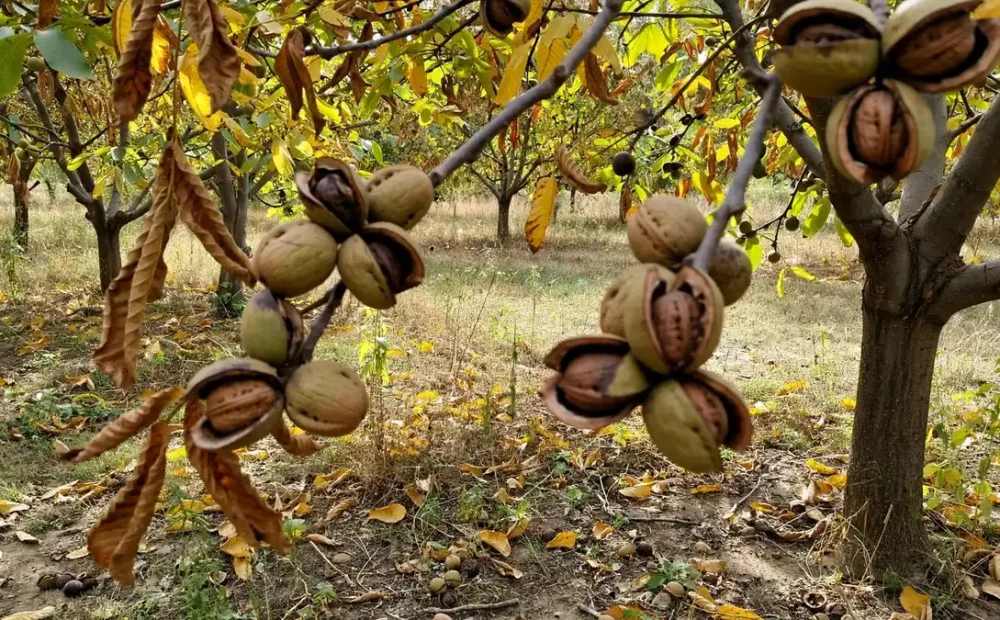
An almond farm escape runs on the orchard’s clock, not yours. The trees decide the dates, the bees decide the blossom, and the best trips fit around both. You do not visit an almond farm the way you visit a hotel; you visit the way you would visit a harvest, with dust on your shoes and an early alarm.
The reason is the nut itself. An almond blooms in February, before a single leaf appears, and is shaken from the tree in August, then left to dry on the ground in the sun, so the two halves of the year feel like different trips. That split is the whole point of the escape: blossom in the cold spring, shakers in the hot summer, and a kitchen that turns the morning’s nuts into marzipan.
This guide covers the nine choices that shape the trip, from telling a Marcona from a Nonpareil to getting a sack of nuts home in one piece.
Key takeaways
- Book the farm before the dates, because the best almond farms are small, fill up fast, and only bloom or harvest for a few weeks a year.
- Sweet almonds are for eating and bitter almonds are for flavouring in tiny amounts, and knowing which one a farm grows changes where you should go.
- Mornings are for the orchard, when the crews are out and the air is cool, so build your day around the farm’s hours.
- Sleep on the farm or minutes away, and bring a car, because orchard lanes are slow and buses rarely reach the trees.
- The harvest is dusty work and the orchards fill with bees at blossom time, so the trip is not for everyone, and anyone with a nut allergy should check first.
What an almond farm escape actually is
An almond farm escape is a short stay built around a working orchard. You sleep in a farmhouse, a lodge, or a guesthouse at the edge of the trees, and the orchard sets the shape of each day: a blossom walk in spring or a harvest morning in late summer, a look at the hulling shed, a tasting of the varieties, and supper cooked with almonds.
The nut is what makes the stay different. An almond is shaken from the branch, dried on the orchard floor, and swept up by machine, and once it leaves the tree it never gets any better.
The pace is the other half of the escape, and it will not suit everyone. If dawn starts, dusty lanes, and sticky fingers sound like a good holiday, an almond farm will suit you.
Before you book: what to decide first
Begin with what you want to learn. A large growing region such as the Central Valley shows you the almond trade at scale, with big hulling sheds and industrial farming. A small-farm region such as Mallorca or the Alentejo shows you old varieties and family methods instead.
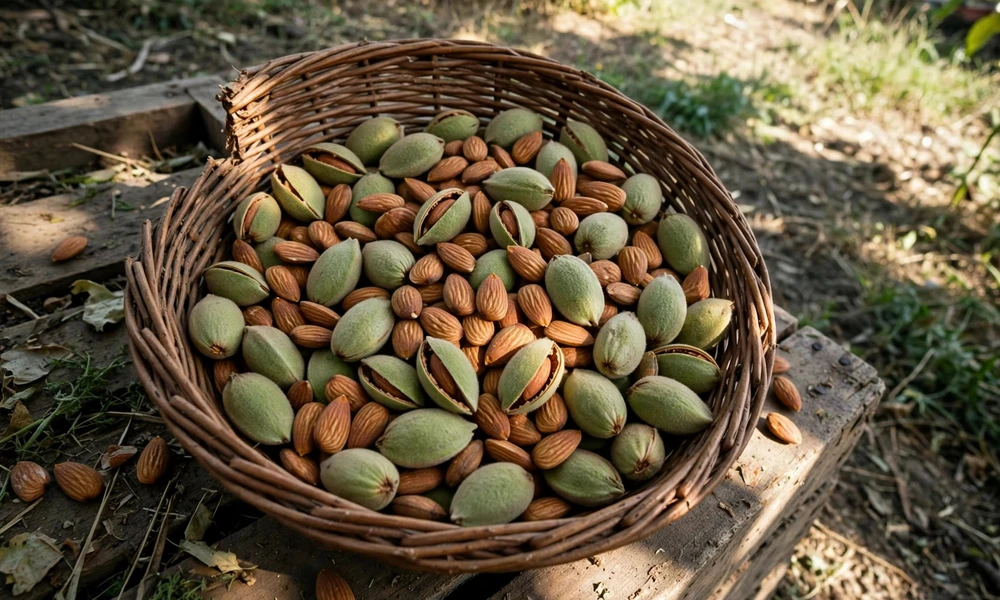
Dates come next, and think in blossom weeks and harvest weeks, not months. Blossom usually comes in February and harvest in August, and the farm’s busiest days are the ones when the bees are in the trees or the shakers are out. The cherry farm escape guide argues the same point, that a farm stay is best while the farm is at work, not while it rests, so read our guide to planning a cherry farm escape for the same timing logic applied to a different crop.
Then sort out travel and sleep. Most almond farms need a car, and the last stretch is often a slow, dusty lane, so give yourself more time than the map promises and try to arrive while it is still light.
9 steps to planning an almond farm escape
Begin with blossom season, when the trees flower bare
What to do: Learn the almond year before you book, because the orchard has two seasons and they feel nothing alike. In February the trees are bare branches and white flowers, and in August they are green hulls and dust. Pick blossom for beauty or harvest for work, and book the farm that fits the season you want. What to avoid: Do not book a farm in June expecting either, because the blossom is gone and the harvest has not started, and the orchard is at its quietest. Best For: Travellers choosing between seasons for the first time. Time Needed: Half an hour of reading. Standout Tip: Ask the farm which week the blossom usually peaks, and book the days around it.
Learn the shake, because almonds are harvested from the ground
What to do: Understand the harvest before you go, because it is nothing like picking fruit. A shaker grips the trunk and shakes the tree until the nuts fall, then they dry on the orchard floor for a week before a sweeper gathers them. What to avoid: Do not expect to pick almonds from the branch, because the nuts are shaken, not picked, and a tree stripped by hand would take days. Best For: Anyone who wants to watch the harvest happen. Time Needed: One email to the farm. Standout Tip: Watch one tree shaken from start to finish, because the whole harvest happens in under a minute.
Taste a Marcona beside a Nonpareil and learn the difference
What to do: Learn the main varieties before you travel, because they taste nothing alike. A Marcona is short, round, and buttery, a Nonpareil is long and crisp, and a Mission is dark and rich. Ask every farm which it grows, and pick a region for the variety you want to taste. What to avoid: Do not judge all almonds by the snack packet at home, because a fresh almond eaten in the orchard tastes nothing like a stale one from a shelf. Best For: Food lovers and home cooks. Time Needed: One tasting at the farm. Standout Tip: Buy a small bag of each variety at the farm shop, and compare them side by side at home.
Follow the bees, because no almond crop exists without them
What to do: Ask the farm about its bees, because the orchard depends on them. Growers bring in hives every February, sometimes hundreds to one orchard, and the bees carry pollen from one variety to another while the blossom lasts. What to avoid: Do not walk up to a hive or stand in a flight path, because the bees are working and a sting in the orchard is no joke. Best For: Every visitor in blossom season. Time Needed: A few minutes beside the guide. Standout Tip: Ask to see the hives from a safe distance, because the hum of a working orchard is the sound of the crop being made.
Book for August, when the shakers come out and the orchards turn to dust
What to do: Aim your stay at the harvest days, when the shakers are in the rows and the hulling shed is running. Ask the farm which days its crews will be working, and build your trip around one of them. What to avoid: Do not arrive on a quiet week and expect a full harvest, because on a non-harvest day the shed can be shut and the orchard empty. Best For: Travellers who want the orchard at its busiest. Time Needed: One email to the farm. Standout Tip: Stay for the hulling shed tour, because the nuts you saw shaken in the morning are graded and boxed by the afternoon.
Ask the farm how it waters the trees, because almonds drink deep
What to do: Ask the farm about water, because almonds are one of the thirstiest orchard crops and the answer tells you how the farm works. Some farms irrigate from rivers, some from wells, and some dry-farm on winter rain alone. What to avoid: Do not assume every almond farm waters the same way, because a dry-farmed orchard in Spain and an irrigated one in California are different farms with different problems. Best For: Travellers who want to understand the farming, not just the view. Time Needed: A few minutes with the host. Standout Tip: Ask which variety the farm waters least, because the toughest trees often give the best-flavoured nuts.
Eat the almond three ways: raw, roasted, and ground into flour
What to do: Ask the farm kitchen to show you one almond three ways: raw, for eating fresh; roasted, for snacking; and ground, for cakes and marzipan. What to avoid: Do not taste a raw bitter almond and judge the farm by it, because bitter almonds are for flavouring in tiny amounts, and one can put you off the nut for the rest of the trip. Best For: Food lovers and home cooks. Time Needed: One meal and a tasting. Standout Tip: Try the same almond raw, roasted, and ground in one sitting, and notice how different it tastes each way.
Buy almonds in the shell, and crack them at the table
What to do: Buy a sack of almonds in the shell from the farm shop or the farm gate, and ask how to keep them dry on the way home. Keep them in a cool, dry place, in the shell, and crack them as you need them. What to avoid: Do not leave a whole sack in a damp car, because almonds go stale fast in humidity, and check the rules before carrying nuts across a border, because some countries restrict them. Best For: Travellers heading home to a kitchen of their own. Time Needed: Ten minutes browsing the farm shop. Standout Tip: Ask the host which variety keeps longest in the shell, because some store for months and some do not.
Dress for dust and heat, not for rain
What to do: Dress for a dusty orchard: sturdy closed shoes, long sleeves, a hat, and sunscreen, with water and a camera in a small bag. What to avoid: Pack dark clothes you can wash, because harvest dust gets into everything, and leave anything pale or precious at home. Best For: Anyone walking the orchard. Time Needed: An evening of packing. Standout Tip: Rinse your shoes before you go inside, because a harvest morning leaves dust on everything.
The almond year, from blossom to harvest
The almond year does not fall on one day. A tree flowers in February, sets nuts in spring, and gives its crop in late summer, with blossom lasting two to three weeks and harvest running through August and September.
The farm also has a weekly rhythm worth timing. Shaking, sweeping, and hulling run on different days, and the shed is busiest when the graders are sorting the morning’s nuts. A visit that catches the shed at full tilt shows you the whole operation at once, while a quiet day shows you only the trees. Our guide to planning a pear farm escape makes the same point about farm timing, that a farm’s busy days and quiet days feel like different trips, in a different orchard.
The caveats that matter
An almond farm escape is low-risk, and the problems are practical ones. Orchard lanes are uneven and dusty, irrigation channels cross the rows, and the sun is strong between the trees, so watch your footing, drink water, and keep food covered, because fallen nuts bring wasps in late summer.
| Detail | What is known |
|---|---|
| Best time to go | February for blossom, August to September for harvest in the north and February to March in Australia, with blossom lasting two to three weeks |
| How long to stay | Two to three nights, with a full morning for the orchard and a day for the area |
| Getting there | A car is almost essential, and the last stretch of orchard road is slow, so arrive before dark |
| What to wear | Closed shoes with grip, a hat, light long sleeves, and clothes that can take orchard dust |
| Who should check first | Anyone with a tree nut allergy, because almond and other nut allergies are linked |
| Health and hygiene | Wash your hands after handling nuts, keep your distance from the hives, and do not bring nuts from another orchard |
| Money and booking | Book direct with the farm, confirm meals and harvest sessions in writing, and expect a deposit for small stays |
| What it does not offer | Early mornings, farm food, and a quiet evening, not late nights, a spa, or a cocktail bar |
Bees deserve a paragraph of their own. Almond orchards fill with hives every February, because the trees need bees to set fruit, and a working orchard can hold hundreds of hives.
Checklist: planning an almond farm escape honestly
Run through these checks before you book, and once more before you travel.
- Season: decide blossom or harvest before you book, because the two halves of the almond year feel like different trips.
- Dates: confirm the blossom or harvest window in writing, because both shift with the weather.
- Distance first: sleep on the farm or a short drive away, because orchard lanes are slow and the harvest crews start at dawn.
- What is included: meals, the orchard tour, and blossom or harvest sessions usually come with the stay, but confirm before you pay.
- Weather next: hope for a dry spell, and pack for dust and heat in the same day.
- Allergy check: tell the farm about any nut allergy when you book, and carry your medication.
Frequently asked questions
Should I plan two nights or three?
Two or three nights is enough, with a full morning for the orchard and a day for the area. One night is too short, because the orchard’s best hours are the early ones, and a longer stay only pays off if you want to see both the blossom and the harvest, which are months apart.
Do almond farms run shuttles from the nearest town?
Most almond farms sit at the end of a slow lane, and buses rarely reach the trees, so a car is almost essential. Some farms near towns run a shuttle from the nearest station, so ask when you book, and arrive before dark, because orchard lanes are hard to find at night.
Are raw almonds safe to eat straight from the tree?
Sweet almonds are safe to eat fresh, but they taste best after drying, and bitter almonds should never be eaten raw, because they contain compounds that are unsafe in quantity. Ask the guide which variety you are tasting, and never eat a nut you cannot identify. Our guide to planning a plum farm escape sets similar limits on tasting its own crop, because the crop is the farm’s livelihood, and the tasting rules protect it.
Does a wet week delay the shakers?
Rain delays the shakers, because wet nuts cannot be swept up and dried, so the farm waits for the orchard floor to dry. A delayed harvest usually means a quieter visit, with the shed running late and the crews waiting on the weather, so build a spare day into your trip.
How do I handle a tree nut allergy on an almond farm?
Tell the farm when you book, ask what the kitchen uses, and carry your medication. Almonds count as tree nuts, and their proteins resemble those in walnut and hazelnut, so some people with one nut allergy react to another. Speak to your clinician beforehand if you have any doubts.
Which clothes survive an almond harvest morning?
Sturdy closed shoes, long sleeves, a hat, and sunscreen, with water and a camera in a small bag. Leave white clothes at home, because harvest dust gets into everything, and pack a clean pair of shoes for the journey home.
The bottom line
The best almond farm escape in 2027 is not the one with the grandest rooms. It is the one where the farming is genuine, the varieties are worth tasting, and the host walks every row. Choose the season that fits what you hope to see, and let the orchard set the rhythm of the day.
Give the trip two or three nights, rise with the orchard at dawn, taste every variety the farm grows, and carry a bag of almonds home with the host’s advice on keeping them dry. That is the honest way to enjoy an almond farm escape.