A plum farm escape is a short trip built around an orchard, and it works best when you plan it around the plum rather than around a calendar. Plums blossom early, before the leaves, and ripen in a short summer window, and the farms are working places with their own rhythm. Book for the blossom and you get flowers, cool air and pickling lessons. Book for the harvest and you get ladders, crates and stills.
That is why planning matters more here than on an ordinary countryside break. A plum farm is not a hotel that happens to have trees. The variety decides the flavour, the season decides the work, and the region decides whether you will taste brandy, make jam, pickle ume or dry prunes. Get those three choices right and the trip almost plans itself.
This guide walks through nine steps that make a plum farm escape work, from choosing your plum to leaving with a bottle from the farm’s own still. Each step is practical and plum-specific, based on how these farms actually run, so you can book with confidence.
Key takeaways
- Plan a plum farm escape around the plum, not the calendar: the variety, the season and the region decide everything.
- Plum blossom is early and brief, while the fruit ripens in a short summer window that moves with the weather.
- European, Japanese and American plums are different fruit, so learn the three families before you choose a region.
- Many plum farms distil brandy, dry prunes or make jam on site, and the tasting is usually the best part of the stay.
- Harvest dates move with the weather, so confirm the fruit is still on the trees.
What a plum farm escape actually is
A plum farm escape is a stay of three to five nights on a working plum farm, in a farmhouse or a converted barn among the trees. The days are simple: a walk through the orchard in the morning, a long lunch made with the farm’s own fruit, and an evening at the farm table. There is no itinerary to tick off and no resort schedule to keep. The orchard sets the day.
What makes it different from a vineyard stay or a general farm stay is the fruit itself. Plums are a short-season crop with a sharp divide between blossom and harvest, and the farm’s year turns on that divide. In spring the work is pruning and thinning, and the trees are covered in white and pink flower. In summer the work is picking, drying and distilling.
The other thing that makes it different is how much of the plum gets used. A good plum farm wastes almost nothing. The best fruit is eaten fresh, the second grade is cooked into jam or plum butter, the surplus is dried into prunes, and the rest is distilled. That is why the food and drink are so good: they are made from the same trees you walk past every morning.
Before you book: what to decide first
Decide first which plum you want. European plums are sweet and good for eating, drying and cooking: the Loire greengage, the Serbian slivovitz and the Californian prune. Japanese plums are sharp and fragrant, pickled into umeboshi and steeped into umeshu: the plums of Kagoshima and South Korea. American plums are smaller and tarter, mostly a wild and hedgerow fruit. Our guide to planning a peach farm escape makes the same point for peaches, because with any fruit farm trip, the variety is the first decision, not the last.
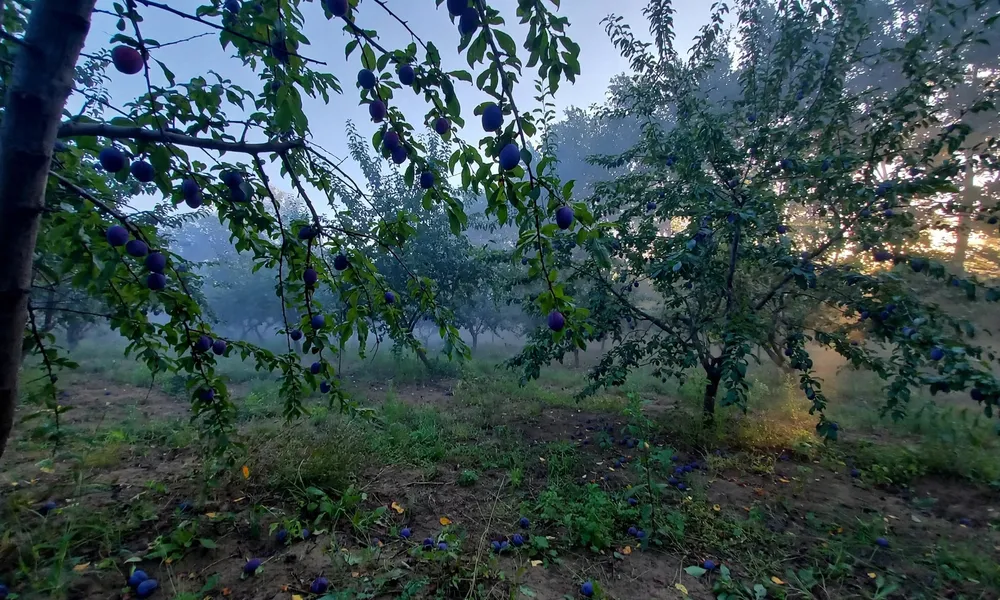
Decide next whether you want blossom or fruit. Blossom is a spring trip, beautiful but short and weather-dependent, and a late frost can end it in a night. Fruit is a summer trip, and it lasts longer, but each variety ripens in its own window. One variety means about a week of fruit; five varieties can stretch the season to a month.
Decide finally how you want to travel. Western Europe is the easiest to reach, with trains and good roads. East Asia rewards a slower trip, with blossom and tea alongside the orchard. The Balkans are the wildest and warmest, with simple rooms and long meals. Book the farm first, then the transport, because the farm’s dates are fixed.
9 steps to planning a plum farm escape
Start with the blossom: plum trees flower before they leaf
What to do: Learn the blossom dates for your region before you book, and ask the farm when the trees flowered last year. Plum blossom opens before the leaves, and the display usually lasts two to three weeks. What to avoid: Do not book blossom dates a year ahead without checking, because a warm winter can bring the blossom forward. Best For: Spring travellers who want flowers and pickling lessons. Time Needed: An hour of research. Standout Tip: Ask the farm for a photograph of last year’s blossom.
Learn the three plum families before you book
What to do: Learn the difference between the three plum families, because each tastes different and is used differently. European plums are sweet and good for eating and drying. Japanese plums are sharp and fragrant, pickled and steeped, not eaten raw. American plums are small and tart, mostly a wild fruit. What to avoid: Do not assume a plum is a plum. A Japanese ume and a French greengage have almost nothing in common except the name. Best For: Anyone choosing between regions. Time Needed: Half an hour of reading. Standout Tip: Pick the family first, then the region.
Pick your plum by use: eating, cooking and drying are different fruit
What to do: Decide whether you want eating, cooking or drying plums, and choose a farm that grows the right kind. Eating plums are sweet and soft. Cooking plums are tart and hold their shape. Drying plums are bred to dry into prunes, keeping their sweetness. What to avoid: Do not expect one variety to do everything: a drying plum is poor eating, and an eating plum makes a poor prune. Best For: Food lovers who want to taste the differences. Time Needed: A short email to the farm. Standout Tip: Ask to taste three varieties side by side.
Choose a freestone variety if you want to pick and eat from the tree
What to do: Ask the farm which varieties are freestone, meaning the flesh parts cleanly from the stone, and book for those if you want to pick and eat from the branch. Freestone plums are the easiest to eat fresh and to pit for cooking. What to avoid: Do not plan a picking day around a clingstone variety, because the flesh sticks to the stone. Best For: Families and first-time pickers. Time Needed: A few minutes on the phone. Standout Tip: A ripe freestone plum should give slightly under your thumb.
Visit a distillery and learn how plums become brandy
What to do: Book a farm with a working still, and ask to see the whole process, from the fermenting mash to the copper still to the cellar. Plum brandy is made by fermenting the fruit, distilling it, and ageing it, and the difference between a good brandy and a rough one is in the handling. What to avoid: Do not taste on an empty stomach. The brandy is strong, often over 40 percent. Best For: Adults who enjoy food and drink culture. Time Needed: An afternoon. Standout Tip: Taste the new spirit and the aged spirit side by side.
Taste a plum three ways: fresh, dried as a prune, and cooked in a dumpling
What to do: Ask the farm kitchen for the same plum served three ways: fresh, dried as a prune, and cooked in a dumpling. The three tastes are so different you will hardly believe they come from the same fruit. What to avoid: Do not skip the dried version: a good prune is a carefully dried one, and often the best of the three. Best For: Food lovers who think they do not like prunes. Time Needed: One lunch. Standout Tip: Try the plum butter, or lekvar, if the farm makes it.
Spend one evening in the orchard after the pickers leave
What to do: Ask the farm if you can walk the rows in the early evening, after the pickers have gone. The light is low, the fruit is cool, and the orchard smells of warm leaves. Take a basket, pick a few for tomorrow’s breakfast, and sit under a tree for a while. What to avoid: Do not wander into rows being sprayed or pruned, and do not pick from trees marked for another day. Best For: Anyone who wants the quiet side of the farm. Time Needed: An hour. Standout Tip: Bring a torch.
Ask how the farm prunes its trees, and why the shape matters
What to do: Ask the farmer to show you how the trees are pruned, and why they are shaped that way. Plum trees are pruned to let light and air into the centre, which keeps the fruit sweet, and the shape decides how much fruit it bears and how easy it is to pick. What to avoid: Do not prune anything yourself unless the farmer invites you to. Best For: Gardeners who like to understand how things work. Time Needed: Half an hour. Standout Tip: Look at the shape of the tree before you look at the fruit.
Leave with a bottle from the farm’s own still, bought after the tasting
What to do: Buy a bottle of the farm’s own brandy, or a jar of its jam, on the last morning, after you have tasted the grades. The farm shop is usually cheaper than any shop in town, and the bottle is the one you tasted. What to avoid: Do not buy brandy before you have tasted it, and do not buy more than you can carry home. Best For: Anyone who wants a souvenir that will get used. Time Needed: Half an hour. Standout Tip: Ask the farmer to write the variety and the year on the label.
Plum seasons, explained
Blossom comes first, in late winter or early spring, the earliest of the fruit blossoms in most regions. The trees flower before they leaf, so the orchard looks like white and pink cloud, and the display usually lasts two to three weeks. A late frost can end it in a night, which is why blossom is beautiful and unreliable, and why you should have a second plan.
The fruit follows in late spring to late summer, ripening variety by variety. Early plums come first, late plums last, and a farm with several varieties will have fruit for a month or more. The harvest is the busiest time on the farm, and the best time to visit. Our guide to planning an apricot farm escape describes a similar rhythm.
Autumn and winter are the quiet seasons. The trees lose their leaves, the work is pruning, and the pleasure is in the kitchen, the cellar and the fireside. A winter stay is slow, cheap and fireside-warm. If you want blossom or fruit, book spring or summer, and confirm the dates with the farm before you travel.
The caveats that matter
A plum farm escape is a working farm stay, not a resort, and it comes with a few warnings. The blossom depends on the weather, the harvest lasts only a few weeks, and a farm that looks open online may have no fruit left. Some farms sit a long way from anywhere, some have plain rooms, and some cook only what the season provides. Knowing that in advance makes the trip better.
| Detail | What is known |
|---|---|
| Best time for blossom | Late winter to early spring, usually two to three weeks, and a late frost can end it |
| Best time for fruit | Late spring to late summer, each variety in its own short window |
| How long to stay | Three to five nights is enough to see the orchard, taste the fruit and meet the farm |
| What to check before booking | Which varieties the farm grows, when they ripen, and whether picking is open |
| Brandy tastings | Plum brandy is often over 40 percent, so taste slowly and eat first |
| What to pack | Sturdy shoes, layers for cool mornings, and a bag for fruit you buy to take home |
| Allergies and sensitivities | Plum pollen and stone fruit can affect people with birch pollen or stone fruit allergies |
| What a plum farm does not do | It does not guarantee fruit on a given date, and it is not a resort with a spa and a pool |
If you have a stone fruit or birch pollen allergy, check with your clinician before you go. If you are pregnant, breastfeeding, or taking medication that interacts with alcohol, leave the brandy tastings out. The fruit, the jam and the walks are still worth the trip.
Checklist: planning a plum farm escape honestly
Use these checks before you book.
- Learn the families: know the three plum families before you choose a region.
- Ask about the fruit: which varieties does the farm grow, when do they ripen, and is picking open on your dates?
- Read what is covered: breakfast, an orchard walk and a tasting should be included, not charged as extras.
- Ask about meals: does the farm have a restaurant, a shared kitchen, or a farm table, and what does dinner look like?
- Prepare for the ground: orchards are uneven and muddy after rain, so pack sturdy shoes.
- Plan the trip home: buy fruit, jam and brandy on the final morning.
Frequently asked questions
Is plum blossom as short as cherry blossom?
Yes, and sometimes shorter. Plum blossom usually lasts two to three weeks, and a late frost can end it in days. Cherry blossom is more predictable in some regions, but plum blossom is earlier, so it is more exposed to late winter weather. Book early and be ready for the dates to move.
Can I pick plums in the orchard myself?
Usually yes, during the harvest, and most farms let guests pick a basket for breakfast or the farm table. Ask first, because some rows are reserved, and some varieties are too fragile for inexperienced hands. A ripe plum should twist off the branch with a gentle turn.
What is the difference between a plum and a greengage?
A greengage is a kind of plum, not a different fruit. It is a small, green, honey-sweet plum, known in France as the Reine-Claude, and it is one of the best eating plums in the world. It ripens fast and bruises easily, which is why it is rarely sold far from where it grows.
Is plum brandy strong, and can I taste it at the farm?
Yes to both. Plum brandy, whether it is called slivovitz, tuica, palinka or rakija, is usually over 40 percent alcohol, and the tastings on plum farms are generous. Taste slowly, eat first, and do not drive afterwards.
How many nights should I stay at a plum farm?
Three to five nights is enough: a day to arrive, a day in the orchard, a day for tasting, and a last morning to buy fruit and brandy. Longer stays suit gardeners and slow travellers, but the orchard does not change much after five days.
Are plum farm retreats good for families with children?
Yes, especially at harvest, when children can pick and help in the kitchen. The orchard is a safe place to run, the food is simple and good, and the farms are used to families. Check the ground first, because orchards are uneven, and skip the brandy tastings with children in tow. Our guide to planning a lavender farm escape is a good next step if you enjoy single-crop farm stays.
The bottom line
The best plum farm escape in 2027 is not the most expensive or the most photographed. It is the one where you choose the right plum family, book for the right season, and stay on a farm that grows plums as its main crop. Three to five nights is enough, and the fruit, the jam and the brandy all come from the same trees you walk past every morning.
Learn the three families, check the variety and the ripening dates with the farm, and plan your days around the orchard. That is the honest way to enjoy a plum farm escape, and the fruit will taste better for it.