Passion twists are the soft, wavy cousin of the classic twist: loose, bohemian twists made by looping water-wave hair through cornrows with a crochet hook. The result looks effortless, but the texture is what makes oiling tricky. The waves frizz if they dry out, and heavy oil flattens them into limp strands. Hair oils for passion twists have to do two opposite jobs at once: calm the scalp hidden under the cornrows and add shine to wavy hair that cannot absorb anything.
The problem is access and texture. Your natural hair sits in cornrows underneath, and the added hair hangs in loose waves on top. Oil poured over the surface lands mostly on synthetic fibre, where it coats rather than nourishes. Too much and the waves go stringy and dull; too little and the scalp itches under the install within days.
Below are nine hair oils worth considering for passion twists in 2027, chosen for light textures, scalp-friendly ingredients, and applicators that can reach the skin between the cornrows. Each one is described by what it does well, what to watch for, and who it suits best, so you can keep the scalp calm and the waves soft without weighing either one down.
Key takeaways
- Light, fast-absorbing oils suit passion twists best, because heavy oils flatten the waves and make the style look limp.
- The applicator is as important as the oil itself: only a nozzle tip or dropper can place oil on the scalp between the cornrows.
- Oil the scalp and your natural hair first, and use only a trace on the wavy lengths themselves.
- Water-wave hair does not absorb oil the way natural hair does, so a little sheen goes a long way and more does not help.
- An install that is too tight, or a scalp that is reacting to it, cannot be fixed with oil, and lasting itching, bumps, or pain mean the style should come out rather than be oiled more.
What hair oil actually does for passion twists
Under a passion twist install, your scalp is covered for weeks at a time. When hair is braided down and covered with added hair, the scalp’s own oils cannot move along the hair shaft the way they do when hair hangs loose. So the scalp dries out, feels tight, and starts to itch, even while the twists themselves still look fresh. Scratching makes it worse, because nails disturb the cornrows and can loosen the crochet loops at the roots.
On the twists themselves, oil plays a different role. Water-wave fibre does not absorb oil, so it cannot be nourished the way natural hair can. What oil does on synthetic hair is coat it: a tiny amount pressed in with flat palms smooths frizz, adds shine, and keeps the waves from looking dry and frayed. One drop smoothed over the lengths is all the waves need. A palmful leaves the hair limp, stringy, and dull, and it attracts dust and lint that are hard to remove without washing the whole install.
The third job is keeping your own hair safe for the day the style comes out. Cornrows that have been dry for six weeks are more likely to snap when the twists are removed and the braids are undone. That protection is the real point of oiling regularly, not the shine you see on top.
There is one more reason oil matters for passion twists in particular. The water-wave texture is at its prettiest in the first two weeks, and it is the ends that give the game away first, going dry and fuzzy while the roots still look new. A trace of oil on the ends every few days is what keeps the style looking like it did on install day, and it costs almost nothing in time.
How we chose these oils and what to look for
Texture came first in our shortlist. Before you buy, rub a drop between your fingers if you can, and watch how quickly it disappears into the skin. The best oils for passion twists are light and fast-absorbing, the kind that sink into the scalp rather than sitting on top of it. Heavy, sticky oils have their place in hair care, but on a passion twist install they mostly end up coating the waves, which is exactly what makes the style look tired.
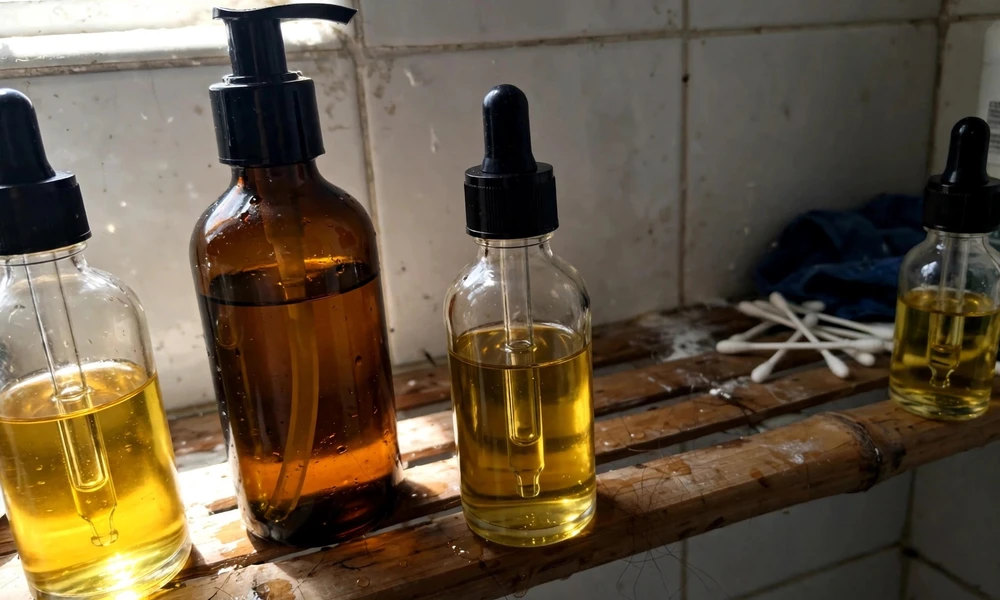
We looked next at the applicator. A pump bottle or a wide-mouth jar spreads oil everywhere except where it belongs, and when the scalp is hidden under cornrows, placement is everything. A nozzle tip, a dropper, or a thin spout lets you draw a line of oil along each cornrow and massage it in with your fingertips, without flooding the twists.
We also weighed scent and sensitivity. Passion twists sit close to the face, so a strong fragrance is hard to escape for six weeks. The oils below favour mild, clean scents, and several are close to fragrance-free. If your scalp is reactive, patch-test behind the ear for two to three days before using any oil all over the scalp.
The 9 best hair oils for passion twists of 2027
Kreyol Essence Haitian Black Castor Oil
What We Like: A pure, thick castor oil that seals moisture into the ends and calms dry edges, with a warm, nutty scent and no added fragrance. What to Consider: It is heavy, so keep it on the scalp and the very ends, and keep it off the wavy lengths or they will go limp. Best For: Dry edges and sealing twist ends. Material: Ricinus communis (castor) seed oil. Price Range: Around $15 to $20 (approximate). Standout Feature: Pure Haitian black castor oil with a warm, nutty scent.
Bask & Lather Scalp Stimulator
What We Like: A tingling scalp oil with a nozzle tip made for partings, designed for protective styles, with rosemary and peppermint that calm itching fast. What to Consider: The tingle is strong at first, so use less than you think on a sensitive scalp, and skip it entirely if the scalp is broken or sore. Best For: Scalps that itch during a long install. Material: Rosemary oil, peppermint oil, castor oil, grapeseed oil. Price Range: Around $18 to $25 (approximate). Standout Feature: Nozzle applicator made for partings.
Cécred Restoring Hair & Edge Drops
What We Like: Feather-light drops that smooth flyaways and edges without flattening the waves, with a silk-like finish and no greasy feel. What to Consider: The bottle is small and the price per millilitre is high, and it is a finishing oil, not a scalp treatment. Best For: Edges and flyaways. Material: Squalane, baobab oil, sea buckthorn oil. Price Range: Around $30 to $40 (approximate). Standout Feature: Silk-like finish with no greasy feel.
As I Am Classic Jamaican Black Castor Oil
What We Like: A classic Jamaican black castor oil that seals the ends and protects the edges, widely available and easy on the budget. What to Consider: Very heavy, so use it on the scalp and the ends only, and keep it off the wavy lengths except for the last inch. Best For: Sealing ends and protecting edges. Material: Jamaican black castor oil. Price Range: Under $12 (approximate). Standout Feature: Old-school sealing oil at a low price.
Dr. Miracle’s Daily Moisturizing Gro Oil
What We Like: A light daily oil with a clean, pleasant scent, easy to find, and good for a quick scalp refresh between washes. What to Consider: It contains fragrance, so skip it if your scalp is sensitive, and it is a maintenance oil rather than a treatment. Best For: Daily scalp refresh. Material: Mineral oil blend, vitamin E, aloe. Price Range: Under $10 (approximate). Standout Feature: A daily-use oil that smells clean, not medicinal.
Adwoa Beauty Baomint Protect + Shine Oil Mist
What We Like: A fine mist that adds shine without weight, ideal for refreshing waves between washes, with baobab oil and a cool mint note. What to Consider: A mist is hard to aim at the scalp, so use it on the lengths only, and shake it well before each use. Best For: Refreshing waves and adding shine. Material: Baobab oil, mint oil, squalane. Price Range: Around $25 to $30 (approximate). Standout Feature: Mist applicator that never over-oils the waves.
Ouidad Mongongo Oil Multi-Use Hair Treatment
What We Like: Mongongo oil smooths frizz and adds gloss to curly and wavy textures, and a single drop per twist is enough to bring the waves back to life. What to Consider: Richer than most oils on this list, so use one drop per twist and no more, or the waves will look weighed down. Best For: Frizz control on the wavy lengths. Material: Mongongo oil, kukui oil. Price Range: Around $35 to $45 (approximate). Standout Feature: Salon-grade gloss for curly and wavy textures.
R+Co Gemstone Color Shine Oil
What We Like: A colour-safe shine oil that leaves the waves glossy without residue, and a good pick if your twists are coloured or highlighted. What to Consider: The price is high for the size, and it does nothing for the scalp, so pair it with a separate scalp oil. Best For: Coloured twists that need gloss. Material: Sunflower seed oil, rice bran oil. Price Range: Around $35 to $45 (approximate). Standout Feature: Colour-safe shine with no build-up.
Keracare Essential Oils for Hair
What We Like: A classic blend of natural oils that softens the natural hair underneath the install and keeps the scalp comfortable, and a little goes a long way. What to Consider: The herbal scent is strong, and the bottle has no nozzle, so decant it into a dropper bottle for precise application. Best For: Softening natural hair under the install. Material: Jojoba oil, olive oil, sweet almond oil. Price Range: Under $15 (approximate). Standout Feature: A long-running salon staple for natural hair.
Which hair oil is right for your passion twists
If your scalp itches, start with a nozzle-tip oil such as the Bask & Lather Scalp Stimulator or the Kreyol Essence castor oil, and apply it along the partings two to three times a week. If the waves look dry and frizzy, reach for a mist or a single drop of a light oil pressed in with flat palms: the Adwoa Beauty mist or the Cécred drops are made for that job. If your twists are two-strand twists rather than passion twists, the best hair oils for twists covers that style in detail.
If your twists are coloured, choose a colour-safe oil such as the R+Co Gemstone oil, and keep heavy castor oils away from the lengths, since they can dull the colour and attract lint. If your budget is tight, the As I Am castor oil and Dr. Miracle’s Gro Oil cover the basics for under $12 each, and both are easy to find in drugstores and beauty supply shops.
If your scalp is sensitive, patch-test every new oil behind the ear, even one you have used on loose hair before. Skin that is covered for weeks reacts differently from skin that can breathe, and a tingle that feels pleasant for a minute can turn into itching that lasts for days. The light, fragrance-free options are the safest starting point, and you can always switch to a scented oil once you know the scalp tolerates it.
For more ideas on oiling other protective styles, see the best hair oils for box braids and the best hair oils for crochet braids. The scalp technique is similar across these styles, though the wave texture of passion twists needs a lighter hand on the lengths than either of them.
The caveats that matter
| Detail | What is known |
|---|---|
| Best oil texture | Light and fast-absorbing; heavy oils flatten the waves and dull the style |
| Where to apply it | Scalp and natural hair first; wavy lengths need only a trace |
| How often to oil | Two to three times a week for the scalp; daily only if the scalp is very dry |
| What to avoid on the waves | Heavy castor oil and thick butters, which coat the fibre and attract lint |
| Who should patch-test | Sensitive scalps; test behind the ear for two to three days before full use |
| What loosens an install | Oil pooling at the crochet loops; keep oil off the looped base |
| When to wash or remove | If the scalp itches constantly, flakes heavily, or smells musty, wash or take the style down |
| What oil does not do | It does not feed synthetic hair or fix an install that is too tight |
If you have a scalp condition, are using a prescription scalp treatment, or notice bumps, sores, or hair loss along the hairline, check with a clinician or dermatologist before continuing with the install. Pain means the install is wrong for you, and no oil can make a too-tight style safe.
Checklist: choosing a hair oil for passion twists honestly
Use these checks before you buy, and again after a week of use.
- Feel it first: a drop on the back of your hand should sink in within a minute, not sit in a greasy film.
- Look for a nozzle: the oil has to travel down a narrow parting, so a thin spout or dropper beats a wide pump.
- Read the label: one or two named oils you recognise beat a long list of fragrances and fillers.
- Test it on skin first: a dab behind the ear, watched for two to three days, tells you more than any review.
- Begin with less than you think: three drops per cornrow is a starting point, not a rule, so add more only when the scalp still feels tight.
- Keep the base dry: oil creeping into the looped roots is what makes twists slide, so stop a finger’s width short.
Frequently asked questions
Can I use hair oil on passion twists every day?
A light oil on the scalp two to three times a week is enough for most people. Daily oiling suits only a very dry scalp, and the waves need oil far less often than the scalp does, so a trace pressed in with flat palms once or twice a week keeps them glossy without weighing them down.
Will hair oil make my passion twists slip out?
Only if oil reaches the looped base. Keep it on the scalp and the lengths, and leave the loops dry, and the twists stay anchored. If twists start to slide at the roots, you are almost certainly oiling too close to the base.
Can I use hair oil on synthetic passion twist hair?
Yes, but only a trace. Synthetic fibre cannot absorb oil, so a drop pressed in with flat palms adds shine. More than that leaves the waves limp and attracts lint, and it is hard to wash out without disturbing the whole install.
How do I oil my scalp under passion twists?
Part the twists to expose a cornrow line, draw a thin line of oil along it with a nozzle tip, and massage it in with your fingertips. Work row by row, front to back, and use only a few drops per row.
What is the best oil for an itchy scalp under passion twists?
A light oil with peppermint or tea tree, such as the Bask & Lather Scalp Stimulator, usually calms itching fastest. If itching persists, flakes heavily, or the scalp is sore, take the style out rather than oiling more.
How long can I keep passion twists in with regular oiling?
Six to eight weeks is the usual range. Oil keeps the scalp comfortable, but it does not stop the natural hair from matting at the roots, so do not stretch the install past eight weeks.
The bottom line
Passion twists ask for a lighter hand than most protective styles. The waves look their best with almost no oil at all, while the scalp underneath needs regular, careful oiling through the cornrows. Choose a light oil with a nozzle, keep it off the looped base, and let the waves do the talking.
If the scalp itches constantly, the twists slip, or the hairline hurts, the answer is not more oil: it is a looser install or an earlier take-down. Oil is maintenance, not a repair, and the healthiest passion twists are the ones that come out on time.