Box braids are one of the most protective styles you can wear, but the style only protects your hair if the hair underneath stays moisturised. Once the braids are in, your scalp is covered by neat, tight partings and your lengths are locked inside three-strand plaits. A few drops, used in the right places, keep the scalp comfortable, stop the braids from looking dry and dull, and make takedown far easier weeks later.
The mistake most people make is treating box braids like loose hair and oiling everything heavily. Box braids do not need a lot of oil. They need a little oil, often, in the right spots: the partings, the scalp, the length of each braid, and the ends. Too much oil weighs the braids down, collects dust and lint, and leaves a greasy film on the scalp that is hard to wash out without disturbing the style.
Below are nine hair oils worth considering for box braids in 2027, from light scalp oils that absorb fast to richer sealing oils that keep the ends smooth. Each one is described by what it is good at, what to watch for, and who it suits best, so you can choose for your hair and your scalp, not just a bestseller list.
Key takeaways
- Box braids need a little oil, often, in the right places: the partings, the scalp, the length of each braid, and the ends.
- Light oils suit the scalp and partings, while richer oils suit the length and the ends, where moisture escapes fastest.
- Apply oil with a nozzle or dropper so it reaches the scalp through the partings, instead of sitting on top of the braids.
- Oil the ends before they dry out, and re-oil the scalp every two to three days to keep it comfortable between washes.
- No oil makes braids last forever, and an itchy, sore, or flaking scalp that does not settle is a sign to wash the braids or take them down.
What box braids need from a hair oil
Box braids are installed in square-shaped sections, with each braid starting from its own knot at the root. That structure is what makes them protective: the hair is tucked away, handled less, and shielded from daily heat and manipulation. It also creates two problems oil is meant to solve. The first is the scalp. With the hair pulled into sections, the scalp is exposed along every parting and can dry out quickly, especially in cold weather or dry indoor air. The second is the ends. The tips of the braids are the oldest, most fragile part of your hair, and once they dry out they fray, split, and tangle with neighbouring braids.
A good box-braid oil therefore has to do two jobs at once. On the scalp it should be light enough to absorb without sitting in a greasy layer, and gentle enough to use every few days without clogging the partings. On the lengths and ends it should be rich enough to seal in moisture and smooth the surface of the braid, so the style keeps its shine for weeks instead of going dull after the first few days. One oil can do both jobs, but many people use a light oil for the scalp and a heavier one for the ends, which is a sensible split.
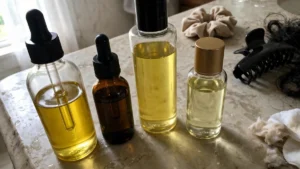
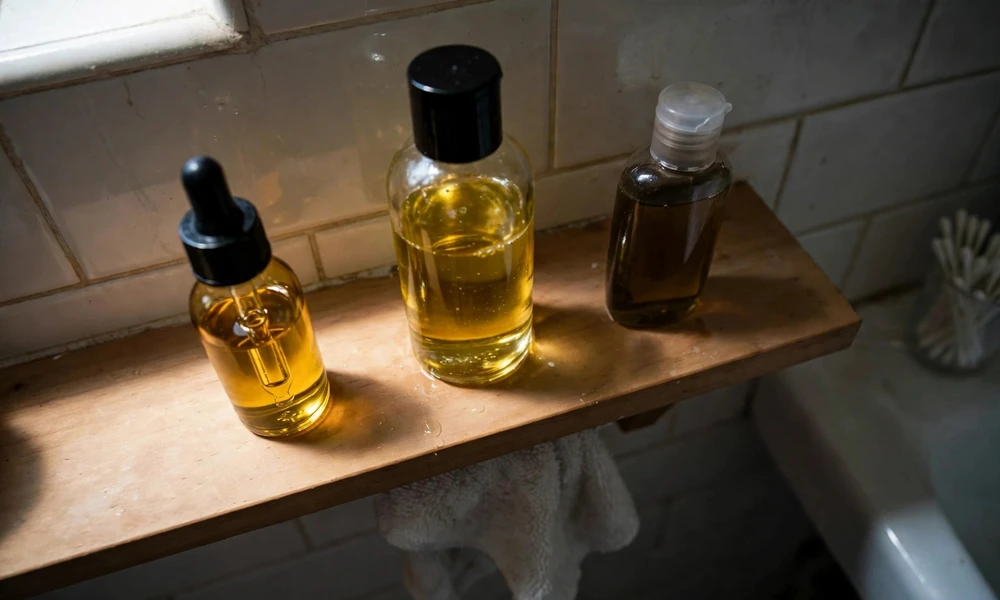
How the oil is delivered matters as much as what is in it. A wide-mouth jar or a pump bottle is awkward for braids, because the oil lands on top of the style instead of reaching the scalp. A nozzle tip or a glass dropper lets you place a thin line of oil directly along a parting, where it belongs. It is a small step, and it changes how well the oil actually works.
How we chose these oils and what to look for
Look first at the weight of the oil. Light oils such as argan, jojoba, grapeseed, and almond absorb quickly and suit the scalp, especially if your scalp gets oily or you wear your braids for six to eight weeks. Richer oils such as castor, olive, and shea-based blends seal better and suit the length and ends, where the hair is oldest and driest.
Look next at the ingredients list. A short list is usually a good sign. Oils built around one or two recognisable base oils, such as argan, jojoba, castor, or coconut, are easier to predict than long blends with added fragrance and silicone. If your scalp is sensitive, choose a fragrance-free oil, or one scented only with a small amount of essential oil, and patch-test it on one parting before you use it all over. Our guide to hair oils for braids explains the same principle for braided styles in general, because what irritates a scalp under braids is very similar from one braid style to the next.
Finally, look at the price against how much you will actually use. A little oil goes a long way on box braids, so a small bottle often lasts the whole install. There is no need to buy the largest size, and there is no need to pay a luxury price for a simple, well-made oil.
The 9 best hair oils for box braids of 2027
Mielle Organics Mint Almond Oil
What we like: A light, sweet-almond-based oil with a fresh mint scent that feels cooling on the scalp, absorbs quickly, and leaves no sticky film on the partings. What to consider: The mint can tingle, so sensitive scalps should patch-test first. Best For: Oiling the scalp and partings between washes. Material: Sweet almond oil, mint. Price Range: Around $10 to $13. Standout Feature: A light, cooling scalp oil that absorbs fast.
SheaMoisture 100% Pure Argan Oil
What we like: A single-ingredient argan oil that is light, absorbs well, and works on the scalp, the length, and the ends without leaving a heavy residue. What to consider: It is a plain, unscented oil, so it does not add shine the way a silicone blend would. Best For: An all-round oil for scalp and braids. Material: 100% pure argan oil. Price Range: Around $9 to $12. Standout Feature: One ingredient, no fragrance, no fillers.
Difeel Rosemary Mint Premium Hair Oil
What we like: A rosemary and mint blend that feels stimulating on the scalp, comes in a generous bottle for the price, and smooths the surface of the braids nicely. What to consider: The herbal scent is strong, and the oil is slightly heavier than a pure argan oil. Best For: Scalp massage and smoothing dull braids. Material: Rosemary oil, mint oil, sunflower oil. Price Range: Around $6 to $9. Standout Feature: A budget-friendly rosemary and mint blend.
Hask Macadamia Oil Moisturizing Shine Oil
What we like: A light, macadamia-based oil that adds shine without weight, smells soft and warm, and is easy to find in most drugstores. What to consider: It is a shine oil rather than a treatment oil, so it does not replace a proper scalp oil. Best For: Adding shine to the length of the braids. Material: Macadamia oil, argan oil. Price Range: Around $4 to $7. Standout Feature: Lightweight shine for the length of the braids.
OGX Coconut Miracle Oil Penetrating Oil
What we like: A coconut-based oil that sinks into the hair well, softens the ends, and has a warm, familiar scent that is not overpowering. What to consider: Coconut oil can feel heavy on fine hair, so use less than you think you need. Best For: Softening dry ends and taming frizz. Material: Coconut oil, vanilla bean extract. Price Range: Around $7 to $10. Standout Feature: A penetrating oil that softens the oldest part of the braid.
John Frieda Frizz Ease Nourishing Oil Elixir
What we like: A light, silky oil elixir that smooths flyaways, tames the frizz that appears around the hairline, and does not weigh the braids down. What to consider: It contains silicones, so it coats rather than absorbs, and it is not the best choice for a sensitive scalp. Best For: Smoothing flyaways and the hairline. Material: Argan oil, silicone blend. Price Range: Around $8 to $11. Standout Feature: A frizz-smoothing elixir for the hairline and partings.
Marc Anthony Argan Oil of Morocco Oil Treatment
What we like: A rich argan treatment that leaves the braids feeling soft, adds a healthy shine, and works well as a pre-wash treatment on the lengths. What to consider: It is richer than a daily scalp oil, so it is best used on the braids rather than the scalp. Best For: A weekly deep condition for the braids. Material: Argan oil, keratin. Price Range: Around $8 to $12. Standout Feature: A rich weekly treatment for the length of the braids.
Weleda Rosemary Hair Oil
What we like: A simple, plant-based rosemary oil with a clean ingredient list, a gentle herbal scent, and a light texture that suits regular scalp use. What to consider: The bottle is small, and the oil is best used little and often rather than in large amounts. Best For: Regular, gentle scalp care. Material: Rosemary oil, peanut oil. Price Range: Around $15 to $19. Standout Feature: A simple, plant-based oil for sensitive scalps.
Hollywood Beauty Hot Six Oil
What we like: A classic blend of six oils that has been used on braided styles for years, warms nicely in the hands, and seals the ends well. What to consider: It is a heavier oil, so it is best for the ends and lengths rather than the scalp. Best For: Sealing the ends of the braids. Material: Olive oil, castor oil, coconut oil, and three more oils. Price Range: Around $4 to $6. Standout Feature: A classic six-oil blend for sealing dry ends.
Which oil suits your hair and scalp
Fine hair and box braids need the lightest touch. A heavy oil will pull the braids down, make the roots look greasy, and collect lint along the partings. If your hair is fine, choose a light oil such as argan or almond, use a dropper, and oil the scalp every two to three days rather than daily. The braids themselves need even less: a light pass down the length once a week is usually enough.
Thick, coarse, or very dry hair can take more. A richer oil such as castor or a six-oil blend seals the ends better and keeps the lengths soft for longer, especially if your braids are long and the ends are months old by the time you take the style down. Our guide to hair oils for knotless braids makes the same distinction, because the weight of the oil matters more than the brand name, whatever the braid style.
A sensitive or itchy scalp needs the simplest oil you can find. Fragrance-free, single-ingredient oils are the safest starting point, and a patch test on one parting for two days will tell you more than any review can. If the itch does not settle with a gentle oil, the problem may be the install itself: braids that are too tight, or a reaction to the braiding hair, will not be fixed by any oil, and it is better to loosen or remove the style than to keep oiling over the irritation.
The caveats that matter
Hair oil helps box braids, but it does not fix a bad install. Braids that are too tight at the edges, braids installed on a sore scalp, or braids left in far past their safe wear time will cause damage no oil can undo. Oil is maintenance, not repair. It cannot rescue hair that is already breaking at the root.
| Detail | What is known |
|---|---|
| Best oil weight for the scalp | Light oils such as argan, jojoba, almond, or grapeseed absorb fastest |
| Best oil weight for the ends | Richer oils such as castor, olive, or a six-oil blend seal better |
| How often to oil the scalp | Every two to three days, a thin line along each parting |
| How often to oil the braids | Once a week down the length, and on the ends as needed |
| Who should start gently | Sensitive scalps; patch-test one parting for two days first |
| What to avoid | Heavy oiling at the roots, and oil on a sore or broken scalp |
| How to apply it | With a nozzle or dropper, directly along the partings |
| What it does not do | It does not fix tight braids, stop breakage at the root, or replace washing |
If your scalp is broken, bleeding, or has raised bumps after install, do not oil over it. Leave the area alone, keep it clean and dry, and speak to a dermatologist or your braider about loosening the style. Oiling an open or infected scalp can make things worse, and a style is never worth a scalp injury.
Checklist: choosing a hair oil for box braids honestly
Use these checks before you buy, and again after the first week of wear.
- Check the weight: light oil for the scalp, richer oil for the ends, never heavy oil at the roots.
- Check the applicator: a nozzle or dropper reaches the scalp through the partings, a pump does not.
- Check the ingredients: a short list with recognisable base oils is easier to predict than a long, fragranced blend.
- Patch-test first: one parting, two days, before you use a new oil all over your scalp.
- Start with less: a thin line along each parting is enough; you can always add more, but you cannot easily remove excess.
- Watch the ends: if the tips of the braids feel dry or start to fray, oil them before they tangle with each other.
Frequently asked questions
How often should I oil my box braids?
Oil the scalp every two to three days, and the length of the braids about once a week. The ends can be oiled whenever they feel dry. Daily heavy oiling is not needed and usually leaves the style greasy and weighed down.
Can I use any hair oil on box braids?
Most hair oils work, but light oils suit the scalp and richer oils suit the ends. Avoid very heavy oils at the roots, and avoid anything that makes your scalp itch. A simple, fragrance-free oil is the safest choice if you are unsure.
Will hair oil make my box braids slip out?
Not if you use a little. A thin line of oil along the partings will not loosen the braids. Large amounts of oil at the roots can make the hair slippery and the knots looser over time, which is another reason to use less, not more.
Should I oil my scalp before or after getting box braids?
Before, lightly. A clean, lightly oiled scalp is a better base for braiding than a dry, flaky one. Ask your braider to oil the partings as they work, and then keep the routine going every two to three days at home.
Can I wash my box braids if I have been oiling them?
Yes, and you should. Wash with diluted shampoo, focusing on the scalp, and re-oil lightly once the braids are mostly dry. Oiling does not replace washing, and a scalp that is never washed will itch no matter how much oil you use. Our guide to hair oils for goddess braids covers the same wash-and-re-oil rhythm, because it works for any long-wear braid style.
How long can I keep box braids in with regular oiling?
Most people wear box braids for four to eight weeks. Oil helps the style look and feel better for longer, but it does not extend the safe wear time. After eight weeks, take the braids down, wash and condition your hair properly, and give your scalp a break before the next install.
The bottom line
The best hair oil for box braids in 2027 is not the most expensive or the most heavily marketed. It is a light oil for the scalp, a richer one for the ends, applied little and often with a nozzle or dropper, so the oil reaches the partings instead of sitting on top of the style. Start with a simple, well-made oil, patch-test it, and let your scalp tell you whether it works.
Choose one scalp oil and one sealing oil, use them consistently for the life of the install, and wash the braids when the scalp needs it. That is the honest way to keep box braids comfortable, shiny, and protective, without the grease, the itch, or the breakage that comes from oiling the wrong way.