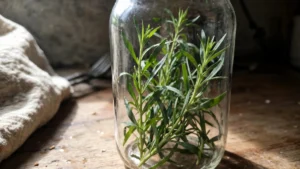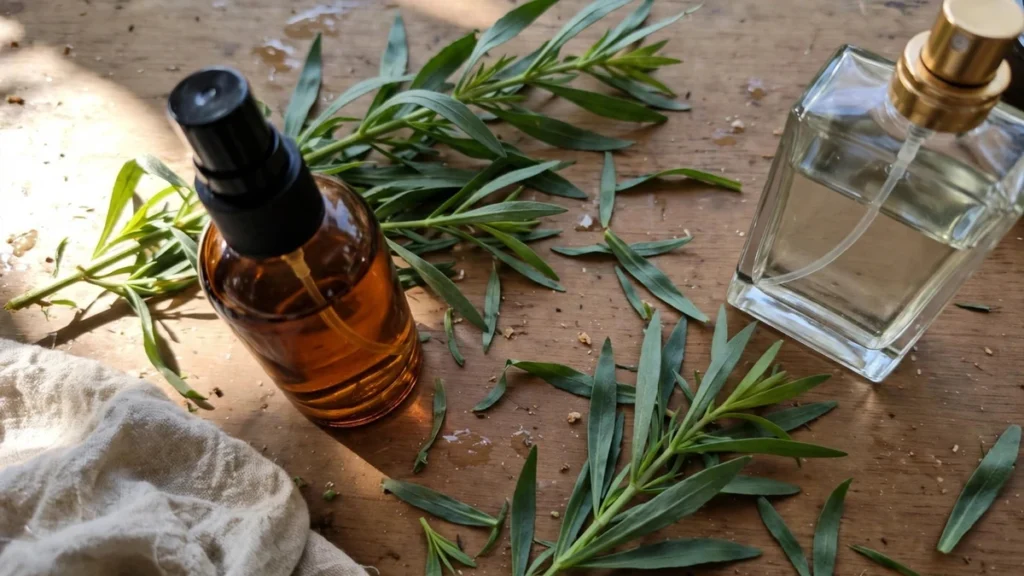
Tarragon is the sharpest green note in the perfumer’s herb garden, and one of the easiest to miss. It smells fresh, green and faintly aniseed, with a clean, slightly peppery edge. In a perfume it rarely takes the lead. Instead it sharpens a floral, steadies a fougère, or gives a classic cologne a lift that feels both old-fashioned and modern at once.
Most people know tarragon from the kitchen, where it seasons chicken, fish and sauces. In perfume it plays a different role, adding a green, aromatic brightness that keeps sweet or powdery compositions from turning flat.
Below are nine perfumes that list tarragon in their published notes, from a classic masculine cologne to a modern rose, so you can see how one herb can smell so different in different company.
Key takeaways
- A tarragon perfume is a fragrance that lists tarragon, a green, faintly aniseed herb note, among its published notes.
- Tarragon is almost always a top or heart note, adding green brightness at the opening rather than weight in the base.
- The note gets its anise-like character from estragole, the same compound that gives tarragon its kitchen smell.
- It pairs well with vetiver, iris, rose, citrus and other herbs, and it keeps sweet or powdery compositions from feeling flat.
- No tarragon perfume will smell like a herb garden all day, and a scent that turns sharp or bitter on your skin is unlikely to soften with more wear.
What tarragon smells like in a perfume
Tarragon smells green, fresh and faintly aniseed, with a cool, slightly peppery lift and a soft sweetness underneath. It is less sweet than basil, less sharp than mint, and less medicinal than oregano. The French cook’s word for it is estragon, and the smell is closer to a mild anise or a green liquorice than to any other herb, but it never reads as a sweet spice.
In perfume, tarragon usually appears in the top notes, where it gives the opening a clean, herbal brightness, or in the heart, where it steadies the middle of the scent. It is a green note in the truest sense: it smells like leaves, not like flowers or wood, and it fades within an hour or two, leaving the heart and base notes to carry the rest of the wear.
Because tarragon is a top note, it is easy to miss if you judge a perfume on the drydown alone. The first spray is where it does its work. Our guide to the best oregano perfumes shows the bolder, drier side of this herb family, and the contrast is the best way to understand what makes tarragon distinct.
How we chose these perfumes and what to look for
Every perfume on this list names tarragon in its published note breakdown. That was the first test, and it is the only test that matters for a note roundup. A perfume that smells green is not a tarragon perfume unless the note is actually in the formula.
Look at the notes around it. Tarragon works best with vetiver, iris, rose, citrus and other herbs, and it is often found alongside lavender, sage, juniper and cedar in aromatic and fougère compositions. If you enjoy the best basil perfumes, you will recognise the same green, aromatic family, but tarragon is cooler and more aniseed, with a sharper green edge.
Look also at the concentration. An extrait de parfum will hold the herbal character a little longer than an eau de toilette. A lighter concentration is often the smarter choice if you want the green opening without a heavy base.
The 9 best tarragon perfumes of 2027
Amouage Honour Man
What we like: A sophisticated masculine composition that opens with tarragon, pink pepper and black pepper, over a floral heart of geranium, jasmine, gardenia and lily of the valley, on a base of vetiver, cedar, sandalwood, frankincense and tonka. It is green, spicy and quietly formal. What to consider: It is a rich, long-lasting scent, and the opening is more herbal than sweet, so it suits occasions rather than everyday wear. Best for: Formal occasions, cooler weather, and lovers of classic, structured masculine perfumes. Material: Eau de parfum, glass bottle. Price range: Approximately $300 to $360 for 100 ml. Standout feature: Tarragon opening one of the most elegant pepper and spice compositions available.
Honour Man is the most polished tarragon perfume on this list. The tarragon gives the peppery opening a green, herbal lift, and the frankincense and vetiver base keeps it grounded for hours.
Penhaligon’s Castile
What we like: A bright, clean composition that opens with tarragon, neroli and petitgrain, over orange blossom, rose and geranium, on a base of cedar, vetiver and musk. It smells like a sunlit garden after rain. What to consider: It is a light, fresh scent with moderate staying power, and the tarragon is most obvious in the opening. Best for: Daytime wear, warm weather, and anyone who wants a green, citrus-led perfume. Material: Eau de parfum, glass bottle. Price range: Approximately $200 to $240 for 100 ml. Standout feature: Tarragon blended with neroli and petitgrain for a clean, green opening.
Orlane Derrick
What we like: A vintage masculine aromatic that pairs tarragon with thyme and sage, over lavender, lemon and bergamot, on a base of geranium, vetiver and musk. It is green, herbal and deliberately old-fashioned, with no citrus sweetness to soften it. What to consider: It is a classic from 1978, and the herbal character is strong and uncompromising, so it will not suit everyone. Best for: Lovers of vintage aromatics, cooler weather, and anyone who wants tarragon without any fruit or sweetness. Material: Eau de toilette, glass bottle. Price range: Approximately $70 to $100 for 100 ml. Standout feature: The most direct, unsoftened tarragon perfume on this list.
Chloé Roses de Chloé
What we like: A bright floral that opens with bergamot, tarragon, litchi and lemon, over a heart of damask rose, magnolia and blackcurrant, on a base of white musk, amber and cedar. The tarragon keeps the rose from turning too sweet or too powdery. What to consider: It is a soft, daytime floral, and the tarragon is a lift rather than a character, so do not expect a strong herbal scent. Best for: Daytime wear, spring and summer, and anyone who loves rose but finds it too sweet. Material: Eau de toilette, glass bottle. Price range: Approximately $75 to $110 for 75 ml. Standout feature: Tarragon keeping a rose perfume fresh, green and never cloying.
Roses de Chloé is the best example of tarragon as a supporting player. The rose is the star, but without the tarragon the scent would be much sweeter, and the green lift is what makes it work every day.
Versace Man Eau Fraiche
What we like: A fresh, aquatic masculine that opens with white lemon, carambola and rosewood, over a heart of cedar, sage, tarragon and pepper, on a base of amber, musk and sycamore. It is clean, green and easy to wear. What to consider: It is a light, fresh scent with moderate longevity, and the tarragon sits in the heart rather than the opening, so it appears as the scent settles. Best for: Everyday wear, warm weather, and anyone who wants a fresh masculine with a herbal twist. Material: Eau de toilette, glass bottle. Price range: Approximately $45 to $65 for 100 ml. Standout feature: Tarragon in the heart of a clean, affordable aquatic masculine.
Bond No. 9 Washington Square
What we like: A unisex rose fragrance with tarragon as a main note, over jasmine, amber and musk. It is aromatic, green and floral at once, with the tarragon giving the rose a sharp, herbal edge that keeps it from feeling soft or powdery. What to consider: It is a niche, premium-priced scent, and the tarragon is bold here, so it is best tried before buying a full bottle. Best for: Rose lovers who want something greener and sharper, and anyone building a niche collection. Material: Eau de parfum, glass bottle. Price range: Approximately $300 to $350 for 100 ml. Standout feature: Tarragon as a leading note in a rose perfume, not a background accent.
Washington Square is the most tarragon-forward rose perfume on this list. The herb and the flower share the stage, and the result smells like a rose garden in spring, green and fresh rather than sweet and heavy.
Versace The Dreamer
What we like: A classic aromatic that opens with juniper, tarragon and artemisia, over a heart of iris, flax and lily, on a base of amber, tobacco and cedar. It is green, powdery and quietly romantic, with a herbal opening that feels both vintage and timeless. What to consider: It is a soft, understated scent, and the tarragon is most obvious in the opening before the iris takes over. Best for: Evenings, cooler weather, and lovers of classic, powdery aromatics. Material: Eau de toilette, glass bottle. Price range: Approximately $30 to $50 for 100 ml. Standout feature: Tarragon opening a green, powdery classic at an affordable price.
Prada Infusion d’Homme
What we like: A clean, soapy iris composition with tarragon listed on the box, over neroli, galbanum and cedar, on a base of iris, benzoin, vetiver and cedar. It is understated, elegant and quietly green. What to consider: It is a subtle, close-to-skin scent, and the tarragon is a gentle lift rather than a bold herbal character. Best for: Office wear, daytime, and anyone who likes clean, understated perfumes. Material: Eau de toilette, glass bottle. Price range: Approximately $90 to $130 for 100 ml. Standout feature: Tarragon lifting a refined iris cologne without ever taking over.
Issey Miyake L’Eau d’Issey Pour Homme
What we like: A modern classic that opens with yuzu, bergamot, lemon and tarragon, over a heart of nutmeg, water lily, saffron and cinnamon, on a base of vetiver, cedar, sandalwood and tobacco. It is fresh, aquatic and aromatic, with the tarragon adding a green, herbal edge to the citrus opening. What to consider: It is a widely available, well-known scent, and the tarragon is one voice in a large aromatic chorus. Best for: Everyday wear, warm weather, and anyone trying tarragon for the first time. Material: Eau de toilette, glass bottle. Price range: Approximately $60 to $85 for 75 ml. Standout feature: The most accessible tarragon perfume on this list, and a modern classic.
Which tarragon perfume is right for you
If you want the strongest tarragon character, start with Orlane Derrick or Bond No. 9 Washington Square. Derrick is the most direct and herbal, with no sweetness to soften it, while Washington Square pairs the herb with rose in a way that makes the tarragon easier to enjoy.
If you want tarragon as a lift rather than a character, start with Prada Infusion d’Homme or Chloé Roses de Chloé. Infusion d’Homme is clean, soapy and understated, with the tarragon adding a quiet green edge to the iris. Roses de Chloé uses the herb to keep a rose fresh and never cloying. Both are easy to wear every day, and both are good introductions to the note. Our guide to the best marjoram perfumes shows the softer side of this herb family, and is a good next step if tarragon feels too sharp.
If you want a classic, start with Versace The Dreamer or Issey Miyake L’Eau d’Issey Pour Homme. The Dreamer is green, powdery and romantic, with the tarragon opening the scent before the iris takes over. L’Eau d’Issey Pour Homme is fresh, aquatic and aromatic, with the tarragon adding a herbal edge to the citrus opening.
The caveats that matter
Tarragon is a top note, and top notes fade. A perfume that smells green and herbal in the first five minutes may smell completely different after an hour, and that is normal. Judge a tarragon perfume on the opening and on the drydown separately, and do not expect the herbal character to last all day.
| Detail | What is known |
|---|---|
| What the note is | The essential oil of Artemisia dracunculus, French tarragon, used as a top or heart note |
| What it smells like | Green, fresh and faintly aniseed, with a cool, slightly peppery lift |
| Key molecule | Estragole, also called methyl chavicol, which gives tarragon its anise-like character |
| Where it sits | Usually the top notes, sometimes the heart; rarely the base |
| Best pairings | Vetiver, iris, rose, citrus, lavender, sage and other green herbs |
| How it differs from basil | Tarragon is cooler, greener and more aniseed; basil is sweeter and more peppery |
| How long it lasts | An hour or two as an opening note, longer in rich fougère and amber bases |
| What to watch for | A sharp or bitter opening that does not soften within an hour |
French tarragon is the only variety used in perfumery, and it has the strongest, most aniseed character. Russian tarragon is a different plant with a much weaker smell, and it is not used in fine fragrance.
Checklist: choosing a tarragon perfume honestly
Use these checks before you buy, and again after a full day of wear.
- Confirm the note list names tarragon itself, rather than a vague herbal description.
- Note the placement: a top position means the herb fades fast, while a heart position means it lingers longer.
- Compare it with basil: if you know basil’s sweetness, tarragon’s cool aniseed edge will be easy to recognise.
- Try it on your wrist, since the herb reacts to skin chemistry more than most notes do.
- Give it sixty minutes before judging, because the sharp opening settles into a warmer drydown.
- Start with a sample: the boldest tarragon perfumes are niche and expensive, so try before you buy a full bottle.
Frequently asked questions
What does tarragon smell like in a perfume?
Green, fresh and faintly aniseed, with a cool, slightly peppery lift and a soft sweetness underneath. It smells like fresh herbs rather than sweet spices, and it adds brightness to the opening of a perfume without making it heavy.
Is tarragon a top, heart or base note?
Usually a top note, sometimes a heart note, and rarely a base note. In the top it gives the opening a clean, herbal brightness. In the heart it steadies the middle of the scent. It is too light and too volatile to anchor a base, so a perfume that lists tarragon in the base is unusual.
Is tarragon the same as anise?
No, although they smell related. Anise and star anise are sweeter and more liquorice-like, while tarragon is greener, cooler and more herbal. They share a molecule, anethole, in the case of anise, and estragole in the case of tarragon, which is why the family resemblance is real, but they are different materials with different characters.
Why do so few perfumes use tarragon?
Because it is a top note that fades quickly, and because its character is distinctive enough to divide opinion. Many perfumers choose a safer herb instead, or use tarragon in such small doses that it is hard to detect. The houses that do use it tend to be classic or niche, or they use it in small doses inside fougère and aromatic compositions where it supports rather than leads.
Does a tarragon perfume last long on skin?
It depends on the base. In a light citrus or aquatic composition the herbal character lasts an hour or two, while in a fougère or amber base it can last several hours. The tarragon itself is usually strongest in the first hour and softens as the heart and base notes take over, which is normal for a top note.
Can a tarragon perfume irritate skin?
Any perfume can irritate sensitive skin, and tarragon is no exception, although finished perfumes use the material at very low, safe doses. Patch-test on your inner arm before wearing a new scent all day, and stop using it if redness or itching persists. Never apply undiluted tarragon essential oil to skin.
The bottom line
A tarragon perfume is a fragrance that uses one of the sharpest green notes in perfumery, and it rewards the people who take the time to understand it. The note is green, fresh and faintly aniseed, it sits in the top or heart of a composition, and it adds herbal brightness to vetiver, iris, rose and fougère scents that would otherwise be too sweet or too heavy.
Start with an accessible tarragon perfume if you are new to the note, test any bold tarragon scent on skin before you buy, and give it an hour before you judge it. The perfumes that use tarragon well let it add character without letting it take over.