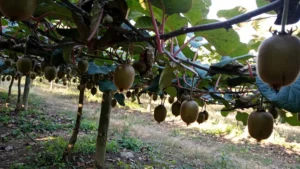
A kiwi farm retreat is a stay among pergola vines, and it works best when you plan it around the harvest rather than around a view. Kiwis grow on woody vines trained along overhead wires, and the fruit is picked hard in autumn, then ripened off the vine. The best stays let you walk the rows and taste the crop the day it is picked.
That is why the region matters more here than on an ordinary countryside break. The Bay of Plenty grows most of the world’s export kiwis, and Te Puke calls itself the kiwi capital. Italy, France, Chile and China all grow the fruit too, each with a different season, a different mix of green and gold varieties, and a different way of serving it. Choose the region first.
This roundup covers nine luxury kiwi farm retreats for 2027, from the orchards of New Zealand’s North Island to the kiwi valleys of Italy, France, Spain and Chile. Each is a region, not a named hotel, because the orchard is the point.
Key takeaways
- A kiwi farm retreat is built around the pergola vines and the autumn harvest, not a resort that happens to have orchards.
- The Bay of Plenty is the heart of the world’s kiwi trade, and Te Puke is the town that calls itself the kiwi capital.
- Green, gold and red kiwis are different fruit in flavour, price and season, so learn the three before you choose a region.
- Kiwis are picked hard and ripened off the vine, so a harvest stay is about picking, grading and tasting, not eating from the tree.
- Harvest dates move with the weather and the fruit is graded fast, so confirm picking is open on your dates.
What a kiwi farm retreat actually is
A kiwi farm retreat is a stay of three to five nights on a working kiwi orchard, in a farmhouse or a converted cottage among the vines. The days are simple: a walk under the pergola in the morning, a long lunch made with the farm’s own fruit, and an evening at the farm table. The orchard sets the day.
What makes it different from a vineyard stay or a general farm stay is the vine itself. Kiwis grow on woody vines that need a pergola of wires and posts to climb, and the farm’s year turns on pruning in winter, flowering in spring and picking in autumn.
The other thing that makes it different is how much of the fruit gets used. A good kiwi farm wastes almost nothing. The best fruit is sold fresh, the second grade is made into jam, dried slices or ice cream, and the fruit that does not make the grade goes to juice. That is why the food is so good: it is made from the same vines you walk under every morning.
How we chose these retreats and what to look for
We chose regions, not hotels, because a kiwi farm retreat is about the orchard. Our guide to the best luxury peach farm retreats follows the same rule.
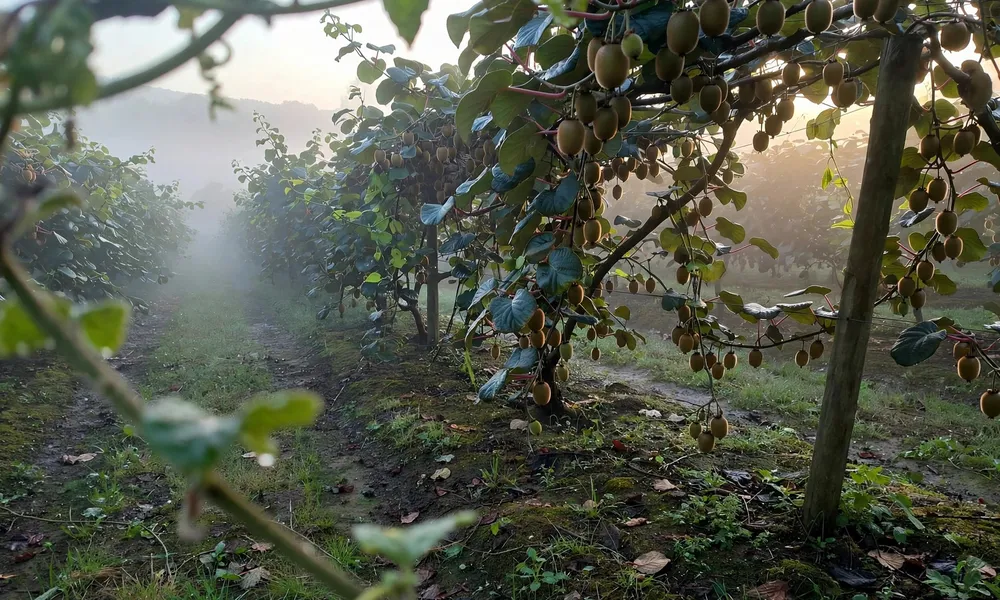
Green Hayward is the classic: tart, bright and the cheapest. Gold kiwi is sweeter, smoother and more expensive, and it ripens earlier. Red kiwi is the newest, with a sweet berry note and a short season.
Look next at the season. The southern hemisphere harvests in autumn, roughly March to May, and the northern hemisphere harvests in autumn too, roughly October to November. Blossom is a spring trip, beautiful but brief, and a late frost can end it in a night.
The 9 best luxury kiwi farm retreats of 2027
Kiwi Orchards of the Bay of Plenty, New Zealand
What we like: The Bay of Plenty is the heart of the world’s kiwi trade, and Te Puke is the town that calls itself the kiwi capital. The orchards here are vast, and the harvest runs on picking bags, grading lines and coolstores. The farms grow green Hayward and gold SunGold side by side. What to consider: This is the busiest kiwi region in the world, so harvest stays book out early and the orchards are working places, not quiet gardens. Best For: Travellers who want the full kiwi harvest at its biggest. Style: Farmhouses and orchard cottages with a packing shed on site. Price Range: About $280 to $520 a night. Standout Feature: Te Puke’s kiwi orchards and the green-versus-gold tasting in the farm shed.
Kiwi Orchards of Northland, New Zealand
What we like: Northland is New Zealand’s warm north, and its kiwi orchards ripen earlier than anywhere else in the country. The farms here are smaller and more relaxed than the Bay of Plenty, and the fruit is often sold at the farm gate. The vines flower early and the harvest starts while the south is still waiting. What to consider: Northland is a long drive from Auckland, and the roads are winding, so plan a slow arrival. Best For: Travellers who want an early harvest and a quieter orchard. Style: Small family orchards with guest rooms and a farm shop. Price Range: About $220 to $420 a night. Standout Feature: The earliest kiwi harvest in New Zealand, with farm-gate jam and dried kiwi.
Kiwi Orchards of Hawke’s Bay, New Zealand
What we like: Hawke’s Bay is famous for wine and apples, and its kiwi orchards sit between the vineyards and the sea. The farms here grow gold kiwi well. Many stays pair the orchard with a winery lunch. What to consider: Hawke’s Bay is a wine region first, so the kiwi orchards are smaller and the farm stays fewer. Best For: Food and wine lovers who want orchard and vineyard in one trip. Style: Vineyard cottages and farm stays with an orchard walk. Price Range: About $260 to $480 a night. Standout Feature: Gold kiwi picked in a wine region, with orchard and winery lunches on the same day.
Kiwi Orchards of Gisborne, New Zealand
What we like: Gisborne is the first place in the world to see the sun each day, and its kiwi orchards get the earliest light in the country. The farms here are family-run and the stays are simple: a farmhouse, a long table, and fruit for breakfast that was picked the day before. What to consider: Gisborne is remote, with one road in from the south, so it suits travellers who like slow, faraway places. Best For: Travellers who want a quiet, faraway orchard stay. Style: Farmhouses with shared meals and a sunrise orchard walk. Price Range: About $200 to $380 a night. Standout Feature: Sunrise over the orchard rows, and hand-picked fruit for breakfast.
Kiwi Orchards of Piedmont, Italy
What we like: Piedmont grows some of Europe’s best kiwis, and the orchards sit in the same hills as the hazelnuts and the vineyards. The farms here grow green Hayward mainly. Many stays pair the orchard with a truffle or hazelnut meal. What to consider: The harvest is in late autumn, and the weather can turn cold and wet, so pack layers. Best For: Travellers who want a European kiwi harvest with great food. Style: Agriturismo farmhouses with an orchard and a shared kitchen. Price Range: About $240 to $460 a night. Standout Feature: Kiwi picking in the Piedmont hills, with hazelnuts and truffles on the same table.
Kiwi Orchards of Lazio, Italy
What we like: Lazio, the region around Rome, is one of Italy’s biggest kiwi areas, and the orchards around Latina are some of the most productive in Europe. The farms here grow green and gold kiwis, and the stays are close enough to Rome for a day trip. The fruit is eaten fresh and made into jam. What to consider: The orchards are flat and productive rather than pretty, so this is a working-farm stay, not a hillside postcard. Best For: Travellers who want a kiwi harvest within reach of Rome. Style: Working farm stays with a farm shop and a short drive to Rome. Price Range: About $200 to $400 a night. Standout Feature: A kiwi harvest a short drive from Rome, with jam and sheep’s cheese on the farm table.
Kiwi Orchards of Southwest France’s Adour Valley
What we like: The Adour Valley in southwest France is the home of French kiwi, and the orchards along the river grow the fruit under a protected label. The farms here are small and the fruit is picked by hand. The harvest festival is a genuine village event. What to consider: The Adour is quiet and rural, with few English speakers outside the farm, so a little French goes a long way. Best For: Travellers who want a French village harvest with great food. Style: Stone farmhouses with a village harvest festival. Price Range: About $220 to $420 a night. Standout Feature: Hand-picked kiwis under a protected French label, with a village harvest festival.
Kiwi Orchards of Galicia, Spain
What we like: Galicia, in Spain’s green northwest, grows kiwis in the damp valleys along the Atlantic coast, and the orchards here are small, family-run and close to the sea. The fruit is picked in October and November, and the stays pair the orchard with the region’s seafood and Albariño wine. What to consider: Galicia is rainy, and the harvest can be wet, so pack a waterproof jacket. Best For: Travellers who want a kiwi harvest by the sea. Style: Stone farmhouses with an orchard and a coastal walk. Price Range: About $180 to $340 a night. Standout Feature: Kiwi picking in the Atlantic valleys, with seafood and Albariño on the same table.
Kiwi Orchards of the Maule Valley, Chile
What we like: The Maule Valley is Chile’s kiwi country, and the orchards here harvest in March and April, when the southern autumn is at its best. The farms grow green Hayward mainly. The farm table serves kiwi with the region’s wine. What to consider: The Maule is a long drive south of Santiago, so plan a slow trip with a night in the city first. Best For: Travellers who want a South American kiwi harvest with wine. Style: Vineyard farmhouses with an orchard and a tasting room. Price Range: About $180 to $360 a night. Standout Feature: A Chilean kiwi harvest in the Maule Valley, with vineyard lunches on the same trip.
Matching a kiwi region to your trip
Choose the Bay of Plenty if you want the biggest harvest and the fullest tasting. It is the busiest kiwi region in the world, so book early. Northland and Gisborne suit travellers who want a quieter, smaller orchard, with farm-gate sales and simple rooms.
Choose Italy or France if you want a European harvest in October and November, with the fruit picked in the autumn and the food built around it. Piedmont pairs the orchard with hazelnuts and truffles, Lazio pairs it with Rome, and the Adour pairs it with duck and prunes. Our guide to the best luxury apricot farm retreats makes the same point for stone fruit.
Choose Sichuan if you want the origin story, and Chile if you want a southern harvest with wine. Sichuan is the oldest kiwi culture and the most remote, while the Maule is the easiest South American option, with vineyards alongside the orchards. Check which varieties the farm grows before you book.
The caveats that matter
A kiwi farm is a working orchard, and the fruit decides the trip. The harvest is short, the grading is fast, and the weather can move the dates by a week. Book the farm first, then the transport.
| Detail | What is known |
|---|---|
| Best time for blossom | Late spring, usually two to three weeks, and a late frost can end it |
| Best time for harvest | Autumn: March to May in the southern hemisphere, October to November in the northern hemisphere |
| How long to stay | Three to five nights is enough to see the orchard, join the picking and taste the fruit |
| What to check before booking | Which varieties the farm grows, when they ripen, and whether picking is open |
| Green vs gold kiwi | Green is tart and bright; gold is sweeter, smoother and usually more expensive |
| Allergies and sensitivities | Kiwi allergy is real, and it can cross-react with latex and birch pollen |
| What to pack | Sturdy shoes, layers for cool mornings, and a bag for fruit you buy to take home |
| What a kiwi farm does not do | It does not guarantee fruit on a given date, and it is not a resort with a spa and a pool |
If you have a kiwi, latex or birch pollen allergy, check with your clinician before you go. Kiwi contains actinidin, an enzyme that can irritate the mouth and that stops jelly from setting, so the farm’s cooks will warn you about it.
Checklist: choosing a kiwi farm retreat honestly
Use these checks before you book.
- Learn the varieties: know the difference between green, gold and red kiwi before you choose a region.
- Ask about the fruit: which varieties does the farm grow, when do they ripen, and is picking open on your dates?
- Read what is covered: breakfast, an orchard walk and a tasting should be included, not charged as extras.
- Ask about meals: does the farm have a restaurant, a shared kitchen, or a farm table, and what does dinner look like?
- Prepare for the ground: orchards are uneven and muddy after rain, so pack sturdy shoes.
- Plan the trip home: buy fruit, jam and dried kiwi on the final morning.
Frequently asked questions
Where is the kiwi capital of the world?
Te Puke, in New Zealand’s Bay of Plenty. The town calls itself the kiwi capital, and the orchards around it grow most of the world’s export kiwis. The harvest there is the biggest and the most organised in the world.
What is the difference between green and gold kiwi?
Green kiwi, usually the Hayward variety, is tart, bright and the cheapest. Gold kiwi is sweeter, smoother and less acidic, with a smooth skin, and it ripens earlier. Red kiwi is the newest, with a sweet berry note and a short season. Taste them side by side if the farm grows more than one.
When do kiwi vines flower, and when is the fruit picked?
Kiwi vines flower in late spring, for about two to three weeks, and the flowers need bees to set fruit. The fruit is picked hard in autumn, roughly March to May in the southern hemisphere and October to November in the northern hemisphere, then ripened off the vine.
Can I eat a kiwi with the skin on?
Yes, and many people do. The skin of a gold kiwi is smooth, and the skin of a green kiwi is fuzzy but edible. Wash the fruit first, and try one with the skin on before you decide. The skin holds fibre, but it can irritate a sensitive mouth, so peel it if it bothers you.
Do I need a car to reach a kiwi farm?
Usually yes. Kiwi orchards are rural, and the farm stays are outside the towns, so a car makes the trip far easier. The Bay of Plenty and Lazio are the exceptions, with bus routes and short drives from a city, but even there a car gives you the freedom to visit more than one orchard.
Can I visit a kiwi farm outside harvest season?
Yes, but the trip is different. In winter the vines are bare and the work is pruning, which some farms let guests watch. The harvest is the best time to visit, because the picking, grading and tasting are all happening at once.
The bottom line
The best kiwi farm retreat in 2027 is not the most expensive or the most photographed. It is the one where you choose the right variety, book for the right season, and stay on a farm that grows kiwis as its main crop. Three to five nights is enough, and the fruit, the jam and the dried kiwi all come from the same vines you walk under every morning. Our guide to the best luxury lavender farm retreats follows the same rule for a different crop.
Learn the three kiwis, check the variety and the picking dates with the farm, and plan your days around the orchard. That is the honest way to enjoy a kiwi farm retreat, and the fruit will taste better for it.