
Bootcut jeans for men are easy to wear and surprisingly easy to get wrong. The cut is forgiving through the thigh, which is the whole point, but that forgiveness can turn into a shapeless outfit if the top is too loose, the shoes too slim, or the hem too long. A bootcut needs a little intention around it: a shirt that shows the waist, a boot the flare can sit over, and a hem that meets the shoe in one clean break.
The good news is that the rules are simple, and once you know them, a bootcut becomes one of the most useful pairs you own. It works for a weekend walk, a casual office, a smart dinner and a night out, with only the top and the shoes changing.
Below are nine steps for styling bootcut jeans for men in 2027, from buying the right opening to dressing the cut up for the evening. Each step is a practical move you can make in front of a mirror, with what to do, what to avoid, and how long it takes.
Key takeaways
- A bootcut flares from the knee, not the thigh — buy for the knee point and the leg opening, not just the waist size.
- The flare exists to sit over a boot, so choose the boot first and let the jeans fall over it.
- Show the belt buckle and keep the shirt tucked or half-tucked, or the waist disappears under the flare.
- A stacked-heel boot is the natural partner; a slim trainer needs a slimmer flare to work.
- No styling trick fixes a pair that is too long or too wide, so the hem length and the opening matter more than any accessory.
Why bootcut works for men in 2027
Denim has been moving away from the very slim for several years, and bootcut is where that move has settled for men who wear boots. It is not a fashion statement the way a wide leg is, and it is not a retro costume the way a bell-bottom can be. It is simply a practical cut that looks normal, which is why it has lasted: men buy it, wear it every week, and do not think about it again.
The cut earns its place because it fixes a genuine problem. A straight leg can catch on a boot shaft, and a slim leg disappears inside one. A bootcut gives the ankle room without changing the rest of the outfit, so the same shirt and jacket you wore with a straight leg still work.
It also works because it dresses up without any effort. A dark wash bootcut with a shirt and a jacket looks smart enough for most casual offices and most dinners, which a baggy jean does not. Our guide to styling bootcut jeans for women covers the same cut from the other side, and the fitting logic is identical: the flare starts at the knee, and the hem should meet the shoe without pooling.
How to approach a bootcut outfit
Start with the idea that the jeans are the relaxed part of the outfit, and everything else should be a little more considered. The shirt should have a collar or some structure, the shoes should be boots with a shaft the flare can cover, and the jacket should have a shape.
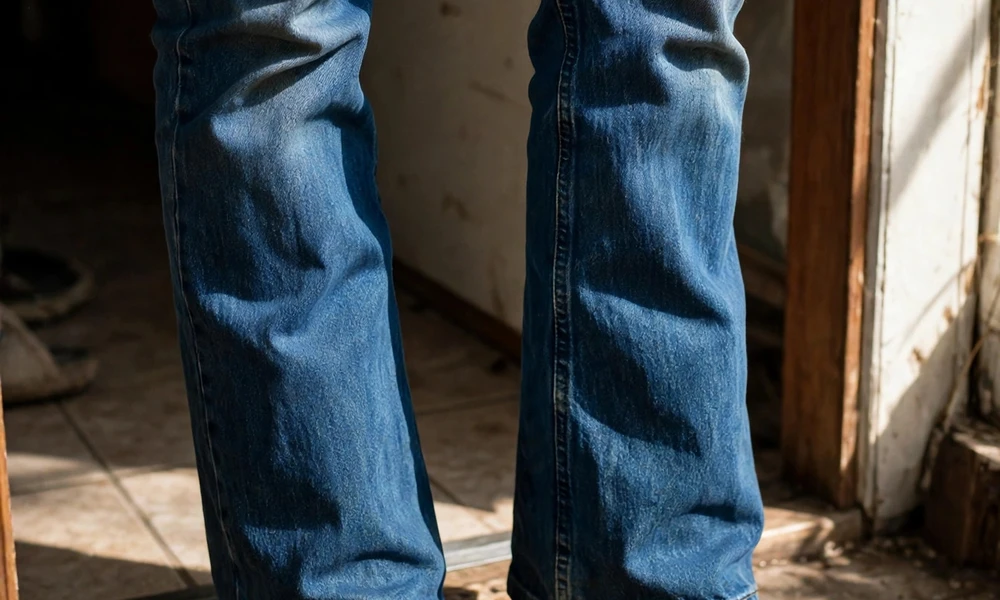
Think in terms of one flared piece and the rest fitted. If the jeans flare from the knee, the shirt should be tucked or half-tucked, the jacket should end at the hip, and the boots should be visible rather than hidden under a long hem. That contrast is what keeps the outfit looking planned rather than thrown together, and it is the most useful idea in this guide.
Finally, plan the outfit around the boots, not the other way round. A bootcut needs a boot with some height and weight to land on, whether that is a cowboy boot, a Chelsea boot or a lace-up work boot. A slim shoe disappears under the flare and makes the jeans look wider than they are. A wide-leg jean for men needs an even chunkier shoe, because the opening is wider, but a bootcut is more forgiving.
The 9 steps to styling bootcut jeans
Buy for the knee point, not the waist — the flare should start at the knee
What to do: Look at the leg from the side before you buy. The denim should run straight from the hip to the knee, and only then begin to widen. The knee is the hinge of the cut, and if the flare starts above it, you are holding a flared jean, not a bootcut. What to avoid: Judging the cut by the waist size alone, which tells you nothing about where the flare begins. Best for: Every man buying his first bootcut pair. Time needed: Five minutes with the jeans on in the changing room. Standout tip: Stand sideways in the mirror — the knee point is obvious from the side and invisible from the front.
Ask for the leg opening in inches — 17 to 19 suits most men, wider reads as flared
What to do: Check the leg opening measurement on the label or the brand’s size guide, and aim for 17 to 19 inches around the hem. That range sits over a boot without swallowing it, and it keeps the leg looking balanced. What to avoid: Buying by feel alone, because a flare that looks modest on the hanger can be surprisingly wide once it is on. Best for: Men who shop online and cannot try the jeans on first. Time needed: Two minutes with a size guide. Standout tip: Measure a pair you already own that fits well, and match the opening, not the waist.
Try the jeans on with your tallest boots, not your shortest shoes
What to do: Try the jeans on with the boots you wear most, and check that the flare falls cleanly over the shaft. The denim should drape, not catch, and the boot should be visible at the front without the hem riding up. What to avoid: Wearing a tall, wide boot under a slim flare, which bunches the denim and ruins the line. Best for: Men who own cowboy boots or tall work boots. Time needed: Five minutes with the boots on. Standout tip: Walk across the room — if the hem catches on the boot with every step, the opening is too narrow for that boot.
Wear a western shirt or a denim shirt to match the bootcut’s heritage
What to do: Pair the jeans with a western shirt, a denim shirt, or a plain chambray shirt. The bootcut comes from western workwear, and those shirts sit naturally with it — the collar, the yoke and the snaps all belong to the same world. What to avoid: A busy patterned shirt that fights the flare for attention, which makes the whole outfit look noisy. Best for: Weekend outfits and casual days when the western roots can show. Time needed: No extra time — it is a shirt swap. Standout tip: A denim shirt in a different wash from the jeans looks intentional; the same wash head to toe looks like a uniform.
Let the belt buckle show — a bootcut looks unfinished with the shirt hanging over the waist
What to do: Tuck the shirt in fully, or half-tuck the front, so the belt and buckle are visible. A bootcut has a lot of fabric at the ankle, and the waist is the one place where you can anchor the outfit. What to avoid: Leaving a long shirt untucked, which hides the waist and lets the flare dominate the whole look. Best for: Any bootcut outfit that needs to look put together rather than thrown on. Time needed: Thirty seconds in front of a mirror. Standout tip: A plain leather belt with a simple buckle works best — a big western buckle is a statement, so save it for days when you want one.
A stacked-heel boot is what the flare was designed to sit over
What to do: Wear a boot with a stacked heel — a cowboy boot, a Chelsea boot with a heel, or a lace-up boot with a solid sole. The heel lifts the hem just enough that the flare falls cleanly, and the extra height balances the width of the opening. What to avoid: A flat, slim shoe, which lets the hem drag and makes the flare look wider than it is. Best for: Men who want the bootcut to look deliberate rather than accidental. Time needed: No extra time — it is a shoe choice. Standout tip: An inch of heel changes the whole drape of the flare, so try the same jeans with a heeled boot and a flat shoe and compare.
Wear bootcut jeans with a suede jacket for a 70s-leaning weekend look
What to do: Layer a suede jacket — tan or dark brown — over a plain tee and dark bootcut jeans for a weekend outfit with a 1970s lean. The suede softens the denim, and the jacket’s short length keeps the leg line long. What to avoid: A long coat, which hides the flare entirely and defeats the point of the cut. Best for: Autumn weekends, pub lunches, and days when the outfit can have a little character. Time needed: No extra time — it is a layering choice. Standout tip: Keep the tee plain and the boots dark, so the suede is the only texture doing the talking.
Avoid the bell-bottom trap — if the opening clears your whole shoe, it is flared, not bootcut
What to do: Check the opening against your shoe. A bootcut should cover the top of the shoe and show the front of it; if you cannot see the shoe at all, the opening is too wide and you have crossed into flared territory. What to avoid: Assuming a wide opening is a bootcut just because the label says so — shops use the word loosely, and the shoe test is the honest check. Best for: Men buying their first pair, and anyone shopping for a bootcut online. Time needed: Two minutes with the shoes on. Standout tip: If you can fit your whole shoe through the opening with room to spare, the jeans are flared — our guide to styling flared jeans explains the difference, and the same test applies to men’s cuts.
Hang them by the waistband so the flare keeps its shape between wears
What to do: Hang bootcut jeans by the waistband on a sturdy clip hanger, with the legs falling straight. Gravity pulls the flare down evenly, so the opening keeps its shape instead of folding at the ankle. What to avoid: Folding them over a rail at the knee, which presses a crease into the exact place the flare begins. Best for: Dark wash bootcut jeans that you wear with a jacket. Time needed: One minute after laundry. Standout tip: Let them air-dry on the hanger — the weight of the wet denim pulls the flare straight on its own.
Matching bootcut jeans to the occasion
For a casual office, wear a dark wash bootcut with a tucked shirt, a plain belt and a soft-shouldered blazer. The dark denim reads as smart, the blazer gives the outfit structure, and the bootcut stays discreet under the jacket.
For a weekend, the rules loosen. A medium wash bootcut with a western shirt or a denim shirt, a suede jacket and cowboy boots is the classic combination, and it is the one the cut was made for.
For an evening, keep the wash dark and the top simple. A black or dark indigo bootcut with a plain shirt and a tailored jacket works for most dinners, and the flare is subtle enough that nobody notices it as a statement — they just notice that the jeans fit well.
The caveats that matter
A bootcut is a forgiving cut, but it still has edges you can cross. The most common mistake is buying the wrong length: a bootcut hem should just cover the top of the boot or shoe, with a single small break, and anything longer looks sloppy and wears out at the heel.
The third mistake is treating a bootcut like a straight leg. The two cuts share a lot of styling rules, but the flare changes the shoe and the shirt: the shoe needs more bulk, and the shirt needs to be tucked so the waist anchors the outfit.
| Detail | What is known |
|---|---|
| Leg opening | Most men’s bootcut pairs open to between 17 and 19 inches at the hem, and anything past 20 inches looks like a flare. |
| Where the flare starts | The opening should widen below the knee — a widening that starts at the thigh belongs to a flared jean. |
| Best shoe | A heeled boot with a shaft the opening can cover; cowboy boots and Chelsea boots both suit it. |
| Best wash | A dark indigo or rinsed wash looks the smartest, while light, faded washes stay weekend-only. |
| Shirt rule | Keep the shirt tucked or half-tucked so the buckle shows — a shirt left hanging hides the waist. |
| Hem length | The hem should meet the top of the shoe and break once; if it pools, the jeans are too long. |
| Jacket length | Choose a jacket that finishes at the hip so the flare stays on show and the leg keeps its length. |
| Who should avoid it | Men who live in slim trainers may find even a narrow bootcut too wide around the ankle. |
Checklist: styling bootcut jeans honestly
- Check the flare starts at the knee by looking at the leg from the side.
- Try the jeans on with the boots you wear most, not with the trainers you happen to have on.
- Tuck the shirt in or half-tuck it so the belt buckle shows.
- Pick a boot with a stacked heel so the flare falls cleanly over it.
- Keep the jacket short — hip length, not below it.
- Press a crease down the front of the leg after washing so the flare hangs straight.
Frequently asked questions
What shoes should men wear with bootcut jeans?
A boot with a stacked heel is the best partner — a cowboy boot, a Chelsea boot, or a lace-up work boot. The flare was designed to sit over a boot shaft, and a heeled boot lifts the hem so the flare falls cleanly.
Are bootcut jeans flattering for men?
Yes, for most builds. The straight thigh keeps the top half neat, and the gentle flare balances a heavier shoe.
Can men wear bootcut jeans to the office?
Yes, in a casual office. A dark wash bootcut with a tucked shirt, a plain belt and a soft-shouldered blazer looks smart enough for most workplaces that allow denim.
How long should men’s bootcut jeans be?
Aim for a hem that just meets the top of the shoe, breaking once at the front. Too short, and the flare looks like a crop; too long, and the hem pools on the floor and wears out at the heel.
What is the difference between bootcut and flared jeans for men?
The bootcut opens gently below the knee, usually to about 17 to 19 inches around the hem. A flare opens higher up the leg and much wider, which changes the whole shape of the outfit. When the opening hides your shoe completely, you are looking at a flare.
Do bootcut jeans work with a suit jacket?
A soft-shouldered blazer works well, because it has the structure to balance the flare without looking formal. A stiff, tailored suit jacket is too formal for denim, and the combination looks mismatched.
The bottom line
Styling bootcut jeans for men comes down to three things: buy for the knee point and the leg opening, wear a boot the flare can sit over, and tuck the shirt in so the waist anchors the outfit. Get those right and the cut does the rest — it is comfortable, it balances a boot, and it looks considered without trying hard.
Start with a dark wash, a 17 to 19 inch opening, and the boots you already wear most. The flare will take care of itself, and the outfit will look like you meant it.