A peach farm is not a place you rush. The trees bloom for a few weeks in spring, the fruit ripens in a short summer window, and the best orchards work on a rhythm that has not changed much in a hundred years. A luxury peach farm retreat puts a comfortable bed, a good table and a quiet room at the centre of that rhythm.
The appeal is simple. Peaches are at their best for only a few days after picking, and a peach eaten warm from the tree tastes nothing like one bought in a shop a week later. On a farm retreat you taste the difference for yourself, you learn why some orchards thin their crop and others do not, and you come home with a crate of fruit you chose yourself.
Peach country is wider than most people expect. Georgia is only one stop: the best orchards also grow in the valleys of Spain, the plains of Greece, the hills of Italy, and the high orchards of Japan. Each region grows different varieties, ripens at a different time, and serves its peaches in a different way, from pie and jam to cider and ice cream. That is what makes a peach farm trip worth planning properly.
Key takeaways
- Peaches are at their best for only a few days after picking, so a farm retreat is the only way to taste a truly tree-ripe peach.
- White, yellow, donut and clingstone peaches taste and behave differently, and the best orchards grow more than one kind.
- The harvest window is short, often ten days per variety, so the date matters more than the destination.
- A good peach farm stay is a working orchard first and a hotel second, with the farm table at its centre.
- No orchard can promise a perfect harvest, and a late frost or a wet spring can change the season entirely.
What makes a peach farm retreat worth the trip
A peach farm retreat is worth the trip because of what happens in the orchard, not what happens in the bedroom. The best stays put you within walking distance of the rows, so you can be out among the trees at first light, when the fruit is cool and the picking crews are starting work. You learn to tell a ripe peach by feel, not by colour, and that is a skill you take home with you.
The second reason is the table. A peach farm kitchen cooks with what the orchard produces that day, so the menu follows the harvest rather than the other way round: peach pie, peach jam, grilled peaches with cheese, peach ice cream made that morning, and in some places a peach cider or brandy. The apricot farms of Turkey do the same with their own fruit, and our guide to luxury apricot farm retreats shows how a stone-fruit farm kitchen works.
The third reason is the pace. A peach orchard in summer is a quiet place, and the days are shaped by the heat and the harvest rather than by a schedule of activities. A good retreat does not fill your day with excursions. It gives you the orchard, the table, a pool or a shaded terrace, and the time to use them properly. That is the luxury here.
How we chose these nine peach farm retreats
We chose these nine by the quality of the orchard first. Every retreat on this list grows its own peaches on working land, harvests them in season, and serves them at its own table. We looked for orchards that grow more than one variety, so a guest can compare a white peach with a yellow one, and for farms that thin their crop, because a thinned tree grows bigger, sweeter fruit.
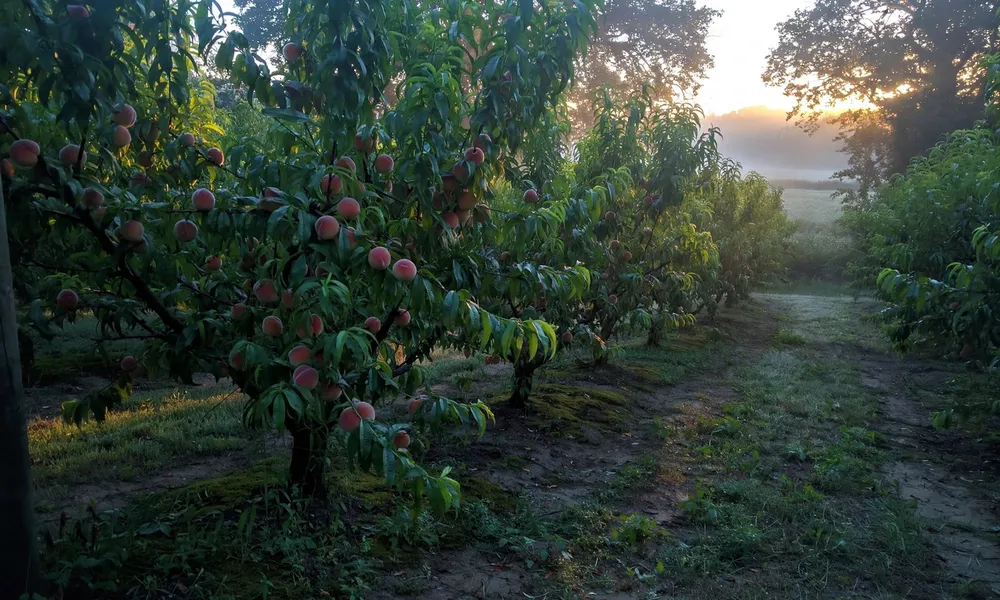
We also looked at the stay itself: a comfortable room within walking distance of the rows, a kitchen that cooks from the orchard, and hosts who know their trees. We avoided places that are only a hotel with a few peach trees planted for decoration. The chamomile farms we covered earlier follow the same rule, and our guide to luxury chamomile farm retreats explains why a working farm matters more than a pretty field.
Prices below are approximate, per night for two people in high season, and they change with the harvest and the room. Each retreat is described by what it does well, what to watch for, and who it suits best.
The 9 best luxury peach farm retreats of 2027
Peach Orchards of Georgia, USA
What we like: The heart of American peach country, with old orchards, warm hospitality, and a peach season that runs from May into August. What to consider: Summer heat is serious, and the best orchards book out early for the peak harvest weeks. Best for: First-time peach farm visitors who want the classic experience. Style: Farmhouse stays and orchard cabins. Price range: Around $250 to $450 a night. Standout feature: Peach ice cream made on the farm the same morning it is served.
Georgia grows more varieties than any other American peach region, and the orchards around Fort Valley and Byron are the place to taste them side by side. A good stay here includes a morning in the rows, a peach cobbler at lunch, and a shaded porch in the afternoon.
Peach Orchards of Murcia, Spain
What we like: Early-season peaches, dry sunny weather, and orchards that sit close to the coast. What to consider: The harvest starts earlier than in northern Europe, so check the dates before you book. Best for: Travellers who want sun, sea and orchards in one trip. Style: Whitewashed farmhouses and small rural hotels. Price range: Around €180 to €350 a night. Standout feature: Peaches picked in the morning and served with the farm’s own almonds at lunch.
Murcia is one of Europe’s earliest peach regions, known for sweet, fragrant fruit. The farms are often family-run, and the hosts are usually happy to walk the rows with you and explain which trees ripen first.
Peach Orchards of Emilia-Romagna, Italy
What we like: Superb food culture, beautiful farm stays, and peaches that feed straight into the region’s famous kitchens. What to consider: The best farms are small and book up fast in July. Best for: Food lovers who want the orchard and the table in equal measure. Style: Restored farmhouses and agriturismo stays. Price range: Around €200 to €400 a night. Standout feature: Peach jam and peach tart made from the orchard’s own late varieties.
Emilia-Romagna is one of Italy’s great food regions, and its peach orchards sit among vineyards and parmesan dairies. A stay here pairs orchard mornings with long lunches, and the peaches are often served with cured meats and cheeses.
Peach Orchards of Naoussa, Greece
What we like: Mountain air, generous hospitality, and peaches grown on the slopes of Mount Vermio. What to consider: The roads into the orchards are steep, and a car is useful. Best for: Travellers who like a cooler climate and a slower pace. Style: Stone guesthouses and family farm stays. Price range: Around €120 to €260 a night. Standout feature: Peaches preserved in syrup, a local speciality, served with Greek yoghurt.
Naoussa is famous in Greece for its peaches, and the orchards benefit from cool nights that keep the fruit firm and sweet. The farms are small and welcoming, and the hosts often press visitors to taste every variety they grow.
Peach Orchards of Bursa, Turkey
What we like: Ancient orchards at the foot of Mount Uludag, with a long peach-growing history. What to consider: English is less widely spoken on the farms, so a little Turkish or a local guide helps. Best for: Travellers who want a deeper, less familiar peach culture. Style: Rural guesthouses and orchard lodges. Price range: Around $100 to $220 a night. Standout feature: Peaches served with clotted cream, a Bursa tradition.
Bursa has grown peaches for centuries, and its orchards are some of the oldest in the world. The fruit is large and fragrant, and the farm stays are simple, comfortable and genuinely connected to the harvest.
Peach Orchards of Yamanashi, Japan
What we like: Exquisite fruit, meticulous orchard care, and a culture that treats a perfect peach as a craft. What to consider: The best fruit is expensive, and the top orchards need booking well ahead. Best for: Travellers who want to see peach growing at its most careful. Style: Ryokan-style inns and orchard guesthouses. Price range: Around ¥25,000 to ¥50,000 a night. Standout feature: A single perfect peach, wrapped and presented like a gift.
Yamanashi is Japan’s peach heartland, and its growers are famous for thinning each tree so every peach grows large and sweet. A stay here is quiet and precise, and the fruit is unlike anything you will taste elsewhere.
Peach Orchards of South Carolina, USA
What we like: Big orchards, friendly farm stays, and a peach season that rivals Georgia’s. What to consider: The humidity is high in July, so plan orchard walks for the morning. Best for: Families and first-time visitors who want a relaxed farm stay. Style: Farm cottages and bed-and-breakfast stays. Price range: Around $180 to $350 a night. Standout feature: Peach tea and peach cobbler served on the farmhouse porch.
South Carolina grows more peaches than Georgia, though it is less famous for them, and its orchards around the Ridge are a good place to taste the difference. The farms are welcoming and unpretentious, and the fruit is excellent.
Peach Orchards of Roussillon, France
What we like: Mediterranean light, Catalan food, and orchards that sit between the mountains and the sea. What to consider: The harvest is short, and the best weeks go quickly. Best for: Travellers who want orchards, coast and good food in one trip. Style: Stone mas farmhouses and small hotels. Price range: Around €170 to €340 a night. Standout feature: Peaches grilled over vine cuttings and served with local goat cheese.
Roussillon’s peach orchards grow in the warm plain below the Pyrenees, and the fruit is sweet and perfumed. The farm stays are often old stone houses with shaded courtyards, and the food is Catalan through and through.
Peach Orchards of Shandong, China
What we like: Huge orchards, a long peach tradition, and farm stays that are genuinely part of village life. What to consider: The language barrier is real, and a local guide makes the trip much easier. Best for: Adventurous travellers who want to see peach growing at scale. Style: Village guesthouses and orchard lodges. Price range: Around $80 to $180 a night. Standout feature: Peaches eaten fresh from the tree at dawn, before the day heats up.
Shandong is one of China’s great peach regions, and its orchards stretch for miles. A stay here is less polished than a European farmhouse, but it is closer to the real work of growing peaches.
Which peach region suits your trip
If this is your first peach farm trip, Georgia or South Carolina is the easiest choice. The orchards are big, the stays are comfortable, the hosts speak your language, and the peach season is long enough that a small change in dates will not ruin the trip. The lavender farms of Provence offer a similar kind of gentle first farm stay, and our guide to luxury lavender farm retreats is a useful comparison if you are choosing between a flower farm and a fruit farm.
If food is the point of the trip, Emilia-Romagna and Roussillon are the strongest choices, because the orchard is only part of a much wider food culture. If you want the most careful fruit in the world, Yamanashi is unmatched, but it costs more and needs earlier booking.
The season matters more than the region. Every orchard has a short window when the fruit is at its best, and that window moves with the weather. Book the dates around the harvest, not around a flight deal.
The caveats that matter
A peach farm retreat depends on the weather in a way a city hotel does not. A late frost in spring can thin the blossom, a wet summer can split the fruit, and a hot spell can bring the harvest forward by a week. Good farms will tell you honestly what the season looks like, and a flexible booking is worth more than a cheap one.
| Detail | What is known |
|---|---|
| Best time to visit | Peak harvest, usually June to August, depending on the region and the variety |
| How long to stay | Three to five nights is enough to learn the orchard and taste the varieties |
| Who should be careful | People with stone-fruit allergies, and anyone sensitive to heat and pollen |
| What to pack | Light clothes, a hat, sun cream, and shoes you can walk in orchard mud |
| What to expect | Early mornings, simple farm food, and days shaped by the harvest |
| What it costs | About $80 to $450 a night, depending on the region and the season |
| When to book | Two to three months ahead for peak harvest weeks, earlier for Japan |
| What it does not offer | It is not a resort: no spa, no nightlife, and no guarantee of a perfect harvest |
If you have a stone-fruit allergy, tell the farm before you arrive, and carry your medication. Peach pollen and peach skin can both cause reactions, and a farm kitchen that works with peaches all day is not the place to discover one. Children should be supervised in the orchard, especially around ladders and picking equipment.
Checklist: choosing a peach farm retreat honestly
Use these checks before you book, and again before you travel.
- Check the orchard is real: ask what varieties they grow and when each one ripens.
- Check the harvest dates: ask the farm directly, and do not rely on a booking site’s generic season.
- Check the room: make sure it sits within walking distance of the rows, not a drive away.
- Check the table: ask whether the kitchen cooks from the orchard, and what a typical dinner looks like.
- Check the weather: a late frost or a wet spring changes the season, so ask what the year looks like.
- Check the booking terms: choose a flexible rate for harvest weeks, because the fruit decides the dates.
Frequently asked questions
When is the best time to visit a peach farm?
Peak harvest, usually June to August depending on the region. Southern Spain ripens first, Japan and the American south follow, and cooler regions ripen last. Ask the farm when its main varieties ripen.
How many nights should I stay at a peach farm?
Three to five nights is enough for most people. That gives you time to walk the rows, taste the varieties, and eat at the farm table. A week is better if you want to see the harvest change as different varieties ripen.
Can I pick peaches in the orchard?
Most working farms allow it, usually with guidance on which rows are ready and how to pick without bruising the fruit. Some farms charge by weight, and some include a small basket in the stay. Ask before you arrive.
What is the difference between a white peach and a yellow peach?
White peaches are usually sweeter and less acidic, with pale flesh and a delicate flavour. Yellow peaches are more acidic and more aromatic, with firmer flesh that holds up in cooking. Most good orchards grow both.
Are peach farm retreats suitable for children?
Often yes, and children usually love picking fruit, but the orchard is a working place. Ladders, picking equipment and hot sun need supervision, and younger children should stay with an adult in the rows.
Do I need to book far ahead for peach season?
Yes, for the peak harvest weeks. The best farm stays are small, and the ripe window is short, so rooms go two to three months ahead. For Japan, book even earlier.
The bottom line
A luxury peach farm retreat is a simple idea done well: a comfortable stay on a working orchard, a kitchen that cooks what the trees produce, and a few days to learn what a truly ripe peach tastes like. The nine retreats above cover the world’s best peach country, from Georgia to Yamanashi, and each one offers a different version of the same pleasure.
Choose the region that suits your appetite, book the dates around the harvest rather than around a flight, and ask the farm directly what the season looks like. Do that, and you will come home with a crate of fruit you chose yourself.