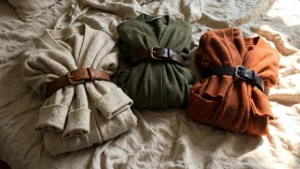
An alpaca blend cardigan is the easiest warm layer a man can own, and the easiest to get wrong. The halo that makes it soft also makes it shed on a dark jacket.
Styling it well is mostly about restraint. Let the cardigan be the softest thing in the outfit, keep everything else matte and plain, and treat the buttons, the nap and the fit as decisions rather than accidents. Nine steps follow, in the order that matters, from the shirt underneath to the way you store it when the season ends.
Nothing here needs a new wardrobe. A plain shirt, dark trousers and clean shoes are enough, and the steps work whether your cardigan cost $115 or $900, because the fibre behaves the same at every price.
Key takeaways
- Let the cardigan be the softest thing in the outfit. Everything else should be matte, plain and quiet.
- A smooth, tight-weave shirt underneath stops the alpaca catching and shedding on rough textures.
- Button from the hem upward so the brushed nap lies in one direction.
- Take the cardigan off before a backpack strap rubs the shoulders bare.
- No step here was tested in a lab, and every cardigan behaves differently, so check your own label before you wash or store it.
What styling an alpaca blend cardigan actually means
Styling an alpaca blend cardigan is not about following a trend. It is about managing a fibre that is softer, warmer and more delicate than wool, in a garment that opens at the front and shows everything underneath. The cardigan is a layer, not a jacket, and it looks best when it behaves like one: worn open or half-buttoned, over a shirt, with the rest of the outfit doing the structural work.
Three decisions carry the whole look. What goes underneath, because the shirt is visible all day and sets the formality. What goes over it, because a coat can crush the halo and a blazer can fight the open front.
The common mistakes are all versions of the same error: treating the cardigan like a jacket. Burying it under a heavy coat hides the one thing that makes it worth owning. Pairing it with shiny synthetics makes the soft halo look cheap. Hanging it on a hook stretches the shoulders out of shape within a season.
How to think about styling it
Start with the blend on the label, because it tells you how the cardigan will behave. A high-alpaca blend, thirty percent and above, is softer and warmer, and it needs smoother layers underneath so the fibres have nothing to catch on. A low-alpaca blend, fifteen percent or so, is sturdier and more forgiving, and it will survive a rougher shirt and a busier day without complaint.
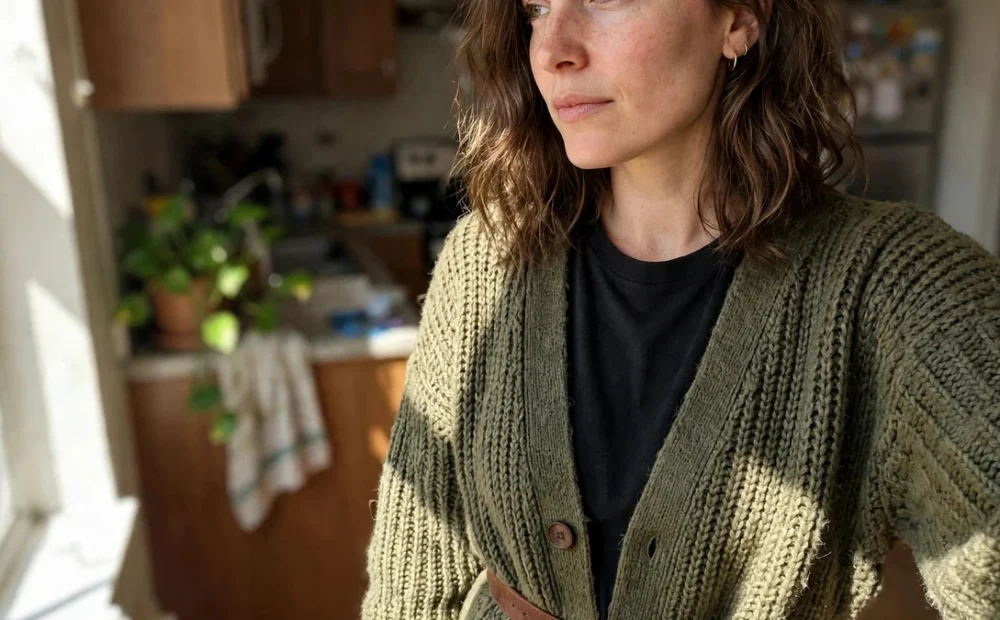
Build the outfit around the halo. One soft thing in an outfit is a luxury; two soft things is a mess. If the cardigan is brushed and fuzzy, the shirt should be smooth, the trousers matte, and the shoes clean leather or suede rather than patent shine.
Plan the fastening before you leave the house. Open over a T-shirt is the weekend look. Half-buttoned over a shirt is the smart-casual look. If you need a closer styling cousin to compare against, our guide to styling a camel hair blend cardigan covers the same decisions with a warmer, more formal fibre.
The 9 styling steps for an alpaca blend cardigan
Keep the brushed face on show and the coat off until you need it
What to do: Wear the cardigan as your visible layer for as long as the weather allows, and carry your coat rather than wearing it. The brushed face is the point of the garment, and it needs air and light to read as luxury rather than as a hidden thermal. Best for: Mild autumn days and heated indoor spaces. Time needed: None, it is a habit you build, not a task you do. Standout tip: If you must wear a coat, choose one with a smooth lining so it does not rub the halo flat.
What to avoid: Do not wear a rough wool coat over a brushed alpaca cardigan all day. The friction flattens the nap, leaves pale streaks across the chest, and turns a soft cardigan into a tired one by evening.
Put a smooth shirt underneath so the alpaca has nothing to catch on
What to do: Choose a tight-weave oxford, a poplin shirt, or a smooth cotton T-shirt as the layer directly under the cardigan. The smooth surface lets the alpaca fibres slide rather than snag, which keeps the inside of the cardigan from pilling and the shirt from collecting shed fibres. Best for: Every day you wear the cardigan. Time needed: A minute at the wardrobe. Standout tip: A white or pale shirt also shows you at a glance whether the cardigan is shedding.
What to avoid: Do not wear a rough flannel, a chunky knit, or a textured tweed shirt directly under brushed alpaca. The two rough surfaces catch on each other, pill both garments, and leave you picking fibres off your chest all afternoon.
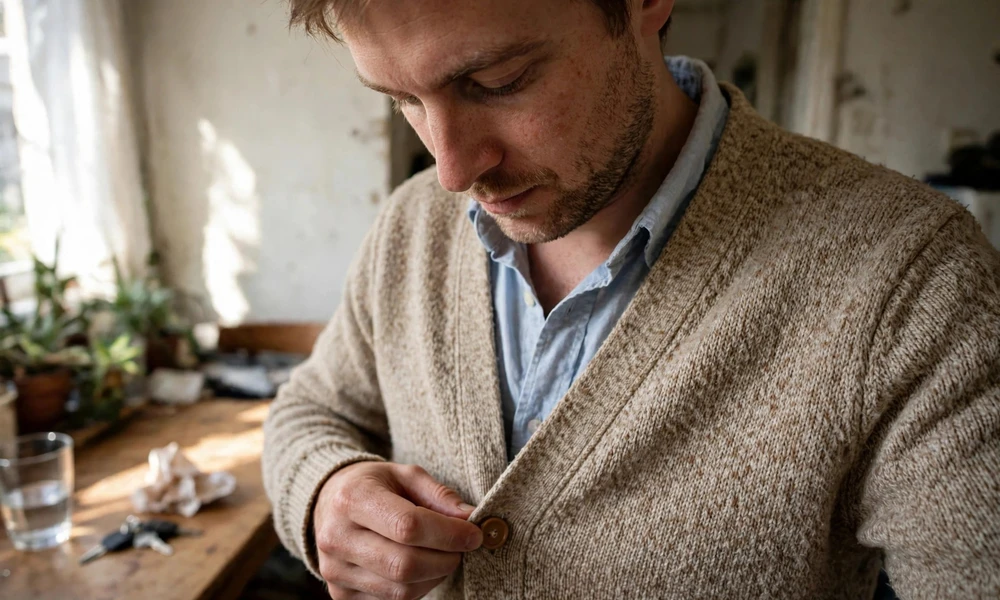
Button it from the hem upward and the nap will lie in one direction
What to do: Start at the bottom button and work upward, smoothing the front panels downward as you go. The brushed nap lies in one direction, and buttoning from the hem keeps it lying flat instead of pushing it into ridges that catch the light unevenly. Best for: Brushed and fuzzy blends. Time needed: Ten seconds. Standout tip: Run a hand down each front after buttoning, and any pale streak will show you where the nap is lying the wrong way.
What to avoid: Do not button from the top down, or yank the fronts together and force the middle button. That pushes the nap upward in a visible band across the chest, and it strains the button stitching at the same time.
Corduroy trousers suit the halo better than shiny synthetics
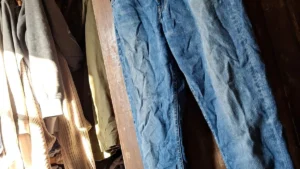
What to do: Match the cardigan with corduroy trousers, matte chinos, or dark denim. The dull, textured surfaces sit naturally beside a soft halo, and the outfit reads as considered rather than accidental. Corduroy is the best of the three, because its ribs echo the knit without competing with it. Best for: Autumn weekends and smart-casual evenings. Time needed: None, it is a wardrobe choice. Standout tip: Keep the trouser colour darker than the cardigan, so the halo stays the lightest thing in the outfit.
What to avoid: Do not pair a brushed alpaca cardigan with shiny synthetic trousers, patent shoes, or a glossy puffer jacket. The shine fights the softness, and the outfit ends up looking like two different wardrobes stitched together.
Take it off before a backpack strap rubs the shoulders
What to do: Carry the cardigan over your arm, or in your bag, on any journey where a backpack or a messenger bag will sit on your shoulders. The strap rubs the same two patches of knit for the whole trip, and alpaca felts and thins under that kind of repeated friction. Best for: Commutes, travel days, and school runs. Time needed: A minute to fold it and a minute to put it back on. Standout tip: Fold it with the fronts together, so the brushed faces protect each other in the bag.
What to avoid: Do not wear a heavy bag over a brushed alpaca cardigan for an hour and expect the shoulders to recover. The thinning shows as two pale, flat patches, and no amount of brushing brings the loft back.
Fold tissue between the fronts so the brushed faces do not mat
What to do: When you fold the cardigan for a drawer or a suitcase, lay a sheet of tissue paper between the two fronts. The tissue stops the brushed faces from pressing together and matting, which is what turns a soft cardigan into a flat, felted one over a season of storage. Best for: Packing, seasonal storage, and tight drawers. Time needed: Thirty seconds. Standout tip: Button the cardigan first, so the fronts line up and the tissue sits flat.
What to avoid: Do not stuff a brushed cardigan into a drawer still damp from rain, or fold it with the fronts rubbing. Dampness plus pressure is exactly how alpaca felts, and felted alpaca does not un-felt.
One pattern only, and the cardigan owns it
What to do: If the cardigan has a pattern, an argyle, a stripe, or a check, keep everything else plain: a solid shirt, solid trousers, solid shoes. The pattern needs empty space around it to read clearly, and the alpaca halo already adds visual texture before any pattern begins. Best for: Patterned cardigans and bold colours. Time needed: None, it is a wardrobe choice. Standout tip: A patterned cardigan over a plain white T-shirt is the easiest version of this rule, and it rarely fails.
What to avoid: Do not pair a patterned cardigan with a patterned shirt and patterned trousers in the same outfit. Three patterns fight each other, the halo gets lost, and the result looks busy rather than stylish.
Give it a workwear frame with a chore coat
What to do: Layer the cardigan under an unstructured chore coat or an overshirt, with the cardigan buttoned and the coat open. The workwear shape gives the soft knit a frame, and the contrast between the rugged coat and the soft cardigan is what makes the outfit interesting. Best for: Autumn weekends and creative workplaces. Time needed: A minute to layer. Standout tip: Choose a chore coat in canvas or waxed cotton, not wool, so the two layers slide rather than grip.
What to avoid: Do not wear the cardigan under a tailored blazer with narrow lapels. The blazer fights the open front, the lapels crush the halo at the chest, and the two garments end up looking like they belong to different outfits.
One cold wash a season is enough for this knit
What to do: Air the cardigan after every wear, brush it down with a soft clothes brush, and wash it once a season in cold water with a mild detergent, then dry it flat on a towel. Alpaca does not hold odour the way wool does, so it genuinely needs less washing than you think. Best for: Every alpaca blend cardigan. Time needed: Twenty minutes of washing, a day of drying flat. Standout tip: Button the cardigan before it goes anywhere near water, so the fronts keep their shape while they dry.
What to avoid: Do not machine wash it warm, tumble dry it, or hang it wet on a hanger. Heat and agitation felt alpaca fast, and a wet cardigan on a hanger stretches at the shoulders in a single afternoon.
What to wear it with
Trousers first, because they carry the outfit. Dark denim is the default, and it works with every cardigan in this range, from the cheapest fluffy knit to the most expensive designer piece. Matte chinos in navy, olive or charcoal are the smarter step up, and corduroy is the best cold-weather choice, because its ribs sit naturally beside a soft halo.
Shirts second. A plain white or pale blue oxford is the safest choice under a button-front cardigan, and a smooth cotton T-shirt is the easiest under an open one. What matters is the surface: smooth, tight-weave, and free of rough texture that could catch the alpaca. If you want a dressier alternative in a different fibre, our guide to styling a cashmere blend cardigan covers the same outfits with a finer, more formal knit.
Shoes last, because they set the formality. Clean leather shoes or suede boots lift the cardigan into smart-casual territory, while clean white sneakers keep it firmly on the weekend. Avoid patent shine and heavy work boots with a fine alpaca knit, which drag the outfit in two directions at once.
The caveats that matter
Alpaca blend rewards a little attention and punishes neglect, and the difference shows within a single season. The halo sheds, the nap streaks if you brush it the wrong way, and the buttons are the weak point of every cardigan in this range.
| Detail | What is known |
|---|---|
| The halo | Sheds at first; a lint roller, not a wash, fixes it |
| The nap | Brushing it the wrong way leaves pale streaks; brush downward only |
| The fit | Relaxed is right; a tight cardigan pills faster at the sides |
| The buttons | The weak point; check the stitching monthly and keep the spare |
| The pockets | Patch pockets stretch; hands only, never a phone and keys |
| The wash | Cold water once a season; heat felts alpaca fast |
| The storage | Folded, buttoned, with cedar; never on a hanger |
| The weather | Warm in the cold, too warm in a heated office; layer so you can shed it |
If the cardigan starts to look tired, the cause is usually one of three things: too much washing, a rough layer underneath, or a bag strap on the shoulders.
Checklist: styling an alpaca blend cardigan
Use these checks before you leave the house, and again at the end of the season.
- Check the shirt: smooth and tight-weave, so the alpaca has nothing to catch on.
- Check the buttons: done up from the hem, with the nap lying in one direction.
- Check the trousers: matte and darker than the cardigan, with no shine.
- Check the pattern count: one pattern in the outfit, everything else plain.
- Check the bag: carry the cardigan, do not wear it under a strap.
- Check the storage: folded and buttoned, with tissue between the fronts and cedar in the drawer.
Frequently asked questions
Why does alpaca shed on dark clothes at first?
At first, yes, especially a brushed blend. The loose surface fibres come away in the first few wears, and a lint roller takes care of them. After a month the shedding settles, and a smooth shirt underneath keeps the rest off your trousers.
Will a coat crush the halo on my cardigan?
Yes, if the jacket is roomy and the lining is smooth. A tight leather jacket crushes the halo and rubs the shoulders, and the two textures fight each other. A relaxed chore coat or an overshirt is a better partner, because the layers slide instead of gripping.
My cardigan feels thinner than it did last winter. Why?
Usually because the loft has been pressed out of it, by a coat, a bag strap, or too much washing. Alpaca loft recovers a little with airing and gentle brushing, but felted or flattened fibre does not come back.
Is this knit too warm for a heated workplace?
Often yes, which is why the open front matters. Wear it open over a shirt, take it off at your desk, and treat it as a layer you shed rather than a garment you live in.
A loop has pulled out of the knit. What now?
Push it through to the inside with a needle or a crochet hook, and never cut it. A pulled loop is a fibre that has come out of the knit, and cutting it leaves a hole that grows. If the snag is large or near a button, take it to a knitwear repairer rather than fixing it yourself.
Does this cardigan pass at a smart dinner without a blazer?
Yes, if the cardigan is dark, plain, and well fitted, and the shirt underneath is crisp. A shawl-collar or a neat V-neck in charcoal or navy reads as deliberate rather than casual, especially with dark trousers and clean shoes. If you are practising the look on a budget first, our guide to styling a wool blend cardigan covers the same dinner outfit with a cheaper, sturdier knit.
The bottom line
Styling an alpaca blend cardigan comes down to one idea: let the fibre do the talking. Keep the shirt smooth, the trousers matte, the pattern count at one, and the bag off your shoulders, and the cardigan will look expensive whatever it cost.
A cardigan worn well is a quiet luxury, and quiet is the point: soft on the skin, warm without weight, and noticed for how it feels rather than how loud it looks.