Sisterlocks change the rules of oiling. In a head of traditional locs, oil goes on generously and soaks in over hours. On Sisterlocks, each loc is a fraction of an inch wide, the scalp is visible in a neat grid, and there are hundreds of parts waiting to collect anything you put near them. Learning how to use hair oil on Sisterlocks 2027 is therefore less about which bottle you buy and more about how little you use, where you put it, and when you stop.
The method below was built for that reality. It uses fingertips instead of palms, drops instead of handfuls, and a strict gap before retightening appointments. It also treats the scalp and the lengths as two separate jobs, because the serum that helps the follicles would be wasted on the locs, and the oil that shines the locs would be a mistake on the roots.
Follow the steps in order the first few times, then let them become habit.
- Fingertips, not palms: palms spread oil across the whole grid at once, while fingertips place it exactly where it belongs.
- Drops, not handfuls: two or three drops per section is a full dose on Sisterlocks; anything more is buildup waiting to happen.
- Lengths first, scalp second: oil the locs themselves before touching the scalp, so the roots stay clean for retightening.
- Five oil-free days before retightening: slippery new growth will not hold a pattern, and the appointment will take longer.
- What this method cannot do: oiling will not fix thinning caused by retightening that is too tight, and no oil can undo traction damage on its own.
What Sisterlocks Are and Why Oil Works Differently on Them
Sisterlocks are installed with a patented tool that creates tiny, uniform locs in a precise grid pattern, usually four hundred or more across a full head. Unlike traditional locs, which are formed by twisting or palm-rolling sections of hair, Sisterlocks are interlocked at the root, which gives them a flat, fine profile and lets them be styled almost like loose hair. That fineness is their appeal and their vulnerability at the same time.
Because each loc holds so little hair, it cannot absorb much product. A single drop of oil is a meaningful dose for a section of Sisterlocks, while the same drop would vanish without trace on a thick traditional loc. The grid also exposes far more scalp than other loc styles, which means the skin between the parts is doing more of the work: it produces the natural oils that keep the locs supple, and it is also the first place to show irritation when a product does not agree with it.
The retightening cycle adds a final constraint. Every four to eight weeks, the new growth at each root is pulled through the existing loc to extend the pattern, and that process only works cleanly on dry, grippy hair. Oil on the roots in the days before an appointment makes the new growth slippery, so the pattern slips and the retightening does not hold.
What You Need Before You Start

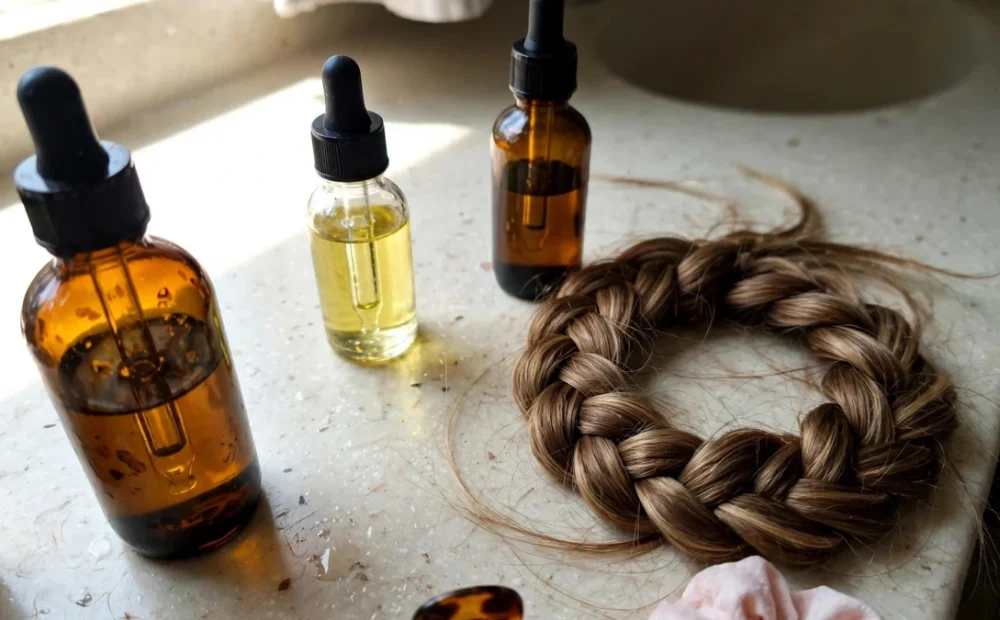
You need less equipment than you might expect. A light length oil with a dropper, a water-based scalp serum with a pipette, a microfibre towel, and a satin scarf for the night are the whole kit. Skip the applicator bottles with wide nozzles, skip the brushes, and skip any tool that promises to massage oil into the scalp, because a Sisterlocks grid does not need massage and the tool will only push product into the parts.
Choose your oil before wash day, not after it. The best time to oil Sisterlocks is on freshly washed, slightly damp locs, when the hair is clean and the cuticle is open enough to accept a light oil. Oiling dirty locs seals in the dust and lint that has collected since the last wash, and it turns a simple routine into a buildup problem. Wash first, towel-dry gently without rubbing, and start oiling while the locs are still faintly damp to the touch.
Set aside fifteen unhurried minutes and a mirror you can see the back of your head in. The most commonly missed areas on Sisterlocks are the nape and the crown, where the grid is densest and the parts are hardest to reach. If you oil in a rush, those two areas either get nothing or get far too much, and both outcomes show within a week. For a comparison with a thicker loc style, the butterfly locs guide shows how the same idea looks when the locs are much larger and more forgiving.
How to Use Hair Oil on Sisterlocks, Step by Step
1. Oil on wash day, while the locs are still faintly damp
What to Do: Wash with a residue-free shampoo, towel-dry without rubbing, and begin oiling within half an hour, while the locs still hold a little moisture. Damp locs accept a light oil evenly instead of letting it sit on the surface.
What to Avoid: Do not oil locs that are fully dry and dusty, and never oil before washing to “pre-treat” them, since that traps the dirt underneath the oil. Best For: Every Sisterlocks wearer, at every stage. Time Needed: Two minutes to check the dampness. Standout Tip: If the locs feel cold and heavy, they are too wet; wait ten more minutes.
2. Lift one row of locs at a time with your fingers
What to Do: Work in horizontal rows from the nape upward, lifting each row with your fingers so you can see the locs beneath it. This keeps the oil on the lengths you are treating and off the parts below.
What to Avoid: Do not rake your fingers through the whole head at once, and do not use a comb to lift the rows, since a comb snags the fine locs and pulls at the roots. Best For: Anyone with a dense grid who misses the lower rows. Time Needed: One minute per row. Standout Tip: Count the rows as you go, so you know you have covered the whole head.
3. Put two drops on your fingertips, never on the scalp
What to Do: Place two or three drops of oil on the pads of your index and middle fingers, rub them together once, and then touch the locs. Your fingertips are the applicator, and they give you exact control over where the oil goes.
What to Avoid: Never pour or drip oil directly onto the head, and never use your palms, which spread oil across the grid in a wide, uneven sheet. Best For: Preventing buildup in the parts. Time Needed: Seconds per section. Standout Tip: If your fingertips look wet, you have used too much; wipe one drop off before you start.
4. Press the oil down each loc from tip to root
What to Do: Starting at the tip of each loc, press your oiled fingertips along its length toward the root in one smooth movement. Working tip to root keeps the oil on the oldest, driest part of the loc first.
What to Avoid: Do not scrub back and forth along the loc, and do not twist the loc while you oil it, since twisting loosens the interlocked pattern at the root. Best For: Dry ends on mature Sisterlocks. Time Needed: Three minutes for a full head. Standout Tip: One pass per loc is enough; a second pass doubles the dose without doubling the benefit.
5. Leave the new growth alone and let it stay grippy
What to Do: Stop your fingertips about a centimetre short of the scalp, and let the natural oils from the skin handle the new growth instead. The roots need grip for the next retightening, not slip.
What to Avoid: Do not massage oil into the roots, and do not oil the roots the week before a retightening appointment under any circumstances. Best For: Keeping retightenings quick and secure. Time Needed: No extra time, just restraint. Standout Tip: If a root looks dry, a single drop of scalp serum is the answer, not length oil.
6. Press the baby hairs down with an almost-dry fingertip
What to Do: After oiling the lengths, use one fingertip with a trace of oil to smooth the baby hairs and edges into place. A fingertip follows the hairline exactly and leaves no excess behind.
What to Avoid: Never use a brush or an edge tool on Sisterlocks edges, since the fine locs at the hairline snap easily under pressure, and a brush drags oil across the forehead. Best For: A neat hairline without tension. Time Needed: One minute. Standout Tip: Do the edges last, when your fingertips carry only a trace of oil.
7. Let the oil sit for twenty minutes before you style
What to Do: Leave the locs loose for twenty minutes after oiling, so the oil can absorb instead of transferring onto your hands, your collar or your styling tools. Use the time to choose your style for the day.
What to Avoid: Do not tie the locs up tightly straight after oiling, and do not put on a hat or a scarf, since both press the oil into the parts and the fabric. Best For: Even absorption across the whole head. Time Needed: Twenty minutes of waiting. Standout Tip: If you are short on time, oil at night and let it absorb while you sleep.
8. Blot away the extra with a microfibre towel
What to Do: After the twenty minutes, press a clean microfibre towel gently over the locs in sections, lifting away any oil that has not absorbed. The towel should come away almost dry if the dose was right.
What to Avoid: Do not rub the towel back and forth, which frizzes the fine locs, and do not skip this step on humid days, when oil absorbs more slowly. Best For: Humid weather and anyone who tends to over-apply. Time Needed: Two minutes. Standout Tip: A towel that comes away greasy is telling you to use one drop less next time.
9. Let a satin scarf guard the oiling overnight
What to Do: On oiling nights, tie a satin scarf loosely over the locs before bed, so the oil stays on the hair instead of transferring to the pillow. Satin lets the locs slide instead of catching, which protects the fine pattern.
What to Avoid: Do not use a cotton scarf or a tight bonnet, since cotton absorbs the oil you have just applied and a tight band pulls on the edges overnight. Best For: Protecting the oiling you have just done. Time Needed: One minute. Standout Tip: Wash the scarf weekly, or it becomes a source of buildup itself.
How Much Oil Sisterlocks Actually Need
| Detail | What is known |
|---|---|
| One full oiling | Two or three drops per section, roughly a teaspoon for a whole head |
| How often to oil | Two or three times a week is enough for most Sisterlocks wearers |
| Best time to oil | On wash day, within half an hour, while the locs are faintly damp |
| Scalp serum dose | One pipette along the parts, on wash days only |
| Absorption time | Twenty minutes loose before styling or covering the locs |
| Oil-free gap | Five full days before every retightening appointment |
| First six months | Oil very lightly, since new Sisterlocks unravel more easily |
| Sign of too much | A microfibre towel that comes away greasy after blotting |
Mistakes That Cause Buildup
The most common mistake is oiling dirty locs. Every day between washes, Sisterlocks collect lint from clothes, dust from the air and shed skin from the scalp, and oil applied on top of that layer seals it in place. Within two weeks the locs look grey and feel coated, and the only fix is a clarifying wash followed by a fortnight without oil. Wash first, always, and oil only on clean hair.
The second mistake is using palms instead of fingertips. Palms cannot tell where the oil is going, so they spread it across the grid in a wide sheet that fills the parts and coats the scalp. Fingertips place two or three drops exactly on the lengths that need them, and they tell you instantly when you have used too much, because they feel wet. If you have been oiling with your palms, switching to fingertips alone will often solve a buildup problem without changing the product at all.
The third mistake is oiling the roots before a retightening. The new growth at each root has to grip cleanly for the interlocked pattern to hold, and oil makes it slippery. A retightening done on oiled roots takes longer, costs more, and does not last as long, which is a high price for a few drops. Keep five oil-free days before every appointment, and use a scalp serum on wash days instead if the scalp feels dry. Thicker loc styles are more forgiving here, as the faux locs guide shows, but Sisterlocks are not.
Checklist: After Every Oiling
- Wait twenty minutes with the locs loose before styling or covering them.
- Blot with a microfibre towel and check whether it comes away greasy.
- Look at the parts in a mirror: they should be clean, not shiny with oil.
- Smooth the edges with one fingertip, using only the trace of oil left on it.
- Note the date, so you can count five oil-free days before your retightening.
- Tie a satin scarf loosely at night, and wash it once a week.
Frequently Asked Questions
Is a daily oiling routine too much for Sisterlocks?
You can, but you almost certainly do not need to. Two or three oilings a week keep fine locs supple, and daily oiling usually adds buildup faster than it adds shine. If the locs look dry between oilings, a single drop on the ends is a better answer than a full daily routine.
Could oil undo the interlocked pattern in my Sisterlocks?
Oil on the lengths of mature Sisterlocks will not unravel them, because the interlocked pattern is already set. Oil on the roots of new Sisterlocks can loosen the pattern, which is why the first six months call for very light oiling and why the roots are left alone in the method above.
Which oil should a new Sisterlocks wearer start with?
A very light oil such as squalane or grapeseed, used in one or two drops per section, is the safest starting point. Avoid thick oils entirely during the first six months, and skip oiling the roots altogether until the pattern has settled.
What clears residue out of a Sisterlocks grid?
Stop oiling for two weeks, wash with a residue-free clarifying shampoo, and rinse thoroughly. If the buildup is heavy, a diluted apple cider vinegar rinse after shampooing can help, but do it once only and follow with a light oil on the lengths after the locs are clean and dry.
Can I use oil on Sisterlocks before a retightening?
No. Keep five full oil-free days before every retightening appointment, because oil makes the new growth slippery and the pattern will not hold. A water-based scalp serum on wash day is the only exception, and even that should stop three days before the appointment.
Can oiling speed up how fast Sisterlocks grow?
Oil does not make hair grow faster on its own. What it does is keep the locs flexible so they break less, and keep the scalp comfortable so you are not scratching and disturbing the roots. Growth itself comes from a healthy scalp, gentle handling and time.
The Bottom Line
Oiling Sisterlocks is a discipline of small amounts and good timing. Two or three drops per section, fingertips instead of palms, lengths before roots, and five oil-free days before every retightening will keep the locs shiny and the scalp calm without the buildup that ruins so many routines. The method takes fifteen minutes once it is familiar, and it is the cheapest part of Sisterlocks care.
Start with one light length oil and one scalp serum, follow the nine steps in order for the first month, and let the locs tell you whether the dose is right. If the towel comes away dry and the parts stay clean, you have found your amount. For a gentler introduction to oiling locs in general, the ponytail oiling guide covers the same fingertip technique on a simpler style, and it is a useful first practice run before you apply it to a full Sisterlocks grid.