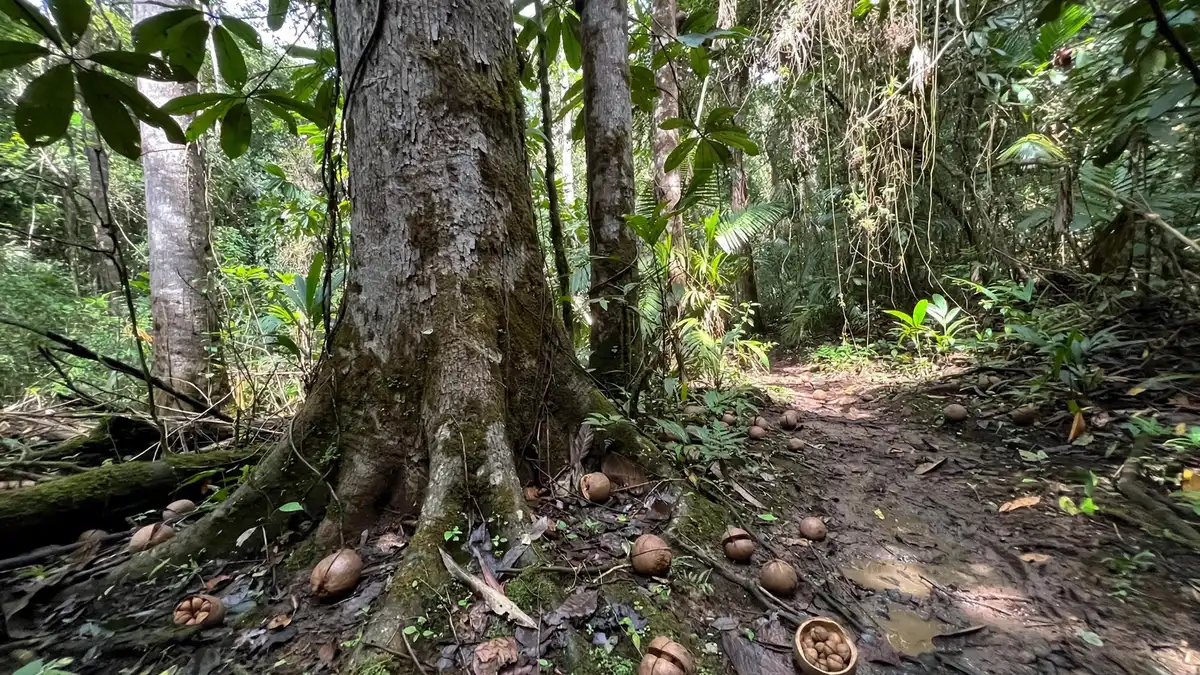

Planning a Brazil nut farm escape is not like planning a hotel break. The rain sets the calendar, the forest sets the pace, and the best days are the ones you do not try to fill. Get those three right and the trip nearly plans itself.
The first decision is the region, and it belongs with the harvest. Brazil nuts fall at different times in different parts of the Amazon, so the same month that is busy in Pará is quiet in Bolivia. Pick a region whose harvest falls inside your travel dates, then pick a stay inside that region that actually works with the collectors. That order, forest first, stay second, room third, is the whole secret of a good forest escape.
The nine steps below carry you from that first decision to the last day of the trip, in the order you will actually need them. Each step pairs the thing to do with the mistake to avoid.
Key takeaways
- Let the harvest calendar choose your dates, because a Brazil nut forest outside harvest season is a quiet forest, not a working one.
- Choose a stay that works with collectors or a cooperative, not a lodge near a forest you cannot enter.
- Sleep in the forest itself, because the dawn walk and the evening gathering are the best moments and they happen before and after day visitors arrive.
- Sort the last leg of the journey before you book anything else, because the final stretch to a forest lodge is often the hardest part of the trip.
- No plan can guarantee a harvest, dry weather, or a particular tree, and a stay that promises all three is selling a brochure, not a forest.
What a Brazil nut escape looks like
A Brazil nut escape is a short stay, usually three to four nights, in a lodge or camp inside or beside the rainforest. You sleep in a cabin or a room in the lodge, you eat what the kitchen and the river provide, and your days follow the forest: a morning walk while the air is cool, a visit to the drying shed or the cracking ground, a long lunch, and an afternoon that is deliberately empty. No itinerary is handed to you at check-in. The forest is the entertainment.
That shape surprises people accustomed to resorts. The forest does not stop for you, and it does not perform for you. The collectors gather, the nuts dry, the kitchen cooks, and you are a guest inside that rhythm rather than the reason for it.
The steps below assume you are travelling for the forest, not despite it. They favour the simple choices: a real working forest, a room on the land, a boat sorted in advance, and a day left open.
The plan in five moves
Before the nine steps, here is the whole plan in short. First, pick your month, then match it to a region in harvest. Second, find a stay there that works with collectors or a cooperative and hosts guests in rooms in the forest. Third, check the journey and sort a boat or lodge transfer. Fourth, book the room, tell the lodge about allergies and food needs, and read the cancellation terms. Fifth, pack sturdy shoes, rain gear, and sun protection, and leave one day completely empty.
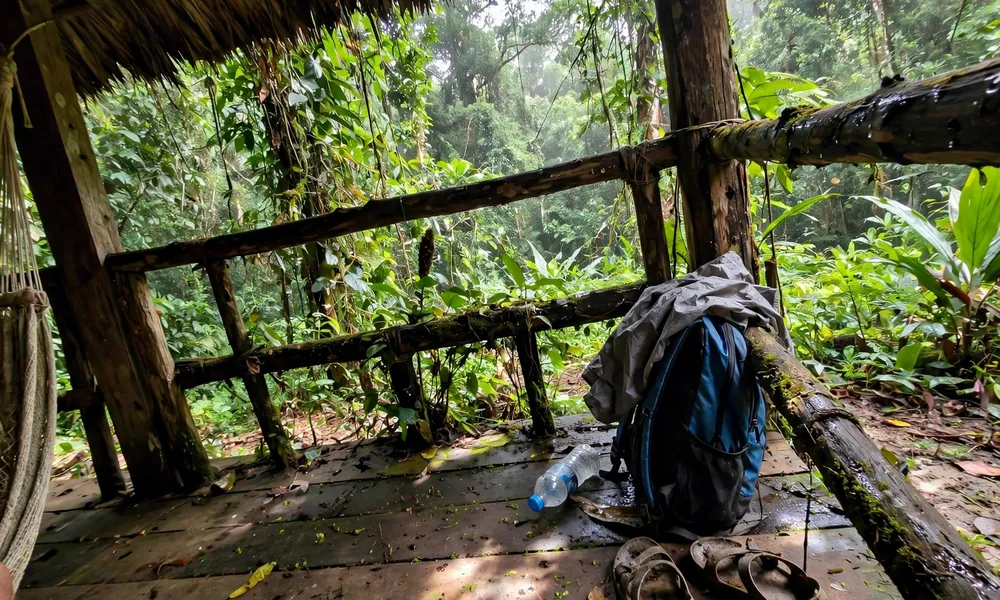
Do those five things and the rest of the trip takes care of itself. The lodge will tell you what is happening when you arrive, the kitchen will feed you, and the forest will give you somewhere to walk every morning. The same five moves work for other crops too, and our guide to planning a pecan farm escape starts from the harvest in the same way.
The nine steps that follow add the detail, in the order you will need them.
The 9 steps to a Brazil nut escape
Follow the pod fall when you choose dates
What to do: Choose your travel month first, then find the Brazil nut regions harvesting in that month, and only then look at rooms. What to avoid: Falling for a beautiful lodge photograph and discovering on arrival that the forest is between seasons.
Best For: First-time forest travellers. Time Needed: An evening of research. Standout Tip: Note the harvest months for three regions before looking at a single room.
The room is the easiest part of a forest escape to choose, and the least important. A beautiful cabin in a quiet forest in the wrong month is still a quiet forest, while a simple room in a busy forest at harvest is a trip you will remember.
Choose a reserve stay, not a plantation
What to do: Ask the stay whether it works inside a reserve or extractive forest, and whether guests can walk the gathering trails. What to avoid: Booking a lodge that calls itself a Brazil nut farm, when the tree cannot be farmed at all.
Best For: Travellers who want the real forest. Time Needed: A few emails with the lodge. Standout Tip: Ask for a photograph of the gathering trails, not the swimming pool.
A Brazil nut tree grows only in the wild, so any stay that claims to farm it is either confused or dishonest. The honest stays work with the forest as it is, and they will tell you so.
Sleep inside the reserve, not outside it
What to do: Ask for a room in the forest itself, as close to the trails and the drying shed as the lodge allows. What to avoid: A room in the nearest town, which turns every forest morning into a drive.
Best For: Early risers. Time Needed: One question when you book. Standout Tip: The room nearest the trails is also the room with the best birdsong in the morning.
The forest is where the escape happens, and it is worth being inside it. The collectors leave at dawn, and the smell of the drying nuts drifts across the clearing by afternoon.
Ask who cracks the pods on the forest floor
What to do: Find out which stages of the work happen in the forest and who does them. What to avoid: Assuming that a lodge gathers nuts just because it has Brazil nut trees.
Best For: Travellers who enjoy learning how things work. Time Needed: Half an hour messaging the host. Standout Tip: Ask the names of the people who do the gathering, and you will get a far more honest answer.
Many lodges grow nothing and gather nothing, which is a perfectly good way to run a lodge, but it means there is little forest work for a guest to see. The best stays work with collectors, and the host can tell you who they are and when they work.
Settle the river transfer ahead of the room
What to do: Work out exactly how you get from the nearest town to the lodge, and book the boat or transfer before you book the room. What to avoid: Arriving at a river port with luggage and no plan.
Best For: Travellers arriving without a car. Time Needed: An hour of planning. Standout Tip: Ask the lodge for the name of a boatman it trusts, and use that boatman.
The last leg is the part of a forest escape that most often goes wrong. Airports and towns are easy, but the final stretch is often a river with no timetable and no taxis. Sort it first, in writing, with the lodge, and the rest of the journey becomes simple.
Dress for mud, rain, and heavy fruit
What to do: Pack sturdy closed shoes, light layers for cool mornings, sun protection, rain gear, and clothes you do not mind getting muddy. What to avoid: White linen, open sandals, and anything you would be upset to stain with forest mud.
Best For: Anyone walking the trails. Time Needed: One packing session. Standout Tip: Pack a light rain layer even in the dry season, because forest weather turns quickly.
A Brazil nut forest is a working landscape, and it will mark your clothes. The ground is muddy, the trees drop fruit and leaves, and the rain arrives without warning.
Taste one handful, then stop
What to do: Taste the fresh nuts the lodge offers, and enjoy one small handful. What to avoid: Eating Brazil nuts by the bowlful, when a single nut holds a full day of selenium.
Best For: Food lovers. Time Needed: One meal. Standout Tip: Taste the nut the morning it is cracked, because it is at its sweetest then.
Most visitors have eaten the nut and never met the tree, and that is a pity. The fresh nut is sweet, creamy, and rich, and one small handful is enough to understand it.
Buy from the collectors’ cooperative
What to do: Leave one morning free to visit the nearest cooperative shop with the lodge’s guidance, and buy what the collectors sell. What to avoid: Filling every day with lodge activities and never seeing the trade the forest depends on.
Best For: Travellers who enjoy meeting people. Time Needed: A morning. Standout Tip: Go early, when the cooperative is busiest and the nuts are freshest.
A Brazil nut forest does not exist in isolation. It feeds the collectors, the cooperative, and the town, and the shop is where that relationship is visible.
Get the rain-moved harvest answer in writing
What to do: Read the cancellation and refund terms before you pay, and ask what happens if the harvest moves. What to avoid: Assuming a lodge will refund a harvest-timed booking just because the harvest moved.
Best For: Travellers booking around one harvest week. Time Needed: Twenty minutes reading the booking terms. Standout Tip: Get the harvest-refund answer in writing before paying, not after.
Harvest dates move with the rain, and a lodge cannot control the weather. Some lodges will move your dates without charge, some will offer a credit, and some will keep the payment, and all three are fair if you knew before you booked.
When Brazil nuts are harvested
Harvest timing is the single most useful thing to know before you plan a Brazil nut escape, and it is also the most variable. The main picking runs from December into March across the Amazon, and the exact weeks move with the rains, so the only way to know is to ask the lodge.
The harvest itself is spread over weeks rather than days, because the pods do not all fall at once. Collectors walk the forest every morning, gathering the fallen pods and cracking them open, and the work repeats day after day until the season ends. That rhythm is good news for a traveller, because it means there is no single harvest day to miss, and a stay of three or four nights inside the season will almost always catch the gathering, the cracking, and the drying.
Outside harvest, the forest is still worth visiting, but for different reasons. The trails are cleared, new trees are marked, and the forest is quieter, which suits travellers who want the landscape without the work. What you will not see is the cracking ground in full swing or the drying shed at its busiest. Season shapes every farm trip, and our guide to planning a macadamia farm escape plans around its own harvest in the same way.
The caveats that matter
A Brazil nut escape is a forest stay, and the caveats are the same ones that apply to any working forest. The weather matters, the harvest moves, the rivers can be rough, and the lodge cannot promise what it does not control.
| Detail | What is known |
|---|---|
| Best time to travel | Inside the harvest season: roughly December to March across the Amazon basin |
| How long to stay | Three to four nights is enough to see the forest work and settle in |
| Getting to the lodge | Most lodges need a boat or lodge transfer, and the last stretch is often a river with no timetable |
| What to pack | Sturdy closed shoes, layers, sun protection, a rain layer, and clothes you do not mind getting muddy |
| Allergies | Tell the lodge about nut allergies before you book; Brazil nut dust and shells are present across the property |
| The falling pods | Never walk under a fruiting Brazil nut tree without a guide; the pods weigh over a kilogram and fall from fifty metres |
| Booking terms | Read the cancellation and harvest-refund terms before you pay, and get the answer in writing |
| What it does not do | It does not guarantee a harvest, dry weather, or a particular tree |
One warning matters more than the rest. A Brazil nut forest is full of dust, shells, and oil in the air while the nuts are being processed, and Brazil nut is a tree nut, so anyone with a nut allergy should talk to the lodge before booking. Some lodges can work around it, while others will say plainly the stay is not suitable, and that honesty is worth more than a polite yes.
Checklist: planning your Brazil nut escape
Use these checks before you book, and again the week before you travel.
- Check your region’s harvest months and travel within them to catch the work.
- Check the lodge works with collectors or a cooperative, and ask which stages guests can watch.
- Check the last leg and book a boat or lodge transfer before you book the room.
- Check the room sits in the forest, not in a nearby town.
- Read the cancellation and harvest-refund terms, and keep the answer in writing.
- Check allergies and dietary needs with the lodge before you book.
Frequently asked questions
When do Brazil nuts ripen?
It depends where the trees grow, but the main harvest is roughly December to March across the Amazon. The pods fall over several weeks, so a stay of three or four nights inside the season will usually catch the gathering and the drying.
Can I reach a Brazil nut reserve without a car?
Often yes, but only with advance planning. Most lodges can send a boat or a driver to the nearest town or airport. What rarely works is arriving at a river port and hoping for a boat, because the last stretch is usually a river with no passing traffic.
Can I bring children to a Brazil nut forest?
For older children who can walk forest trails and follow safety rules around the falling pods, yes. Younger children will enjoy the river and the animals, but the forest is a working place with tools, rain, and soft ground. Ask the lodge which ages it welcomes before you book.
How many nights make a good Brazil nut stay?
Three to four nights suits most travellers. One night is too short to settle into the forest’s rhythm, and a week is a long time unless you are genuinely interested in the work. Four nights gives you the dawn walk, the drying shed, and the cooperative morning.
What goes in my bag for a rainforest stay?
Sturdy closed shoes, light layers for cool mornings, sun protection, and a light rain layer, plus clothes you do not mind getting muddy or stained with sap. Leave the white linen and open sandals at home, and bring small cash for the cooperative shop. For another crop, our guide to planning a pistachio farm escape lists the same kind of kit, minus the rain gear.
Will the forest let me join the nut gathering?
Sometimes, and it depends on the lodge. Some lodges welcome guests to gather fallen pods and help sort the nuts, and some keep guests out of the work for safety reasons. Ask before you arrive, and if the lodge says yes, follow the collectors’ instructions exactly.
The bottom line
A good Brazil nut escape is planned backwards from the harvest. Choose the month, match it to a region, find a stay that works with the collectors, sleep in the forest, sort the river leg, and leave a day open. That order is the whole plan.
Start with the nut, not the room, and the forest will do the rest. The trails will give you a morning walk, the drying shed will give you the smell of warm Brazil nut, and the kitchen will give you a meal you could not get anywhere else. That is what a Brazil nut escape is for, and it is worth planning properly.