A Brazil nut retreat is not a farm stay in the usual sense. There is no orchard in neat rows, no irrigation, and no planting season, because the Brazil nut tree is not farmed at all. It grows wild in the Amazon rainforest, drops its fruit from fifty metres up, and has resisted every attempt to grow it in a plantation.
That is what makes these stays different from every other farm retreat on this site. You do not visit a field. You visit a forest, and you travel with the people who gather the nuts the way their families have for generations: walking the trails after the pods fall, cracking them open on the forest floor, and carrying the nuts out in baskets to a drying shed.
Below are nine Brazil nut retreats worth considering in 2027, from a riverside lodge near Belém to a collectors’ camp in the Bolivian Amazon. For each of the nine, you will find what it does well, what to watch for, and who it suits best.
Key takeaways
- Brazil nuts are gathered wild from the rainforest, not farmed, so a Brazil nut stay is a forest trip, not an orchard visit.
- Travel in the harvest months, roughly December to March, when the pods are falling and the collectors are working.
- Never walk under a fruiting Brazil nut tree without a guide, because the woody pods weigh over a kilogram and drop from fifty metres.
- Book a stay that works with a collectors’ cooperative, because the nut trade only works when the people who gather the nuts are paid fairly.
- No one can promise you a harvest, a dry week, or a particular tree, so treat any stay that does as a warning sign, not a selling point.
What a Brazil nut retreat really means
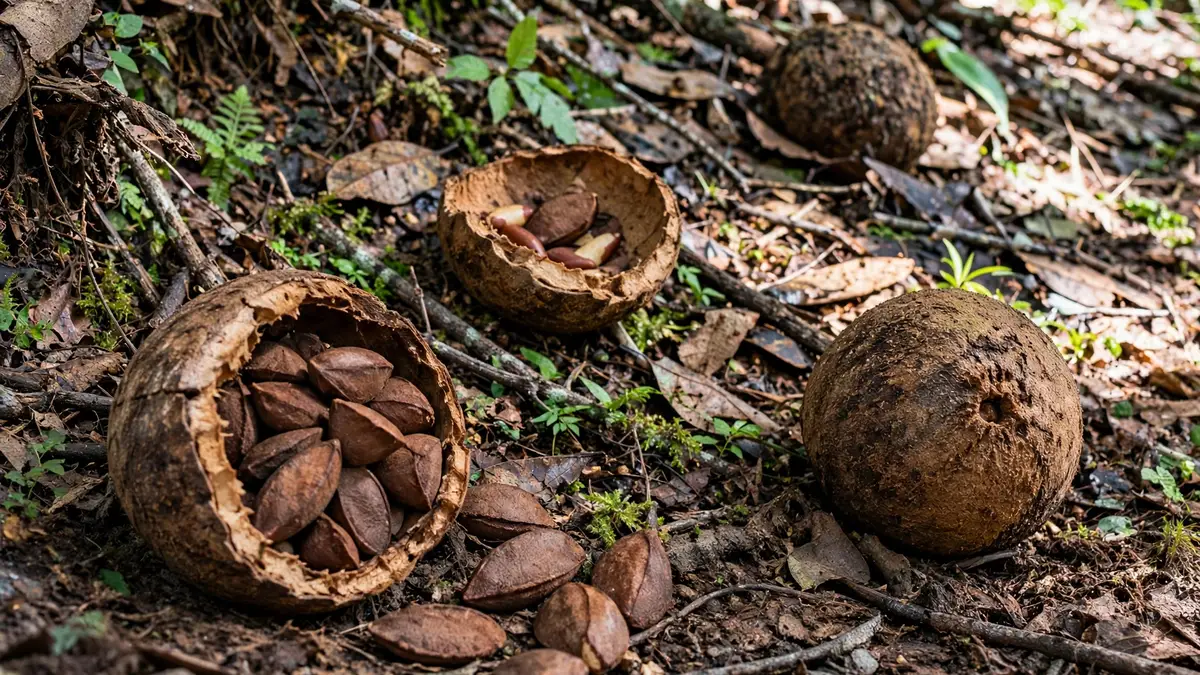
A Brazil nut retreat is a stay built around a working forest, not a working farm. The tree, Bertholletia excelsa, grows only in the wild Amazon, and it takes ten to twenty years to fruit. The nut itself is a seed inside a woody pod the size of a grapefruit, and the pod falls whole, so the harvest is a matter of walking the forest floor and gathering what the trees have dropped.
The stay is organised around that gathering. Guests sleep in a lodge, a cabin, or a camp inside or beside the forest, eat what the kitchen and the river provide, and spend their days on the trails with a guide or a collector. There is no spa menu, no lobby, and no schedule beyond the forest’s own rhythm.
The nine stays below were chosen for the quality of the forest experience, not the thread count. Each one is in a real Brazil nut region, works with the people who gather the nuts, and lets guests see the crop being collected and dried. Prices are indicative nightly bands for a double room in 2027, and they shift with the season.
How these nine stays were chosen
We started with the tree. A stay only made the list if it sits inside a genuine Brazil nut region, works with collectors or a cooperative that gathers the nuts, and lets guests see at least one stage of the work. A lodge near a forest you cannot enter did not qualify.
We then looked at the stay itself: a comfortable bed, food cooked on site, a guide who knows the forest, and a price that matches what is offered. The cheapest stay here is a simple riverside lodge and the most expensive is a full-service rainforest lodge, and both earn their place. If you like the idea of a working crop, our guide to luxury cashew farm retreats covers a nut that is farmed, not gathered.
The 9 best luxury Brazil nut farm retreats of 2027
Belém, Pará, Brazil
What we like: A riverside lodge at the mouth of the Amazon, with a blackwater creek behind it, a host who has gathered nuts since childhood, and a drying yard you can walk through at dawn. What to consider: The harvest season is short, the lodge is simple, and the nearest town is a forty-minute boat ride.
Best For: River travellers who want an easy first forest stay. Style: Riverside lodge. Price Range: $150–$200 per night. Standout Feature: A dawn boat ride up a blackwater creek while the forest wakes.
The lodge sits where the river meets the forest, and the Brazil nut trees start a short walk from the dock.
Xapuri, Acre, Brazil
What we like: A cabin inside an extractive reserve, a community that lives from the forest, and a guide who can tell you the story of the rubber tappers as well as the nut. What to consider: The reserve is remote, the cabin is basic, and the roads are rough in the rains.
Best For: Travellers who want the story behind the nut. Style: Extractive reserve cabin. Price Range: $210–$260 per night. Standout Feature: Sleeping in the reserve where the rubber tappers’ struggle began.
Xapuri is where the forest’s history is still visible, in the trails, the cabins, and the people who stayed.
Porto Velho, Rondônia, Brazil
What we like: A forest-edge farmhouse on the Madeira River, warm river air, and a garden where Brazil nut trees stand beside the house. What to consider: The river is hot and humid, the farmhouse is old and full of character, and the drive from the city is long.
Best For: Couples who like slow river days. Style: Forest-edge farmhouse. Price Range: $270–$320 per night. Standout Feature: Breakfast on a veranda while macaws cross the river.
Porto Velho is where the Amazon’s southern edge meets the river, and the farmhouse sits in the middle of that meeting point.
Manaus, Amazonas, Brazil
What we like: A jungle lodge a boat ride from the city, a canopy walkway above the Brazil nut trees, and guides who know the forest by name. What to consider: The lodge is busy in season, the humidity is high, and the boat transfer adds to the cost.
Best For: Travellers who want the classic Amazon first. Style: Jungle lodge. Price Range: $330–$390 per night. Standout Feature: A canopy walk at dawn, high above the Brazil nut trees.
Manaus is the gateway to the central Amazon, and the lodge here is the easiest way to stand inside a real Brazil nut forest.
Macapá, Amapá, Brazil
What we like: A riverfront guesthouse where the Amazon meets the Atlantic, calm water, and a forest that is still young enough to feel like a discovery. What to consider: The guesthouse is small, the rooms are few, and the river is wide and windy.
Best For: Solo travellers who want quiet water. Style: Riverfront guesthouse. Price Range: $400–$460 per night. Standout Feature: Watching the Amazon meet the Atlantic from the guesthouse deck.
Macapá sits at the river’s mouth, and the guesthouse has the feel of a place at the edge of the map, in a good way.
Boa Vista, Roraima, Brazil
What we like: A savanna-edge lodge where the forest thins into open country, wide skies, and Brazil nut trees standing alone on the horizon. What to consider: The lodge is off the usual route, the rooms are simple, and the dry season is the only comfortable time to walk.
Best For: Birdwatchers and open-country walkers. Style: Savanna-edge lodge. Price Range: $470–$530 per night. Standout Feature: A savanna sunrise with Brazil nut trees on the horizon.
Boa Vista is Roraima’s Brazil nut country, and the lodge here sits where the forest gives way to grassland without a fence between them.
Alta Floresta, Mato Grosso, Brazil
What we like: An eco-lodge in the southern Amazon, tall forest, and a night walk where the guides listen for the forest after dark. What to consider: The lodge is at the end of a rough track, and the forest is loud at night.
Best For: Families whose older children love the outdoors. Style: Eco-lodge. Price Range: $540–$600 per night. Standout Feature: A night walk with a guide, listening for the forest after dark.
Alta Floresta’s Brazil nut trees grow in mixed forest, and the lodge sits at the edge of the trees with the forest pressing in on three sides.
Riberalta, Pando, Bolivia
What we like: A collectors’ camp in the Bolivian Amazon, a working harvest, and a cooperative that sells its nuts directly to buyers abroad. What to consider: The camp is basic, the forest is deep, and the stay is best arranged through the cooperative itself.
Best For: Travellers who want the real harvest. Style: Collectors’ camp. Price Range: $610–$680 per night. Standout Feature: Cracking pods open with the collectors on the forest floor.
Riberalta sits in one of Bolivia’s main Brazil nut regions, and the camp here has been run by the same cooperative for years.
Puerto Maldonado, Madre de Dios, Peru
What we like: A rainforest lodge in a province where Brazil nut grows alongside mahogany and cedar, with a kitchen that cooks forest food three times a day. What to consider: The lodge is a boat ride from town, and the rainforest is wet in harvest season.
Best For: Small groups travelling together for the forest. Style: Rainforest lodge. Price Range: $690–$760 per night. Standout Feature: Supper at one long table with the collectors, after a day on the trails.
Puerto Maldonado’s Brazil nut grows in tall forest, and the lodge here sits on a river bend with the trees rising behind it.
Brazil nut country, explained
The Brazil nut tree is native to the Amazon rainforest, and it has never been farmed. The tree grows fifty metres tall, lives for centuries, and depends on a single orchid bee to pollinate it and a single rodent, the agouti, to open the fallen pods and bury the seeds. That chain of dependencies is why the nut cannot be grown in a plantation, and why the harvest is still a forest walk, not a field job.
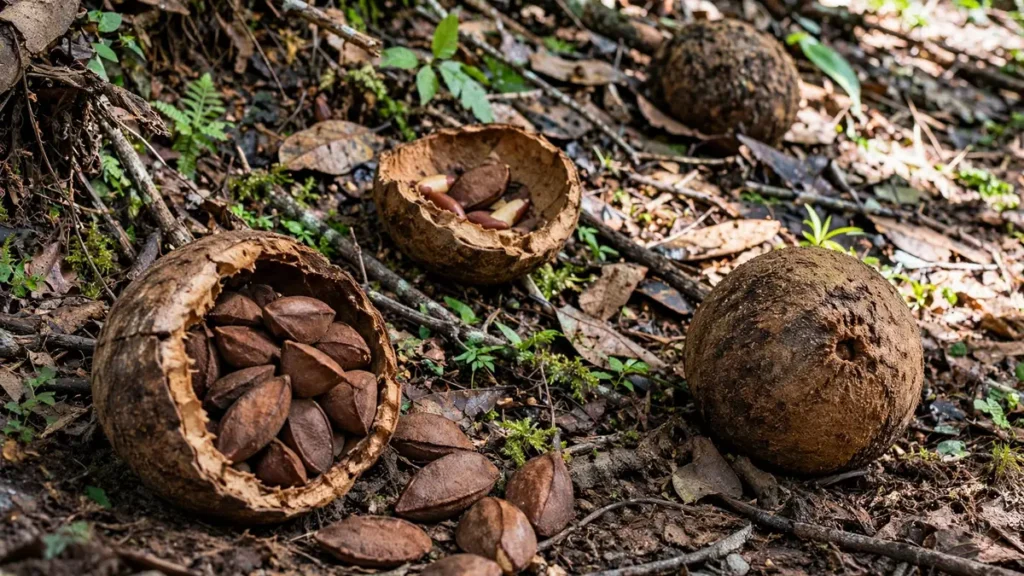
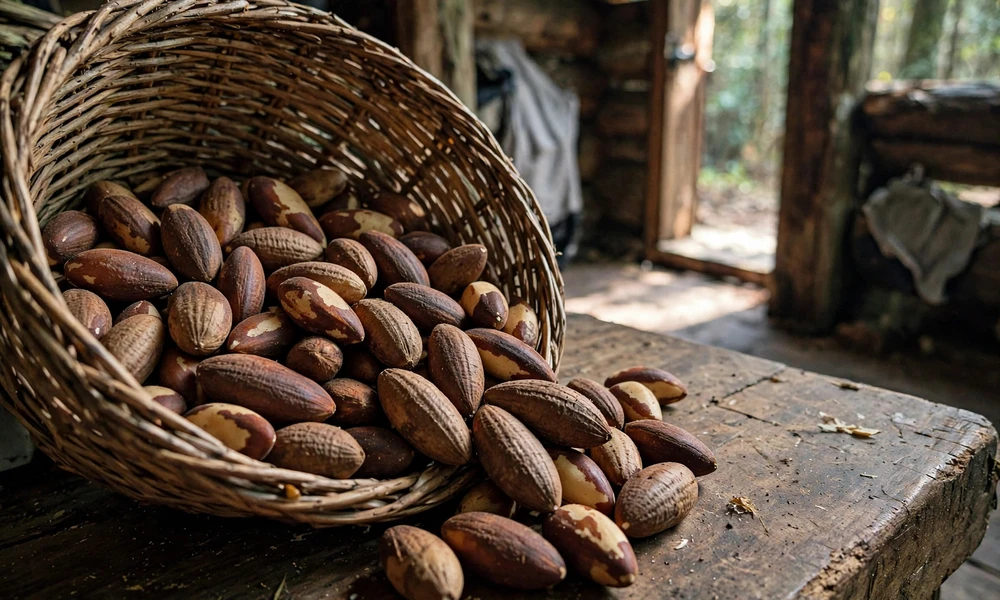
The fruit itself is a woody pod the size of a grapefruit, weighing over a kilogram, and it falls from the canopy when it is ripe. Inside are twelve to twenty-four nuts, each in its own hard shell. The collectors gather the fallen pods, crack them open with a machete on the forest floor, and carry the nuts out in baskets to a drying shed, where they are dried in the sun before being shelled.
Harvest season runs with the rains, roughly December to March across the Amazon, and it is the key to timing a visit. If you want to see the gathering, the cracking, and the drying, travel inside those months. Outside them the forest is still beautiful, but the work is trail clearing, planting, and waiting, and the drying shed will be quiet. The nut trade works the same way in our guide to luxury macadamia farm retreats, where the orchard, not the hotel, sets the pace.
The caveats that matter
A Brazil nut retreat is a forest first and a hotel second, and the caveats all follow from that. The work is seasonal, the weather is part of the experience, and the forest cannot control either. Any stay that guarantees a harvest on a set date is either lucky or overselling. Read the booking terms, ask what is included, and check how far the lodge really is from the nearest town.
| Detail | What is known |
|---|---|
| Best time to visit | During harvest: roughly December to March across the Amazon basin |
| How long to stay | Three to four nights is enough to see the forest work and settle in |
| Getting there | Most lodges need a boat or a lodge transfer, and the last stretch is often a river or a track |
| What to pack | Sturdy closed shoes, layers, sun protection, rain gear, and clothes you do not mind getting muddy |
| Allergies | Tell the lodge about nut allergies before you book; Brazil nut dust and shells are present across the property |
| The falling pods | Never walk under a fruiting Brazil nut tree without a guide; the pods weigh over a kilogram and fall from fifty metres |
| What the price covers | Usually the room and breakfast, sometimes full board; activities and transfers are often extra |
| What it does not do | It does not guarantee a harvest, dry weather, or a particular tree |
Allergies deserve a special note. Brazil nut is a tree nut, and a Brazil nut forest is full of nut dust, shells, and oil in the air during processing. If you or anyone travelling with you has a nut allergy, tell the lodge before you book and ask honestly whether the stay is suitable.
Checklist: booking a Brazil nut farm retreat honestly
Use these checks before you pay, and again the week before you travel.
- Check your region’s harvest dates and book within them to catch the work.
- Check what the price includes: room, meals, activities, and transfers are often charged separately.
- Check the journey: ask how long the last stretch takes and whether you need a boat or a transfer.
- Check the room is in the forest itself, not in a nearby town.
- Check the cancellation terms, especially when the harvest can shift with the rains.
- Check allergies and dietary needs with the lodge in writing before you book.
Frequently asked questions
Which of these nine suits a first rainforest trip?
Belém in Pará or Manaus in Amazonas are the gentlest introductions on this list. Both have hosts used to first-time forest guests and trails that are easy to walk. Save the more remote stays, such as Riberalta or Xapuri, for a second trip.
Can children visit a Brazil nut forest?
Yes, for families with older children who can walk forest trails and follow safety rules around the falling pods. Younger children will enjoy the river and the animals, but the forest is a working place with tools, rain, and mud. Ask the lodge about ages before you book.
When do Brazil nuts fall?
It depends on the region, but the main harvest is roughly December to March across the Amazon. The pods ripen over several weeks, so even inside harvest season the forest changes day by day.
Is a Brazil nut retreat a good couples trip?
They can be, in a quiet, unpolished way. A cabin in the forest, dinner under the trees, and a morning walk before anyone else is awake suits couples who like slow days. If slow forest days sound too quiet, a resort suits you better, and our guide to luxury pistachio farm retreats draws the same line between farm stays and resorts.
What will a Brazil nut stay cost each night?
On this list, from around $150 a night for a simple riverside lodge to around $760 for a full-service rainforest lodge. Most stays fall between $270 and $600, and the price usually covers the room and breakfast, so check what is included before you compare two stays.
How early do I need to reserve a Brazil nut stay?
For harvest season, two to three months ahead is sensible, because the small forest stays on this list have few rooms and harvest is the busiest time. Outside harvest, a few weeks’ notice is usually enough. If you are travelling for a specific harvest week, confirm the dates with the lodge a week before you travel, because the season can move.
The bottom line
The best Brazil nut farm retreat in 2027 is not the most expensive or the most polished. It is the one in a real Brazil nut region, at harvest time, with a room in the forest itself and a guide who knows the trees. Belém and Manaus are the easiest places to start, Riberalta and Xapuri are the most rewarding for travellers who want the real harvest, and Puerto Maldonado is the best for a group that wants to share the table.
Choose one region, travel inside its harvest season, pack sturdy shoes and patience, and let the forest set the pace. That is the honest way to see how a Brazil nut gets from a rainforest tree to a table, and it is an experience no packet of nuts will ever give you.