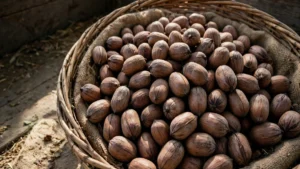
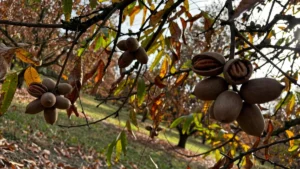
A pistachio farm retreat is a stay inside a working orchard where the trees stand in dry, sun-baked rows, the shells split open on the branch when the nuts ripen, and the harvest is gathered in the heat of late summer. The orchards are quiet places of pale soil, wide spacing, and deep shade, and the kitchen turns the morning’s crop into baklava, green pesto, and bowls of roasted nuts still warm from the pan. You arrive expecting a farm walk and a tasting, and you leave knowing why the pistachio keeps the longest year of any orchard crop.
Pistachios do not behave like other nuts. They grow on trees that carry male and female flowers on separate plants, so every orchard needs its pollinators planted among the cropping trees, and the nuts ripen over a long, hot summer before the shells split open by themselves, which is the tree’s own signal that the kernel inside is ready. A pistachio that has not split is not ripe, so the harvest is a matter of watching the trees day by day and shaking them at exactly the right moment.
Below are nine pistachio farm regions worth considering in 2027, from the Kerman plains of Iran to the baklava kitchens of Gaziantep, the lava slopes of Bronte, the island groves of Aegina, the valleys of California and the plains of Spain, and the old pistachio country of Syria, Australia, and Tunisia.
Key takeaways
- A pistachio farm retreat is a stay on or beside a working orchard, with orchard walks, a harvest shaken from the trees, pistachios roasted on the farm, and meals built around the nut, from baklava to green pistachio pesto.
- The pistachio year has one peak, the harvest in late August and September, when the shells split open on the tree, so plan around those weeks, since the dates shift a little with the weather every year.
- Iran grows most of the world’s pistachios, while California grows most of the rest, and the best farms grow named varieties rather than mixed nuts.
- Stay on the farm or a short drive away, because orchard lanes are slow and the harvest starts early, when the air is cool and the sun is still low.
- Pistachios are tree nuts, so anyone with a nut allergy should check with the farm before booking, and the harvest is hot, dusty work, so the orchards are not for everyone.
What a pistachio farm retreat actually is
A pistachio farm retreat keeps the pistachio at the heart of the stay. The farm grows named varieties for the table, the roaster, and the mill, and part of its land has become guest rooms, a small lodge, or a restored farmhouse. The orchard decides how each day runs, and the meals, walks, and tastings all follow the work among the trees.
The tree surprises most visitors. A pistachio grows as a low, spreading tree with grey bark and a broad canopy, so the orchard is a park of wide shade and pale, dusty ground, and in late summer the same trees carry clusters of nuts in pink-tinged hulls that split open to show the shell inside.
How we chose these retreats and what to look for
We chose regions rather than hotels, because what makes a pistachio farm stay good is the farming, and the rooms come second. Every region below grows pistachios on a serious scale, opens its working orchards to visitors, and puts a bed minutes from the trees.

Start with the varieties. One commercial variety can still make a farm worth visiting, but several, such as a long Akbari, a round Fandoghi, a sweet Ahmad Aghaei, and a small local landrace, make for a far better tasting. The best luxury hazelnut farm retreats run on the same idea, that a farm stay is only worth the trip when the farm itself is worth watching.
A good retreat gives you a hat, water, a basket, and a guide who sets the pace.
The 9 best luxury pistachio farm retreats of 2027
Rafsanjan and the Kerman Pistachios, Iran
What we like: Rafsanjan, on the plains of Kerman province, grows the Kerman pistachio, the variety that carries the name of the region and anchors the world trade, with orchards watered from deep wells where the Akbari, Ahmad Aghaei, and Fandoghi varieties are shaken down in September and dried in the sun the same week. What to consider: The harvest is in September, the farms are large and working orchards first, and the best stays book out early for the harvest weeks. Best For: Travellers who want the heart of the pistachio world, with sun-drying yards, old bazaars, and the desert towns of Kerman a short drive away. Style: Stone farmhouses and shaded courtyards among the pistachio trees. Price Range: About $265 to $495 a night. Standout Feature: Tasting Akbari pistachios beside the drying yards of Rafsanjan, with the desert hills rising behind the orchards.
Gaziantep and the Antep Pistachios, Turkey
What we like: Gaziantep, in the hills of south-eastern Turkey, grows the Antep pistachio, the small, intensely green nut that gives the city’s baklava its colour and its fame, with orchards on the dry slopes where the nuts are gathered in September and ground into paste the same day. What to consider: The harvest is in September, the best farms are small and Turkish-speaking, and the baklava workshops fill fast in harvest week. Best For: Travellers who want Turkish pistachio country, with baklava makers, old bazaars, and the museums of Gaziantep close by. Style: Ottoman-era guesthouses above the pistachio orchards. Price Range: About $245 to $485 a night. Standout Feature: Green Antep pistachios ground for baklava in a Gaziantep workshop, with the old city in view below.
Bronte and the Green Gold of Etna, Sicily
What we like: Bronte, on the lava slopes of Mount Etna, grows the green pistachio of Bronte, a protected nut with a deep emerald kernel, in terraced orchards of black volcanic stone where the harvest comes every two years and the nuts are gathered by hand in September. What to consider: The harvest runs in alternate years, the terraces are steep, and the best farms are small and Italian-speaking. Best For: Travellers who want Sicilian pistachio country, with lava-stone villages, Etna views, and the markets of Catania nearby. Style: Lava-stone villas on the slopes of Etna. Price Range: About $275 to $515 a night. Standout Feature: Emerald pistachios shelled in a Bronte farmhouse, with the black lava fields and the volcano behind.
Aegina and the Island Pistachios, Greece
What we like: Aegina, the island in the Saronic Gulf, grows pistachios in groves that run down to the sea, and the harvest in September fills the harbour town with nuts that carry the island’s protected name, sold in the shell from stalls along the waterfront. What to consider: The island is small, the groves are family-run, and the harvest is short. Best For: Travellers who want Greek pistachio country, with island beaches, the temple of Aphaia, and Athens a short ferry ride away. Style: Whitewashed island houses with blue shutters above the groves. Price Range: About $235 to $465 a night. Standout Feature: Pistachios in the shell bought at the Aegina harbour, eaten with the sea in front of you.
The San Joaquin Valley, California, USA
What we like: The San Joaquin Valley, in central California, grows pistachios in vast irrigated orchards below the Sierra Nevada, and the harvest runs in September, when shaking machines move down the rows and the nuts are hulled and dried in yards the size of small towns. What to consider: The season is in the late summer heat, the farms are large and mechanised, and the valley needs planning to reach. Best For: Travellers who want pistachios at scale, with Sierra views, wine country, and the Pacific coast a drive away. Style: Ranch-style lodges beside the orchards. Price Range: About $255 to $505 a night. Standout Feature: A shaking harvest at dawn in September, in the warmth of the Californian autumn, while the Sierra stands behind the rows.
Castilla-La Mancha and the Spanish Pistachios, Spain
What we like: Castilla-La Mancha, on the dry plains of central Spain, grows pistachios in new orchards planted among the vineyards and olive groves, and the harvest in September fills the farmyards with nuts that are roasted in the shell and sold in the markets of Toledo. What to consider: The region is rural and far from the coast, the best farms are young and Spanish-speaking, and the harvest is in September. Best For: Travellers who want Spanish pistachio country, with windmills, old towns, and the wine of La Mancha close by. Style: Whitewashed farmhouses with shaded patios on the dry plains. Price Range: About $285 to $525 a night. Standout Feature: Pistachios roasted in the shell on a La Mancha farm, with the windmills of Consuegra on the horizon.
Damascus and the Syrian Pistachios, Syria
What we like: Damascus, in the oasis country of southern Syria, has grown pistachios for centuries in orchards watered by the Barada river, and the harvest in September is gathered by hand, with the nuts dried on the farm roof and sold in the old city’s souks. What to consider: The harvest is in September, the farms are small and family-run, and the region needs planning to reach. Best For: Travellers who want Syrian pistachio country, with old souks, Roman ruins, and the history of Damascus nearby. Style: Small hotels and farm guesthouses in the oasis towns. Price Range: About $295 to $545 a night. Standout Feature: Pistachios drying on a farm roof in the Damascus oasis, with the old city walls in the distance.
The Riverina, New South Wales, Australia
What we like: The Riverina, in the dry country of New South Wales, grows pistachios in irrigated orchards along the Murrumbidgee river, and the harvest runs in March and April, when the southern hemisphere is in autumn and the northern hemisphere is still in winter. What to consider: The season is in the southern autumn, the farms are large and working orchards first, and the region is a long drive from Sydney. Best For: Travellers who want pistachios in March, with river towns, wide skies, and the wine country of the Riverina nearby. Style: Shearing-shed conversions and riverside cabins near the orchards. Price Range: About $305 to $555 a night. Standout Feature: A harvest morning in March, in the warmth of the Australian autumn, while the northern hemisphere is mid-winter.
Tunis and the Tunisian Pistachios, Tunisia
What we like: Tunis, in the rolling country of northern Tunisia, grows pistachios in farm orchards along the Medjerda river, and the harvest in September fills the farmyards with nuts that are cracked, roasted, and ground into the paste of Tunisian sweets. What to consider: The harvest is in September, the farms are small and family-run, and the region needs planning to reach. Best For: Travellers who want Tunisian pistachio country, with medina markets, Roman ruins, and the coast a short drive away. Style: Whitewashed cottages with tiled courtyards at the orchard edge. Price Range: About $315 to $565 a night. Standout Feature: Pistachio paste ground in a Tunisian farm kitchen, with the Medjerda river running past the orchard.
Matching a pistachio region to the trip you want
If the kitchen matters most, pick a region where pistachios appear at breakfast, lunch, and supper, not just in the orchard.
The best luxury cherry farm retreats make the same point in a different orchard, that the farm should sit at the centre of the trip and everything else should be a short drive.
The caveats that matter
Treat a pistachio farm as a workplace before anything else, and the warnings stay practical rather than dramatic.
| Detail | What is known |
|---|---|
| Best time to go | Late August to September for harvest in the north and March to April in Australia, with the shells splitting over two to three weeks |
| How long to stay | Two or three nights, with one full morning among the trees and a day to see the area |
| What to wear | A hat, sunscreen, light long sleeves, sturdy shoes, and clothes you do not mind dusting off |
| Who should take care | Anyone carrying a tree nut allergy should speak to the farm first, since pistachio is one of the most common nut allergies |
| What not to bring | Leave nuts and cuttings from other orchards at home, because pests and disease ride on plant material |
| Money and booking | Small farms usually take bookings direct with a deposit, so confirm meals and tours in writing first |
| Getting there | A car is the usual way in, and the farm lanes twist and narrow, so allow more time than the map suggests |
| What it does not offer | This is a working farm, not a hotel with a spa, so expect dawn starts, plain rooms, and supper from the farm kitchen |
Checklist: choosing a pistachio farm retreat honestly
Go through these checks before you book, and again the week before you travel.
- Varieties first: ask the farm to name its pistachios, because a farm that grows Kerman, Akbari, or Ahmad Aghaei by name will feed you far better than one that grows mixed nuts.
- Dates first: pin down the harvest weeks in writing, since they shift with the weather and neither last long.
- Sleep close: book a room on the farm or minutes away, because the lanes are slow and the harvest crews are out before sunrise.
- Included extras: ask whether meals, the orchard tour, and the roasting sessions come with the room, and get the answer before you pay.
- Weather: hope for dry weather and still pack for dust and heat, since the harvest runs under a fierce late-summer sun.
- Allergy check: tell the farm about any nut allergy when you book, ask what the kitchen uses, and keep your medication in your bag.
Frequently asked questions
Which countries grow the most pistachios?
Iran grows most of the world’s pistachios, about half of the crop, almost all of it on the plains of Kerman province around Rafsanjan. The United States is second, with California’s San Joaquin Valley, and Turkey, Syria, and Greece follow, each with its own pistachio character.
Do Kerman and Akbari pistachios taste different?
A Kerman is round and firm, with a clean, nutty bite, and it is the pistachio most of the world eats in the shell. An Akbari is long and slender, with a sweeter, more delicate flavour, and it is the pistachio the Iranian market prizes most and pays most for.
Why do pistachio shells split open on the tree?
Pistachio shells split open as the nut ripens, because the kernel grows and pushes the two halves of the shell apart, and a pistachio whose shell has not split is usually not ripe, so the harvest is timed to the split.
Why are some pistachios green and others yellow?
A deep green kernel, like the pistachio of Bronte, comes from a variety grown for its colour, while a paler yellow kernel comes from a variety grown for size. The green ones are prized for sweets and pastes, because the colour survives the cooking.
May visitors help with the pistachio harvest?
Most farms let you gather a basket of nuts from the catching frames, and some let you help with the hulling and drying, but the machines do the real work, because a whole orchard cannot be harvested by hand. Ask first, because the nuts on the frames are the farm’s income. The best luxury pear farm retreats keep the same rule for their own fruit, since a farm’s harvest is its income.
Is a pistachio farm safe if I have a nut allergy?
Pistachio is one of the most common tree nut allergies, and it often goes with a cashew allergy, so anyone with a nut allergy should mention it at booking, check what the kitchen cooks with, and talk to their clinician first if they are unsure.
The bottom line
The honest pick for 2027 is the farm where the trees are tended by hand, the varieties have names you can learn, and the host can tell you which row splits first.
Spend two or three nights, walk the rows at first light, taste every variety the farm grows, and bring a sack home with the host’s roasting tips. That is how a pistachio farm retreat is meant to be enjoyed.