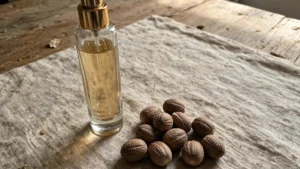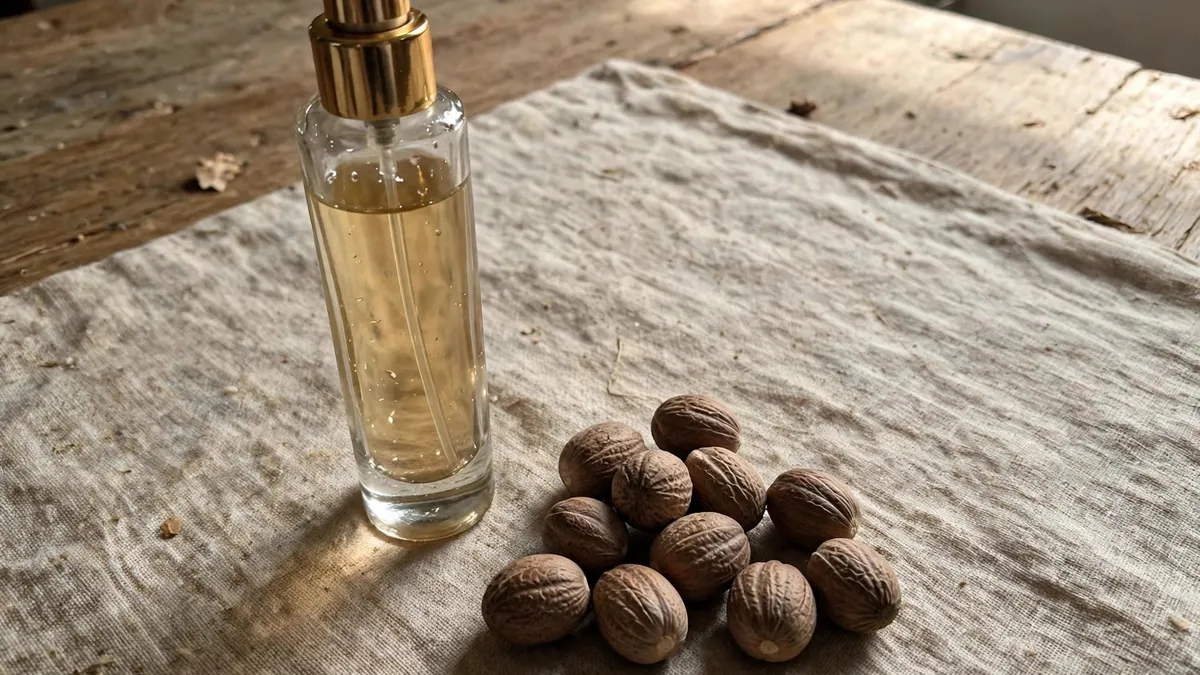

Nutmeg is the warmest spice in a perfumer’s drawer, and the one most likely to be hiding in a bottle you already own.
One seed, three jobs: green and fresh in a fougère, dark and leathery in a chypre, sweet enough to pass for a gourmand beside vanilla.
Below are nine things worth knowing about nutmeg in perfume, from the island it once made empires fight over to the molecule that makes a whole nutmeg dangerous to eat.
Key takeaways
- Nutmeg is the seed of Myristica fragrans, from the Banda Islands; mace is the lacy covering around the same seed.
- Most of its warmth comes from myristicin, the molecule that makes eating a whole nutmeg dangerous.
- It usually sits in the heart of a perfume, warming the woods and leather around it rather than leading the opening.
- The same note can smell fresh in a fougère, dark in a chypre, or sweet beside vanilla.
- No nutmeg perfume suits everyone — the spice can read as festive, old-fashioned or medicinal, so test on skin first.
What a nutmeg perfume actually is
A nutmeg perfume is a perfume in which nutmeg is a named note, usually in the heart. It turns up in fougères, chypres, orientals and gourmands alike, and the family of the bottle tells you more than the note itself does.
Cinnamon is hot and sweet, clove is dark and medicinal, and nutmeg sits between them: warm, dry, and faintly woody, with a sweetness that never turns sticky.
Our guide to what a cardamom perfume is covers a spice that works in a similar way, warming a composition from the inside, and the two are often paired in the same bottle.
How to read a nutmeg note list
Where the nutmeg sits matters more than the name. Nutmeg listed at the top means a bright, short-lived spice. Listed in the middle, it means the warm centre of the perfume, usually strongest an hour or two in. Listed at the bottom, it means a slow, woody warmth that lasts until evening.

The neighbours decide the mood. Citrus and lavender pull nutmeg towards fresh and clean, vanilla and tonka towards sweet and warm, leather and moss towards dark and formal.
And do not ignore the vague entries. A list that says spices without naming them often contains a small dose of nutmeg. Our explainer on what a coriander perfume is covers the same trick from the other side, since coriander is the spice most often left unnamed in a fresh opening.
Nine things worth knowing about nutmeg in perfume
Nutmeg and mace come from the same fruit, and they are not the same smell
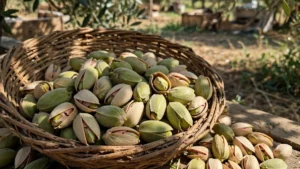
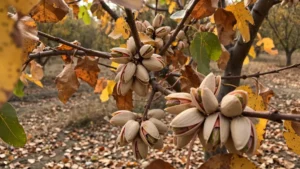
One fruit gives perfumery two materials: nutmeg is the seed inside, and mace is the red, lacy covering wrapped around it.
What It Shows: A note list that says nutmeg means the seed, and a list that says mace means the covering, and the two are not interchangeable in a formula.
What to Consider: Mace is warmer, softer and more floral than nutmeg, with less of the dry, woody edge.
Best For: Telling the two apart before you buy, and knowing which one a bottle actually contains.
Material: Nutmeg oil, steam-distilled from the dried seed of Myristica fragrans.
Price Range: Both oils are inexpensive for natural materials, which is why they appear at every price point.
Standout Feature: One fruit, two oils, and two different smells from the same harvest.
The Banda Islands were once worth a city — nutmeg was traded for Manhattan
For two hundred years, nutmeg grew almost nowhere except the Banda Islands, a tiny volcanic chain in what is now Indonesia. In 1667 the English gave up their claim to the island of Run in exchange for New Amsterdam — the settlement that became New York.
What It Shows: Nutmeg was once one of the most valuable commodities on earth, worth more than gold by weight, and its price was set by monopoly, not by harvest.
What to Consider: The monopoly is long gone, and nutmeg is now grown in Grenada, India and Sri Lanka, so the note costs almost nothing in a modern formula.
Best For: Understanding why a spice that costs pennies today was once worth a city.
Material: The dried seed of Myristica fragrans, once traded by the sack and guarded by warships.
Price Range: A whole nutmeg costs less than a coin, and the oil is among the cheapest naturals in perfumery.
Standout Feature: A spice once traded for Manhattan, now cheaper than the bottle it scents.
Myristicin gives nutmeg its warmth, and it is also why too much nutmeg makes you ill
Myristicin is the main constituent of nutmeg oil, along with elemicin and safrole, and it is responsible for the warm, woody sweetness that defines the note. It is also psychoactive in large doses: eating a whole nutmeg can cause nausea, confusion and a racing heart.
What It Shows: The warmth of nutmeg is chemistry, not poetry, and the same molecule that makes it smell comforting makes it dangerous in quantity.
What to Consider: The dose in a perfume is tiny, a fraction of a percent, and it is not a health concern on skin — but the story explains why perfumers treat the material with respect.
Best For: Understanding why nutmeg smells warm rather than hot, and why it is dosed so carefully.
Material: Myristicin, the main constituent of nutmeg essential oil, with elemicin and safrole beside it.
Price Range: The oil is cheap, and the molecule is available synthetically, so cost never decides whether a bottle uses it.
Standout Feature: One molecule, a warm smell, and a dose that separates a spice from a poison.
East Indian nutmeg and Grenadian nutmeg do not smell the same
The two main sources of nutmeg oil smell noticeably different. East Indian nutmeg is warmer, sweeter and more resinous, while Grenadian nutmeg is drier, greener and more peppery.
What It Shows: Origin matters even for a cheap material, and a perfumer choosing between the two is choosing between a warm base note and a dry heart note.
What to Consider: A bottle rarely says which one it uses, so the only way to know is to smell it — the warm version leans gourmand, the dry version leans fougère.
Best For: Knowing why two nutmeg perfumes can smell like different spices.
Material: Nutmeg oil from Myristica fragrans, distilled in Indonesia or Grenada.
Price Range: Both are inexpensive, so the choice is about smell, not cost.
Standout Feature: Two islands, two oils, and the same seed smelling like two spices.
Nutmeg usually sits in the heart, arriving after the citrus has gone
Most perfumes place nutmeg in the middle of the pyramid, where it takes over from the citrus of the opening and hands the wear to the woods of the base. It is strongest one to three hours after spraying.
What It Shows: A heart note is a bridge, and nutmeg is one of the best bridges in perfumery, because it is warm enough to carry the base and light enough to follow the top.
What to Consider: A perfume that lists nutmeg in the top will smell spicier for twenty minutes and then lose it, so judge the bottle by its middle, not its opening.
Best For: Knowing when to judge a nutmeg perfume, and why the first spray is the least informative part.
Material: Nutmeg oil, used as a heart note in most fougères, chypres and orientals.
Price Range: The position costs nothing — it is a formulator’s choice, not a materials choice.
Standout Feature: A note that arrives late, stays for hours, and does its best work in the middle.
Nutmeg is the bridge between the spice notes and the woods
In a formula, nutmeg sits between two worlds: above it are the bright spices, below it are the woods. It connects them, because it is sweet enough to belong with the spices and dry enough to belong with the woods.
What It Shows: A perfume without a bridge note can feel like two perfumes stitched together, and nutmeg is often the stitch.
What to Consider: If a woody perfume smells harsh or a spicy perfume smells thin, the missing piece is often a bridge note like nutmeg.
Best For: Reading a note list like a structure, and seeing where the weight of a perfume sits.
Material: Nutmeg oil, paired with cedarwood, sandalwood or vetiver in most woody compositions.
Price Range: The chemistry decides that, not the price tag.
Standout Feature: One note that holds the top and the base together.
The nutmeg in a bottle is not the nutmeg on your spice rack
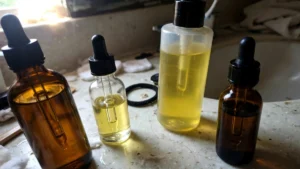
The nutmeg in a perfume is almost always the steam-distilled essential oil, not the ground spice. The oil is brighter and cleaner than the powder, because distillation leaves the heavy, fatty parts behind.
What It Shows: Smelling the spice in your kitchen is a useful reference, but it is not the same material, and a perfume will always smell cleaner and sharper than the jar.
What to Consider: If you want to train your nose, buy whole nutmegs and grate them fresh, and smell the grating immediately, before the brightness fades.
Best For: Knowing what to expect from the note, and why a perfume smells tidier than a kitchen.
Material: Nutmeg essential oil, steam-distilled from the dried seed.
Price Range: Whole nutmegs cost little, and a small bag is enough to learn the smell.
Standout Feature: The same seed, two materials, and the oil is the brighter of the two.
Grenada put a nutmeg on its flag, and the island is still called the Isle of Spice
Grenada grows so much nutmeg that the spice appears on the national flag. Its nutmegs are the dry, peppery kind that perfumers use when they want the note to stay in the heart.
What It Shows: A country can be defined by a single spice, and the flag is a reminder that nutmeg is not a minor crop.
What to Consider: Hurricane Ivan destroyed most of Grenada’s nutmeg trees in 2004, and the industry is still recovering, so the supply of the dry, peppery oil is smaller than it was.
Best For: Understanding where the drier style of nutmeg comes from, and why it costs more than the sweeter kind.
Material: Grenadian nutmeg, Myristica fragrans grown on volcanic soil in the Caribbean.
Price Range: Grenadian oil costs a little more than East Indian oil, but both are cheap by perfume standards.
Standout Feature: A spice on a flag, and an island that still calls itself by it.
Plague doctors carried nutmeg in pomanders, believing it kept the sickness away
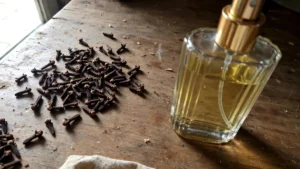
In the seventeenth century, doctors treating plague victims carried pomanders — small pierced balls filled with spices — and nutmeg was one of the most prized fillings.
What It Shows: Nutmeg has been valued for its smell for centuries, and the association between the spice and protection is older than modern perfumery.
What to Consider: The belief was wrong — bad air does not cause plague — but it explains why nutmeg became a luxury good in Europe long before it became a perfume note.
Best For: Knowing the history behind the note, and why it still carries an old-fashioned, apothecary character.
Material: Whole nutmeg, carried in a pomander alongside cloves, cinnamon and amber.
Price Range: A pomander of spices once cost a small fortune; the same nutmeg today costs almost nothing.
Standout Feature: A spice once worn as medicine, now worn as perfume.
How nutmeg behaves on skin
On skin, nutmeg is at its warmest in the second hour, once the citrus has faded. On a paper strip it can smell thin and peppery, but on a warm wrist it turns rounder and sweeter.
Skin temperature decides how fast the note develops. Warm skin pushes the spice open quickly and brings the sweetness forward, while cool skin holds the opening longer and keeps the spice dry and peppery.
Nutmeg over bare skin fades faster than nutmeg over an unscented moisturiser or a vanilla lotion, because the oils in the base hold the spice in place. The effect is the same one that makes a cumin perfume last longer over a warm base, and it is the simplest way to get more wear out of a light, spicy bottle.
The caveats that matter
Buy a sample before you buy a bottle. Nutmeg divides wearers more than most spice notes: its warmth can read as festive to one person and old-fashioned to another.
| Detail | What is known |
|---|---|
| What nutmeg is | The dried seed of Myristica fragrans, a tree that grows on the Banda Islands |
| Where it sits | Most often in the heart, at its strongest one to three hours in |
| What makes it smell warm | Myristicin and elemicin, the two leading constituents of the oil |
| Two opposite styles | Green and fresh in a fougère, dark and leathery in a chypre |
| Best season | Cold months suit it best, because cool air keeps the warm spice from turning heavy |
| Who should patch-test first | Anyone with reactive skin, or a history of irritation from spiced scents |
| What to avoid | Deciding from the first spray, or committing to a full bottle without a sample |
| What nutmeg does not do | It will not carry a perfume alone — the woods and amber underneath do the lasting |
Anyone who is pregnant, breastfeeding, or using prescription skincare should ask a clinician first.
Checklist: reading a nutmeg perfume honestly
Run through this list before spending money, and once more after a full day of wear.
- Work out where the nutmeg sits before you spray: a top-note nutmeg burns bright and vanishes, a heart-note nutmeg shapes the middle hours, and a base-note nutmeg warms the drydown.
- Read the company it keeps: citrus and lavender point to a fresh bottle, vanilla and tonka point to a sweet one, leather and moss point to a dark one.
- Train your nose on the real thing first: grate a whole nutmeg in your kitchen so you know the smell.
- Wear it on skin, never on paper alone: a blotter flattens the spice.
- Wait until the second hour before you judge it: the sharpest edge of the spice is gone by then, and what remains is the perfume you would live with.
- Compare the cost per millilitre, not the bottle: smaller niche bottles can hide a higher cost per spray.
Frequently asked questions
Will people think I smell of Christmas cake?
It can, and that is both the charm and the risk. The perfumes that avoid the Christmas association are the ones that pair nutmeg with dry woods, leather or citrus instead of vanilla and tonka. If you want nutmeg without the holiday feeling, look for a fougère or a chypre, not a gourmand.
Is the myristicin in a nutmeg perfume a problem?
No, not at the dose used in perfume. In a perfume it is present in fractions of a percent, and it is one of several constituents in the oil, not a standalone ingredient.
Nutmeg or mace — how do I tell which one a bottle uses?
They come from the same fruit, but they smell different. Nutmeg is the seed, and it smells warm, dry and woody. Mace is the lacy covering around the seed, and it smells warmer and softer.
Will the nutmeg in a bottle help it stay on skin?
Not directly. Nutmeg itself is a middle note that fades within a few hours, so it does not add longevity on its own.
Why is nutmeg a staple of classic men’s scents?
Because it is one of the few warm spices that reads as masculine without smelling sweet. Nutmeg sits in between: warm, dry and woody, with just enough sweetness to round off a fougère or a chypre.
What happens if I spray nutmeg over a vanilla lotion?
Yes, and it is one of the easiest pairings in perfumery. Nutmeg over a vanilla lotion lasts longer, because the vanilla gives the spice something warm to hold onto.
The bottom line
A nutmeg perfume is a perfume built around one of the warmest, hardest-working notes in perfumery. It comes from the seed of a tree that once made empires fight over a handful of islands, and it spends its time warming the woods and leather around it.
Start with a fresh grating in your kitchen, then wear one bright, green nutmeg and one dark, leathery one for a full day each. The note will teach you the rest.