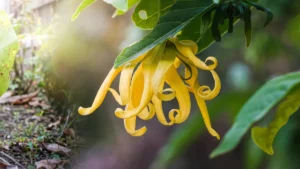
Clove is the darkest spice in a perfumer’s drawer, and the one most likely to be hiding in a bottle you already own.
One bud, three jobs: sharp and medicinal in a vintage floral, smoky and warm beside chestnut, dark and leathery in a chypre.
Below are nine things worth knowing about clove in perfume, from the five islands it once made empires fight over to the molecule that makes a whole clove numb a toothache.
Key takeaways
- Clove is the dried flower bud of Syzygium aromaticum, from the Molucca Islands; its smell comes mostly from eugenol.
- Clove bud oil and clove leaf oil come from the same tree and smell nothing alike.
- It usually sits in the heart of a perfume, darkening the florals and woods around it rather than leading the opening.
- The same note can smell smoky beside chestnut, powdery beside rose, or leathery beside tobacco.
- Clove is a divisive note — it can smell medicinal or old-fashioned to some wearers, so always test it on skin first.
What a clove perfume actually is
A clove perfume is a perfume in which clove is a named note, usually in the heart. It turns up in orientals, chypres, vintage florals and gourmands alike.
Cinnamon runs hot and sweet, nutmeg runs warm and woody, and clove is the outlier of the three: darker, sharper, and faintly medicinal, with a sweetness that stays in the background.
Our explainer on what a cardamom perfume is looks at another warm spice that does quiet work inside a formula, and the two notes share more than a shelf in the perfumer’s drawer.
How to read a clove note list
The position tells you more than the name. A clove in the opening is a flash of sharp spice that is gone in twenty minutes. A clove in the middle is the dark centre of the wear, strongest an hour or two in. A clove in the base is a slow warmth that stays until evening.

The neighbours decide the mood. Rose and jasmine pull clove towards powdery and floral, chestnut and vanilla towards smoky and sweet, leather and tobacco towards dark and formal.
Watch for the word spices on its own: a list that hides the spice names usually still contains a small dose of clove. Our explainer on what a saffron perfume is covers the same trick, since saffron is the spice most often left unnamed in an expensive opening.
Nine things worth knowing about clove in perfume
Clove bud oil and clove leaf oil come from the same tree and smell nothing alike
One tree gives perfumery two materials: clove bud oil comes from the unopened flower buds, and clove leaf oil comes from the leaves. The bud oil is sweet, warm and rounded, while the leaf oil is harsher, greener and far stronger in eugenol.
What It Shows: A note list that says clove usually means the bud oil, and a list that says clove leaf means the cheaper, sharper material, and the two are not interchangeable in a formula.
What to Consider: Leaf oil is cheaper and more common in functional products, so a budget perfume that lists clove may be using the leaf, not the bud.
Best For: Knowing which of the two oils a bottle actually contains.
Material: Clove bud oil, steam-distilled from the dried buds of Syzygium aromaticum.
Price Range: Bud oil costs several times more than leaf oil, which is why fine perfume uses the bud.
Standout Feature: Two oils from one tree, and the expensive one is the one you actually want to smell.
Eugenol is the molecule behind the smell, and it numbs a toothache for a reason
Eugenol makes up 70 to 90 percent of clove oil, and it is responsible for the warm, sharp sweetness that defines the note. It is also a mild anaesthetic, which is why a drop of clove oil on a sore tooth has been a home remedy for centuries.
What It Shows: The warmth of clove is chemistry, not poetry, and the same molecule that makes it smell comforting makes it numb skin in quantity.
What to Consider: The dose in a perfume is tiny, a fraction of a percent, and it is not a health concern on skin — but the story explains why perfumers dose the material so carefully.
Best For: Knowing why clove smells medicinal, and why a little of it goes a long way.
Material: Eugenol, the main constituent of clove oil, with beta-caryophyllene beside it.
Price Range: Eugenol is cheap and widely available, so cost never decides whether a bottle uses clove.
Standout Feature: The same molecule that numbs a tooth is the one that warms a perfume.
An orange studded with cloves is the oldest clove perfume there is
Long before clove was a perfume note, it was a pomander: an orange studded with whole cloves, hung in a wardrobe or carried in a pocket to scent the air and keep moths away.
What It Shows: Clove has been valued for its smell for centuries, and the pairing with orange is older than modern perfumery.
What to Consider: The belief that a pomander protected against disease was wrong, but it explains why clove became a luxury good in Europe long before it became a perfume note.
Best For: Seeing where the note’s old-fashioned character comes from.
Material: Whole cloves, pressed into the skin of a fresh orange.
Price Range: An orange and a handful of cloves cost almost nothing, and the scent lasts for weeks.
Standout Feature: The oldest clove perfume was made in a kitchen, not a laboratory.
Clove once grew on five islands, and the Dutch burned the trees everywhere else
For two hundred years, clove grew almost nowhere except five small islands in the Moluccas, a volcanic chain in what is now Indonesia. The Dutch East India Company guarded the monopoly fiercely, burning clove trees on every other island.
What It Shows: Clove was once one of the most valuable commodities on earth, worth more than gold by weight, and its price was set by monopoly, not by harvest.
What to Consider: The monopoly is long gone, and clove is now grown in Madagascar, Zanzibar and Sri Lanka, so the note costs almost nothing in a modern formula.
Best For: Knowing why a cheap spice once decided the fate of islands.
Material: The dried flower bud of Syzygium aromaticum, once traded by the sack and guarded by warships.
Price Range: A jar of whole cloves costs less than a coin, and the oil is among the cheapest naturals in perfumery.
Standout Feature: Five islands, one monopoly, and a spice that outlived the empire that guarded it.
Dentists trusted clove oil long before perfumers did
Clove oil has soothed toothache since at least the sixteenth century, and eugenol is still used in dental dressings today.
What It Shows: A perfume note can carry the character of its other uses, and clove’s medical past is part of why some people love it and others cannot stand it.
What to Consider: The medicinal association is the reason clove divides wearers: to one nose it smells warm and old-fashioned, to another it smells like a waiting room.
Best For: Understanding why clove smells like a pharmacy to some people and like Christmas to others.
Material: Eugenol, the same molecule dentists use in fillings, present in clove oil at 70 to 90 percent.
Price Range: A small bottle of clove oil costs a few dollars, and a little of it goes a very long way.
Standout Feature: A medicine cabinet staple that became a perfume note.
Kretek cigarettes made clove the smell of Indonesia
In Indonesia, clove is not a perfume note first. It is the defining ingredient of kretek, the clove cigarette smoked by most of the country’s smokers, which blends tobacco with ground cloves and gives off a sweet, crackling smoke.
What It Shows: A single spice can define the smell of a whole country, and the association between clove and Indonesia is older than modern perfumery.
What to Consider: The cigarette association is the reason some wearers find clove smoky and addictive, and others find it harsh and ashy.
Best For: Knowing why clove smells smoky rather than sweet, and where that smoke comes from.
Material: Ground clove buds, blended with tobacco in a kretek cigarette.
Price Range: A pack of kretek costs a few dollars, and the clove inside is the cheapest part of it.
Standout Feature: A spice that scents a whole country, one cigarette at a time.
Clove lives in the middle of the pyramid, and it shouts before it settles
Most perfumes place clove in the middle of the pyramid, where it takes over from the citrus of the opening and hands the wear to the woods of the base.
What It Shows: A heart note is a bridge, and clove is one of the darkest bridges in perfumery, because it is sharp enough to carry the top and warm enough to hold the base.
What to Consider: A perfume that lists clove in the top will smell spicier for twenty minutes and then lose it, so judge the bottle by its middle, not its opening.
Best For: Knowing which hour of the wear actually belongs to the clove.
Material: Clove bud oil, used as a heart note in most orientals, chypres and vintage florals.
Price Range: Where the note sits costs nothing — it is a formulator’s choice, not a materials choice.
Standout Feature: Loud at first, softer by the hour, and gone before the base arrives.
Clove was made for rose, and the great florals prove it
The most famous clove perfumes are florals: Rochas Femme, Parfum Sacré, L’Interdit, Youth-Dew. In each one, clove does the same job: it darkens the rose and gives a powdery floral a backbone that lasts into the evening.
What It Shows: A spice can be the structure of a floral, not just a decoration, and clove is the spice that holds the great powdery florals together.
What to Consider: If a rose perfume smells too sweet or too simple, the missing piece is often a dark spice like clove.
Best For: Reading a floral note list like a structure, and seeing where the weight of a perfume sits.
Material: Clove bud oil, paired with rose, jasmine and tincture of rose in most classic florals.
Price Range: Chemistry decides that, not the price tag.
Standout Feature: One note that keeps a floral from floating away.
The 1980s powerhouses ran on clove
The great men’s perfumes of the 1980s — Kouros, Antaeus, Jubilation XXV — were built on clove. The note gave them their dark, animalic warmth.
What It Shows: A single note can define an era, and clove defined the decade when men’s perfume was at its loudest.
What to Consider: The powerhouse style fell out of fashion, and modern perfumes use clove more quietly, but the note itself never went away.
Best For: Understanding why a 1980s classic smells the way it does, and why a modern bottle smells tamer.
Material: Clove bud oil, dosed heavily in 1980s powerhouses and lightly in modern compositions.
Price Range: Vintage bottles of the powerhouses cost more than their modern reissues, but the clove inside costs the same.
Standout Feature: A decade of perfume, held together by one dark spice.
How clove behaves on skin
On skin, clove is sharpest in the first hour, while the citrus is still fading. A blotter makes it smell thin and medicinal; a warm wrist rounds it out and lets the sweetness show.
Warm skin opens the spice fast and pulls its sweetness forward, while cool skin keeps it dry and sharp.
A cream base holds clove longer than bare skin does, because the oils in the moisturiser give the spice something to sit in. The effect is the same one that makes a star anise perfume last longer over a warm base, and it is the simplest way to get more wear out of a sharp, spicy bottle.
The caveats that matter
Try a sample before you commit to a bottle. Clove divides wearers more than most spice notes: its medicinal edge can read as warm to one person and as a dentist’s chair to another.
| Detail | What is known |
|---|---|
| What clove is | The dried flower bud of Syzygium aromaticum, a tree that grows on the Molucca Islands |
| Where it sits | Most often in the heart, at its strongest one to three hours in |
| What makes it smell dark | Eugenol, the leading constituent of the oil, at 70 to 90 percent |
| Two opposite styles | Smoky and warm beside chestnut, powdery and floral beside rose |
| Best season | Autumn and winter, when cool air keeps the sharp spice from turning heavy |
| Who should patch-test first | Anyone with reactive skin, or anyone who has reacted to a spiced scent before |
| What to avoid | Judging from the first spray, or buying a full bottle without wearing a sample first |
| What clove does not do | It will not carry a perfume alone — the florals and woods underneath do the lasting |
Anyone who is pregnant, breastfeeding, or using prescription skincare should ask a clinician first.
Checklist: reading a clove perfume honestly
Run through this list before spending money, and once more after a full day of wear.
- Spray it on the back of your hand in the shop, then leave for an hour — the clove you smell when you come back is the clove you would live with.
- Check the note list for the neighbours: rose means powdery, chestnut means smoky, leather means dark.
- Smell a whole clove first, so you know the raw material before you judge the bottle.
- Try it over moisturiser as well as bare skin: a cream base holds the spice longer and softens the sharp edge.
- Wear it on a cold day before you decide: clove behaves differently in warm air, and most people wear it in winter.
- Start with the smallest size, because a clove you love in the shop can smell medicinal at home.
Frequently asked questions
Does clove make me smell like a dentist’s waiting room?
It can, and that is the charm and the risk of the note. The perfumes that avoid the medicinal association are the ones that pair clove with dark woods, leather or chestnut instead of leaving it bare. If you want clove without the pharmacy feeling, look for a smoky gourmand or a chypre, not a bare spicy floral.
Can undiluted clove oil go on skin?
No. Clove oil is a known sensitiser in its pure form, which is why perfumers use it in fractions of a percent and why undiluted clove oil should never go on skin. A finished perfume is a different matter: the dose is tiny, and the oil is one of several constituents, not a standalone ingredient.
Why do some people find clove medicinal?
Because of eugenol, the same molecule dentists use. The association is learned: if your first memory of the smell is a dentist’s chair, the perfume will always carry a trace of it. The perfumes that avoid the association bury the clove under rose, vanilla or leather, so the medicine never gets a chance to lead.
How can I tell clove apart from cinnamon in a bottle?
They are cousins, but they smell different. Clove is dark, sharp and faintly numbing. Cinnamon is hot, round and sweet. If the spice smells like a dentist’s chair, it is clove. If it smells like baking, it is cinnamon.
Does clove add staying power to a perfume?
Not directly. Clove itself is a middle note that fades within a few hours, so it does not add longevity on its own. What it does is give the base something to hold onto: a dark, resinous base lasts longer when the heart has weight in it.
Is clove a summer scent at all?
Sometimes, but choose carefully. A light clove, such as Pomegranate Noir, works in warm weather because the fruit keeps it fresh. A heavy clove, such as Parfum Sacré or Cinnabar, turns medicinal in the heat. Save the dark ones for autumn and winter.
The bottom line
Clove is one of the darkest, hardest-working notes in perfumery, and a clove perfume is built around it. The bud comes from a tree that once made empires fight over five small islands, and in a bottle it spends its time giving the florals and woods around it a backbone.
Start with a whole clove from your spice drawer, then wear one smoky clove and one powdery clove for a full day each. The note will teach you the rest.