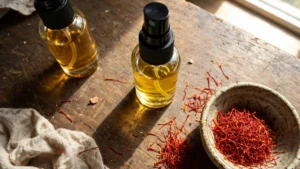
Saffron is the most expensive spice on earth, gram for gram, and it has quietly become one of the most talked-about notes in modern perfumery. It shows up in some of the best-selling niche fragrances of the last decade, it anchors warm evening scents, and it gives perfumes a leathery glow that no other note quite manages.
That gap is understandable. Saffron in perfume is almost never the red threads you buy for cooking. It is a laboratory-made accord built to smell like saffron.
This guide explains what a saffron perfume actually is, how the note is made, why it costs what it costs, and how to wear it well. It covers the difference between Kashmiri and Iranian saffron, why concentration changes the note so much, and how to tell saffron apart from cinnamon, clove and cumin when you are testing a fragrance.
Key takeaways
- Saffron perfume almost never contains real saffron threads; the note is a lab-made accord built to smell like the spice.
- The note smells leathery, warm and hay-like, with a faint iodine edge, and it sits in the heart of a fragrance rather than the opening.
- Saffron pairs best with oud, amber, leather, rose and vanilla, and it leans warm and unisex rather than floral.
- A little goes a long way: saffron perfumes tend to last long and project strongly, so two sprays are usually enough.
- Price is a poor guide on its own: a high price can reflect the saffron story rather than the amount of saffron character in the bottle.
What a saffron perfume actually is
A saffron perfume is a fragrance in which saffron is one of the named heart notes, the part of the scent that emerges after the bright opening fades and stays on the skin for hours. It is not a perfume made from saffron oil, and it is not a single-ingredient scent.
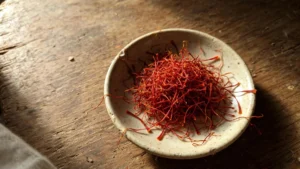
The reason is practical. Real saffron comes from the stigmas of the crocus flower, and each flower yields only three threads. Harvesting is done by hand, which is why the spice can cost more per gram than silver. A perfumer would need an impractical quantity of threads to scent a single batch, and the natural extract is weak, unstable and variable from harvest to harvest.
This is normal practice in perfumery, not a shortcut to be suspicious of. Many of the most famous floral notes, including lily of the valley and lilac, are also built in the lab because the real flower gives up almost no oil.
How to recognise saffron and what to look for
Learning to spot saffron takes a little patience, because it is a quiet note that works underneath louder ingredients. On a first spray you will usually notice the top notes first, often citrus, pink pepper or cardamom, and saffron arrives a few minutes later as a warm, leathery hum.

When you are testing, spray once on the wrist and wait at least fifteen minutes before judging. Saffron reveals itself in the dry-down, the stage where the perfume settles on skin, and it is there that you can tell whether the note is doing real work or is only a name on the box. A good saffron perfume keeps a warm, leathery thread running through the scent for hours.
Look for balance rather than strength. Saffron should warm a perfume, not dominate it. If the scent smells harsh, smoky or medicinal in a way that stings the nose, the saffron accord is probably dosed too high or paired badly. If the scent smells flat and sweet, the saffron may be little more than a label.
9 facts about saffron perfume
Saffron is the most expensive spice in the world, and perfumers rarely use the real thing
It takes roughly 150,000 crocus flowers to produce a single kilogram of saffron, and every stigma is picked by hand. That labour is why the spice sells for thousands of pounds per kilogram, and why no commercial perfumer builds a fragrance from real saffron threads.
What It Shows: the saffron note in your bottle is a crafted impression of the spice, not an infusion of the threads.
What to Consider: a perfume that claims real saffron is usually referring to a tiny amount used for the story, not the main scent.
Best For: anyone curious about how luxury notes are actually built.
Material: lab-made saffron accord, centred on safranal.
Price Range: saffron perfumes typically run from around £60 to over £250.
Standout Feature: the most expensive raw material in the spice world, recreated for a fraction of the cost.
The smell is leathery, warm and hay-like, with a faint iodine edge
Saffron does not smell like a flower. It smells like warm leather, dried hay and a little like the inside of a spice drawer, with a faint medicinal sharpness that some people compare to iodine or antiseptic.
What It Shows: saffron is a warm spice note with a leathery character, not a floral or a fresh note.
What to Consider: if the medicinal edge stays sharp after half an hour, the dose may be too high for your taste.
Best For: wearers who like warm, leathery scents over light florals.
Material: safranal-led accord, often supported by amber and woods.
Price Range: the note appears at every price point, from around £40 to over £300.
Standout Feature: a warm, leathery smell with a distinctive faint iodine edge.
Saffron sits in the heart of a perfume, not the opening
Perfume is built in layers, and saffron belongs in the middle layer, the heart, which appears after the bright top notes fade and lasts for several hours. Top notes are the first thing you smell, usually citrus or spice, and they vanish within twenty minutes.
What It Shows: saffron is a heart note, and its character only becomes clear after the opening fades.
What to Consider: always wait at least fifteen minutes before deciding whether you like a saffron perfume.
Best For: anyone who wants a scent that changes and deepens over hours.
Material: heart-note accord, typically paired with rose or oud.
Price Range: heart-note saffron perfumes span roughly £60 to £280.
Standout Feature: a note that rewards patience, arriving after the opening and staying for hours.
It pairs with oud, amber and leather, not with soft florals
Saffron’s natural partners are the warm, deep notes: oud, amber, leather, vanilla and dark woods. If you enjoy oud perfumes, you will probably enjoy saffron too.
What It Shows: saffron belongs with warm, deep base notes, and rose is its best floral partner.
What to Consider: a saffron perfume built on light florals is likely to smell muddled rather than warm.
Best For: lovers of oud, amber and leather scents.
Material: saffron accord with oud, amber, leather or rose.
Price Range: warm saffron compositions usually cost from £80 to £300.
Standout Feature: one of the few spice notes that sits comfortably beside oud.
Kashmiri and Iranian saffron are different crops, but the perfume note barely changes
The two most famous saffrons in the world come from Kashmir and Iran, and cooks will argue endlessly about which is better. Kashmiri saffron is prized for its deep colour and delicate flavour, while Iranian saffron is the world’s largest crop and is known for its strong, earthy character.
What It Shows: origin labels on saffron perfume refer to the spice story, not to a real difference in the scent.
What to Consider: do not pay more for a perfume just because it names a particular saffron-growing region.
Best For: buyers who want to see past marketing and judge the scent itself.
Material: safranal-based accord, the same molecule whichever region is named.
Price Range: region-named saffron perfumes often carry a premium of £20 to £80 over similar scents.
Standout Feature: a note where the story costs more than the ingredient.
The same saffron smells different at EDT, EDP and extrait strength
Concentration is the share of perfume oil in the bottle, and it changes saffron more than it changes most notes. In an eau de toilette, saffron is usually a light, warm whisper that appears briefly and then fades into the base.
What It Shows: strength changes saffron’s character, from a whisper in EDT to a dense, smoky presence in extrait.
What to Consider: test the exact bottle strength you intend to buy, not a different concentration of the same name.
Best For: anyone choosing between EDT and EDP versions of a saffron scent.
Material: saffron accord at 5 to 10 percent oil in EDT, 15 to 20 percent in EDP, higher in extrait.
Price Range: extrait versions typically cost 30 to 60 percent more than the EDP.
Standout Feature: a note that transforms with concentration more than almost any other.
Saffron perfumes last long and project far, so a little goes a long way
Warm, leathery notes are among the longest-lasting in perfumery, and saffron is no exception. A saffron perfume will usually still be detectable on skin eight hours after spraying, and on clothes it can last into the next day.
What It Shows: saffron gives a perfume long wear and strong projection, even at modest strength.
What to Consider: over-spraying is the most common mistake with saffron perfumes.
Best For: evening wear, cold weather and occasions where you want to be noticed.
Material: saffron accord over an amber or woody base.
Price Range: long-lasting saffron perfumes start at around £50.
Standout Feature: eight hours or more on skin from two sprays.
Saffron reads warm and unisex, not floral or feminine
For decades, perfume marketing divided scents into floral scents for women and woody scents for men, but saffron never fitted that split. If you are used to rose perfumes, saffron will feel warmer and drier, but it is no harder to wear.
What It Shows: saffron is a warm, unisex note that suits anyone who likes rich, leathery scents.
What to Consider: ignore the gender label on the bottle and judge the scent on your own skin.
Best For: anyone looking for a warm evening scent, whatever the marketing says.
Material: saffron accord, usually unisex by design.
Price Range: unisex saffron perfumes run from about £60 to £300.
Standout Feature: a note that broke out of the old floral versus woody divide.
Saffron is easy to confuse with cinnamon, clove and cumin, but the differences are clear
Warm spice notes can blur together on a first sniff, and saffron is often confused with cinnamon, clove or cumin. The differences are worth learning.
What It Shows: saffron’s leathery, hay-like character sets it apart from the sweeter and sharper warm spices.
What to Consider: a perfume labelled saffron that smells mainly of cinnamon may be using saffron as a minor note.
Best For: anyone learning to read perfume notes by smell rather than by the label.
Material: saffron accord, compared against cinnamon, clove and cumin.
Price Range: learning to spot saffron costs nothing more than a few test strips.
Standout Feature: the only warm spice note with a leathery, hay-like dryness.
Which saffron perfume is right for you
The right saffron perfume depends less on the brand and more on how warm and leathery you want the scent to be. If you are new to the note, start with a saffron perfume built around rose and vanilla, which softens the leathery edge and makes the scent easy to wear in the daytime.
Season matters too. Saffron blooms in cold weather, when its warmth and projection feel generous rather than heavy, and most people reach for it in autumn and winter. In summer it can still work, but only in the evening, when the air cools and the note has room to breathe.
Budget is the last question, and here the honest answer is that you do not need to spend a fortune. The saffron accord is the same family of molecules at every price point, and a well-made saffron perfume at £60 can smell better than a careless one at £250. If you are exploring the note for the first time, a discovery set or a small bottle is a smarter buy than a full bottle of the most expensive option, and many houses now sell saffron scents in 10ml sizes for exactly that reason. For a gentler introduction to perfume notes in general, our guide to floral perfumes explains how the lighter notes are built.
The caveats that matter
Saffron is a generous note, but it has limits. The table below sets out the points that matter most before you buy.
| Detail | What is known |
|---|---|
| Real saffron content | Almost no commercial saffron perfume contains real saffron threads; the note is a lab-made accord. |
| Skin sensitivity | Saffron accords are generally well tolerated, but always patch-test a new perfume on one wrist first. |
| Over-spraying | Two sprays are usually enough; saffron projects strongly and can overwhelm a small room. |
| Summer wear | Best in the evening in warm weather; dense saffron and amber scents can feel heavy in midday heat. |
| Longevity claims | Eight hours or more on skin is typical, but longevity varies with skin type and concentration. |
| Price and value | Price reflects branding and blending as much as ingredients; a £60 saffron perfume can outperform a £250 one. |
| Staining | Perfume itself does not stain, but the saffron colour in marketing imagery is not in the bottle. |
| Storage | Keep the bottle away from heat and light; a cool, dark place preserves the saffron note longest. |
Checklist: buying a saffron perfume honestly
- Spray once on your wrist and wait fifteen minutes before judging the saffron note.
- Check whether saffron is listed as a heart note, and which notes sit beside it.
- Test the exact concentration you plan to buy, since EDT and EDP can smell very different.
- Start with two sprays; add more only if the scent has faded by midday.
- Try a discovery set or a 10ml bottle before committing to a full bottle.
- Store the bottle away from heat and sunlight so the warm notes stay true.
Frequently asked questions
Why is saffron perfume so expensive?
Saffron is the most expensive spice in the world because it is harvested by hand, flower by flower, and it takes around 150,000 flowers to make a kilogram. Perfume prices also reflect the cost of the surrounding ingredients, the blending and the brand.
Is saffron a winter-only note?
No, but it is at its best in cold weather. Saffron’s warmth and projection feel generous in autumn and winter, when the air is cool and the note has room to breathe.
Can I wear a saffron perfume to the office?
Yes, if you keep the dose low and choose the right composition. A saffron perfume built around rose and vanilla, worn with a single spray, is warm and polished without being overpowering.
What should I try first if I have never smelled saffron in perfume?
Start with a discovery set, or a 10ml bottle of a saffron and rose perfume, the gentlest introduction to the note. Spray it on your wrist in the evening, wait fifteen minutes, and notice the leathery warmth that arrives after the opening fades.
Does saffron stain skin or clothes?
No. Real saffron threads can stain cooking and fabric a deep yellow, but perfume contains a lab-made saffron accord, not the spice, and the liquid in the bottle is usually pale or colourless.
How do I store a saffron perfume so the note stays true?
Keep the bottle in a cool, dark place, away from radiators, windows and bathroom steam. Heat and light break down a saffron accord fast, so a bottle left on a sunny shelf can lose its warmth within a year.
The bottom line
Saffron perfume is a warm, leathery, quietly luxurious scent built around a lab-made impression of the world’s most expensive spice. It sits in the heart of a fragrance, pairs best with oud, amber and leather, and lasts for hours on skin, which makes it one of the most rewarding notes to learn and one of the easiest to overdo.
The note is worth the effort because it does something few other notes can: it makes a perfume feel warm without making it sweet, and rich without making it heavy. Once you can pick saffron out of a blend, you will start noticing it everywhere, from the best-selling niche scents to the warm evening perfumes that have quietly relied on it for years.