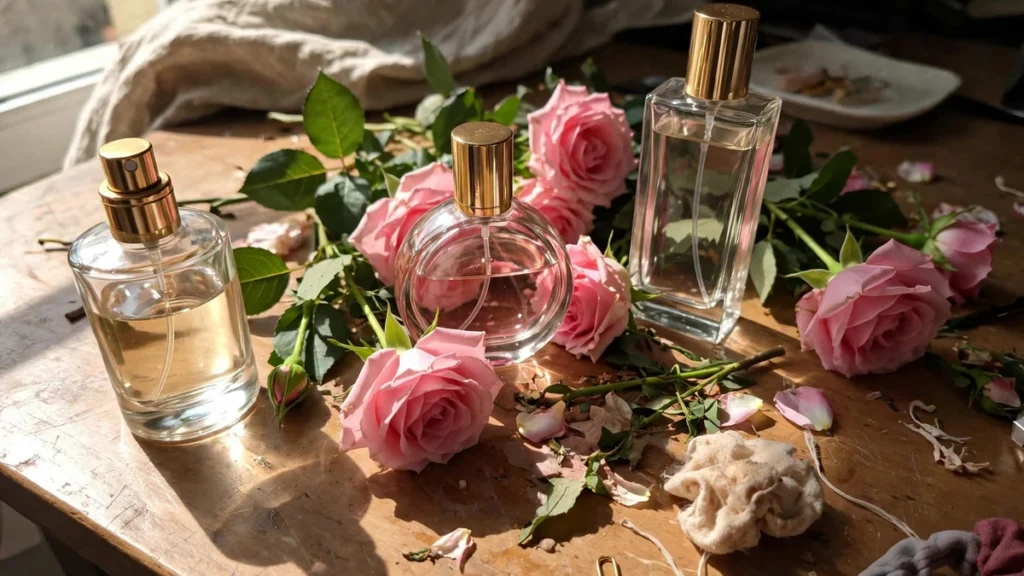
Rose is the most recognisable note in perfumery, and also the most misunderstood. A rose perfume is not one smell. It can be fresh and green like a just-cut stem, soft and powdery like dried petals, dark and spiced like a winter rose, or bright and fruity like a rose mixed with lychee and peony. The flower is the same, but the way it is built around other notes changes everything about how it wears.
That range is why choosing a rose perfume takes a little more care than picking a bottle with a rose on the label. Some rose perfumes are light enough for a warm afternoon and gone by dinner. Others are rich, long-lasting compositions that fill a room and stay on a coat for days. Some lean romantic and classic, some lean modern and clean. The difference is in the supporting notes, the concentration, and how the rose itself was extracted.
Below are nine rose perfumes worth trying in 2027, from a fresh, easy daily rose to a dark, opulent one for evenings. Each one is described by what it does well, what to watch for, and who it suits best.
Key takeaways
- Rose perfumes range from fresh and green to dark and spiced, so the supporting notes matter as much as the rose itself.
- Light, fresh roses suit daytime and warm weather, while rich, spiced roses suit evenings and cooler months.
- Test a rose perfume on skin, not on paper, and give it at least an hour before deciding, because the opening is rarely the whole story.
- One or two sprays is usually enough for a rose perfume, since the note is naturally strong and projects well.
- No rose perfume suits everyone, and a rose that smells powdery or old-fashioned on one person can smell bright and modern on another.
What a rose perfume actually is
A rose perfume is a fragrance built around rose as its main note, but rose itself is not a single scent. The two roses most used in perfumery are the Damask rose, which is rich, warm and slightly honeyed, and the May rose, also called the Centifolia rose, which is softer, greener and more delicate. A perfume may use one or both, and the choice changes the whole character of the scent.
How the rose is extracted matters too. Rose absolute is made by solvent extraction and keeps the deep, full character of the flower, including its honeyed and slightly spicy facets. Rose water and rose oil capture lighter parts of the scent. What matters is not whether the rose is natural or made in a lab, but whether the finished perfume smells balanced and pleasant on your skin.
The notes around the rose decide what kind of rose perfume you are smelling. Green notes and citrus make it fresh. Peony, lily of the valley and violet make it soft and airy. Lychee, raspberry and peony make it fruity and bright. Patchouli, oud, amber and musk make it dark and long-lasting. Vanilla and praline make it sweet and warm.
How we chose these rose perfumes and what to look for
Look first at the kind of rose you want. If you like fresh, easy scents, look for words like green, dewy, or fresh on the description, and for supporting notes such as citrus, green leaves, or peony. If you like something richer, look for patchouli, amber, oud, or vanilla alongside the rose. If you are unsure, start with a balanced rose, one that is neither very light nor very dark, and let your taste develop from there.
Look next at concentration and longevity. Most of the perfumes below are eau de parfum, which usually lasts six to eight hours on skin, though a fresh rose may fade sooner. A lighter eau de toilette will be brighter at first and shorter-lived. Price per millilitre is a fairer comparison than the price of the bottle, and a small bottle you finish is better value than a large one that sits unused because the scent does not suit you. Our guide to how to choose a perfume explains how to weigh concentration, season and occasion together before you buy.
Finally, test on skin, and test only one or two at a time. Paper strips show the opening, not the dry-down, and your skin chemistry changes how a rose develops. Spray once on your wrist, do not rub it, and check again after an hour and after four hours. A rose that smells sharp at first can soften beautifully, and a rose that smells lovely at first can turn powdery or flat later. The dry-down is the scent you will actually live with.
The 9 best rose perfumes of 2027
Diptyque Eau Rose
What we like: A fresh, dewy rose with green leaves and a touch of lychee, light and easy to wear, with a clean finish that never turns powdery. What to consider: It is lighter than most on this list, so it fades sooner and suits daytime better than evening. Best for: Everyday wear and warm weather. Material: Damask rose, lychee, green leaves. Price range: Mid-range. Standout feature: The freshest, most natural-smelling rose in this roundup.
This is the rose to start with if you think you do not like rose perfumes. It smells like a garden after rain rather than a perfume counter, and it layers well with a plain musk if you want a little more staying power.
Jo Malone Red Roses
What we like: A bright, classic rose with crushed violet leaves, clear and uncluttered, with a fresh opening that settles into a soft, clean rose. What to consider: It is a cologne rather than a heavy eau de parfum, so expect a shorter wear time and a lighter trail. Best for: Daytime, office wear, and anyone who likes a straightforward rose. Material: Red rose, violet leaf, lemon. Price range: Mid-range. Standout feature: The clearest, most literal red-rose scent here.
Parfums de Marly Delina
What we like: A bright, fruity rose with lychee, rhubarb and peony, modern and radiant, with strong projection and very good longevity. What to consider: It is sweet and noticeable, so one spray is enough, and it is premium-priced. Best for: Spring days, celebrations, and anyone who likes a rose with lift. Material: Turkish rose, lychee, peony, musk. Price range: Premium. Standout feature: The most radiant and long-lasting fruity rose on this list.
Delina is the rose for people who find most rose perfumes too quiet or too old-fashioned. It is bright, fruity and confident, and it stays with you from morning to evening without needing a top-up.
Byredo Rose of No Man’s Land
What we like: A soft, warm rose with pink pepper and papyrus, gentle and slightly spiced, with a clean, modern feel and a comforting dry-down. What to consider: It is deliberately subtle, so it will not project far, and the price is premium for a quiet scent. Best for: Close, personal wear and cooler days. Material: Turkish rose, pink pepper, papyrus, amber. Price range: Premium. Standout feature: The softest, most skin-like rose in this roundup.
This is a rose that stays close to the skin, which makes it a good choice for work or for anyone who dislikes strong projection. It is the kind of scent people notice only when they are near you.
Frédéric Malle Portrait of a Lady
What we like: A deep, opulent rose with raspberry, patchouli and incense, rich and dramatic, with exceptional longevity and a dark, elegant trail. What to consider: It is intense and unapologetically strong, so it is easy to over-apply, and it is one of the most expensive here. Best for: Evenings, formal occasions, and cold weather. Material: Turkish rose, raspberry, patchouli, incense. Price range: Luxury. Standout feature: The richest, most dramatic rose in this roundup.
Le Labo Rose 31
What we like: A dry, woody rose with cumin, cedar and musk, unusual and unisex, with a clean, slightly spicy character that smells modern rather than romantic. What to consider: The cumin note can read as sharp on some skin, and the rose is quieter than the woods around it. Best for: Anyone who wants a rose without sweetness, and for cooler weather. Material: Centifolia rose, cumin, cedar, musk. Price range: Premium. Standout feature: The most unusual, wood-led rose on this list.
Rose 31 is the rose for people who do not think of themselves as rose people. The woods and spice lead, the rose follows, and the result smells more like a well-cut jacket than a bouquet.
Tom Ford Rose Prick
What we like: A bold rose with Sichuan pepper, turmeric and patchouli, warm and spicy, with strong projection and a distinctive, modern edge. What to consider: The spice is prominent, so it is not a soft or delicate rose, and it is luxury-priced. Best for: Evenings, autumn and winter, and confident wearers. Material: Bulgarian rose, Sichuan pepper, turmeric, patchouli. Price range: Luxury. Standout feature: The spiciest, most striking rose in this roundup.
Rose Prick takes the flower somewhere unexpected. The pepper and turmeric give it warmth and bite, and it is the rose to choose when you want something that stands out rather than blends in.
Chloé Eau de Parfum
What we like: A soft, powdery rose with peony, lychee and cedar, feminine and easy, with a clean, fresh dry-down that suits daily wear. What to consider: It is gentle and can feel familiar rather than distinctive, and longevity is moderate rather than exceptional. Best for: Everyday wear, spring, and first-time rose buyers. Material: Rose, peony, lychee, cedar. Price range: Mid-range. Standout feature: The easiest, most approachable rose in this roundup.
Dior Miss Dior Eau de Parfum
What we like: A bright, velvety rose with peony, iris and vanilla, polished and romantic, with good longevity and a soft, warm finish. What to consider: It leans sweet and polished, so it may feel too classic for anyone who prefers a dry or green rose. Best for: Date nights, spring, and romantic occasions. Material: Grasse rose, peony, iris, vanilla. Price range: Premium. Standout feature: The most polished, romantic rose on this list.
Miss Dior is the classic French rose, updated for now. It is smooth, warm and easy to love, and it is a good first luxury rose perfume if you are buying one bottle to last the year.
Which rose perfume suits you best
Start with the feeling you want, not the bottle. If you want fresh and easy, choose a green or fruity rose such as Eau Rose or Red Roses, and wear it in the daytime. If you want soft and romantic, choose a powdery or peony-led rose such as Chloé or Miss Dior. If you want rich and dramatic, choose a spiced or dark rose such as Portrait of a Lady or Rose Prick, and save it for evenings and cold weather.
Season matters more with rose than with many other notes. Fresh roses shine in spring and summer, when their lightness feels right and their shorter wear time is less of a problem. Rich, spiced roses come into their own in autumn and winter, when cold air carries them further and their warmth feels welcome.
Occasion matters too. A quiet, skin-close rose such as Rose of No Man’s Land is a good choice for work, because it will not fill a room. A radiant rose such as Delina suits celebrations and days when you want to feel noticed. A dark rose such as Portrait of a Lady suits evenings and formal events.
The caveats that matter
Rose is a strong note, and it is easy to wear too much of it. One spray on the wrist and one on the neck is usually enough, and two sprays of a rich rose is a lot. If you can smell your own perfume strongly after an hour, you have probably applied too much. A rose perfume should be something others notice when they are close, not something that arrives in the room before you do.
| Detail | What is known |
|---|---|
| Main rose types used | Damask rose is rich and honeyed; May rose is softer and greener |
| Fresh vs rich roses | Fresh roses use green, citrus or fruit notes; rich roses use patchouli, amber, oud or vanilla |
| Best season for fresh roses | Spring and summer, when lightness suits warm air |
| Best season for rich roses | Autumn and winter, when warmth and depth carry well |
| How much to apply | One to two sprays is usually enough; rose projects well |
| How long they last | Most eau de parfum roses last six to eight hours; fresh roses fade sooner |
| Who should test carefully | Anyone sensitive to strong florals, or who finds powdery scents old-fashioned |
| What they do not do | They do not suit every occasion, and a rich rose can overwhelm a small room |
If your skin is sensitive, patch-test a new rose perfume on your inner arm before wearing it all day, and be aware that some people find strong rose or powdery musks irritating. If you are pregnant or using prescription skincare, a quick check with your clinician is sensible before adding a new fragrance to your routine. For a wider view of the family, our roundup of the best floral perfumes shows how rose sits alongside jasmine, tuberose and other flower notes.
Checklist: choosing a rose perfume honestly
Use these checks before you buy, and again after a full day of wearing it.
- Decide the kind of rose you want first: fresh, soft, fruity, or dark and spiced.
- Test on skin, not on paper, and wait at least an hour before judging it.
- Test only one or two roses at a time, so your nose stays clear.
- Check the dry-down after four hours, because that is the scent you will live with.
- Start with one spray, and add a second only if the scent feels too quiet after an hour.
- Match the rose to the season and the occasion, not just to the bottle.
Frequently asked questions
What is the best rose perfume for everyday wear?
A light, fresh rose such as Diptyque Eau Rose or Chloé Eau de Parfum is a good everyday choice. Both are easy to wear, not too strong, and suit daytime and work without overwhelming a room.
Do rose perfumes last long?
Most eau de parfum rose perfumes last six to eight hours on skin. Rich, spiced roses last longer, while fresh, green roses fade sooner. Longevity also depends on your skin, the weather, and how much you apply.
Are rose perfumes only for women?
No. Rose is used in many unisex and masculine perfumes, and dry, woody roses such as Le Labo Rose 31 are worn by all genders. The flower itself has no gender, and the supporting notes decide how the perfume reads.
Why does my rose perfume smell powdery?
Powderiness usually comes from iris, violet, or musk alongside the rose, and it is stronger on some skin than on others. If you dislike it, choose a green or fruity rose instead, and avoid heavy iris or powdery musk in the base.
Can I wear a rose perfume in summer?
Yes, if you choose a fresh rose. Green, citrus-led or fruity roses work well in heat, while rich, spiced roses can feel heavy. Apply less in summer, one spray, and let the warmth carry it.
Which rose perfume is best for a gift?
A balanced, well-known rose such as Dior Miss Dior or Chloé Eau de Parfum is a safe gift, because both are widely liked and easy to wear. If you know the person likes bold scents, Delina or Portrait of a Lady is a more memorable choice. Our guide to vanilla perfumes is another good gift starting point if rose is not their note.
The bottom line
The best rose perfume in 2027 is the one that matches the kind of rose you actually like, fresh or rich, soft or spiced, and that you will reach for without thinking. A light rose such as Eau Rose is a good daily choice, a radiant rose such as Delina suits days when you want to feel noticed, and a dark rose such as Portrait of a Lady is the one for evenings that matter.
Test on skin, wait for the dry-down, start with one spray, and choose by season as much as by scent. A rose perfume chosen that way will feel like yours, not like a bottle you were told to like.