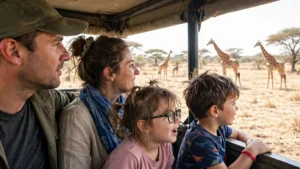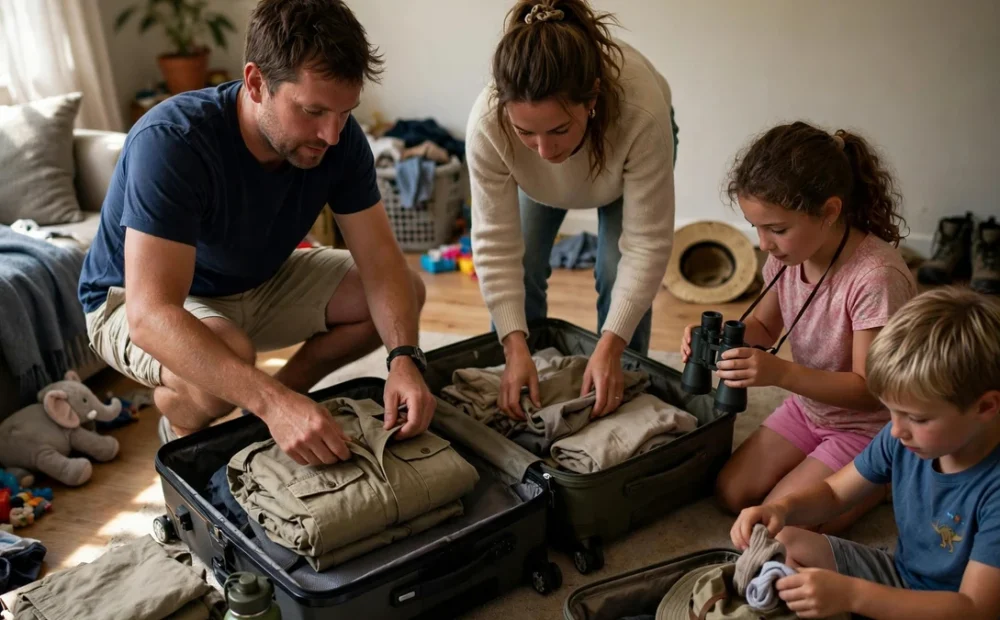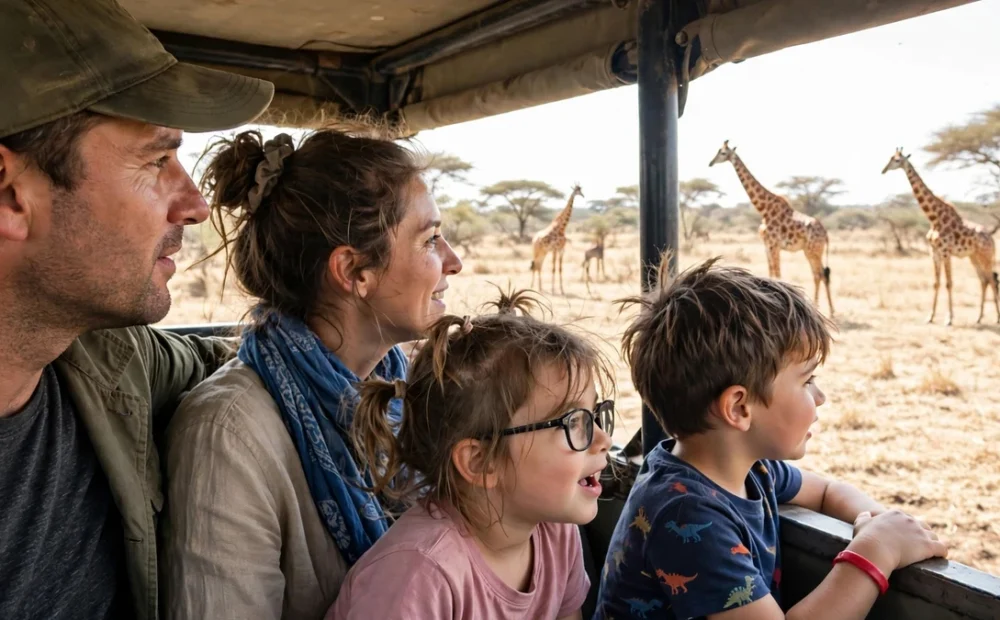
A family safari is a different kind of trip from a safari for two adults. The animals are the same, the light is the same, and the thrill of a leopard in the grass is the same, but everything around it has to work for a child as well as a grown-up. A six-year-old cannot sit still for a five-hour game drive, a teenager will not be charmed by a camp with no other children, and a parent cannot relax if the camp feels like it is tolerating the family rather than welcoming it.
That is why the best luxury safari camps for families are not simply the most expensive camps with a family suite added on. They are the camps that have thought about children from the start: shorter drives with a break in the middle, guides who know how to talk to a child, a pool and a programme for the hours between drives, and a room layout where parents can actually sleep while the children sleep nearby.
Below are nine camps worth considering in 2027, from classic tented camps in the Kruger to family villas in the Serengeti and desert lodges in Namibia. Each one is described by what it is good at, what to watch for, and who it suits best, so you can choose with your whole family in mind, not just the brochure photographs.
Key takeaways
- The best family safari camps combine a family suite or two adjoining rooms with a children’s programme and guides who enjoy working with children.
- Most luxury camps welcome children aged six and over, but age rules vary widely, so check the minimum age before you fall in love with a camp.
- Shorter, flexible game drives matter more than a famous location: a child who is bored at 9am will not remember the leopard at 10am.
- All-inclusive rates usually cover meals, drinks, drives and laundry, but internal flights, park fees and tips are often extra, so confirm the total before booking.
- No camp can guarantee a sighting, a malaria-free stay or a child who loves every drive, and a camp that promises all three is overselling.
What makes a safari camp genuinely family-friendly
A family-friendly camp starts with the room. A family suite, two adjoining tents, or a private villa means children sleep within earshot and parents do not have to whisper after 8pm. Ask for the exact layout, not just the word “family”, because some camps call a room family-sized when it simply has a sofa bed.
Then comes the programme. The strongest camps run a children’s club or a junior ranger programme: tracking lessons, plaster casts of animal prints, bug hunts, star talks and cooking sessions. These are not babysitting. They are the reason children come home talking about the trip for years, and they give parents an hour to read a book or take a swim. A camp with no programme at all can still work for teenagers, who usually prefer to be on the drives, but it is a harder sell for a seven-year-old on a four-night stay.
The third piece is the guide. A good family guide reads the group: they stop for a dung beetle when the children are curious, they keep the drive short when attention fades, and they explain the bush in plain language instead of lecturing. Our roundup of the best luxury safari camps covers the general camp landscape, while this guide focuses on the ones that work best when children are along.
How we chose these camps and what to look for
Look first at the age policy. Most luxury camps set a minimum age of six, some accept younger children in a private villa only, and a few set the bar at eight or ten. That rule shapes the whole trip: if your youngest is five, a camp with a strict six-plus rule is not an option, however beautiful it looks. Check it in writing before you pay a deposit, because age rules are one of the few things camps rarely bend on.

Look next at the room and the rate. A family suite for four is usually better value than two separate tents, and it keeps the family together at night. Ask whether the rate includes the children’s meals, the drives, the laundry and the transfer from the airstrip. All-inclusive usually means all of those, but park and conservation fees are often charged separately, and they can add several hundred dollars a night for a family of four.
Finally, look at the pace. Two drives a day, morning and afternoon, is the standard rhythm, but a family with young children often does better with one long drive and one short one, or with a morning drive and a pool afternoon. Camps that offer flexible drive times, a mid-morning break, and a guide who will come back early without complaint are worth more than a camp with a longer list of activities. The honeymoon lodges in our luxury safari lodges for honeymoon guide show the same idea from the other side: the best camps shape the day around the guests, not the other way round.
The 9 best luxury safari camps for families in 2027
Singita Sabi Sand, Ebony Lodge
What we like: A classic Kruger lodge with family suites, a dedicated children’s programme, and guides who are used to young guests. The Sabi Sand has famously reliable leopard sightings, which is what most children remember most.
What to consider: Premium pricing, and the lodge is best for children aged six and over. Best for: Families wanting a first safari with a high chance of big-cat sightings. Style: Classic tented luxury with a family suite. Price range: From about $1,500 per person per night, all-inclusive. Standout feature: A junior ranger programme with tracking and bushcraft.
&Beyond Phinda Forest Lodge
What we like: A forest setting that feels different from open savanna, with family suites, a children’s programme, and a wide range of activities beyond drives, including boat trips and beach time nearby.
What to consider: The forest is denser than open plains, so sightings can feel less dramatic for children expecting wide-open herds. Best for: Families with younger children who want variety as well as game drives. Style: Glass-walled forest suites. Price range: From about $900 per person per night, all-inclusive. Standout feature: A children’s programme plus a nearby beach option.
Londolozi Varty Camp
What we like: One of the original family camps in the Sabi Sand, with a relaxed, home-like feel, family suites, and guides who have worked with children for years. The leopard viewing here is among the best in Africa.
What to consider: The camp is not the newest or glossiest, and the style is deliberately understated. Best for: Families who value guiding and atmosphere over shiny new rooms. Style: Relaxed luxury with a strong family history. Price range: From about $1,200 per person per night, all-inclusive. Standout feature: Generations of guiding experience with families.
Four Seasons Safari Lodge Serengeti
What we like: A larger lodge with family suites, a children’s club, a pool with a view over a watering hole, and elephants that often wander past the deck. The scale means there is always something to do.
What to consider: It is bigger and more resort-like than a small tented camp, so it feels less intimate. Best for: Families with children of different ages who need different things at once. Style: Full-service luxury lodge. Price range: From about $1,000 per person per night, all-inclusive. Standout feature: A pool overlooking an active watering hole.
Angama Mara
What we like: A spectacular clifftop setting above the Mara Triangle, with family tented suites, a children’s programme, and some of the best guiding in Kenya. The views alone are worth the trip.
What to consider: The camp sits on a cliff edge, so very young children need watching on the deck, and the location suits children aged six and over. Best for: Families wanting the Great Migration and a dramatic setting. Style: Contemporary tented suites on a clifftop. Price range: From about $1,400 per person per night, all-inclusive. Standout feature: A private balcony view over the Mara.
Sossusvlei Desert Lodge
What we like: A desert lodge in Namibia with family suites, stargazing, dune walks and quad biking, so children who are not natural early risers still have plenty to do. The night sky here is extraordinary.
What to consider: This is a desert, not a classic big-five safari, so set expectations about what the children will see. Best for: Families who want desert, stars and adventure as well as animals. Style: Modern desert suites with glass and stone. Price range: From about $800 per person per night, all-inclusive. Standout feature: An observatory and some of the darkest skies in Africa.
Ol Donyo Lodge
What we like: A relaxed Kenyan lodge in the Chyulu Hills with family villas, horse riding, mountain biking and a pool, plus views of Kilimanjaro on clear mornings. It suits active families.
What to consider: The wildlife is more spread out than in the Mara, so sightings need patience. Best for: Active families who want riding, biking and walking as well as drives. Style: Open-plan villas with a pool. Price range: From about $900 per person per night, all-inclusive. Standout feature: Horse riding and a view of Kilimanjaro.
Tswalu Motse
What we like: A private Kalahari reserve with family suites, a children’s programme, and a strong conservation story. It is malaria-free, which removes a worry for many parents, and the desert wildlife is unlike anywhere else.
What to consider: The Kalahari is subtle, so children expecting crowds of animals may need a day to adjust. Best for: Families wanting a malaria-free safari with a conservation focus. Style: Elegant desert suites in a private reserve. Price range: From about $1,300 per person per night, all-inclusive. Standout feature: A malaria-free reserve with a junior ranger programme.
&Beyond Kichwa Tembo
What we like: A classic Mara camp with family tents, a children’s programme, and easy access to the Great Migration. The camp has a long history with families and it shows in the guiding.
What to consider: It is a popular camp, so book early for school holidays, and the main camp can feel busy at peak times. Best for: Families timing their trip around the migration. Style: Classic tented camp with family tents. Price range: From about $1,100 per person per night, all-inclusive. Standout feature: A long-running children’s programme in migration country.
What to look for by age
Children under six are the hardest to place. Many luxury camps set a minimum age of six, and those that accept younger children usually do so only in a private villa, with a private vehicle. If your youngest is under six, look for camps that explicitly welcome toddlers, or wait a year.
Children aged six to ten are the sweet spot. They are old enough to sit through a drive, young enough to be thrilled by a dung beetle, and they love a junior ranger programme. Look for camps with a children’s club, a pool, and guides who enjoy teaching. A private vehicle is worth the extra cost at this age, because it lets you come back early without feeling guilty.
Teenagers need a different pitch. They usually do not want a children’s club, and they often prefer walking, photography, horse riding or a night drive to another morning in the vehicle. Look for camps with activities beyond drives, a good pool, and reliable Wi-Fi in the rooms, because a teenager who can share a photograph at breakfast is a happier traveller. Our guide to the best luxury safaris is a useful starting point for matching a destination to a teenager’s interests, because the place matters as much as the camp.
The caveats that matter
A family safari is a big spend, and the caveats are mostly about money and health. Malaria is the first question: many classic safari areas are in malaria zones, and children need proper prophylaxis and advice from a travel clinic. Malaria-free options such as the Kalahari exist, and they are worth considering for a first trip with young children. The second question is the total cost. The nightly rate is only part of it. Internal flights, park fees, transfers, tips and a night in Johannesburg or Nairobi on the way home all add up, and for a family of four they can add thousands to the bill.
| Detail | What is known |
|---|---|
| Typical minimum age | Six at most luxury camps; some accept younger children only in a private villa |
| Best room for a family | A family suite or two adjoining tents, so children sleep within earshot |
| Most useful upgrade | A private vehicle, so drives can bend around your children’s attention |
| What the rate usually covers | Meals, drinks, drives, laundry and airstrip transfers; park fees often extra |
| Health check first | Visit a travel clinic for malaria advice and vaccinations well before departure |
| Best ages for a first safari | Six to ten, when children can sit through a drive and love a ranger programme |
| Teenagers need | Activities beyond drives, a pool, and a camp that treats them as young adults |
| What no camp can promise | A sighting, a malaria-free stay, or a child who loves every drive |
If a member of the family is pregnant, has a medical condition, or takes regular medication, check with your clinician before booking, and tell the camp in advance. Camps are used to this, and they would rather know than guess.
Checklist: booking a family safari camp honestly
Use these checks before you pay a deposit, and again before you fly.
- Check the minimum age in writing, and confirm it applies to your youngest child.
- Check the room layout: a family suite or adjoining tents, not just a sofa bed.
- Check what the rate covers, including park fees, internal flights and transfers.
- Ask about a private vehicle and what it costs, especially for children under ten.
- Visit a travel clinic early for malaria advice, vaccinations and a first-aid kit.
- Tell the camp about allergies, dietary needs and any medical conditions when you book.
Frequently asked questions
What age is best for a first family safari?
Six to ten is the sweet spot for most families. Children are old enough to sit through a drive and young enough to be thrilled by the bush. Younger children can go, but only at camps that explicitly welcome them, and usually with a private vehicle.
Are luxury safari camps safe for children?
Yes, when the camp’s rules are followed. Camps are fenced or guarded at night, children are escorted after dark, and guides are trained to keep a safe distance from animals. The main risks are health-related, so visit a travel clinic before you go.
Do I need a private vehicle for a family safari?
It is not essential, but it is the single most useful upgrade. A private vehicle means the drive can stop when the children are curious, come back early when they are tired, and skip the long waits that bore younger guests.
What does an all-inclusive safari rate actually include?
Usually meals, drinks, game drives, laundry and transfers from the nearest airstrip. Park and conservation fees, internal flights, premium drinks and tips are often extra, so ask for the full breakdown before you book.
Can teenagers enjoy a safari, or will they be bored?
Most teenagers enjoy it when the camp offers more than drives: walking, photography, horse riding, a pool and a chance to be treated as a young adult rather than a child. Ask the camp what it offers for ages thirteen and up.
How far ahead should I book a family safari?
Nine to twelve months ahead for school holidays, when family suites sell out first. For off-peak dates, six months is usually enough, but popular camps and private vehicles still go early.
The bottom line
The best luxury safari camp for a family is not the most expensive one, and it is not the one with the most famous name. It is the one whose age policy fits your youngest child, whose rooms keep the family together at night, whose guides enjoy children, and whose pace bends around a seven-year-old’s attention span rather than fighting it.
Start with the age rule, then the room, then the programme, and book a private vehicle if the budget allows. Do that, and the trip becomes what it should be: a week your children talk about for years, and a holiday the adults actually enjoy too.