
Planning a family safari feels daunting the first time, because there are more moving parts than an ordinary holiday. You are choosing a country, a season, a camp, flights that connect in places you have never been, and health advice for children who will be far from a hospital.
The truth is somewhere in between. A good family safari is planned in the right order: ages and pace first, then the country and season, then the camp, then the flights, and only then the packing list. Each step depends on the one before it, and skipping ahead is how families end up with a camp that does not take five-year-olds, or a flight that lands after the last transfer has left.
This guide walks through the planning in that order, in nine steps, with the practical detail that matters for a family: what to do, what to avoid, how long each step takes, and the one tip that saves the most trouble.
Key takeaways
- Plan in order: ages and pace first, then country and season, then camp, then flights, then packing.
- Book the camp before the flights, because family suites and private vehicles sell out long before seats do.
- Start nine to twelve months ahead for school holidays, and visit a travel clinic at least eight weeks before departure.
- A private vehicle is the most useful upgrade for a family, and it should be booked at the same time as the camp.
- No plan survives contact with a tired child, so build rest into every day and keep one day free of plans.
Why planning order matters for a family safari
Most safari mistakes are order mistakes. A family books a flight to Nairobi, then discovers the camp they wanted is in South Africa. A family books a camp, then discovers its minimum age is eight and their youngest is six. A family books everything, then discovers the travel clinic needs six weeks for a vaccination course and they leave in four. Each of these is avoidable, and each one is avoided by doing the steps in the right order: ages and pace first, then country and season, then camp, then flights, then paperwork, then travel days, then packing, and finally the daily rhythm.
That last step matters most. A safari is not a checklist, and children do not keep to a timetable. The families who enjoy it most are the ones who plan carefully and then hold the plan loosely, because a leopard at breakfast is worth more than any schedule. Our guide to how to plan a luxury safari covers the same ground for adults travelling without children, and it is a useful companion if you want the general planning picture as well.
Before you start: the three decisions that shape everything
Before you open a single camp website, make three decisions together as a family. First, who is going, and how old is the youngest. That number decides which camps are even possible, and it is the one fact you cannot negotiate around. Second, how long you can be away, including travel days. A safari needs at least five nights on the ground to feel unhurried, and most families need a night at each end for flights and recovery.
Third, what the trip is for. Is it a first safari where the children should see the big five, or a second trip where they want walking and riding? Is it a celebration, a school-holiday escape, or a once-in-a-lifetime trip? The answer shapes the country, the camp and the budget, and it is worth agreeing on before anyone starts browsing. A family that wants the migration should be looking at Kenya and Tanzania in the dry season, while a family that wants a malaria-free trip with young children should be looking at the Kalahari or the Eastern Cape.
If it does not fit the ages, the time or the purpose, it is not the right choice, however beautiful the photographs are. The camps in our best luxury safari camps roundup are a good place to start once you know what you are looking for.
The 9 steps to planning a family safari
Step 1: Decide the ages and the pace first
What to do: Write down every traveller’s age on the day you travel, and agree honestly on how long each child can sit still, how early they can wake, and how much walking they will enjoy.
What to avoid: Do not assume a child who loves animals will love a five-hour drive. Attention and enthusiasm are different things, and a safari tests the first. Best for: Every family, before any other planning. Time needed: One evening of honest conversation. Standout tip: If the youngest cannot sit still for two hours, plan for a private vehicle and shorter drives from the start.
Step 2: Pick the country and the season together
What to do: Match the country to your purpose and your dates. Kenya and Tanzania are best for the migration in the dry season, South Africa is best for a first safari with easy logistics, and Namibia is best for desert and stars.
What to avoid: Do not pick a season by price alone. The cheapest months are often the wettest, when roads are hard, animals are spread out, and mosquitoes are at their worst. Best for: Families with fixed school-holiday dates. Time needed: A weekend of reading and one call with a safari specialist. Standout tip: If your dates are fixed, choose the country that is best in those dates, rather than forcing a favourite country into the wrong season.
Step 3: Choose a camp that actually wants children
What to do: Shortlist camps whose minimum age fits your youngest, that offer a family suite or adjoining rooms, and that run a children’s programme or welcome children on drives.
What to avoid: Do not book a camp that “accepts” children but has no programme, no family rooms and no guides experienced with children. Tolerating children is not the same as welcoming them. Best for: Families with children under twelve. Time needed: One to two weeks of shortlisting and emailing camps. Standout tip: Ask the camp directly what a typical day looks like for a child your age, and judge the answer, not the brochure.
Step 4: Set a total budget before you fall in love
What to do: Add up the nightly rate for the whole family, then add internal flights, park and conservation fees, transfers, tips, a night at each end, and travel insurance. That is your real budget.
What to avoid: Do not compare camps by nightly rate alone. A cheaper camp that needs two internal flights can cost more than a dearer camp with a direct transfer. Best for: Every family, before paying a deposit. Time needed: An evening with a spreadsheet. Standout tip: Ask each camp for a written total for your exact family and dates, including fees, so you are comparing like with like.
Step 5: Book the camp before the flights
What to do: Pay the camp deposit first, confirm the family suite and the private vehicle in writing, and only then book flights that arrive in time for the camp’s transfer.
What to avoid: Do not book a non-refundable flight before the camp is confirmed. Flights are flexible compared with family suites, which sell out months ahead. Best for: School-holiday travel, when family rooms go first. Time needed: One day to confirm, once the shortlist is done. Standout tip: Ask the camp what time the last transfer leaves the airstrip, and book a flight that lands at least two hours before it.
Step 6: Sort passports, health and paperwork early
What to do: Check every passport has at least six months left and two blank pages, visit a travel clinic at least eight weeks before departure, and confirm visa and entry rules for every country you will touch, including transit stops.
What to avoid: Do not leave vaccinations to the last month. Some courses need several weeks, and malaria prophylaxis needs a prescription and a trial run to check for side effects. Best for: Every family, eight to twelve weeks before departure. Time needed: One clinic visit and a week of paperwork. Standout tip: Take a photo of every passport and keep a copy in a separate bag, because replacing a passport in a remote town is a long, unhappy day.
Step 7: Plan the travel days around rest
What to do: Build a night at each end of the trip, keep the first day at camp free of plans, and allow a full day for the journey home with no work or school the next morning.
What to avoid: Do not fly overnight, drive straight to camp, and expect the children to enjoy a 5am wake-up the next day. Tired children do not enjoy safaris, however good the animals are. Best for: Families flying long-haul with young children. Time needed: An hour of planning, once flights are booked. Standout tip: Arrive a day early and treat the first day as a holiday in itself, not as lost time.
Step 8: Pack for the bush, not for the hotel
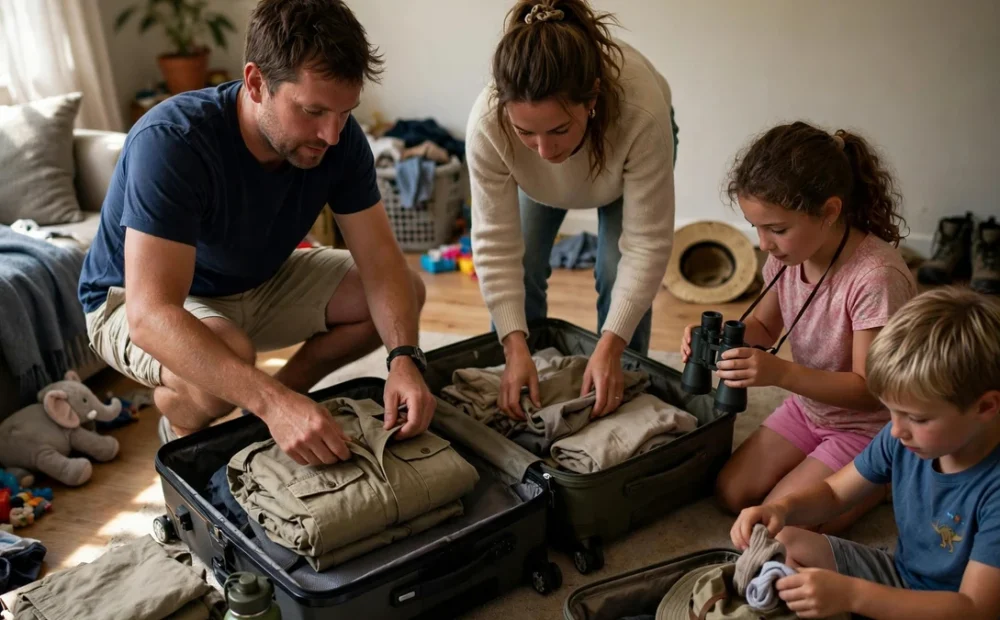
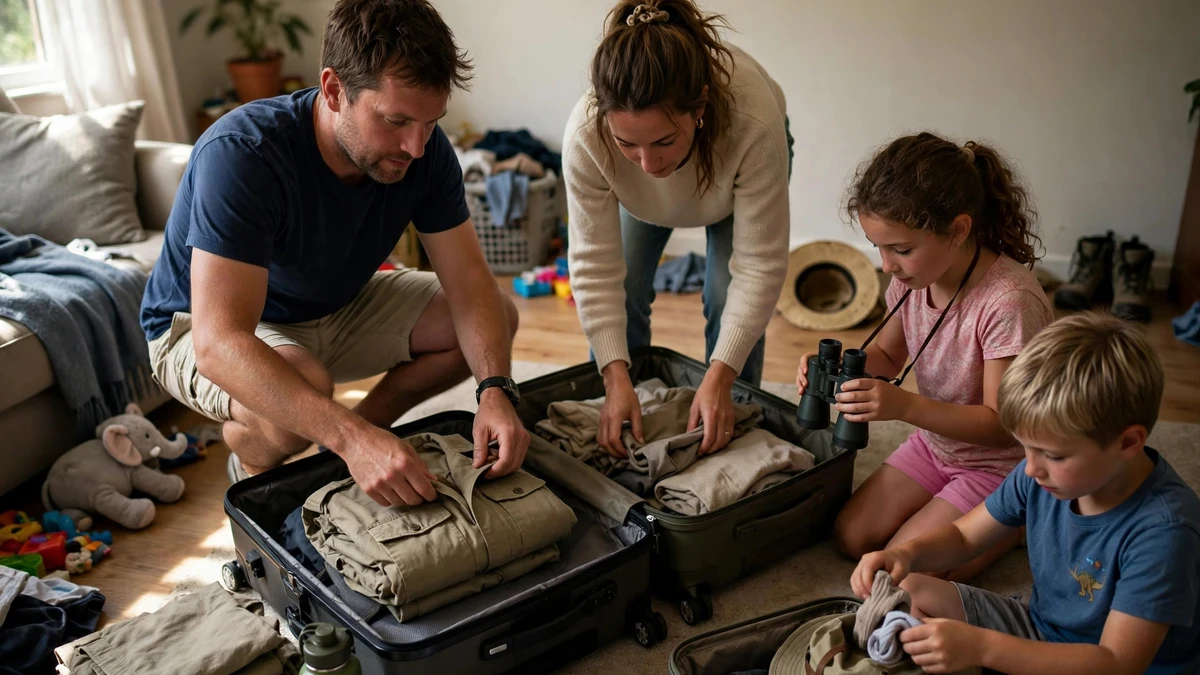
What to do: Pack soft bags, not hard cases, in neutral colours, with layers for cold mornings and warm afternoons, closed shoes, sun hats, binoculars for each child, and a small bag of quiet entertainment for the vehicle. Our guide to the best luxury safaris in Kenya is a useful check for what the bush actually looks like at different times of day.
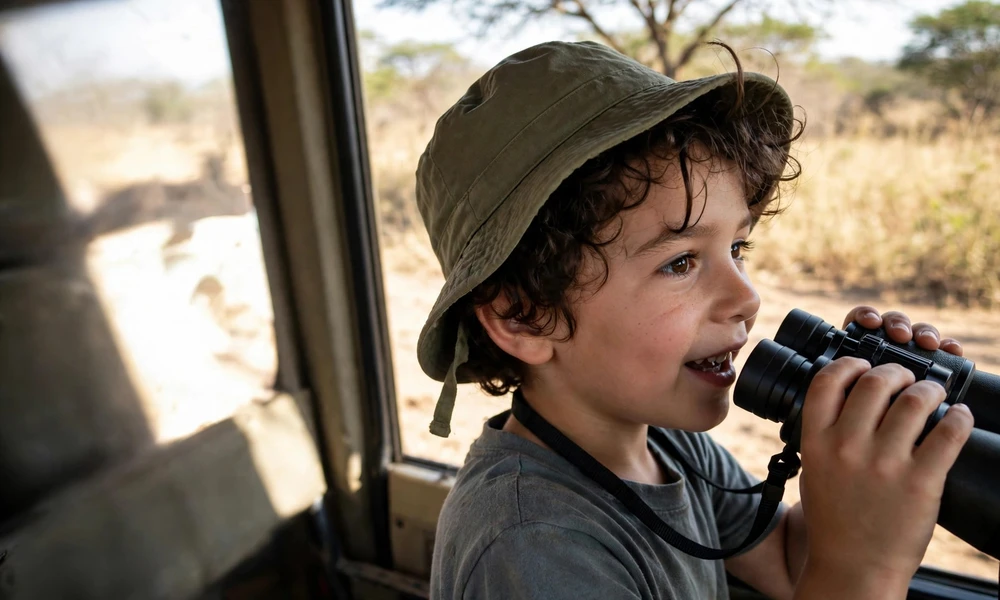
What to avoid: Do not overpack. Internal flights have strict weight limits, often 20 kilograms per person in a soft bag, and camps do laundry daily. Best for: Every family, the week before departure. Time needed: An evening of packing and weighing. Standout tip: Give each child their own binoculars. Sharing one pair between two children is the fastest way to start an argument on a game drive.
Step 9: Build the days around the children, then let go
What to do: Plan one drive a day as the anchor, keep the middle of the day free, let children choose one activity each day, and keep one whole day with nothing planned at all.
What to avoid: Do not fill every hour. A safari with no empty time is a safari where nobody rests, and tired children stop seeing animals even when they are right in front of them. Best for: Every family, once you are at camp. Time needed: Ten minutes each evening, planning the next day together. Standout tip: Ask the children at dinner what they want to do tomorrow, and let their answer change the plan.
When things go wrong on a family safari
Something will go wrong, and it is usually small. A flight is delayed, a child is carsick on a bumpy road, or the animals simply do not show up on the first drive. The families who cope best are the ones who have a plan for the small problems: a change of clothes in the day bag, rehydration sachets and basic medicine in the hand luggage, and a flexible first day with nothing that cannot be moved.
If a child is unwell, tell the camp immediately. Camps have first-aid training, a vehicle on standby, and a radio link to the nearest clinic, and they would far rather know early than late. If a drive disappoints, do not chase it with a longer drive the next day. Rest, swim, and try again in the morning, when animals are active and children are fresh. The bush rewards patience far more than persistence.
The caveats that matter
The biggest caveat is health. Many safari areas are in malaria zones, and children need proper advice from a travel clinic, not from a forum. Malaria-free options exist, and they are worth considering for a first trip, but they are not the only answer: good prophylaxis, repellent, long sleeves at dusk and a camp with nets and screens are the standard approach, and it works when it is followed properly. If a member of the family is pregnant, has a medical condition, or takes regular medication, check with your clinician before booking.
| Detail | What is known |
|---|---|
| How far ahead to book | Nine to twelve months for school holidays; six months for off-peak dates |
| Minimum stay on the ground | Five nights, so the trip has time to breathe around the travel days |
| Book first | The camp and the private vehicle, then the flights around the transfer times |
| Health timeline | Travel clinic at least eight weeks before departure; some vaccines need weeks |
| Luggage limit | Often 20 kilograms per person in a soft bag on internal flights |
| Best ages for a first safari | Six to ten, when children can sit through a drive and love a ranger programme |
| Most useful upgrade | A private vehicle, booked at the same time as the camp |
| What to keep free | One whole day with nothing planned, and the middle of every day for rest |
The second caveat is money. A family safari is expensive, and the total is always more than the nightly rate suggests. Park fees, internal flights, transfers, tips and a night at each end all add up.
Checklist: planning a family safari honestly
Use these checks as you plan, and again the week before you fly.
- Check the youngest child’s age against each camp’s minimum age, in writing.
- Book the camp and the private vehicle before the flights, not after.
- Confirm the total cost in writing, including park fees, flights and transfers.
- Visit a travel clinic at least eight weeks before departure.
- Check every passport has six months left and two blank pages.
- Keep one day free of plans, and the middle of every day free for rest.
Frequently asked questions
How far ahead should I plan a family safari?
Nine to twelve months ahead for school holidays, when family suites and private vehicles sell out first. Six months is usually enough for off-peak dates, but start the health checks eight weeks before departure at the latest.
What is the best age for a child’s first safari?
Six to ten is the sweet spot. Children are old enough to sit through a drive, young enough to be thrilled by the bush, and they love a junior ranger programme. Younger children can go, but only at camps that explicitly welcome them.
Do we need a private vehicle?
It is the most useful upgrade for a family, especially with children under ten. It lets the drive stop when the children are curious and come back early when they are tired, without affecting other guests. Book it at the same time as the camp.
How much does a family safari actually cost?
More than the nightly rate suggests. Add internal flights, park and conservation fees, transfers, tips, a night at each end and travel insurance. Ask each camp for a written total for your exact family and dates before you compare prices.
What should children pack for a safari?
Soft bags, neutral colours, layers for cold mornings and warm afternoons, closed shoes, a sun hat, and their own binoculars. Internal flights usually limit luggage to about 20 kilograms per person, and camps do laundry daily, so pack light.
Is a safari safe for children?
Yes, when the camp’s rules are followed. Children are escorted after dark, camps are guarded at night, and guides keep a safe distance from animals. The main risks are health-related, so visit a travel clinic before you go and follow its advice.
The bottom line
Planning a family safari is mostly about order. Decide the ages and the pace, pick a country and season that fit, choose a camp that genuinely wants children, set a total budget, book the camp before the flights, and sort the health checks early. Do those steps in that order and the rest of the planning is straightforward.
Then, once you are there, hold the plan loosely and let the bush do the rest. Plan carefully, travel rested, and leave room for the unplanned days.