Choosing a perfume is one of the most personal decisions in beauty, and one of the easiest to get wrong. A fragrance that smells wonderful on a friend, on a paper strip, or in an advertisement can turn sharp, sweet, or simply invisible on your own skin. That is not a failure of taste. Perfume is chemistry as much as it is art, and the same bottle can tell a different story on every person who wears it.
The good news is that choosing well is a skill, not a gift. Once you understand fragrance families, how notes unfold over hours, what concentration means, and how your skin changes a scent, the perfume counter stops being overwhelming.
This guide covers the whole process: narrowing down the families you love, testing properly, matching scent to season, and avoiding costly mistakes.
Key takeaways
- Test perfume on your own skin, never on paper alone, and wait at least thirty minutes before deciding.
- Learn the main fragrance families first: they narrow hundreds of bottles down to the few you will love.
- Match concentration to your day, with lighter eau de toilette for daytime and richer eau de parfum for evenings.
- Skin type and weather change how a perfume smells, so test in real conditions, not just in the shop.
- Buy the smallest bottle first, and commit to a full size only after wearing a scent for a whole day.
Start With How You Actually Live
Before you smell a single bottle, think about your days. A perfume has to fit the life you live, not the life in the advertisement. Someone in a small, shared office needs a scent that sits close to the skin, while someone who spends weekends outdoors can carry something brighter. A teacher, a nurse, and a lawyer all need different things from a fragrance, even if they love the same notes on paper.
Consider the moments you want it for. Is this an everyday signature, something colleagues will associate with you? Is it for evenings and dates, where more warmth is welcome? Or is it seasonal, a fresh citrus for summer or a spiced amber for winter? Most people need two or three perfumes to cover their year, not one bottle that tries to do everything.
Learn the Fragrance Families
Perfumers group scents into families, and learning them is the fastest shortcut in fragrance. Instead of spraying twenty random bottles, you can identify the two or three families that suit you and ignore the rest. Most modern perfumes blend two or more families, but the dominant one still tells you most of what you need to know.
Floral is the largest family, built on rose, jasmine, peony, and violet, from fresh and dewy to rich and powdery. Fresh scents cover citrus, green, and aquatic notes: bergamot, lemon, cut grass, and sea air. Woody scents are built on cedar, sandalwood, vetiver, and patchouli, and feel dry and grounded. Oriental or amber scents are the richest, built on vanilla, amber, and cinnamon.
| Fragrance family | Key notes | Character | Best for |
|---|---|---|---|
| Floral | Rose, jasmine, peony | Soft, romantic, versatile | Everyday, all seasons |
| Fresh citrus | Bergamot, lemon, neroli | Bright, clean, energising | Daytime, warm weather |
| Green | Cut grass, green tea | Crisp, natural, sharp | Spring, casual days |
| Aquatic | Sea air, water lily | Cool, airy, minimal | Summer, clean style |
| Woody | Cedar, sandalwood, vetiver | Dry, warm, grounded | Evenings, cooler months |
| Oriental / amber | Vanilla, amber, cinnamon | Rich, sweet, warm | Winter, nights out |
| Gourmand | Caramel, coffee, praline | Sweet, comforting | Cold weather, evenings |
| Chypre | Bergamot, oakmoss, patchouli | Earthy, sophisticated | Autumn, tailored style |
Use the table as a map, not a rulebook. If you love one floral but hate another, look at the notes: a rose and jasmine perfume can feel entirely different from a peony and violet one. Keep a note on your phone of the families you love. After three or four tests, a pattern usually appears. Our guide to the best luxury perfumes of 2027 shows each family in its most polished form.
Understand Notes and How a Perfume Changes
A perfume is not one smell. It is a composition that changes over hours, built in three layers called notes. Top notes are the first impression, lasting about fifteen minutes: citrus, herbs, and light fruits. They catch your attention, but they fade fastest, so they are the least reliable guide to a perfume.
Heart notes appear after fifteen to thirty minutes and form the core of the fragrance for the next few hours. This is where florals, spices, and fruits live, and it is the part you will actually live with. Base notes are the foundation: woods, resins, musks, amber, and vanilla. They emerge after an hour and can linger for the rest of the day.
So patience matters more than anything in perfume shopping. Spray on skin, leave the shop, and check the scent at thirty minutes, two hours, and four hours. If it still smells good at the end of the day, you have found a contender.
Concentration Matters More Than Price
The same fragrance name can exist in several concentrations, and the difference is real. Concentration is how much perfume oil is dissolved in alcohol, and it controls strength and longevity. A light eau de cologne may last an hour or two; a parfum can last twelve hours.
Eau de toilette, with five to fifteen percent perfume oil, is the most common daytime choice: lighter, fresher, and easier in warm weather. Eau de parfum, with fifteen to twenty percent, lasts longer with a richer character. Parfum, or extrait, is the most concentrated of all, and a single drop on pulse points can last all day. More is not always better: a heavy eau de parfum can overwhelm a hot office, while a light eau de toilette can vanish on a cold evening.
How Skin Chemistry Changes Everything
Your skin is not a blank page. Its warmth, oiliness, moisture, and acidity all shape how a perfume develops. Oily skin holds fragrance longer and projects it further, because perfume oils cling to skin lipids. Dry skin can make a perfume fade quickly, which is why people with dry skin often find scents vanish within a couple of hours.
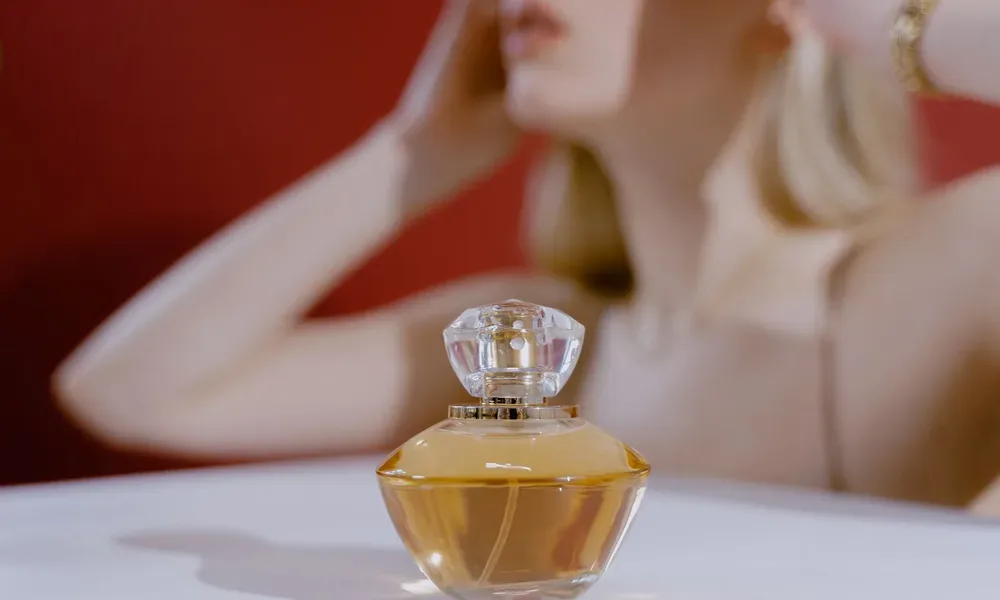
Warmer skin amplifies a perfume and makes top notes evaporate faster, while cooler skin keeps a scent closer and quieter. Diet, hormones, medication, and stress can also shift how a fragrance smells on a given day, so test a perfume more than once. For dry skin, moisturise with an unscented lotion before spraying, giving the perfume something to hold on to. Apply to pulse points, the wrists, neck, and behind the ears, and do not rub your wrists together afterwards, because friction breaks down the top notes.
How to Test a Perfume Properly
Testing is where most perfume mistakes happen, and where they are easiest to prevent. Never test more than three perfumes in one visit. Your nose tires quickly, and after the fourth spray everything blurs into the same sweet haze.
Spray each candidate somewhere different: one on each wrist and one inside an elbow. Smell the paper strip only to decide whether a perfume is worth putting on skin at all. The strip shows what the perfumer intended; your skin shows what you will actually smell like. If a scent smells wrong on skin within fifteen minutes, trust that instinct and move on.
Then leave. Walk around, have a coffee, and check the scent at intervals. The best test of all is a sample worn for a full day at home, in your normal routine, before you commit to a bottle. Test in the morning when your nose is fresh, and skip heavily scented lotion on testing days.
Match Your Perfume to the Season
Perfume behaves differently in heat and cold. In summer, heat amplifies scent, so light, fresh, citrus, and aquatic perfumes work best, while a heavy oriental can feel suffocating. In winter, cold air mutes scent, so richer, warmer, woodier perfumes come into their own.
Spring suits green, floral, and soft fruity scents; autumn suits chypres, leathers, and smoky woods. You do not need a different perfume for every month, but a light scent for warm months and a warm scent for cold months covers most of the year. Our round-up of the best winter perfumes for 2027 is a good place to start if your cold-weather wardrobe needs a signature.
Occasion matters as well. For the office, choose something clean and moderate that stays close to the skin: a soft floral, a light musk, or a gentle woody scent. For evenings and dates, you can wear something richer. For holidays, a bright, joyful scent can become a memory in itself: years later, one spray can take you straight back to a place.
Your Perfume Checklist
Use this checklist every time you shop.
- Know your favourite families and notes before you enter the shop.
- Test on clean, unperfumed skin, and never test more than three scents in one visit.
- Wait thirty minutes, and check the scent again after two and four hours.
- Wear a sample for a full day at home before buying a full-size bottle.
- Choose the concentration for the occasion: lighter for day and heat, richer for evening and cold.
- Check the return policy, and keep the receipt until you are sure.
Mistakes That Waste Money
The most expensive mistake is buying on the first spray. Top notes are designed to seduce, and many a bottle has been bought in the first minute and regretted by the evening. The second is buying a perfume because someone else wears it beautifully: their skin is different from yours, and the same bottle can smell like a different perfume on you.
Another mistake is spraying too much. Two or three sprays on pulse points are enough for most eau de parfum; more will not make the scent last longer, only louder at first. If you cannot smell your own perfume after an hour, that is normal: your nose adapts, while others can still smell it. Store bottles in a cool, dark place with the cap on, away from windows and radiators. A well-stored perfume lasts for years; one left in sunlight can turn within months. For everyday inspiration, our guide to the best perfumes for women in 2027 shows how a well-chosen scent works across seasons and occasions.
Frequently Asked Questions
How many perfumes should I test at once?
No more than three in one visit, one on each wrist and one inside an elbow. Your nose tires quickly, and testing more makes it hard to tell scents apart.
How long should I wait before deciding on a perfume?
Wait at least thirty minutes to meet the heart notes, and check again after two and four hours. The base notes, which decide whether a perfume suits you long term, only appear after an hour. A full day of wear from a sample is the most reliable test.
Why does the same perfume smell different on me than on someone else?
Skin chemistry changes how fragrance develops. Your skin’s warmth, oiliness, moisture, and acidity affect which notes are amplified and how long the scent lasts.
Should I choose eau de toilette or eau de parfum?
Choose eau de toilette for daytime, warm weather, and close quarters, because it is lighter and fresher. Choose eau de parfum for evenings and cold weather, when you want the scent to last longer.
How many sprays of perfume should I apply?
Two or three sprays are enough for most eau de parfum: one on each wrist and one at the neck. More will not make the scent last longer, only stronger at first.
Where should I store my perfume?
In a cool, dark place away from heat, sunlight, and humidity, with the cap firmly on. A bedroom drawer is far better than a bathroom shelf, where steam can spoil a fragrance.
The Bottom Line
Choosing a perfume well comes down to three habits: know the families you love, test on your own skin with patience, and match the scent to your life and the season. Skip the impulse buy, wear a sample for a full day, and trust what the perfume smells like at hour four, not minute one.
Note: Fragrance is deeply personal, and skin chemistry varies from person to person. Use this guide as a starting point, test before you buy, and patch-test a new perfume on a small area of skin first if you have sensitive skin or a history of reactions.