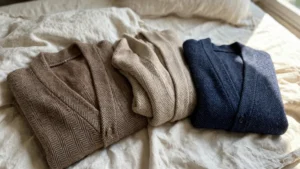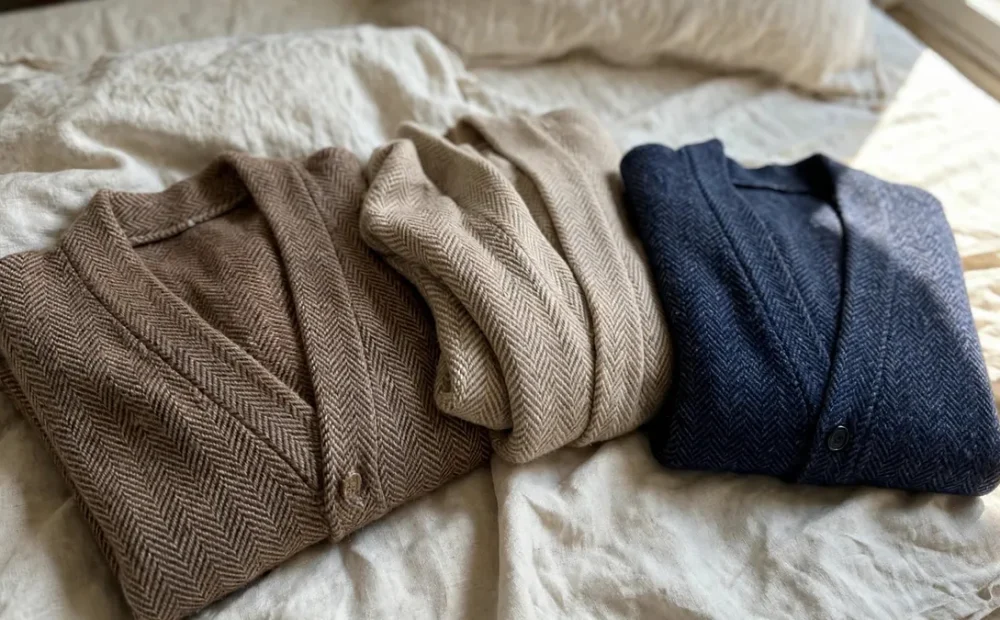
Wool and alpaca sweaters look almost identical on a rail, and that is exactly the problem. Yet they come from different animals, behave differently in cold and damp weather, age in different ways, and suit different people.
Wool usually means sheep’s wool, most often merino, and it is the workhorse of winter knitwear: springy, breathable, easy to find, and forgiving of hard wear. Alpaca comes from the alpaca, a camelid farmed high in the Andes, and its fibre is hollow, lighter, and often softer than wool at the same weight, with a quiet sheen that wool does not have.
Below are nine comparisons that matter in 2027, from warmth and softness to pilling, care, price, and how each fibre ages.
Key takeaways
- Alpaca is warmer for its weight and often softer against skin, but good wool is tougher, cheaper, and far easier to look after.
- Merino wool is the best all-round choice for everyday wear, while alpaca suits lighter layers you are willing to care for properly.
- Cheap alpaca is often worse value than good wool, because coarse or heavily blended alpaca pills fast and loses its shape.
- Both fibres need gentle washing and proper storage, but alpaca is less forgiving of heat, agitation, and moths.
- No sweater is an investment in the financial sense, and neither fibre fixes a poor fit, a scratchy neckline, or a colour that does not suit you.
What wool and alpaca sweaters actually are
Wool comes from sheep, most often merino sheep, whose fine fibres are crimped, springy, and naturally insulating. A wool sweater traps air between its fibres, which is why it keeps you warm even when it gets damp.
Alpaca comes from the soft fleece of alpacas, animals related to llamas and camels that live at high altitude in Peru, Bolivia, and Chile. Baby alpaca, the finest grade, comes from the first shearing and is the softest of all.
How we chose these comparisons and what to look for
Look first at the fibre itself. For wool, merino is the benchmark for softness, while lambswool is slightly coarser and better for chunky, outdoor knits. For alpaca, look for baby alpaca on the label and a dense, even knit. Hold the sweater up to the light: if you can see through it easily, the knit is too loose and it will lose its shape quickly.
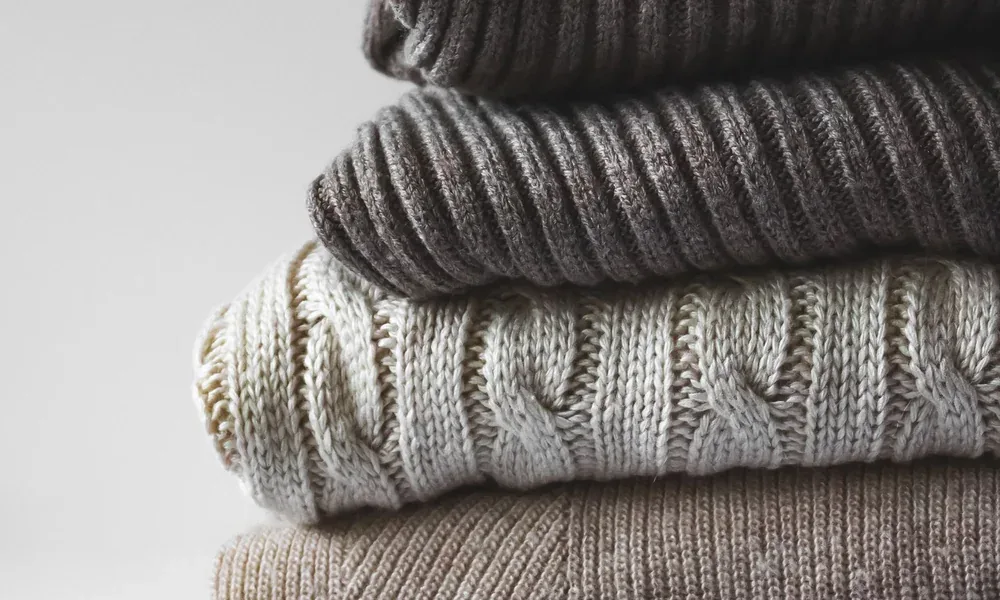
Look next at the label and the feel. Pure alpaca should say 100 percent alpaca, and a blend should state its percentages honestly. Our guide to natural fibres in clothing explains how to read fibre labels, because the label is the one thing a salesperson cannot dress up.
The 9 comparisons that matter in 2027
Warmth and insulation
What we like: Alpaca is remarkably warm for its weight, because its hollow fibres trap air so well, which is why a thin alpaca sweater can feel as warm as a much thicker wool one. Wool is still an excellent insulator, and it keeps insulating when damp, which alpaca does less well.
What to consider: Alpaca’s warmth depends on fibre fineness and knit density, and thin, coarse alpaca is barely warmer than a wool sweater of the same weight. Price Range: Alpaca £120-£350; wool £60-£200.
Softness against skin
What we like: Good baby alpaca is one of the softest natural fibres most people will ever wear, with fine fibres that lie flat against skin instead of prickling, and no lanolin to irritate sensitive skin. Fine merino is close behind and has improved enormously, and many people can now wear merino next to skin without any itch at all.
What to consider: Coarse wool and low-grade alpaca both itch, and sensitive skin notices the difference within minutes. Price Range: Alpaca £120-£350; merino £80-£200.
Weight and drape
What we like: Alpaca drapes beautifully, falling in soft folds that flatter the body without bulk, which is why it suits slim silhouettes and layering under a coat. Wool has more structure and spring, holding its shape and giving a chunkier knit its satisfying, cosy volume.
What to consider: Very light alpaca can look limp and shapeless on some body types, while heavy wool can add visual bulk under a fitted jacket. Price Range: Alpaca £120-£300; wool £60-£180.
Durability and lifespan
What we like: Wool is the tougher fibre by a clear margin. Its fibres are springy and resilient, so a wool sweater bounces back from stretching, survives regular wear, and can last a decade with basic care. Good alpaca can also last for years, but only with gentle handling and proper storage.
What to consider: Alpaca fibres are smoother and less elastic, so they wear thin at the elbows and cuffs faster, and moths are drawn to alpaca as much as to wool. Price Range: Wool £60-£200; alpaca £120-£350.
Pilling and upkeep
What we like: Both fibres pill, and a little pilling is normal, not a sign of a bad sweater. Wool pills most in the first few wears, then usually settles, and the pills are easy to remove with a comb. Alpaca pills too, especially under the arms and where a bag strap rubs, but a fabric comb restores it quickly.
What to consider: Short-fibre alpaca pills relentlessly and never really stops, which is the clearest sign of low-grade fibre. Price Range: Wool £60-£200; alpaca £120-£350.
Care and washing
What we like: Many wool sweaters can be machine washed on a cold wool cycle, which makes them genuinely practical for everyday life. Alpaca prefers hand washing in cool water with a gentle detergent, then drying flat, which is slower but not difficult once it becomes a habit.
What to consider: Heat and agitation are the enemies of both fibres, but alpaca felts and shrinks faster, and a single hot wash can ruin it. Price Range: Wool £60-£200; alpaca £120-£350.
Price and value
What we like: Wool offers far more sweater for the money, with excellent quality available at every price from high-street to luxury. Alpaca is expensive for a real reason, the fibre is scarcer and slower to produce, but the price only makes sense when the quality is genuinely high.
What to consider: Very cheap alpaca is almost always low-grade or heavily blended with acrylic, and it is worse value than a good wool sweater at the same price. Price Range: Wool £40-£200; alpaca £100-£400.
Our guide to the best alpaca sweaters for women shows what good alpaca looks like at different prices, because the difference between a £100 and a £300 alpaca sweater is usually visible in the knit, not just the label.
Versatility and styling
What we like: Wool comes in every weight and texture, from fine merino layers to chunky fisherman’s knits, so it covers office, outdoors, and weekend with ease. Alpaca is at its best in fine, simple shapes, crew necks, v-necks, and cardigans, where its softness and drape do the talking.
What to consider: Alpaca’s elegance can feel too precious for rough everyday use, while a heavy wool knit can look wrong with tailored clothes. Price Range: Wool £60-£200; alpaca £120-£350.
Sustainability and sourcing
What we like: Wool is a renewable fibre, and responsibly sourced merino from certified farms is one of the more sustainable choices in fashion. Alpaca is also a gentle fibre to produce: alpacas graze lightly on Andean grasslands, need little water, and their fleece comes in many natural colours, so less dye is needed.
What to consider: Neither fibre is sustainable if the sweater is worn a few times and thrown away, and cheap alpaca is often linked to poor traceability and heavy blending. Price Range: Wool £60-£250; alpaca £120-£400.
Which sweater is right for you
Choose wool if you want a hard-working everyday sweater. It suits people who wear knitwear several times a week, who want to machine wash, who spend time outdoors, and who want the best value per wear. A fine merino crew neck is the most versatile sweater most wardrobes will ever own, and a chunky lambswool knit is the cosiest thing you can put on in January.
Choose alpaca if you want softness and lightness above all else, and you are willing to hand wash, store it properly, and treat it as a special layer rather than a workhorse. It suits sensitive skin, refined outfits, and anyone who feels the cold but hates bulk. Our guide to the best wool sweaters for women is the place to start if you decide wool is the better first buy, because it shows the range from fine merino layers to chunky knits.
The caveats that matter
Neither fibre is perfect, and the label is not a guarantee. Cheap alpaca is the biggest trap in knitwear: coarse, short-fibre yarn that pills within weeks, loses its shape, and feels worse than a good wool sweater at half the price.
| Detail | What is known |
|---|---|
| Warmest for its weight | Alpaca, with hollow fibres that trap air well |
| Softest against skin | Good baby alpaca, with fine merino a close second |
| Toughest for daily wear | Wool, with springy fibres that bounce back |
| Easiest to wash | Wool, often machine washable on a cold wool cycle |
| Biggest trap | Cheap, coarse alpaca that pills and loses shape |
| Best value per wear | Good wool, especially merino, at any price point |
| Most sustainable choice | Certified wool, or traceable alpaca, kept for years |
| What neither fixes | Poor fit, a scratchy neckline, or a colour that does not suit you |
Moths are a real risk with both fibres, and alpaca is a favourite. Store sweaters clean, folded rather than hung, with cedar or lavender, and check the drawer in spring.
Checklist: choosing a wool or alpaca sweater honestly
- Check the label: fibre content and percentages should be stated clearly, with no vague “alpaca blend” hiding mostly acrylic.
- Check the knit: hold it up to the light; a dense, even knit holds its shape, while a loose, see-through knit will sag.
- Check the feel: rub it against your wrist for a minute; if it itches there, it will itch all day.
- Check the seams: neat, even stitching and ribbed cuffs that spring back are signs of a well-made sweater.
- Check the care label: if it says hand wash only and you never hand wash, walk away.
- Check the price honestly: very cheap alpaca is a warning sign, not a bargain.
Frequently asked questions
Is alpaca warmer than wool?
Yes, gram for gram, alpaca is usually warmer than sheep’s wool, because its hollow fibres trap air so well, which is why a thin alpaca sweater can feel surprisingly warm.
Is alpaca better for sensitive skin?
Often yes. Alpaca has no lanolin, and baby alpaca is very fine, so it prickles less than coarse wool.
Why does my alpaca sweater pill so much?
Alpaca pills more in the first weeks, especially where it rubs against a coat or a bag strap. It is normal, not a fault.
Can I machine wash a wool or alpaca sweater?
Only if the label says so, and only on a cold, gentle wool cycle in a mesh bag. Never wash either one hot, never agitate it, and never tumble-dry it.
How do I tell a real alpaca sweater from a blend?
Read the label for exact percentages, feel the fibre for softness and lightness, and check the price. A genuine 100 percent baby alpaca sweater is rarely cheap.
Which one should I buy first?
Wool, in most cases. It is cheaper, tougher, easier to care for, and works with more outfits.
The bottom line
Wool and alpaca are not rivals so much as different tools for different jobs. Wool is the tougher, cheaper, easier fibre, and a good merino sweater is the hardest-working piece in most wardrobes.
Buy wool for everyday wear and value, buy alpaca for softness and lightness, and buy a blend when you want a bit of both. Whichever you choose, judge the sweater in your hands, not the word on the label, and buy the best quality you can afford, because a sweater you keep for ten years is always better value than one you replace every winter.
Note: Warmth, softness, and durability vary by fibre grade, brand, and knit, so treat this guide as a starting point and try sweaters on in person where possible. Check care labels before washing or cleaning any garment.
Meet Our Experts
This guide was written by the BrassSmile fashion editors, who cover seasonal style, wardrobe planning, and fabric and fit guidance across our fashion and lifestyle coverage. Every comparison is checked against one question: would we wear this ourselves, all season?
Why Trust BrassSmile
BrassSmile covers fashion, beauty, lifestyle, travel, and luxury with guides written to be genuinely useful, not just shoppable. We focus on fit, fabric, and real-life wearability, and we do not invent test results or expert quotes.
Sources
Fibre and care guidance in this article reflects standard textile references and brand care guidance for wool and alpaca knitwear, including the International Wool Textile Organisation, the Alpaca Owners Association, and published fibre guides from leading knitwear brands.