Alpaca has quietly become the knitwear fibre that editors reach for when cashmere feels too delicate and wool feels too scratchy. It is warmer than sheep’s wool by weight, softer against the skin than most merino, and it holds its shape through far more wears than its price usually suggests. The problem is not finding an alpaca sweater.
That is why this guide is organised by fibre content and fit, not just by brand name. A sweater labelled “alpaca blend” can contain as little as 10 percent alpaca, with the rest made up of acrylic or nylon, and it will feel and wear very differently from one that is 70 percent alpaca or more.
Below are nine alpaca sweaters worth considering in 2027, from a classic crew neck to a soft, brushed cardigan-style layer. Each one is described by what it is good at, what to watch for, and who it suits best, so you can choose with your wardrobe in mind, not just a bestseller list.
Key takeaways
- Alpaca is warmer than sheep’s wool by weight, naturally hypoallergenic, and softer than most merino, which makes it a strong choice for sensitive skin.
- Check the fibre content before the price: a sweater with 70 percent alpaca or more wears very differently from a 10 percent “alpaca blend”.
- Baby alpaca is the finest, softest grade, and it is the one worth paying more for if you want a sweater that sits close to the skin.
- Alpaca holds its shape well but needs gentle care: hand wash cold or use a wool cycle, dry flat, and keep it away from moths in summer.
- No knit is completely pill-proof, and alpaca can feel warm enough that it suits cold days better than mild ones, so a light layer underneath helps on changeable days.
What alpaca actually is and why it matters
Alpaca fibre comes from the alpaca, a camelid farmed in the Andes for thousands of years. The fibre is hollow, which is why it traps warmth so well, and it has a smooth surface, which is why it feels softer than wool and rarely irritates the skin. It also contains no lanolin, the natural oil in sheep’s wool that some people react to, so it is often the first knit that people with sensitive skin can wear comfortably.
There are two main types of alpaca fibre. Huacaya is the fluffy, teddy-bear type, and it is the one used for most sweaters. Within huacaya, the fibre is graded by fineness. Baby alpaca is the finest grade, taken from the first shearing or the softest part of the fleece, and it is noticeably softer and smoother than standard alpaca. Royal alpaca is finer still, but it is rare and costly, and you will seldom find it in a high-street sweater.
What matters most for a buyer is how much alpaca is actually in the sweater. A high-street knit may say “alpaca” on the label and contain only a small share of it, with the rest made up of wool, acrylic or nylon. But if softness and warmth are the reasons you are buying alpaca, look for at least 50 percent alpaca, and ideally 70 percent or more. The nine sweaters below are chosen with that in mind, and the fibre content of each one is stated plainly.
How we chose these sweaters and what to look for
Look first at the fibre content, then at the knit. A fine-gauge knit in baby alpaca will drape and layer neatly under a coat. A chunky, brushed knit will be warmer and more casual, but it will take up more room under outerwear and may pill faster where a bag strap rubs.
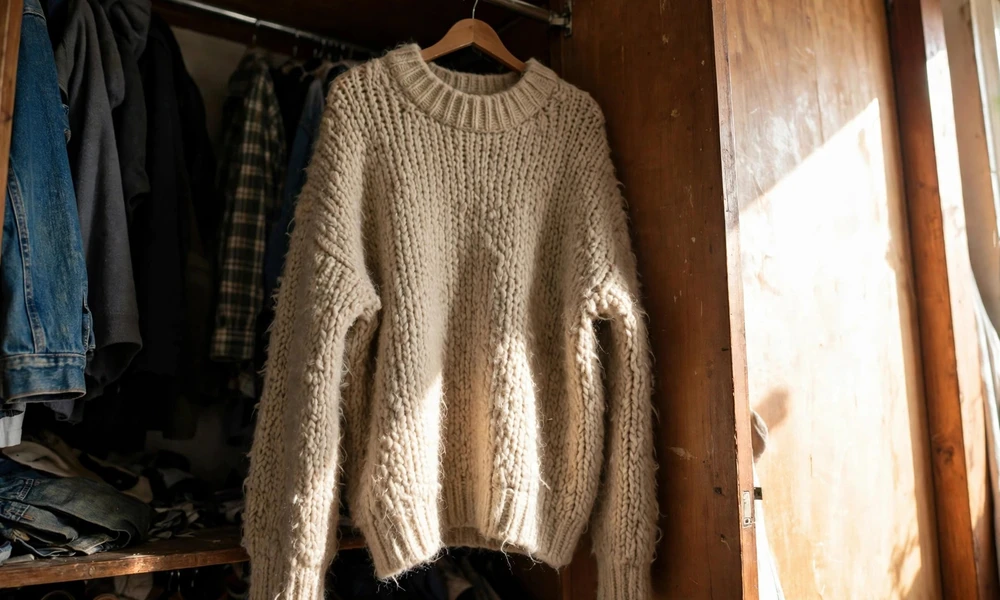
Fit is the next thing to get right. Alpaca has less natural stretch than wool, so a sweater that is too tight will not give the way a wool one does, and one that is too loose can look shapeless after a few wears. If you plan to layer it under a coat, choose your usual size. If you want it as a standalone piece over a shirt or a dress, sizing up once gives a relaxed, modern shape without looking sloppy.
Price is the last filter, not the first. Alpaca is a premium fibre, and a genuinely high-content alpaca sweater is rarely cheap, but the price should reflect the fibre share, the gauge and the finish, not just the label.
The nine alpaca sweaters worth buying in 2027
1. Everlane The Alpaca Crew
Everlane’s alpaca crew is the straightforward choice: a clean, classic crew neck in a fine gauge, made from a high share of alpaca with a little wool for structure. It comes in a steady range of neutrals, and the cut is neat enough to wear under a blazer and relaxed enough to wear on its own.
What We Like: A high alpaca content at an accessible price, a clean classic shape, and a colour range that stays useful year after year.
What to Consider: The fine gauge means it is not the warmest option here, so it suits mild cold days and layered outfits better than deep winter on its own.
Best For: Everyday wear and layering under coats and blazers. Material: Alpaca blend with wool. Price Range: Mid-range. Standout Feature: The cleanest, most versatile crew neck shape in this roundup.
2. Naadam The Alpaca Crew
Naadam built its name on direct-to-consumer cashmere, and its alpaca crew follows the same idea: good fibre, simple design, and a price that undercuts most luxury labels. The knit is soft and slightly brushed, the shoulders sit neatly, and the ribbed cuffs hold their shape.
What We Like: Soft, slightly brushed hand feel, honest pricing for the fibre quality, and a cut that works on most body shapes.
What to Consider: The brushed finish can pill lightly under a bag strap, so keep a knit comb handy in the first few weeks.
Best For: Weekend wear and relaxed office days. Material: Alpaca blend. Price Range: Mid-range. Standout Feature: The softest hand feel for the price in this roundup.
3. COS Alpaca Crew-Neck Jumper
COS does minimalism well, and its alpaca crew neck is the most design-led piece in this list. The silhouette is slightly boxy, the neckline sits high, and the knit is smooth and even.
What We Like: A modern, slightly boxy silhouette, a smooth even knit, and colours that sit well with tailored trousers and wide-leg jeans.
What to Consider: The boxy cut can overwhelm a petite frame, so try your usual size first rather than sizing up.
Best For: Minimalist outfits and smart-casual days. Material: Alpaca blend. Price Range: Mid-range. Standout Feature: The most fashion-forward silhouette in this roundup.
4. Arket Alpaca Crew Neck
Arket’s alpaca crew is the quiet workhorse of this list. The knit is dense and smooth, the fit is true to size, and the colours are muted and easy to combine.
What We Like: A dense, smooth knit that holds its shape, true-to-size fit, and a palette of easy neutrals.
What to Consider: The colour range is deliberately restrained, so if you want a bright or seasonal shade, look elsewhere.
Best For: A capsule wardrobe and daily wear. Material: Alpaca blend with wool. Price Range: Mid-range. Standout Feature: The best shape retention after repeated wears.
5. Massimo Dutti Alpaca Blend Sweater
Massimo Dutti’s alpaca blend sweater is the smartest-looking option in this roundup, with a slightly finer gauge and a neater finish that suits tailored outfits. The shoulders are clean, the cuffs are slim, and the overall effect is polished rather than rustic.
What We Like: A polished, tailored finish, a fine gauge that layers neatly, and a price that sits well below luxury labels.
What to Consider: The finer knit is less forgiving of rough handling, so wash it gently and avoid snagging it on jewellery.
Best For: Smart office wear and evening outfits. Material: Alpaca blend. Price Range: Mid-range. Standout Feature: The most polished, tailored finish in this roundup.
6. Mango Alpaca Blend Sweater
Mango’s alpaca blend sweater is the most affordable way into this fibre, and it does not feel like a compromise. The knit is soft, the fit is relaxed without being shapeless, and the colour range includes a few warmer seasonal shades alongside the usual neutrals.
What We Like: The lowest price in this roundup, a soft and comfortable knit, and a relaxed fit that suits layering.
What to Consider: The alpaca share is lower than in the premium options here, so it is slightly less warm and a little more prone to pilling.
Best For: Trying alpaca for the first time and casual everyday wear. Material: Alpaca blend with wool and recycled fibres. Price Range: Budget-friendly. Standout Feature: The best value entry point into alpaca knitwear.
7. & Other Stories Alpaca Blend Jumper
& Other Stories offers one of the prettiest alpaca jumpers in this list, with a slightly relaxed shape, a soft brushed texture, and colours that feel considered rather than safe. The knit has a gentle halo that makes it look warm and inviting, and the fit is easy without being oversized.
What We Like: A soft brushed texture, a relaxed and flattering shape, and a colour range with more character than most.
What to Consider: The brushed finish needs gentle handling and will pill more in the first month than a smooth knit.
Best For: Relaxed days and outfits where the sweater is the main piece. Material: Alpaca blend. Price Range: Mid-range. Standout Feature: The softest brushed texture in this roundup.
8. Toast Alpaca Jumper
Toast’s alpaca jumper is the most considered and the most expensive piece here, and it shows in the details. The knit is dense and even, the shape is generous but well judged, and the colours are drawn from natural, undyed shades where possible.
What We Like: Exceptional knit quality, natural and undyed colour options, and a shape that drapes beautifully.
What to Consider: The price is the highest in this roundup, and the relaxed fit may need a belt or a tuck to look intentional on shorter frames.
Best For: A long-term investment piece and slow-fashion wardrobes. Material: High alpaca content. Price Range: Premium. Standout Feature: The highest fibre quality and the most considered design in this roundup.
9. Banana Republic Alpaca Crew-Neck Sweater
Banana Republic’s alpaca crew neck is the most classic American option in this list: a neat, well-proportioned sweater with a smooth knit and a fit that works under a jacket or on its own. The colours are reliable, the quality is consistent, and it is easy to find in a size that fits.
What We Like: A classic, dependable fit, a smooth and even knit, and reliable availability in a full size range.
What to Consider: The design is deliberately plain, so it will not stand out if you want a statement knit.
Best For: Classic outfits and reliable everyday wear. Material: Alpaca blend. Price Range: Mid-range. Standout Feature: The most reliable fit and size range in this roundup.
What to look for before you buy
Start with the label. The fibre content is usually listed in descending order, so the first fibre named is the largest share. Look for alpaca at 50 percent or above if warmth and softness matter most, and treat anything under 20 percent as a token amount rather than a real alpaca sweater.
Then look at the knit itself. A fine gauge suits layering and smart outfits, while a chunky gauge suits cold weekends and relaxed looks. Check that the ribbing at the cuffs and hem is firm and springs back, and that the seams lie flat.
Finally, think about colour and care together. Natural, undyed alpaca shades such as cream, camel, grey and brown show less wear and age more gracefully than very pale or very dark dyed shades. A little care goes a long way with this fibre, and a well-kept alpaca sweater can last many winters. For a direct comparison with the closest alternative fibre, see our guide to cashmere vs alpaca sweaters.
The caveats that matter
Alpaca is a wonderful fibre, but it is not perfect for every person or every day. It is very warm, so it can be too much on mild days or in heated rooms, and it has less stretch than wool, so the fit needs to be right from the start. It can also pill, especially where a bag strap or seatbelt rubs, and it needs protection from moths in the summer months.
| Detail | What is known |
|---|---|
| Warmth | Warmer than sheep’s wool by weight, thanks to the hollow fibre structure. |
| Softness | Softer than most merino, and baby alpaca is the softest grade available. |
| Sensitive skin | Contains no lanolin, so it is often tolerated by people who react to wool. |
| Fibre content | Look for 50 percent alpaca or more; under 20 percent is a token amount. |
| Pilling | Common in the first weeks, especially under straps; a knit comb removes it easily. |
| Stretch | Less natural stretch than wool, so fit matters more and sizing up helps. |
| Care | Hand wash cold or use a wool cycle, then dry flat; never tumble dry. |
| Moths | Store clean and folded with cedar or lavender in summer; never hang heavy knits. |
If you have very sensitive skin, try a baby alpaca piece first, and wear it over a thin layer for the first wear to see how your skin responds. If you live somewhere with mild winters, a fine-gauge alpaca sweater will get far more wear than a chunky one.
Checklist: before you buy an alpaca sweater
- Check the fibre label and aim for at least 50 percent alpaca, ideally 70 percent or more.
- Choose baby alpaca if the sweater will sit directly against your skin.
- Pick a fine gauge for layering and smart outfits, and a chunky gauge for cold weekends.
- Try your usual size first, and size up only if you want a relaxed, standalone shape.
- Inspect the ribbing, seams and knit density before you buy, and hold it up to the light.
- Plan for gentle care: wool wash, cold water, dry flat, and moth protection in summer.
Frequently asked questions
Is alpaca warmer than wool?
Yes, by weight alpaca is warmer than sheep’s wool, because the hollow fibre traps more air.
Is alpaca good for sensitive skin?
Usually, yes. Alpaca contains no lanolin, the oil in sheep’s wool that many people react to, and its smooth fibre surface is less likely to irritate the skin.
Does alpaca pill?
It can, especially in the first few weeks and where a bag strap or seatbelt rubs. Pilling is normal for soft animal fibres and is not a sign of poor quality.
How do I wash an alpaca sweater?
Hand wash in cold water with a wool wash, or use a gentle wool cycle in the machine inside a mesh bag. Roll the sweater in a clean towel to press out water, then reshape it and dry it flat, away from direct heat.
Is alpaca better than cashmere?
Neither is simply better. Alpaca is warmer, more durable and often less expensive, while cashmere is softer and lighter. The right choice depends on how and where you will wear it. Our guide to cashmere care covers how the two fibres differ in upkeep.
Can I wear alpaca in spring and autumn?
Yes, but choose a fine-gauge piece. A light baby alpaca crew neck works well on cool spring and autumn days, while a chunky alpaca knit is best kept for winter.
The bottom line
Alpaca is one of the best knitwear fibres you can buy: warmer than wool, softer than most merino, and durable enough to last for years when it is looked after. The nine sweaters above cover the range from an affordable first piece to a premium investment, and each one is chosen for fibre quality and wearability rather than for branding alone. Start with the fibre content, get the fit right, and choose a gauge that suits how you actually live.
If you buy one alpaca sweater this year, make it a fine-gauge crew neck in a neutral shade, with at least 50 percent alpaca and preferably baby alpaca. It will layer under a coat, work on its own, and still look good in three winters’ time. For a similar roundup in the closest alternative fibre, see our wool sweaters for women guide.