A pineapple plantation escape sounds simple: pick a farm stay, book a room, and spend a few days among the pineapple rows. In practice, the trip only works when the pieces fit together, and the pieces are easy to get wrong.
The good news is that none of this is complicated once you know what to check. A pineapple plantation escape is a small trip with a small number of decisions, and each decision has a clear right answer once you know how the farm works.
Below are nine steps that take you from the first idea to a finished trip, in the order that makes the planning easiest. Follow them in sequence and the escape plans itself, with the harvest at the centre and the logistics sorted before they can cause trouble.
Key takeaways
- Start with the harvest calendar, not the flight calendar: the best pineapple trips follow the fruit, and the harvest dates decide when to go.
- Choose a region that matches how you travel, then a stay that matches the region, rather than choosing a room from photographs alone.
- Ask the farm the questions that decide the trip: harvest dates, what is included, how the transfer works, and what happens when it rains.
- Book the room that faces the fields and the transfer before anything else, because remote stays have few rooms and slow roads.
- No plantation escape is a city break, and remote stays can mean slow internet, long transfers and limited dining choice, so plan for farm pace, not hotel pace.
What a pineapple plantation escape actually involves
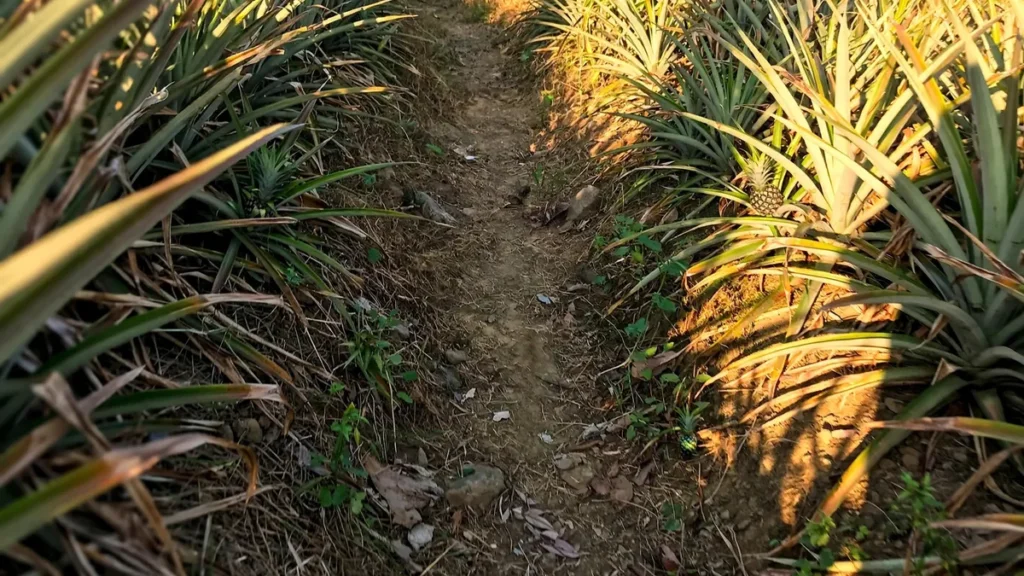
A pineapple plantation escape is a short stay on or beside a working pineapple farm, usually three to five nights, where the farm shapes the day. Mornings are for field walks and harvest work, afternoons are for tastings, cooking and rest, and evenings are quiet. The trip is built around the farm, not around a list of attractions, and that is what makes it restful.
What it involves, in practical terms, is a transfer from the nearest airport or town, a room close to the fields, meals that come largely from the farm, and a small number of organised activities, usually a field walk, a tasting and perhaps a cooking session.
The other thing it involves is a change of pace. Farm days start early and end early, the internet is often slow, and the weather decides what happens. Travellers who arrive ready to slow down, walk in the morning and rest in the afternoon, tend to leave saying it was the most restful trip they have taken.
How we planned this escape and what to look for
Start by looking at the harvest calendar for the region you are considering. Pineapple harvests differ by country, and the sweetest fruit and the liveliest farm work follow the harvest. Hawaii harvests through much of the year, Costa Rica peaks in the dry season, and the Azores run a short glasshouse season.

Look next at what the stay includes and how the transfer works. Remote plantation stays often charge separately for transfers, tours and meals, and those extras can double the cost of the trip. The best stays fold the farm walk, a tasting and at least one farm meal into the nightly rate, and they are clear about the transfer before you book. Our guide to planning a dragon fruit plantation escape makes the same point, because plantation trips of every kind are decided by the same few practical questions.
Finally, look at the room and the season together. A plantation room should face the fields or the valley, not a car park, and it should be comfortable in the local climate, with good ventilation and a bed you can sleep in after a long farm day.
The 9 steps to plan a pineapple plantation escape
Start with the harvest calendar, not the flight calendar
What to do: Look up the pineapple harvest season for the region you want to visit, and choose your dates inside it. Ask the stay for its harvest dates before you book, and let those dates set the trip. What to avoid: Booking flights first and hoping the farm is busy when you arrive. Best For: Every traveller, and especially first-timers. Time Needed: An evening of reading. Standout Tip: The harvest is the trip, so the dates matter more than the flight price.
The step most travellers skip, and the one that matters most: the same farm is quiet outside harvest season and busy, generous and alive during it.
Pick a pineapple region that matches how you travel
What to do: Match the region to your travel style: Hawaii for an easy first trip, Costa Rica or Ghana for slow farm time, Chiang Rai or Réunion for food, the Azores for a short European trip. What to avoid: Choosing a region only because the photographs look good, without checking the journey time or the climate. Best For: Travellers deciding between regions. Time Needed: An evening of comparing. Standout Tip: The right region is the one that fits how you travel, not the one with the prettiest pictures.
Regions differ in journey time, language, food, weather and cost, and those differences shape the trip more than the farm itself.
Compare stays by what they include, not by their photos
What to do: Shortlist two or three stays, then compare them on what the price covers: farm walks, tastings, meals, transfers and the room itself. What to avoid: Choosing the stay with the best photographs without reading what is included. Best For: Travellers comparing options. Time Needed: A couple of hours. Standout Tip: The cheapest nightly rate is often the most expensive trip once the extras are added.
Photographs are a poor guide, because every farm looks beautiful in the morning light. What matters is the list of inclusions, and if a stay cannot tell you what is included, move on.
Ask the farm the questions that decide the trip
What to do: Email the stay and ask four questions: when is the harvest, what is included, how does the transfer work, and what happens when it rains. What to avoid: Booking without asking anything, then discovering the answers after you arrive. Best For: Every traveller, before booking. Time Needed: One email and a day to wait for the reply. Standout Tip: A stay that answers clearly and quickly will look after you well on the trip.
These four questions decide the trip, and the quality of the answers tells you a great deal about the stay: prompt and specific means organised, vague means vague about everything else too.
Choose the room that looks over the fields
What to do: When you book, ask for the room that faces the pineapple fields or the valley, and confirm it in writing. What to avoid: Accepting any room without asking, and ending up facing a car park or a service yard. Best For: Every traveller, at booking. Time Needed: Five minutes in the booking email. Standout Tip: The field view is the reason you are going, so it is worth asking for.
Plantation stays have few rooms, and the best ones go first. The room that faces the fields is the room you will remember, and it costs nothing extra to ask for it.
Sort the transfer before you book anything else
What to do: Find out how long the transfer takes from the nearest airport, who arranges it, and what it costs, and book it at the same time as the room. What to avoid: Arriving at a small airport with no transport arranged and no taxi in sight. Best For: Every traveller, especially first-timers. Time Needed: An hour of checking. Standout Tip: A two-hour transfer on a rough road feels much longer at the end of a long flight.
The transfer is the least glamorous part of a plantation escape and the part that causes the most trouble, so sort it before you book the flights.
Pack light layers and shoes you can wash
What to do: Pack closed shoes you can wash, light layers for cool mornings, sun protection, insect repellent and a light rain jacket, plus a small day pack for field walks. What to avoid: Packing smart clothes, white shoes or anything you would mind getting muddy. Best For: Every traveller, before departure. Time Needed: An evening of packing. Standout Tip: The farm decides the dress code, and the farm does not care about smart clothes.
Packing for a plantation stay is simple once you accept that you will get muddy, sweaty and rained on, sometimes all in one morning. Our guide to planning an avocado grove escape gives the same advice, because grove stays share the same mud and the same mornings.
Slow down on day one and learn the farm routine
What to do: Spend the first day walking the fields, meeting the staff and learning the farm routine, and keep the afternoon free for rest. What to avoid: Arriving and immediately trying to fit in every activity on the first day. Best For: Every traveller, on arrival. Time Needed: One slow day. Standout Tip: The farm sets the pace, and the trip works better when you let it.
Day one sets the tone for the whole trip: slow down, walk the fields and learn how the farm works, and the fruit will taste better after a good night’s sleep.
Eat what the farm grows and take one day out
What to do: Eat the farm meals, join the tastings, and plan one day trip to a nearby town, coast or market, then return to the farm for the last evening. What to avoid: Eating only in the nearest town, or trying to fit in a day trip every day. Best For: Every traveller, during the stay. Time Needed: One day out. Standout Tip: One day out makes the farm days feel richer, and two or three make them feel rushed.
The farm food is the best part of a plantation escape, and one day out, a market, a coast or a town, is what makes it feel like a holiday rather than a visit to a farm.
Which approach fits your travel style
Couples on a first plantation trip usually do best with the simple approach: Hawaii, three or four nights, a farm walk, a tasting and one day trip.
Families should plan around the children: a villa or eco-stay with space, a pool and a kitchen that can handle a fussy eater, short field walks, and plenty of free time. A family trip works best when the days are easy and the farm work is something children can join, rather than something they have to watch. Our guide to planning a papaya grove escape follows the same family logic, because grove stays and plantation stays share the same pattern.
Food lovers should plan around the kitchen: Chiang Rai or Réunion, a cooking session, a market visit and a tasting, with the farm meals as the centre of the trip. Slow travellers should plan around the farm itself: Ghana or Costa Rica, a long stay, and days shaped by the harvest rather than by a schedule. The right approach is the one that matches how you travel.
The caveats that matter
Pineapple plantation escapes are wonderful trips, but they are not for everyone, and the things that make them special are also the things that can catch a traveller out. Remote locations mean long transfers, and a stay that looks close to an airport on a map can be two hours away on a rough road.
| Detail | What is known |
|---|---|
| Best time to go | Harvest season in your chosen region, when the fruit is sweetest and farm work is liveliest |
| How long to stay | Three to five nights, which is enough for farm walks, tastings and one day trip |
| How far ahead to book | Two to three months ahead for harvest season, earlier for small lodges with few rooms |
| Who it suits best | Slow travellers, food lovers and couples, and families with older children |
| Who should think twice | Travellers who need city facilities, fast internet or a packed activity list |
| What to pack | Closed washable shoes, light layers, sun protection, insect repellent and a rain jacket |
| Typical cost | Roughly $110 to $480 a night, with transfers, tours and meals sometimes extra |
| What it does not offer | Nightlife, shopping or a resort-style spa and entertainment programme |
Weather matters more than most travellers expect. Pineapple farms are in warm, wet places, and rain can close a field walk or cancel a harvest morning. Ask what happens when it rains before you book, and pack for mud as well as for sun.
Checklist: planning a pineapple plantation escape honestly
Use these checks before you book, and again before you travel.
- Check the harvest dates: are you travelling inside the harvest season for your region?
- Check what is included: farm walks, tastings, meals and transfers, and what costs extra.
- Check the transfer: how long it takes, who arranges it, and what it costs.
- Check the room: does it face the fields, and is it comfortable in the local climate?
- Check the rainy-day plan: what happens when a field walk or harvest morning is rained off?
- Check your packing: washable shoes, light layers, sun protection, repellent and a rain jacket.
Frequently asked questions
How far ahead should I book a pineapple plantation escape?
Two to three months ahead for harvest season, and earlier for small lodges with only a handful of rooms. The best rooms and the field-facing rooms go first, and the harvest mornings and cooking sessions can fill up too, so book the room and the activities together.
Do I need a car at a pineapple plantation retreat?
Usually not, as most stays arrange transfers and run their own farm walks. A car is useful in Réunion and the Azores, where the farm is a good base for exploring the island, but in Hawaii, Costa Rica and Ghana the stay will arrange what you need.
What is the best length for a pineapple plantation trip?
Three to five nights is the sweet spot. One night is too short to settle into farm time, and a week can feel long if the stay is remote. Three nights gives you a field walk, a tasting and a day trip, with a slow day in between.
Can I visit a pineapple farm without staying overnight?
Sometimes, as some farms run day tours and tastings for visitors. The experience is thinner, though, because the best parts of a plantation stay, the early morning walk and the evening quiet, only happen when you sleep there.
What should I pack for a pineapple plantation escape?
Closed shoes you can wash, light layers for cool mornings, sun protection, insect repellent and a light rain jacket. Leave the smart clothes at home. A small day pack for field walks is useful,.
Is a pineapple plantation escape good for a honeymoon?
Yes, for couples who want quiet and food rather than nightlife and crowds. The Maui lodge and the Oahu farm stay are the most honeymoon-friendly on this list, with private rooms, field views and good food.
The bottom line
The best way to plan a pineapple plantation escape in 2027 is to start with the harvest calendar, pick a region that matches how you travel, and ask the farm four questions before you book: when is the harvest, what is included, how does the transfer work, and what happens when it rains. Those four answers decide the trip, and the stays that answer them clearly are the stays that will look after you well.
Book the room that faces the fields, sort the transfer before the flights, pack for the farm rather than for a hotel, and arrive ready to slow down. The trip will take care of itself from there, and the farm will do the rest. A pineapple plantation escape rewards travellers who let the farm set the pace, and that is the honest way to enjoy it.