



Planning a papaya grove escape is different from planning a beach holiday. The grove sets the rhythm: early mornings in the trees, long shaded lunches, and evenings that end early because the day starts at dawn. A good plan respects that rhythm. A bad one tries to pack a grove stay with the same schedule you would use in a city, and ends up tired, sunburned, and disappointed.
The most common mistake is booking the wrong season, or the wrong kind of stay. A working grove in the wet season is beautiful and cheap, but its paths are muddy and its dining is often moved indoors. A small farm stay is peaceful and personal, but it has no spa, no pool bar, and no one to arrange your day. Knowing which of those trade-offs you are happy with is the whole plan, and it is decided before you book, not after you arrive.
This guide walks through the planning in order, from choosing the season and the stay to packing, travelling, and making the most of the grove once you are there. It is written for a first papaya grove escape, but the same steps work for a return trip, when you already know what you liked and what you would change.
Key takeaways
- Choose the season first, then the stay: the dry season suits firm paths and outdoor dining, the wet season suits lower prices and greener groves.
- Book the grove stay that matches your travel style, not the prettiest photograph, and read the inclusions before comparing prices.
- Plan the transfer carefully, because many grove retreats sit an hour or more down a narrow road from the airport.
- Pack for shade, rain, and walking, not for a beach, and tell the kitchen about dietary needs before you arrive.
- No plan can guarantee perfect weather, a quiet harvest, or a specific fruit season, so keep one day free and flexible.
What a papaya grove escape really involves
A papaya grove escape is a stay in, or next to, a grove of papaya trees, usually in a warm, frost-free region a short drive inland from the coast. The days are simple. You wake early, walk the grove or sit on the veranda, eat a long breakfast, and spend the middle of the day in the shade. The afternoons are for a swim, a walk, or a nap. Evenings are for dinner under the trees and an early night.
That simplicity is the point, and it is also the risk. The escape works when you want to slow down, eat well, and spend time outdoors. It works less well as a base for sightseeing, shopping, or nightlife, because the grove is usually a drive from all three.
The length of stay matters, too. Two nights is enough to rest, but it is barely enough to settle into the grove rhythm. Four to five nights is the sweet spot for most people: long enough to slow down, short enough not to feel restless. A week suits travellers who want to read, walk, and eat their way through the stay. Longer than a week, and you will want a car and a plan for day trips.
How to choose the season, the place, and the stay
Start with the season. In most tropical regions the dry season runs roughly from December to April, and it is the easiest time for a grove stay: firm paths, reliable outdoor dining, and fewer mosquitoes. The wet season, roughly May to November in many places, is greener and cheaper, but it brings rain, mud, and more insects. Check the local season for the exact place you are considering, because the window changes with the region.
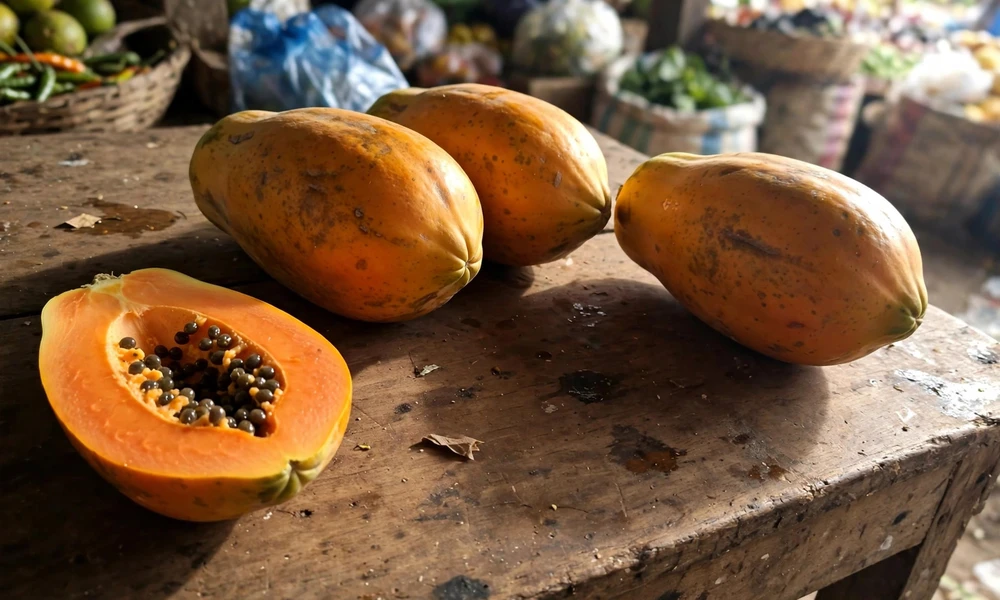
Then choose the place. Papaya grows in warm regions around the world, from Southeast Asia and Sri Lanka to Central America, the Caribbean, Queensland, and the Mediterranean hills. The grove experience is similar everywhere, but the food, the culture, and the journey are not. Choose the region for the trip around the grove as much as for the grove itself. Our guide to planning a mango grove escape makes the same point, because grove escapes share the same planning logic: the place shapes the trip, and the grove shapes the days.
Then choose the stay. Small grove stays have four to twelve rooms, shared meals, and personal hosts. Full-service resorts have fifteen to twenty suites, a spa, a pool, and a restaurant. The small stay is quieter and cheaper. The resort is more comfortable and more predictable. Read the inclusions before you compare prices, because a stay that includes meals and transfers can be cheaper overall than a cheaper room that charges for everything.
The 9 steps to planning a papaya grove escape
Step 1: Pick your dates around the dry season
What to do: Look up the dry season for the exact region, then pick dates inside it, avoiding the busiest holiday weeks if you can. What to avoid: Booking on a general idea of tropical weather, or assuming the dry season is the same everywhere. Best for: First-time grove travellers. Time needed: About an hour of research. Standout tip: The first two weeks of the dry season often have the best combination of price and weather.
Dates decide the trip more than any other choice. A wet-season week is cheaper and greener, but it needs a retreat with covered dining and firm paths. Decide which trade-off you prefer before you look at rooms.
Step 2: Choose a region for the trip around the grove
What to do: Pick the region for its food, culture, and journey, not just its trees, and check flight times and visa needs early. What to avoid: Choosing a region only because the photographs look good, without checking how long it takes to get there. Best for: Travellers who want more than the grove itself. Time needed: An evening of reading and comparing. Standout tip: A region with a good food culture makes a grove stay twice as good, because the kitchen is half the trip.
Step 3: Shortlist stays by style, not by photographs
What to do: Sort stays into small grove stays and full-service resorts, then shortlist two or three of the style that suits you. What to avoid: Shortlisting by the prettiest photograph, which usually shows the pool, not the grove. Best for: Anyone comparing several stays at once. Time needed: About two hours. Standout tip: Look for recent guest photographs of the grove paths and the dining area, not the marketing shots.
Photographs lie by selection. Every grove stay has a good pool photograph. Read the room descriptions and the reviews for those details, because they are what you will live with.
Step 4: Ask the retreat the questions that matter
What to do: Email the retreat and ask about the grove size, the shade at midday, the transfer time, the inclusions, and the food. What to avoid: Booking without asking, and finding out on arrival that meals, transfers, or walks cost extra. Best for: First-time grove travellers and anyone with dietary needs. Time needed: About 30 minutes to write and send. Standout tip: The speed and honesty of the reply tells you a lot about the stay itself.
A good retreat answers clearly and quickly. Ask how large the grove is, whether guests can walk it, what the kitchen grows, and what is included in the price. Ask about dietary needs and allergies now, not at the first dinner. A vineyard escape needs the same questions, because small rural stays share the same economics: a small team, a small kitchen, and a long way to the nearest shop.
Step 5: Book the room that faces the grove
What to do: Ask for a room that faces the grove or the garden, away from the road, the kitchen, and the service area. What to avoid: Taking the cheapest room without asking where it sits, or booking a room that faces the car park. Best for: Light sleepers and early risers. Time needed: A few minutes at booking. Standout tip: A room under the canopy is cooler and quieter than a room in the open sun.
Room position matters more in a grove stay than in a city hotel. A room that faces the grove wakes you to birdsong and shade. A room that faces the road wakes you to harvest traffic.
Step 6: Plan the transfer and keep one day free
What to do: Book the transfer with the retreat or a reliable local driver, allow extra time for the road, and keep your first day free of plans. What to avoid: A tight flight connection after a long rural drive, or a full schedule on arrival day. Best for: Anyone flying in on the same day. Time needed: About an hour to arrange. Standout tip: Arrive in daylight if you can, because rural grove roads are much easier to navigate before dark.
Step 7: Pack for shade, rain, and walking
What to do: Pack light, breathable clothes, sturdy walking shoes, a hat, sunscreen, insect repellent, and a light rain layer. What to avoid: Packing only beach clothes, or bringing shoes that cannot handle a muddy grove path. Best for: Everyone, and especially wet-season travellers. Time needed: An evening of packing. Standout tip: A small day bag for the grove walk is more useful than a large suitcase you will not open.
A grove stay is an outdoor holiday, and the packing should match. You will walk on paths, sit in the shade, and eat outdoors, so pack for sun, rain, and uneven ground.
Step 8: Settle into the grove rhythm on day one
What to do: Walk the grove on your first morning, eat breakfast under the trees, and spend the middle of the day in the shade. What to avoid: Filling the first day with activities, or trying to see everything before lunch. Best for: Travellers who arrive tired from a long journey. Time needed: One slow morning. Standout tip: The grove walk is best at dawn, when the light is soft and the birds are loudest.
Step 9: Eat from the grove and plan one day trip
What to do: Eat the grove food every day, ask the kitchen what is in season, and plan one day trip to the coast or the nearest town. What to avoid: Eating only familiar food, or staying inside the property for the whole week. Best for: Travellers staying four nights or more. Time needed: A day for the trip, plus daily meals. Standout tip: Ask the kitchen for the papaya dish they are proudest of, and order it.
The food is half the reason to stay in a grove, so eat from it every day. One day trip is enough to see the region without breaking the rhythm. A plan for an avocado grove escape follows the same balance, because grove stays work best when the days are slow and the excursions are few.
What to pack and what to leave behind
Pack light, and pack for the outdoors. Light, breathable clothes, a hat, sunscreen, and insect repellent are the essentials. Sturdy walking shoes matter more than smart shoes, because grove paths are uneven and can be muddy after rain. A light rain layer is worth carrying even in the dry season, because tropical showers are short and sudden.
Leave the formal clothes behind. A grove retreat is not a place for tailored outfits or high heels. Bring a book, a small day bag, and a camera, and leave the laptop in the room, or at home.
Carry the basics with you. The nearest pharmacy, cash machine, and clinic may be an hour away, so bring the medicines you need, a small first-aid kit, and enough cash for a few days. Tell the retreat about any medical needs before you arrive, and keep the local emergency number in your phone.
The caveats that matter
The main caveat is distance. A grove retreat is peaceful because it is remote, and remote means a long way from help. Check the distance to the nearest town, pharmacy, and clinic before you book, and travel with the basics you need. If you have a medical condition, tell the retreat and your travel insurer before you go.
| Detail | What is known |
|---|---|
| Best time to go | Usually the dry season, roughly December to April in many tropical regions |
| Ideal length of stay | Four to five nights for most travellers; two nights to rest, a week to settle in fully |
| Best room choice | A room facing the grove or garden, under the canopy, away from the road |
| Transfer time | Often an hour or more from the airport, down a narrow rural road |
| What to pack | Light clothes, walking shoes, hat, sunscreen, insect repellent, a light rain layer |
| Food | Tell the kitchen about dietary needs and allergies before you arrive |
| Day trips | One trip to the coast or nearest town is enough for a four to five night stay |
| What is not guaranteed | Perfect weather, a quiet harvest, or a specific fruit season on your dates |
Weather is the second caveat. Even in the dry season, a tropical shower can arrive without warning, and in the wet season it can rain for hours. A good plan keeps one day free and flexible, so a rainy day is a rest day, not a ruined one.
Checklist: planning a papaya grove escape honestly
Use these checks before you book, and again before you travel.
- Check the season: pick dates inside the dry season for the exact region, not a general tropical window.
- Check the stay: small grove stay or full-service resort, and read the inclusions before comparing prices.
- Check the room: ask for a grove-facing room under the canopy, away from the road.
- Check the transfer: book it in advance, allow extra time, and arrive in daylight if you can.
- Check the food: tell the kitchen about dietary needs and allergies before you arrive.
- Check the packing: light clothes, walking shoes, hat, sunscreen, insect repellent, and a light rain layer.
Frequently asked questions
How many nights should I stay at a papaya grove retreat?
Four to five nights is the sweet spot for most people. Two nights is enough to rest, but barely enough to settle into the grove rhythm. A week suits travellers who want to read, walk, and eat their way through the stay.
When is the best time to plan a papaya grove escape?
Usually the dry season, roughly December to April in many tropical regions, when paths are firm and outdoor dining works every evening. Check the local season for the exact place, because the window changes with the region.
Do I need a car for a papaya grove escape?
Often yes, or a pre-booked transfer. Many grove retreats sit an hour or more from the airport, and taxis are scarce in rural areas. Resorts with included transfers and on-site dining work well without a car.
What should I pack for a papaya grove retreat?
Light, breathable clothes, sturdy walking shoes, a hat, sunscreen, insect repellent, and a light rain layer. Leave formal clothes behind, and carry the medicines and basics you need, because the nearest pharmacy may be an hour away.
Are papaya grove retreats good for a honeymoon?
Yes, especially the small villa stays and the luxury resorts with private plunge pools. The quiet, the shade, and the slow days suit a honeymoon well. Book a grove-facing room and allow a full day for the transfer in and out.
Can I visit a papaya grove retreat in the wet season?
Yes, and it is greener and cheaper, but choose a retreat with covered dining, firm paths, and good room screens. Pack a rain layer and sturdy shoes, and keep one day free, so a rainy day becomes a rest day rather than a ruined one.
The bottom line
Planning a papaya grove escape comes down to three decisions: the season, the region, and the style of stay. Get those right, ask the retreat the questions that matter, and the rest of the plan is simple: a grove-facing room, a booked transfer, and a slow first morning in the trees.
Keep one day free, pack for the outdoors, and eat from the grove every day. A papaya grove is a slow, green, generous place to stay, and a plan that respects that rhythm is the one that works.


