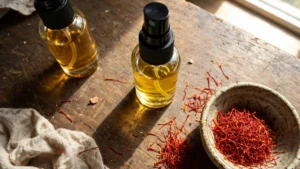
Honeysuckle is one of those scents that everyone recognises and almost nobody can describe. Ask someone what it smells like and they will usually say sweet, or summery, or like a garden in June, and then stop, because the smell is so familiar that it feels like it needs no explanation.
A honeysuckle perfume is a reconstruction. The flower gives up almost no oil, so there is no honeysuckle essential oil or absolute to pour into a bottle. The result can be remarkably close to the flower, or it can drift into a generic sweet floral that could be almost anything. Knowing which is which starts with knowing what honeysuckle actually is.
This guide explains what a honeysuckle perfume is, how the scent is built, where it sits in a perfume, and how to tell a good one from a sweet imitation. It is a plain explanation of a note that deserves more attention than it usually gets.
Key takeaways
- A honeysuckle perfume is a reconstruction, because the flower has no natural extract, so every version is a perfumer’s interpretation rather than a direct capture.
- Honeysuckle smells sweet, honeyed and golden, with a green, slightly fruity edge, and that green edge is what separates it from jasmine, orange blossom and other white florals.
- It is usually a heart note, appearing after the opening and fading before the base, which is why honeysuckle perfumes feel light and often last only a few hours.
- The same name can smell very different across brands, because each perfumer balances the honey, the green and the fruit differently.
- No honeysuckle perfume smells exactly like a living honeysuckle vine, and a version that smells only of sugar is a sign that the flower itself has been left out.
What honeysuckle actually smells like
The first thing to know is that honeysuckle smells sweet, but it is not a simple sweetness. The flower’s scent is honeyed and golden, with a warmth that reminds some people of apricot and others of fresh nectar. Underneath that warmth is a green, leafy quality, almost like crushed stems, and a faint citrus brightness that keeps the whole thing from feeling heavy. On a warm evening the scent carries a long way, which is why a honeysuckle-covered fence can perfume a whole garden. It is a scent that most people meet before they ever think about perfume, on a walk home from school or in a grandparent’s garden, which is why it carries such a strong sense of place.
The second thing to know is that honeysuckle is a vine, not a shrub, and its flowers open in the evening. The scent is strongest at dusk, when the white and yellow trumpets release their perfume to attract night-flying moths.
The third thing to know is that there are many kinds of honeysuckle, and they do not all smell the same. Japanese honeysuckle, the most common garden variety, is the sweetest and most familiar. Woodbine, the wild European honeysuckle, is softer and greener.
How honeysuckle is captured in a bottle
Because the flower gives up almost no oil, perfumers cannot distil honeysuckle the way they distil rose or lavender. Instead, they build it. The usual starting point is a white floral base, often jasmine or orange blossom, which provides the creamy, floral body. Then they add green notes for the leafy edge, and the aroma chemicals that carry honeysuckle’s distinctive honeyed character, including the lactonic materials that give it a soft, milky sweetness.

The balance between those parts decides what the perfume smells like. Lean too far into the honey and the scent becomes sugary, almost edible, and loses the flower entirely. Lean too far into the green and it becomes a leafy fresh scent with no warmth. The best reconstructions hold both sides together, so the sweetness and the green arrive at the same time, the way they do on a real vine. Our guide to what a floral perfume is explains how heart notes like honeysuckle work inside a wider bouquet, because honeysuckle rarely stands alone in a finished perfume.
9 facts that explain a honeysuckle perfume
Honeysuckle has no natural extract
What it shows: Every honeysuckle perfume is a reconstruction, built from other materials, because the flower yields almost no oil when distilled or extracted.
What to consider: A perfume that claims to contain pure honeysuckle oil is misleading, and the quality of a honeysuckle scent depends entirely on the perfumer’s skill. Best For: Anyone who wants to understand why honeysuckle perfumes vary so much. Material: White floral base, green notes, honeyed aroma chemicals. Price Range: Approximately $15 to $175, depending on the brand. Standout Feature: The single most important fact about honeysuckle perfume.
It smells sweet, then green, then warm
What it shows: Honeysuckle opens with a honeyed sweetness, then shows a green, leafy edge, and settles into a warm, golden dry-down that feels like a summer evening.
What to consider: A version that is only sweet, with no green or warmth, is probably a sugary imitation rather than a real honeysuckle reconstruction. Best For: Anyone learning to recognise the flower in a bottle. Material: Honeyed aroma chemicals, green notes, soft musk. Price Range: Approximately $25 to $160. Standout Feature: The three-part character that makes honeysuckle distinctive.
Listen for the change as the perfume develops. The sweetness comes first, the green arrives in the middle, and the warmth stays longest.
It is a heart note, not a top or a base
What it shows: Honeysuckle usually sits in the heart of a perfume, appearing after the bright opening notes fade and before the woody or musky base takes over.
What to consider: It will not be the first thing you smell, and it will not be the last, so judge it in the middle of the wear, not at the first spray. Best For: Anyone wondering why a honeysuckle perfume seems to disappear and come back. Material: Heart-note florals, supported by citrus tops and musk bases. Price Range: Approximately $15 to $175. Standout Feature: Its position explains both its charm and its short life.
It is often confused with jasmine
What it shows: Jasmine and honeysuckle are both sweet white florals, but jasmine is richer, creamier and more animalic, while honeysuckle is lighter, greener and more honeyed.
What to consider: Many perfumes use the two together, which makes them harder to tell apart, so test a single-note honeysuckle if you want to learn the difference. Best For: Anyone who has ever mixed the two flowers up. Material: Jasmine, honeysuckle, green notes. Price Range: Approximately $25 to $160. Standout Feature: The most common confusion in white floral perfumes.
The easiest way to tell them apart is the green edge. Jasmine has almost none, while honeysuckle always has some.
It pairs best with citrus, green notes and soft woods
What it shows: Citrus keeps honeysuckle bright, green notes bring out its leafy side, and soft woods give it the staying power it lacks on its own.
What to consider: Pairing honeysuckle with heavy amber or vanilla can bury it, so the best honeysuckle perfumes keep the base light. Best For: Anyone choosing a honeysuckle perfume for daytime or warm weather. Material: Bergamot, green notes, cedarwood, soft musk. Price Range: Approximately $25 to $175. Standout Feature: The pairings that make honeysuckle work hardest.
It fades faster than rose or jasmine
What it shows: Honeysuckle is built from light, volatile materials, so most honeysuckle perfumes last two to five hours, while a rose or jasmine perfume can last much longer.
What to consider: Spraying more will not make it last much longer, it will only make the opening stronger, so reapplying or layering is the better approach. Best For: Anyone disappointed by how quickly a honeysuckle perfume disappears. Material: Light floral materials, soft musk. Price Range: Approximately $15 to $160. Standout Feature: The short life is the nature of the note, not a fault.
This is the hardest thing to accept about honeysuckle, and the most important. The flower itself is fleeting, strongest at dusk and gone by morning, and the perfume follows the same pattern.
Concentration changes it more than most notes
What it shows: A honeysuckle cologne is light, airy and close to the flower, while a honeysuckle eau de parfum is warmer, sweeter and more developed, and the two can smell like different perfumes.
What to consider: Choose the concentration for the occasion, not for the price, because a light cologne is often the more honest version of the flower. Best For: Anyone choosing between a cologne and an eau de parfum. Material: The same honeysuckle reconstruction at different strengths. Price Range: Approximately $15 to $175. Standout Feature: The same note, two very different scents.
The same name can smell very different across brands
What it shows: Because there is no natural extract to anchor it, each perfumer’s honeysuckle is a different balance of honey, green and fruit, so two perfumes called honeysuckle can smell almost unrelated.
What to consider: Never buy a honeysuckle perfume on the name alone, and always test on skin before committing to a full bottle. Best For: Anyone who has been disappointed by a honeysuckle perfume that did not smell like the last one. Material: Varies by brand and perfumer. Price Range: Approximately $15 to $175. Standout Feature: The widest variation of any common floral note.
This is the practical consequence of the first fact.
It is a summer note, but it works year-round
What it shows: Honeysuckle feels most natural in late spring and summer, when the flower is in bloom, but its warmth makes it work in cooler weather too, especially layered under a richer floral or a soft wood.
What to consider: In winter, choose a warmer honeysuckle with woods or musk in the base, rather than a light citrus version that will feel thin in cold air. Best For: Anyone who loves honeysuckle and does not want to put it away in September. Material: Honeysuckle, soft woods, musk. Price Range: Approximately $25 to $175. Standout Feature: A summer flower with a warm enough character for winter layering.
Honeysuckle, jasmine, lilac and other white florals
Honeysuckle is often grouped with jasmine, lilac and orange blossom, and the four do share a family resemblance. All are sweet white florals, all sit in the heart of a perfume, and all are associated with spring and summer. But they are not interchangeable, and knowing the differences will help you choose between them. Perfumers often use two or three of them together, which is why a perfume can smell familiar without being easy to name.
Jasmine is the richest of the four, creamy and slightly animalic, with a warmth that feels almost like skin. Lilac is the softest, powdery and a little old-fashioned, with a cool, green quality. Orange blossom is the brightest, clean and slightly soapy, with a citrus edge that makes it feel fresh. Honeysuckle is the warmest and most honeyed, with a green edge that none of the others quite share. Our guide to what a magnolia perfume is covers another soft, creamy white floral, if you want to compare honeysuckle with something gentler and more lemony.
The caveats that matter
The main caveat is the one that runs through this whole guide: honeysuckle has no natural extract, so there is no definitive version to measure against. That means a honeysuckle perfume can be excellent and still smell nothing like the honeysuckle you remember from a garden, because the perfumer was aiming for a different part of the flower.
| Detail | What is known |
|---|---|
| What it is | A reconstructed floral note, built from other materials because the flower has no extract |
| What it smells like | Sweet, honeyed and golden, with a green, slightly fruity edge and a faint citrus brightness |
| Where it sits | Usually a heart note, appearing after the opening and fading before the base |
| How long it lasts | Two to five hours for most honeysuckle perfumes, longer with woods or musk in the base |
| Best season | Late spring and summer, though warmer versions layer well in cooler weather |
| Best pairings | Citrus and green notes for brightness, soft woods and musk for staying power |
| What to avoid | Judging on paper, buying on the name alone, and expecting it to last all day |
| What it is not | It is not jasmine, orange blossom or lily of the valley, and it is not a natural oil |
The second caveat is about sweetness. Honeysuckle is a sweet note, and some perfumes push that sweetness too far, until the scent smells like honey and sugar with no flower in it at all. Our roundup of lily perfumes covers another white floral that shares honeysuckle’s light, sunny character, if you want a comparison point that is less likely to turn sugary.
Checklist: understanding a honeysuckle perfume honestly
Use these checks when you test one, and again after a full day of wear.
- Smell for the green edge: a real honeysuckle reconstruction has a leafy quality under the sweetness.
- Test on skin, not on paper, and wait twenty minutes before you judge it.
- Check the role: is honeysuckle the star, or is it supporting a wider bouquet?
- Check the lasting power: two to five hours is normal for this note.
- Compare it with jasmine and lilac, so you learn what makes honeysuckle different.
- Try it in summer first, when the flower is in bloom and the scent feels most natural.
Frequently asked questions
What is a honeysuckle perfume?
A perfume built around the scent of honeysuckle flowers. Because the flower has no natural extract, the scent is a reconstruction, built from other floral materials, green notes and honeyed aroma chemicals to imitate the flower’s sweet, golden smell.
Does honeysuckle perfume smell like the real flower?
The best ones come close, especially single-note colognes that aim for a literal copy of the flower. Most designer versions are looser interpretations, with honeysuckle as one note among many, so they smell like a perfume with honeysuckle in it rather than like the vine itself. That is why a honeysuckle perfume can feel both familiar and hard to place, even to people who know the flower well.
Why is there no honeysuckle essential oil?
Honeysuckle flowers give up almost no oil when distilled or extracted, so there is no commercial honeysuckle essential oil or absolute. Any product claiming to contain pure honeysuckle oil is either using a synthetic reconstruction or using the name loosely.
Is honeysuckle a top, heart or base note?
Usually a heart note. It appears after the bright opening notes fade and before the woody or musky base takes over, which is why it blooms for an hour or two in the middle of the wear and then hands over to the base.
How long does a honeysuckle perfume last?
Two to five hours for most versions, because the note is built from light, volatile materials.
Can I wear honeysuckle perfume in winter?
Yes. Honeysuckle feels most natural in summer, but its warmth makes it work in cooler weather too, especially in a warmer version with woods or musk, or layered under a richer floral. A light citrus honeysuckle will feel thin in cold air, so choose a warmer one for winter.
The bottom line
A honeysuckle perfume is a perfumer’s best attempt to bottle a flower that refuses to be bottled. The flower gives up no oil, so every version is a reconstruction, and the best ones are honest about that, balancing honey, green and warmth the way a real vine does on a summer evening. The worst ones are just sweet, and they tell you nothing about the flower at all. That balance is the whole craft of the note, and it is what makes a good honeysuckle perfume feel like a memory rather than a product.
If you take one thing from this guide, take the green edge. It is the part of honeysuckle that separates it from jasmine, from orange blossom, and from a bottle of sugar water. Smell for it when you test, give the perfume twenty minutes on skin, and accept that it will fade sooner than a woody scent. That fading is not a flaw. It is the flower being itself.