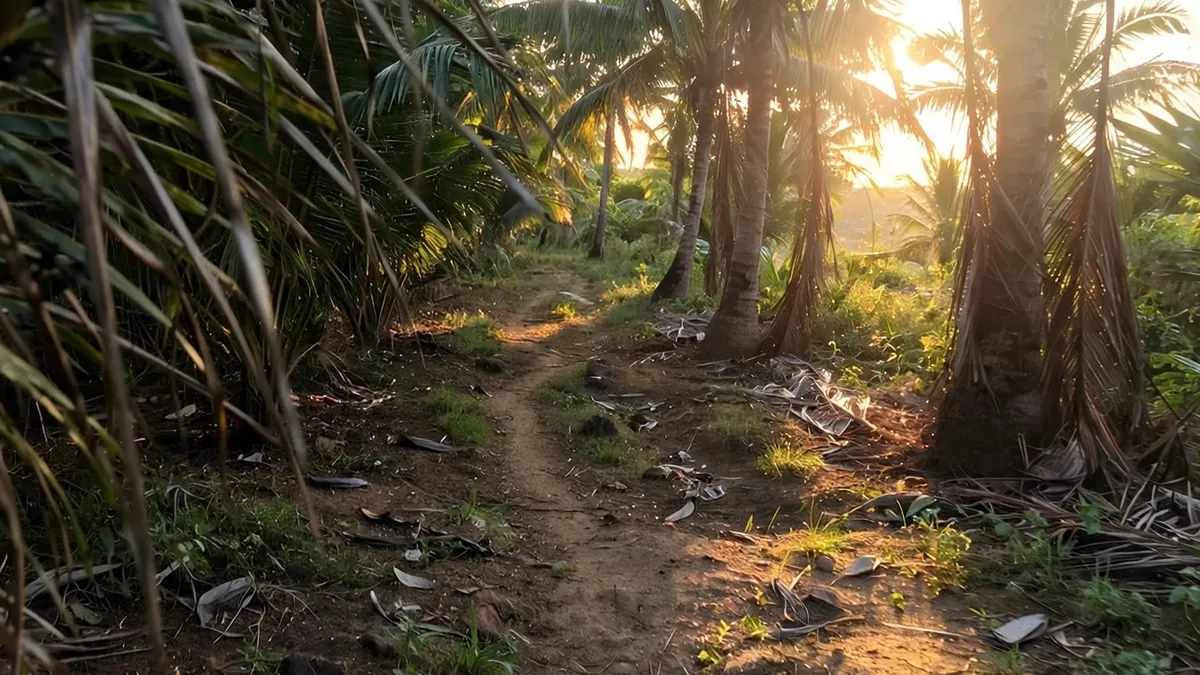

Planning a coconut plantation escape is different from planning a beach holiday. The destination is not a town or a resort strip. It is a working farm, often in a quiet rural area, with its own seasons, its own transport quirks, and a pace that rewards travellers who arrive prepared. The good news is that the planning itself is simple. There are only a few decisions that matter, and if you make them in the right order, the rest falls into place.
The order matters because a coconut plantation stay is shaped by the farm, not by you. Harvests, rain, and road conditions decide what is possible on a given week, and the best trips are the ones that work with the farm rather than against it. Choose the region first, then the season, then the stay, and only then the flights. Travellers who book the flight first often find themselves landing in the wrong season, or facing a transfer that eats half a day.
This guide walks through the nine steps that make a coconut plantation escape work, from picking a region to packing the right bag, so you arrive relaxed, spend your days well, and leave with the feeling that the grove gave you something, not just a place to sleep.
Key takeaways
- Choose the region first, then the season, then the stay, and only then the flights.
- The harvest calendar and the weather window matter more than the room rate, because both decide what your days will actually look like.
- Ask the farm direct questions before you book: what is included, how you get there, and what the grove is like in your month.
- Pack light layers and shoes you can wash, because plantation paths are uneven and the ground is often damp.
- No plantation escape is a resort holiday, and a plan that expects resort facilities from a working farm will disappoint.
What a coconut plantation escape really involves
A coconut plantation escape is a stay on a working farm, usually for three to seven nights, in a small lodge, estate, or villa set among the palms. Days are slow. You walk the grove, swim, eat food from the farm, and rest. There is no entertainment programme, no crowded beach, and no schedule beyond meals and whatever the farm offers that day.
The escape works best for travellers who want rest with a sense of place. You are not just in a tropical country, you are inside its farming life. You see how coconuts are harvested, dried, and pressed, you eat food cooked with them, and you learn something about the land without sitting through a lecture. That is the whole appeal.
It helps to know what it is not. It is not a resort, not a spa retreat, and not a base for sightseeing. If you want a busy itinerary, stay elsewhere and visit a plantation for a day. If you want quiet, shade, and good food, a plantation escape is hard to beat.
How to plan the trip, step by step
The steps below follow the order that works. Each one answers a question that the next step depends on, so skipping ahead usually means redoing the work. Start with the calendar, end with the bag, and check the inclusions before you pay for anything.
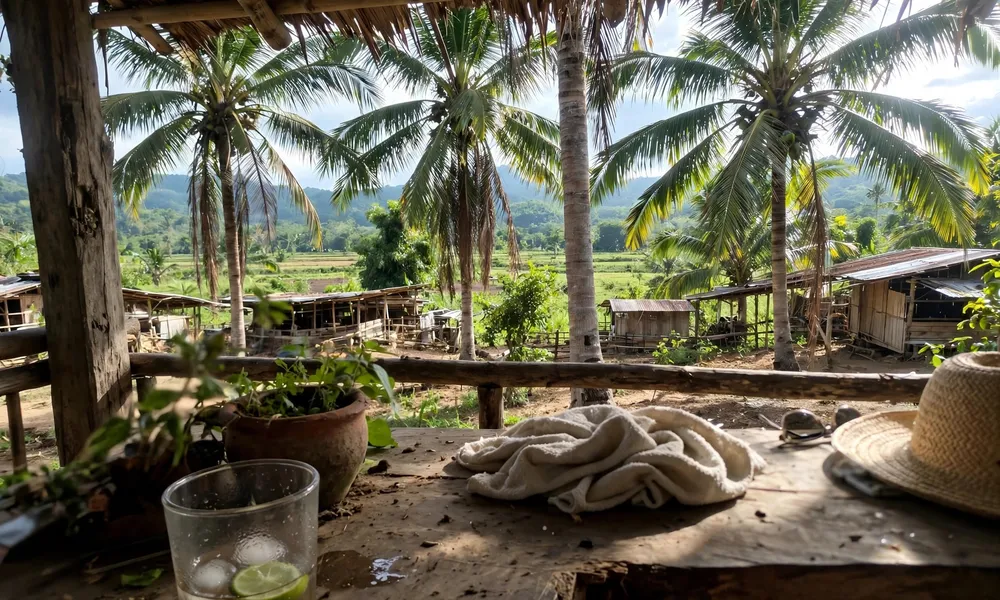
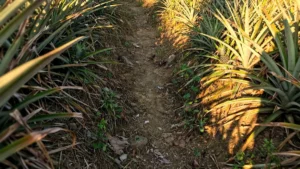
The most common mistake is booking the stay first and discovering the season afterwards. A grove in the rain is still beautiful, but the paths are muddy, the harvest slows, and the light is grey. A pineapple plantation escape follows the same logic, because every plantation crop has its own season, and the season decides the trip.
Ask questions early and directly. Plantation stays are small, and the people who run them usually answer emails themselves. A short message with three questions will tell you more than an hour of searching, and it also tells you how the stay communicates, which is a useful sign in itself.
The 9 steps to planning your coconut plantation escape
Start with the harvest calendar, not the flight calendar
What to do: Find out when coconuts are harvested in your chosen region, and when the grove is busiest, because that is when the farm is most alive. What to avoid: Do not pick dates from flight prices alone, or you may arrive when the grove is quiet and the weather is poor. Best For: Every traveller, because the calendar shapes everything else. Time Needed: One hour of research. Standout Tip: Ask the stay which month it would choose for itself, and trust that answer.
The harvest calendar is the farm’s real calendar. When the harvest is on, the grove is busy, the kitchen is full, and the staff have stories to tell. When it is off, the place is quieter, which suits some travellers and bores others.
Pick a coconut region that matches how you travel
What to do: Match the region to your style: South Asia for food and history, East Africa for coast and privacy, Southeast Asia and the Caribbean for learning and exploring. What to avoid: Do not choose a region for one photograph, or you may find the rest of the trip does not suit you. Best For: Travellers deciding between several groves. Time Needed: An evening of reading. Standout Tip: Read about the food of the region, because you will eat it every day.
Regions differ more than resorts do. Kerala and Sri Lanka are rich in food and old houses. Zanzibar and the Seychelles are quiet and coastal. Thailand and the Philippines are best for travellers who want to learn, cook, and move around.
Compare stays by what they include, not by their photos
What to do: List what each stay includes: meals, grove walks, cooking classes, transfers, and taxes, then compare the totals. What to avoid: Do not compare room rates alone, because a cheap rate with everything charged separately is often the most expensive option. Best For: Budgeting honestly before you book. Time Needed: One hour across three or four stays. Standout Tip: A stay that lists its inclusions clearly is usually a stay that runs well.
Photos are the least useful part of a plantation listing. Every grove looks beautiful in golden light. The inclusions tell you what your days will actually cost, and whether the stay is built for guests or just for photographs.
Ask the farm the questions that decide the trip
What to do: Email the stay with direct questions: what is the grove like in my month, what is included, how do I get there, and is the plantation working? What to avoid: Do not rely on booking-site descriptions alone, because they are often written by someone who has never visited. Best For: Anyone booking a small or remote stay. Time Needed: Thirty minutes to write, a day to hear back. Standout Tip: A fast, honest reply is a good sign; a slow, vague one is a warning.
Small stays are run by people, not by systems, and the way they answer tells you how they host. If they are honest about rain, mud, and early mornings, they are probably honest about everything else too.
Choose the room that looks over the fields
What to do: Ask for a room or cottage with a view over the grove or the fields, and a veranda you can sit on. What to avoid: Do not accept a room beside the kitchen, the road, or the drying yard if you want quiet mornings. Best For: Light sleepers and early risers. Time Needed: Five minutes in the booking message. Standout Tip: A veranda matters more than a large room, because you will live outside.
In a plantation stay, the room is a place to sleep and wash. The veranda is where you spend your time. A small room with a good veranda beats a large room with a view of a wall, every time.
Sort the transfer before you book anything else
What to do: Confirm the transfer from the nearest airport: the time, the cost, and whether the stay arranges it. What to avoid: Do not arrive without a plan, because rural roads and boat times do not forgive improvisation. Best For: Travellers arriving after a long flight. Time Needed: Thirty minutes of checking. Standout Tip: A two-hour transfer after a long flight is tiring, so consider arriving a day early and staying near the airport.
Transfers are the hidden cost of plantation travel. A stay that looks close on a map can be two hours by road, and a boat that runs twice a day can decide your whole arrival. A dragon fruit plantation escape has the same pattern, so the habit of checking transfers first is worth building.
Pack light layers and shoes you can wash
What to do: Pack light, breathable layers, a rain jacket, sun protection, and sturdy shoes you can wash after muddy paths. What to avoid: Do not bring heavy luggage, white clothes you care about, or shoes that cannot handle mud. Best For: Anyone walking the grove daily. Time Needed: An evening of packing. Standout Tip: A small day bag for water, sunscreen, and a book is the most useful thing you will carry.
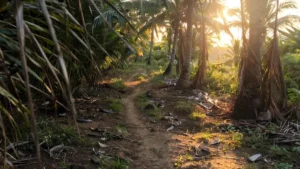
Plantation paths are uneven, damp, and sometimes muddy, even in the dry season. Light layers work because the temperature changes through the day, and washable shoes work because the ground is a farm, not a hotel floor.
Slow down on day one and learn the farm routine
What to do: Spend the first day walking the grove with staff, learning the routine, and settling into the pace. What to avoid: Do not plan a full schedule for day one, or you will spend it tired and rushed. Best For: Travellers arriving after long journeys. Time Needed: One unhurried day. Standout Tip: Ask the staff what a normal day looks like, then follow it for a day before making your own plans.
The farm has a rhythm, and the first day is for learning it. When the harvest starts, when meals are served, when the light is best for a walk: these small facts shape the whole stay, and they are easiest to learn by following along.
Eat what the farm grows and take one day out
What to do: Eat the farm’s food every day, try the coconut dishes, and take one day out to visit a nearby market, village, or coast. What to avoid: Do not eat only imported food, or stay inside the grove for the whole trip, or you will miss the place you came to see. Best For: Food lovers and curious travellers. Time Needed: One day out, the rest at the farm. Standout Tip: A market morning with the cook is the best single day out a plantation stay can offer.
The food is the farm’s story in edible form. Coconut milk, fresh fish, fruit, and rice tell you more about a place than any guidebook, and a day out to a market or a village puts the grove in its context.
What the trip usually costs
A coconut plantation escape is not a budget trip, but it is not a luxury-resort trip either. Small farm stays start around $180 a night, mid-range estates run $250 to $550, and secluded island properties can pass $1,000. Flights are the biggest variable, and transfers add a real cost, especially on islands. A week for two people, including flights, transfers, and meals, often lands between $3,000 and $7,000, depending on the region and the season.
The best way to keep the cost honest is to compare totals, not rates. A stay that includes meals, walks, and transfers is often cheaper than a lower rate that charges for each separately. A palm grove escape follows the same arithmetic, so the habit of adding up the whole trip before booking is worth keeping.
Book the stay first, then the flights, and leave a day of slack at each end. Plantation travel rewards unhurried arrivals, and a rushed transfer is the fastest way to spoil a slow trip.
The caveats that matter
Plantation stays are working farms, and the caveats are practical rather than dramatic. Rain can close a path, insects are part of the setting, and early mornings can be noisy with harvest work. None of this is a reason to avoid a plantation escape, but all of it is a reason to plan for it.
| Detail | What is known |
|---|---|
| Best trip length | Four to seven nights, enough to settle into the farm rhythm |
| Best regions | Kerala, Sri Lanka, Zanzibar, the Philippines, Thailand, Costa Rica, the Dominican Republic, the Seychelles |
| Best months | November to March for South Asia; June to October for East Africa; dry season varies by island |
| Typical cost | Around $180 to $550 a night for most stays; island estates can pass $1,000 |
| What to book first | The stay, then the flights, then the transfer |
| What to ask first | What is included, how you get there, and what the grove is like in your month |
| What to pack | Light layers, a rain jacket, sun protection, washable shoes, a small day bag |
| What it does not offer | It does not offer resort facilities, nightlife, or a busy activity programme |
Check travel insurance that covers rural stays and boat transfers, because some policies exclude them. And check the visa and health requirements for the exact country, not just the region, because they change more often than guidebooks suggest.
Checklist: planning a coconut plantation escape honestly
Use these checks before you book, and again before you travel.
- Check the harvest calendar: pick dates when the grove is working and the weather is dry for that exact region.
- Check the inclusions: list meals, walks, classes, and transfers, and compare totals, not room rates.
- Check the transfer: confirm the time, cost, and booking from the nearest airport before you pay for flights.
- Check the room: ask for a cottage with a veranda over the grove, away from the kitchen and the road.
- Check the packing: light layers, a rain jacket, sun protection, and shoes you can wash after muddy paths.
- Check the pace: plan one slow day first, one day out, and nothing else fixed, so the farm sets the rhythm.
Frequently asked questions
How long should a coconut plantation escape be?
Four to seven nights is the sweet spot. Shorter stays do not give you time to settle into the farm rhythm, and longer stays suit only travellers who are happy with very little to do.
Do I need a car at a coconut plantation?
Usually not at the stay itself, because the grove is walkable, but a car or a driver is useful for day trips. Ask the stay whether it arranges transport, or whether you should hire a driver for a day.
Is a coconut plantation escape good for children?
Often yes, especially at villa stays, but working farms have uneven paths, open water, and early-morning work. Ask the stay directly about safety and suitability for your children’s ages before booking.
What should I eat at a coconut plantation?
Eat what the farm grows: coconut milk curries, fresh fish, fruit, and rice dishes. The cooking classes are worth doing, because they teach you how the farm’s main crop becomes the meal.
Can I visit a coconut plantation for a day instead?
Yes, many plantations offer day visits with a grove walk and lunch. It is a good way to try the experience, but it does not replace the slow rhythm of staying overnight, which is where the escape really works.
When should I book a coconut plantation escape?
Book the stay three to six months ahead for the dry season, because small stays fill quickly. Flights can wait until the stay is confirmed, so you do not end up flying in the wrong season.
The bottom line
A coconut plantation escape works when you plan it in the right order: region first, season second, stay third, and flights last. The harvest calendar and the weather window decide what your days look like, the inclusions decide what the trip really costs, and the transfer decides how you arrive. Get those three right and the rest is simple.
Choose the region that matches how you travel, ask the farm direct questions, pack light, and give the grove a slow first day. A plantation is a working farm, not a resort, and the travellers who enjoy it most are the ones who arrive ready for that.