
A ponytail is the style most people reach for when they have no time, and it is also the style that punishes rushed hands the fastest. A ponytail gathered in a hurry shows a lumpy crown, a crooked line, and a tail that goes flat by lunch. Add hair oil to the rush, and the crown goes greasy too, because oil put in the wrong place has nowhere to hide once the hair is pulled back.
The fix is not more effort. It is a short, calm order of steps: decide the height, detangle, oil the tail, gather with both hands, check the line, and then leave it alone. Each step takes seconds, and each one prevents a problem that takes much longer to fix.
This guide walks through those nine steps for a ponytail in 2027, with the oil amounts, the tie choices, and the small checks that make the difference between a ponytail that looks thrown together and one that looks deliberate.
Key takeaways
- Decide the ponytail height before you touch the hair, because height decides where the oil goes and how the crown is smoothed.
- Oil the tail, not the roots: two to four drops through the lengths, with the crown and the hair at the tie left almost dry.
- Gather with both hands and check the line in a mirror before you fasten the tie, because a crooked ponytail cannot be fixed once it is tied.
- Fasten the tie snugly, not tightly, and move it slightly each day, so the same spot does not break.
- No routine fixes a ponytail that is too tight, and oil does not repair split ends or undo breakage from a rough tie.
What a ponytail needs from hair oil
A ponytail needs oil for three jobs, and only three. The first is shine on the tail, which is the part of the style everyone sees. The second is smoothness on the surface, so the hair looks like one clean line from the crown to the ends instead of a fuzzy outline. The third is protection for the ends, which are the oldest and driest part of the hair and the part most likely to split.
What a ponytail does not need is oil at the roots. The crown of a ponytail is pulled flat against the head, so any oil there shows as grease within an hour, and it also makes the tie slip.
The other thing a ponytail needs is a light hand. A ponytail uses far less oil than loose hair, because the hair is gathered into one length and the oil cannot spread out. Two drops is enough for most hair, three or four for thick hair, and one for very fine hair.
How to prepare: oil, tie, and tools
Start with dry, clean hair. Damp hair is more fragile, and a ponytail pulled tight on damp hair breaks more easily than one pulled on dry hair. If you have just washed your hair, let it dry first, or at least until it is only slightly damp at the roots. The oil goes on dry hair, where you can see exactly how much shine it adds.

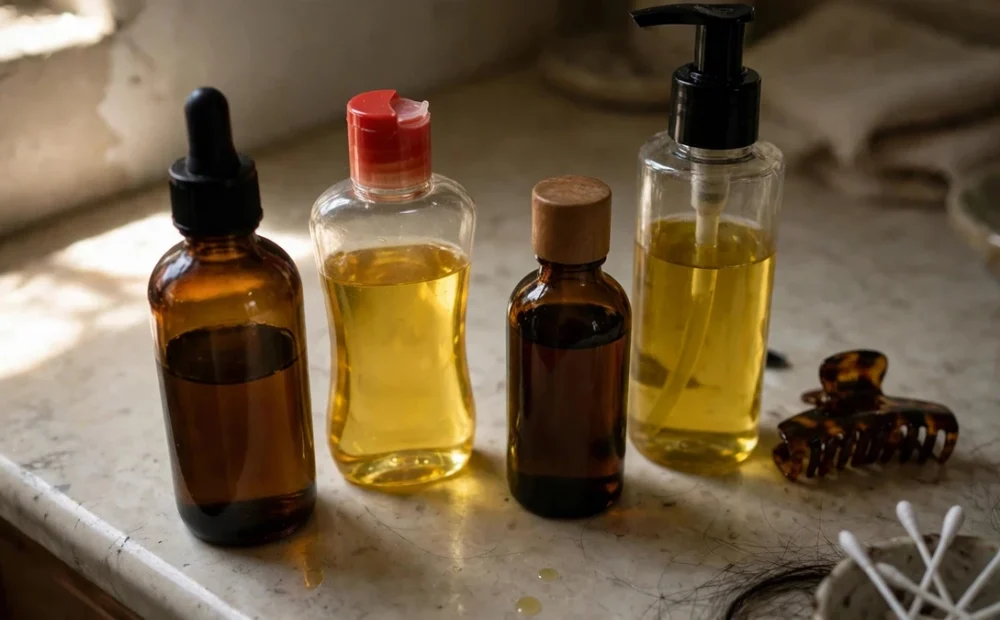
Choose your oil by your hair type, not by the bottle. Fine hair needs a light argan or moringa oil. Normal hair suits a classic argan blend. Thick or dry hair can take a richer oil on the ends. Put the bottle, a wide-tooth comb, a soft fabric-covered tie, and a clean toothbrush or small smoothing brush on the vanity before you start, so you are not hunting for them with oiled hands.
Choose the tie with care, because the tie does as much damage as the oil does good. A soft, fabric-covered tie with no metal join is the kindest choice. Our guide to oiling a top knot explains the same tie test, because a knot and a ponytail both depend on a tie that holds without pulling.
The 9 steps to an oiled ponytail
Pick the ponytail height first, because it decides where the oil goes
What to do: Stand in front of a mirror and decide: high at the crown, mid at the back of the head, or low at the nape. A high ponytail needs the crown smoothed flat and the oil kept well below the tie. A low ponytail is more forgiving, and the oil can go a little higher up the tail.
What to avoid: Do not gather the hair and then decide. A ponytail gathered at the wrong height has to be taken down and started again, and the second attempt is always messier than the first. Best for: Every ponytail, and especially a high one. Time needed: Ten seconds. Standout tip: Tilt your chin up slightly for a high ponytail, so the crown stays smooth as you gather.
Work knots out with a wide-tooth comb, ends first, before you gather anything
What to do: Comb from the ends upward in short strokes, lifting each knot out gently, until the comb runs through the whole length without catching.
What to avoid: Do not drag a brush from the roots down through a knot. That pulls the knot tighter and breaks the hair around it, and the breakage shows at the crown once the hair is gathered. Best for: Long, thick, or wavy hair that tangles easily. Time needed: One to two minutes. Standout tip: Hold the section above the knot while you comb, so the pull never reaches the roots.
Warm two drops of oil and smooth them through the tail, not the roots
What to do: Put two drops of oil on your palms, rub them together to warm the oil, then smooth your hands down the lengths from the middle of the hair to the ends, twice.
What to avoid: Do not pour oil onto the crown or rub it into the roots. The roots of a ponytail need almost no oil, and oil at the roots makes the style slide and the crown look greasy. Best for: All hair types; use one drop for fine hair, three or four for thick hair. Time needed: Thirty seconds. Standout tip: If your palms feel dry after the first pass, the oil has gone where it should; if they feel slick, you used too much.
Gather the hair with both hands, then check the line in a mirror
What to do: Scoop the hair back with both hands, one from each side, and gather it at the height you chose. Look in the mirror from the front and the side, and smooth any bumps with your palms before you tie.
What to avoid: Do not gather with one hand while the other holds the tie. One-handed gathering pulls the hair unevenly and leaves a lumpy crown that no amount of smoothing will fix afterwards. Best for: High and mid ponytails, where the line matters most. Time needed: Twenty seconds. Standout tip: A hand mirror held behind you shows the back line, which is the part everyone else sees.
Fasten the tie twice around, snug but not tight
What to do: Hold the gathered hair in one hand, loop the tie around it twice, and pull just enough that the ponytail stays put when you shake your head gently.
What to avoid: Do not loop the tie a third time to make it feel secure. A third loop pulls the hair tighter at one point and leaves a crease that lasts all day, and it is the main cause of breakage at the tie. Best for: All ponytails, and especially daily ones. Time needed: Ten seconds. Standout tip: If the ponytail slips with two loops, the tie is worn out; replace it instead of pulling harder.
Lift the tail at the roots for a little volume, without pulling
What to do: Hold the tail in one hand and use the other to gently lift the hair just above the tie, pushing it upward a few millimetres so the crown has a soft curve instead of a flat pull.
What to avoid: Do not pull the tail upward hard, or tug at the hairline. A hard pull breaks hairs at the front and gives you a headache by lunchtime. Best for: Flat or fine hair that needs a little lift. Time needed: Ten seconds. Standout tip: Lift from underneath the tie, not from the top, so the surface stays smooth.
Cover the elastic with a silk scarf or a ribbon, not a strand of hair
What to do: Wrap a narrow silk scarf or a ribbon around the tie twice, knot it underneath, and let the ends fall along the tail.
What to avoid: Do not wrap a strand of your own hair around the tie and pin it, unless the hair is dry and the pin is smooth. A wrapped strand pulls at the hairline and comes loose within an hour on most hair. Best for: A ponytail you want to look deliberate rather than rushed. Time needed: Thirty seconds. Standout tip: Match the scarf to your top, not your hair, so the tie becomes part of the outfit.
Tame the baby hairs with one drop, brushed flat with a clean toothbrush
What to do: Put one small drop of oil on a clean, dry toothbrush and brush the baby hairs at the hairline flat, in the direction they naturally grow.
What to avoid: Do not use your fingers to press the baby hairs down with oil. Fingers put too much oil in one spot, and the hairline goes greasy while the baby hairs spring back up within the hour. Best for: Fine baby hairs and a sleek ponytail finish. Time needed: Twenty seconds. Standout tip: Keep a toothbrush just for this job, and wash it weekly so it never carries old product.
Undo the ponytail by unwinding the tie, then brush the oil through
What to do: At night, hold the tail in one hand and unwind the tie loop by loop with the other, until it slides off without pulling. Then brush the oil through the lengths with a soft brush.
What to avoid: Do not pull the tie out by dragging it down the tail. Dragging it down catches on the hair and breaks the ends, and it leaves the crease in place instead of releasing it. Best for: Every ponytail, and especially one worn all day. Time needed: Thirty seconds. Standout tip: Brushing the oil through after taking the style down spreads it evenly, so the ends stay soft overnight.
Which ponytail height suits your hair
A high ponytail suits thick and wavy hair best, because the volume at the crown holds the shape and the tail has enough weight to swing. Fine hair can wear a high ponytail too, but it needs a light oil and a fabric tie with good grip, or it slides down within the hour.
A mid ponytail, at the back of the head, suits almost everyone. It is the easiest height to gather evenly, it puts the least pull on the hairline, and it works with every oil weight. The guide to oiling milkmaid braids makes a similar point about defaults, because a style you wear daily should be the gentlest one, not the most dramatic.
A low ponytail, at the nape, suits fine hair and formal occasions. It puts almost no pull on the hairline, it hides a little extra oil better than a high ponytail, and it pairs well with a scarf or ribbon at the tie. It is also the best choice for hair that is growing out, because it does not demand length at the crown the way a high ponytail does.
The caveats that matter
A ponytail is a gentle style only if it is worn gently. A tight ponytail worn in the same spot every day causes breakage at the tie and thinning at the hairline, and no oil prevents that.
| Detail | What is known |
|---|---|
| Best hair for oiling | Dry, clean hair; damp hair breaks more easily when gathered |
| How much oil to use | Two drops for most hair; one for fine hair, three or four for thick hair |
| Where the oil goes | Mid-lengths and ends; crown and tie area left almost dry |
| How tight the tie should be | Snug enough to hold, loose enough that two loops are enough |
| Best tie to use | A soft, fabric-covered tie with no metal join; a scrunchie for a low ponytail |
| How to avoid a crease | Do not loop the tie a third time, and do not sleep in a ponytail |
| How to take it down | Unwind the tie loop by loop; never drag it down the tail |
| What oil does not do | It does not repair split ends or stop breakage from a tight tie |
If your scalp is sore, itchy, or flaking, do not wear a tight ponytail until it settles, and keep oil off the scalp entirely. The space buns oiling guide uses the same rule for the same reason.
Checklist: an oiled ponytail, done properly
Use these checks before you tie the ponytail, and again at lunchtime.
- Check the height first: high, mid or low, decided before you gather the hair.
- Check the detangling: the comb runs through the whole length without catching.
- Check the oil amount: two drops warmed in your palms, tail only, crown left dry.
- Check the line in a mirror: smooth from the front and the side before you tie.
- Check the tie: two loops, snug not tight, no metal join, no deep dent in the hair.
- Check the crown at lunchtime: if it looks greasy, use one drop less tomorrow, not more oil.
Frequently asked questions
How high should I wear a ponytail with oil in it?
As high as your hair allows, but no higher than your crown. A high ponytail needs the crown smoothed flat and the oil kept below the tie, so it suits thick hair best. A mid ponytail is the safest default for daily wear, and a low ponytail is the kindest choice for fine hair.
Can I oil my hair the night before a ponytail?
Yes, and for dry hair it works well. Oil the tail lightly before bed, braid it loosely or leave it down, and gather it in the morning.
Why does my ponytail look greasy at the crown by noon?
Almost always because oil reached the roots, either from your hands or from the oil travelling up the hair during the day. Use one drop less, keep your hands off the crown, and oil the tail only. If the crown is still greasy, your oil is too heavy for your hair type.
How do I hide the elastic without pulling out a strand?
Wrap a narrow silk scarf or a ribbon around the tie twice and knot it underneath. It hides the elastic completely, adds nothing to the hairline, and comes off without pulling.
Can I wear a ponytail to the gym with oil in it?
Yes, but keep it light. Use one drop on the tail only, tie it low or mid so it does not bounce against your neck, and wash the oil out afterwards. Sweat and oil together can clog the hairline, so do not leave a gym ponytail in all day.
How do I take a ponytail down without a crease?
Unwind the tie loop by loop instead of dragging it out, and do not sleep in a ponytail. A faint crease usually fades if you mist the hair lightly with water and brush it through, but a deep crease from a thin elastic can last until the next wash.
The bottom line
An oiled ponytail is a short routine done in the right order: height first, detangle, oil the tail, gather with both hands, check the line, tie it snugly, and leave it alone. The oil is the smallest part of it. The order is what makes the style look deliberate instead of rushed.
Try it for a week with the same oil and the same tie, and judge it at the end of the day. If the ponytail still swings, the crown still looks clean, and the tail still looks smooth at 6pm, the routine is working, and you can stop thinking about it.