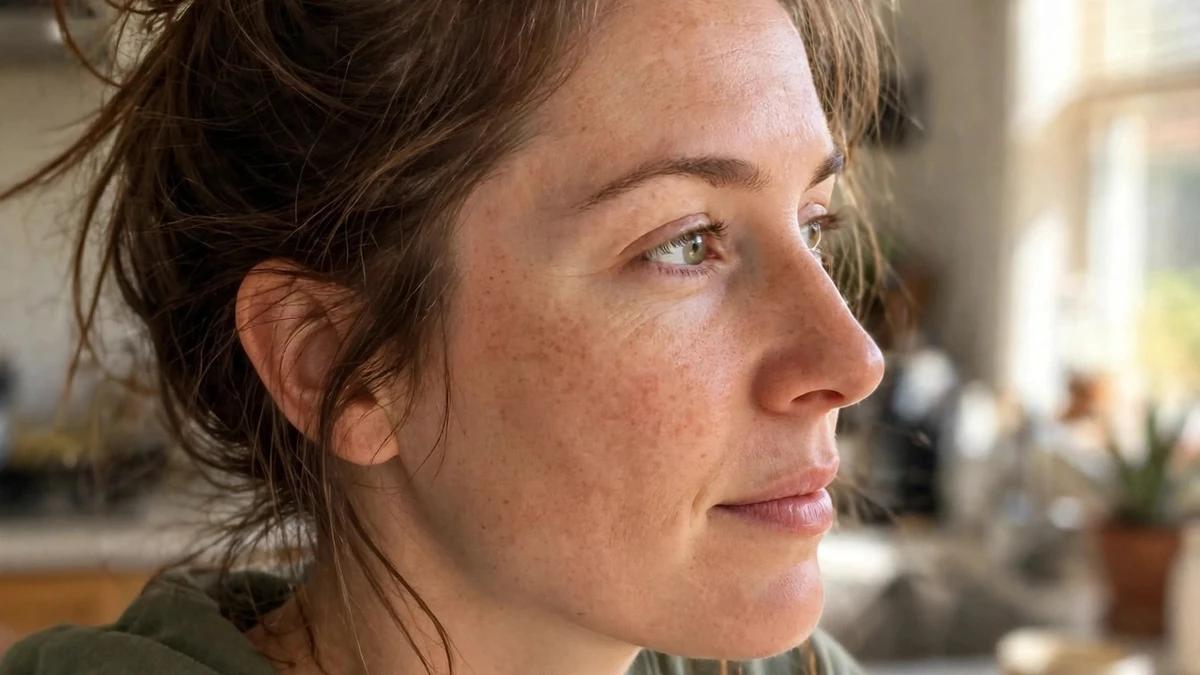
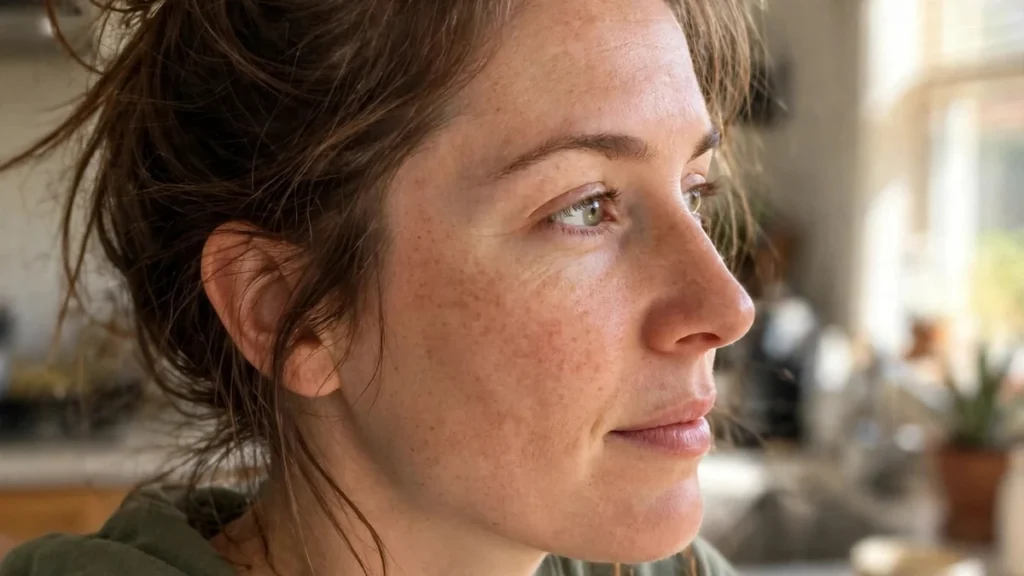
A messy bun is the style everyone assumes takes thirty seconds, and the style that most often takes thirty minutes and still looks wrong. The loop collapses, the tail disappears, the bun slides to one side, or the whole thing looks less like an effortless updo and more like a hair tie that gave up. Hair oil is part of the answer, but only when it is used in the right order and in the right place.
The key idea is simple: a messy bun is built on texture, not on smoothness. Freshly washed, perfectly smooth hair is the worst starting point, because it has nothing for the loop to hold onto. Second-day hair, with its natural bend and a little grit at the roots, is the best starting point. Oil goes on the lengths, where it smooths and protects, and stays away from the roots, where it would kill the grip.
What follows is a nine-step method that works on most hair types, with the adjustments for fine, thick, and curly hair called out where they matter. Our guide to using hair oil on a top knot covers the neater end of the bun family, if you want to compare the two approaches.
Key takeaways
- Start on second-day hair, not freshly washed hair: the natural texture is what holds the loop up.
- Oil the mid-lengths and ends only. Keep the roots and the crown clean, or the bun will go flat and slide.
- Twist once, loosely, and fold the hair into a low loop. A tight twist makes a neat bun, not a messy one.
- Let the tail stick out of the loop on purpose, and pin only at the base, underneath, where nobody sees.
- No amount of oil can save a bun that is pinned too tightly or tied too loosely, and a bun that keeps falling is usually a pin problem, not an oil problem.
What a messy bun actually is
A messy bun is a loose loop of hair, pinned at the base, with the tail left sticking out and a few soft pieces pulled loose around the face. It sits anywhere from the crown to the nape, and the exact height changes the look: high for a casual daytime bun, low for something softer and more relaxed. What makes it messy is not carelessness. It is the deliberate looseness of the loop, the uneven edges, and the softness around the hairline.
That looseness is also what makes it hard. A neat bun works because it is tight: the tension holds it up. A messy bun has to hold without tension, which means it needs texture, grip, and pins placed in the right spots. Hair oil helps with the texture part. It smooths the cuticle so the hair twists without snagging, it keeps the ends from splitting apart inside the loop, and it gives the finished bun a soft sheen.
It helps to know the difference between a messy bun and its cousins before you start. A chignon is low, smooth, and folded at the nape. A messy bun is the only one that is meant to look a little undone, and the method below is built for that specific shape.
How to get the grip right before you oil
Grip comes before oil, not after. If your hair is freshly washed, it is too slippery to hold a loose loop, so give the roots some texture first. A small amount of dry shampoo at the crown, worked in with your fingertips, is the simplest way. If you do not use dry shampoo, a light backcomb at the roots, just two or three strokes with a fine-tooth comb, will do the same job.
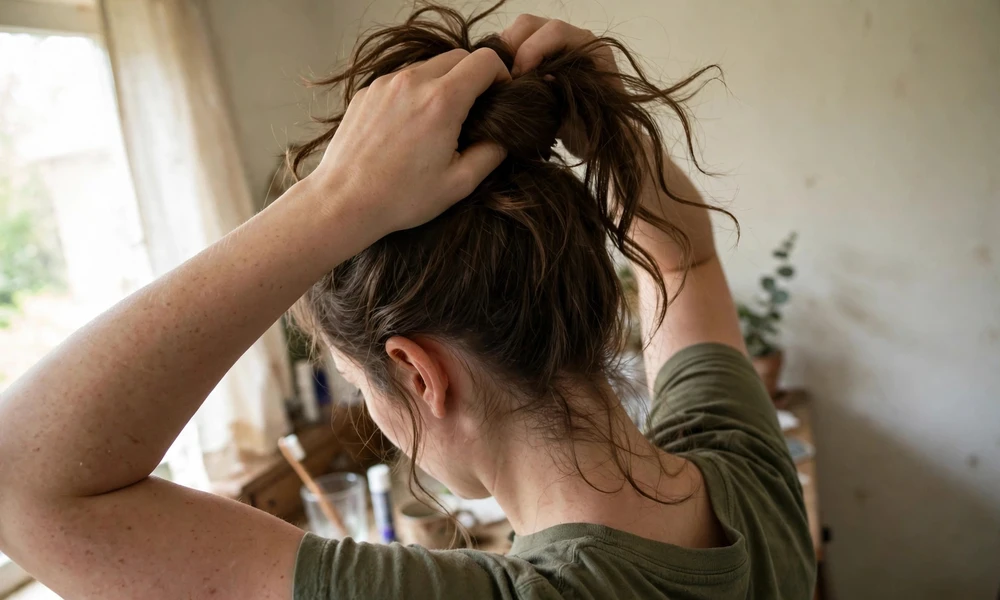
Next, check the condition of your ends. If they are dry or split, they will poke out of the loop in every direction and make the bun look frizzy rather than textured. One drop of oil on the ends, smoothed through with your palms, fixes that before you start. This is the only oil that goes on before gathering, and it goes on the last few inches only. Our guide to using hair oil on space buns makes the same point about ends first, because the same dry ends ruin both styles.
Finally, gather your tools before you start: one hair tie, two to four bobby pins, and the oil. Brushing smooths out exactly the texture you just created at the roots, and a brushed messy bun is just a neat bun that failed.
How to use hair oil on a messy bun in 9 steps
Start on second-day hair, not freshly washed hair
What to do: Wait until the day after washing, when the hair has natural bend and a little grit at the roots. What to avoid: Starting on squeaky-clean hair, which is too slippery for a loose loop. Best for: Everyone, and especially fine, straight hair. Time needed: No extra time, it is a timing choice. Standout tip: If you must use freshly washed hair, add dry shampoo at the roots first.
Second-day hair is the single biggest advantage you can give yourself. The natural oils and the slight bend from sleeping on it create grip that no product can fully replace.
Rough up the roots with your fingers before any oil touches them
What to do: Massage the roots with your fingertips for ten seconds, lifting the hair at the crown. What to avoid: Brushing the roots smooth, or applying oil anywhere near the crown. Best for: Fine and straight hair that goes flat easily. Time needed: About 10 seconds. Standout tip: A little dry shampoo at the roots makes this step twice as effective.
This step creates the texture the loop will hold onto. It feels like doing nothing, but it is what keeps the bun up for hours instead of minutes.
Oil the mid-lengths and ends only, and keep the roots bare
What to do: Warm one to three drops between your palms and smooth them through the mid-lengths and ends. What to avoid: Letting any oil touch the roots, the crown, or the hairline. Best for: All hair types, with the amount adjusted to thickness. Time needed: About 20 seconds. Standout tip: If your palms still feel oily, you used too much; wipe the excess on the ends, not the roots.
The split is the whole method: oil where the hair needs softness, nothing where it needs grip. One drop for fine hair, two for medium, three for thick.
Gather the hair loosely with your fingers, never a brush
What to do: Scoop the hair up with both hands, fingers spread, and let the texture stay uneven. What to avoid: Brushing the hair back, which smooths out the grip you just created. Best for: Wavy and curly hair, which loses its pattern to a brush. Time needed: About 10 seconds. Standout tip: Gather at the height you want the bun to sit, because moving it later pulls the loop apart.
Your fingers are the right tool here because they leave the hair uneven in a good way. A brush makes everything uniform, and uniform is the opposite of messy.
Twist once, loosely, and fold it into a low loop
What to do: Give the gathered hair a single loose twist, then fold it into a loop and hold the base. What to avoid: Twisting two or three times, which winds the hair tight and turns the loop into a knot. Best for: Medium to long hair; short hair may need a smaller loop. Time needed: About 15 seconds. Standout tip: If the twist feels tight, you have gone too far; shake it out and start the twist again.
One loose twist is the difference between a messy bun and a top knot. It leaves air inside the loop, and that air is what makes the bun look full and soft.
Let the tail stick out of the loop on purpose
What to do: Leave the last few inches of the tail sticking out of the loop, pointing down or to the side. What to avoid: Tucking the tail in neatly, which turns the style into a chignon. Best for: Anyone who wants the bun to look deliberately undone. Time needed: No extra time, it is a choice about the tail. Standout tip: Oil the tail lightly so it looks soft, not dry and wispy.
The sticking-out tail is the signature of a messy bun. It is what tells the eye the style is relaxed on purpose, rather than a neat bun coming undone.
Pin only at the base, underneath the loop
What to do: Slide two to four pins into the base of the loop, underneath, where they catch the hair against the head. What to avoid: Pinning through the top of the loop, which flattens it, or pinning where oil has made the hair slippery. Best for: All hair types; thick hair may need one extra pin. Time needed: About 30 seconds. Standout tip: Cross two pins over each other at the base for a hold that lasts all day.
Pins at the base do the holding, and pins anywhere else do the flattening. Keep them hidden underneath and the loop keeps its shape.
Pull the loop apart gently to make it look fuller
What to do: Pinch small sections of the loop and pull them outward, a millimetre at a time, until the bun looks full. What to avoid: Pulling hard or pulling the loop apart from the top, which loosens the pins. Best for: Fine and medium hair that needs more volume. Time needed: About 20 seconds. Standout tip: Pull from the sides of the loop, not the top, so the base stays secure.
This is the step that makes the bun look intentionally messy. Small, gentle pulls widen the loop without undoing it, and the result looks full rather than flat.
Take it down by unpinning first, then shaking it out
What to do: Remove every pin first, then slide the tie off and shake the hair out gently. What to avoid: Pulling the tie through the loop while the pins are still in, which tangles and breaks hair. Best for: Everyone, and especially anyone with fine or fragile hair. Time needed: About 20 seconds. Standout tip: Smooth one more drop of oil through the ends after taking it down, for an easy second-day wave.
Taking a bun down badly causes more breakage than wearing it. Unpin first, then unwind, and the oil you applied earlier will help the hair separate without snagging.
Which oil weight suits your hair
Fine hair should stay with the lightest oils: a single drop of a light oil such as Odele or Act+Acre, smoothed through the ends only. Fine hair shows excess oil faster than any other type, and a messy bun on fine hair depends on root texture more than on oil.
Medium hair has the widest choice. A light to medium oil works well, and the decision is about finish rather than weight. If you want flyaway control, a silk-protein oil is the practical pick. If you want even coverage, a mist sprayed into the palms works well.
Thick, coarse, or curly hair needs a medium oil with more body, so the loop has something to hold onto and the ends stay soft. Use two to three drops, work them through before gathering, and let the oil clump the curls before they go into the loop. Our guide to using hair oil on a ponytail covers the same weight question for a tighter style, if you switch between the two.
The caveats that matter
Hair oil will not hold a messy bun up by itself. The hold comes from the texture at the roots, the loose twist, and the pins at the base. Oil is the finishing layer, not the structure. If your bun keeps falling out, check the pins first: are they at the base, underneath the loop, and crossed over each other?
| Detail | What is known |
|---|---|
| Best starting hair | Second-day hair, which has natural texture and grip that fresh hair lacks |
| Where the oil goes | Mid-lengths and ends only; keep the roots and crown clean |
| How much oil to use | One drop for fine hair, two for medium, three for thick hair |
| How many twists | One loose twist; two or three twists turn the loop into a tight knot |
| Where the pins go | At the base, underneath the loop, crossed over each other for hold |
| What to avoid | Brushing the hair back, oiling the roots, and pinning through the top of the loop |
| Who should use less oil | Fine, straight, or oily hair; use a light oil and half the usual amount |
| What oil does not do | It does not hold a bun up alone, and it does not fix a bun pinned in the wrong place |
If your scalp is irritated or you are using a medicated scalp treatment, keep oil away from the scalp and use it on the lengths only.
Checklist: using hair oil on a messy bun honestly
Use these checks before you start, and again after an hour of wear.
- Check the hair: second-day hair holds best; add dry shampoo at the roots if the hair is freshly washed.
- Check the oil: one to three drops, warmed between the palms, on the mid-lengths and ends only.
- Check the gather: use your fingers, not a brush, so the root texture stays intact.
- Check the twist: one loose twist, then fold into a loop; if it feels tight, start again.
- Check the pins: two to four pins at the base, underneath the loop, crossed for hold.
- Check the finish: pull the loop apart gently from the sides, let the tail stick out, and leave the pins hidden.
Frequently asked questions
How much hair oil should I use in a messy bun?
Most hair needs between one and three drops. Use a single drop if your hair is fine, one or two for medium hair, and up to three for thick hair. Warm the oil between your palms first and smooth it through the mid-lengths and ends. If the bun looks greasy, you used too much.
Can hair oil loosen my messy bun during the day?
Yes, if it travels onto the roots, the tie, or the pins. Leave the crown untouched, keep the product on the lengths, and set your pins low at the base, clear of any oiled hair. Applied that way, a light oil supports the style instead of undoing it.
Can I do a messy bun on fine, slippery hair with oil?
Yes, but start on second-day hair and add dry shampoo at the roots first. Use a single drop of a light oil on the ends only, and use three pins at the base instead of two. Fine hair needs the grip from the roots more than it needs oil.
Should I oil my hair before or after making the bun?
Before, on the lengths. Oil the mid-lengths and ends while the hair is still down, then gather, twist, and pin. Oiling after the bun is made only coats the outside and makes the pins slide.
How do I keep the bun looking messy, not just undone?
The difference is in the finishing steps: pull the loop apart gently from the sides, let the tail stick out, and pull out two soft pieces around the face. A bun that is only loose looks undone; a bun that is loosened deliberately looks messy on purpose.
How do I take a messy bun down without tangles?
Remove every pin first, then slide the tie off and shake the hair out. Never pull the tie through the loop while the pins are still in. Smooth one more drop of oil through the ends afterwards, and the hair will fall into a soft wave.
The bottom line
A good messy bun is built on texture, not on smoothness. Start on second-day hair, rough up the roots with your fingers, oil the mid-lengths and ends only, gather with your hands, twist once loosely, let the tail stick out, and pin at the base underneath the loop. Those seven moves are the whole method, and they work on most hair types with only the oil amount adjusted.
Choose a light to medium oil, use one to three drops, and let the texture do the holding. That is the honest way to get a messy bun that looks undone on purpose, holds all day, and comes down without a tangle.