What Is a Lotus Perfume 2027
A lotus perfume smells like clean water. It is the pale, powdery freshness at the heart of many aquatic florals, a note that suggests a flower floating on still water rather than a flower cut and put in a vase. It is light, slightly sweet, faintly green, and it fades sooner than the woods and musks around it, which is why perfumers use it to open a perfume up rather than to anchor it down.
Most people meet lotus without knowing it. It is the watery lift in a fresh designer floral, the clean powder in a white musk, the quiet sweetness behind a cucumber or water lily accord. The word itself carries a calm, almost sacred weight, but the material in the bottle is stranger than the symbol, because the lotus flower gives up almost no oil at all.
This guide explains what lotus is, which plant the name actually covers, how to read it on a pyramid, and which perfumes show it best. It also covers the mistakes buyers make most often, from expecting a strong floral to confusing lotus with lily, and from judging a heart note by its first minute on a blotter. Our lily explainer follows the same plain-language approach, and it works here too.
Key takeaways
- Lotus in perfumery is usually a rebuilt accord, not a distilled oil, because the flower gives up almost no scented oil of its own.
- Two different plants share the name: the sacred lotus, Nelumbo nucifera, and the blue lotus, Nymphaea caerulea, which is really a water lily.
- It smells clean, watery, and powdery, faintly sweet and slightly green, and it usually sits in the heart of a perfume.
- It travelled from ancient Egyptian oils and Asian incense into modern designer florals, where it softens sharper aquatics.
- A pyramid that says only “lotus” rarely tells you which lotus, or whether the note is natural at all, so read the rest of the pyramid before you buy.
What lotus actually smells like
On a blotter, lotus smells like water with a flower in it. There is a clean, almost mineral freshness first, then a soft powdery sweetness, then a faint green edge, like a stem snapped under water. It is not a loud or fleshy smell. First it smells cool and pale, close to cucumber and white tea, then it settles into something softer and rounder, nearer water lily and white musk than any rose or jasmine.
The smell changes with the accord. A white lotus accord is the cleanest of the three, pale and powdery with almost no sweetness. A pink lotus accord is warmer and rounder, with a soft floral sweetness on top. A blue lotus accord is darker and greener, with a watery depth that leans towards water lily and wet leaves. A perfume that uses one smells very different from a perfume that uses another, which is why two lotus perfumes can smell like different notes entirely.
In a blend, lotus acts like a window. It opens a heavy floral up, gives a sharp aquatic room to breathe, and softens a musk that would otherwise feel flat. It rarely carries a perfume on its own. Spray it, enjoy the clean opening, and expect the watery freshness to lift the middle hours while the woods and musks underneath do the lasting.
Concentration changes the note too. An eau de toilette lets the clean, watery opening lead, while an eau de parfum pushes the powdery sweetness forward, so the same flower can smell almost like two different materials depending on the bottle you pick up.
How to spot lotus on a pyramid
A pyramid is three layers of notes, and lotus almost always lands in the middle one. When you see it there, expect a fresh, powdery middle that lasts a few hours and then hands over to the base. When you see it in the top, expect a brief watery flash that fades fast.

The name changes from house to house. “Lotus” on one bottle, “white lotus” on another, “blue lotus” on a third, and “lotus flower” on a fourth may all name the same rebuilt accord, or they may name three different ones. What matters is the word itself: a pyramid that says only “aquatic notes” or “watery florals” is not naming lotus at all, and neither is one that lists water lily without the lotus. The same plain reading shaped our fig explainer, and it works here too.
Watch the company the note keeps. Lotus with cucumber and water lily is cool and green, lotus with white musk and sandalwood is soft and powdery, lotus with fig and green tea is fresh and leafy.
9 facts about lotus
Sacred lotus, blue lotus: two plants, one name
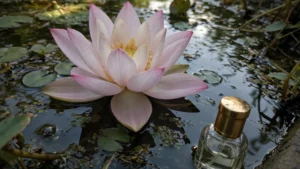
What it shows: The sacred lotus is Nelumbo nucifera, the pink and white flower of Asian ponds, while the blue lotus is Nymphaea caerulea, a water lily from the Nile. They belong to different plant families, they grow in different waters, and they smell different, yet perfumery calls them both lotus.
What to consider: Because the name covers two plants, a pyramid that says only “lotus” does not tell you which one you are smelling. The sacred lotus leans pale and powdery, the blue lotus leans green and watery, and most bottles never say which they mean.
Distilling lotus yields next to nothing
What it shows: A lotus flower contains almost no scented oil, and steam-distilling it yields next to nothing. The lotus note in almost every perfume is therefore a rebuilt accord, assembled from aldehydes, white-floral materials, and green notes to imitate the flower’s clean, watery smell.
What to consider: A rebuilt accord is not a flaw. Nearly every aquatic floral is built this way, and the best lotus accords smell closer to the living flower than any extract could. But a buyer who wants a natural lotus oil is chasing something that barely exists.
Its smell is clean, watery, and powdery
What it shows: The lotus accord smells of clean water first, then soft powder, then a faint green stem. It is pale and cool rather than warm and fleshy, which is why it reads as fresh and quiet next to roses, jasmines, and tuberoses.
What to consider: The paleness is the point, and it is also the risk. Anyone who expects a big floral will find lotus thin and distant, while anyone who likes quiet perfumes will find it exactly right.
The heart is where lotus does its work
What it shows: Lotus is a heart note in most perfumes, sitting between the bright top and the lasting base. It softens sharp citruses, cools warm florals, and gives clean musks a floral lift in the middle hours of wear.
What to consider: A heart note is judged in the middle hours, not the first minute. Spray it, wait an hour, and judge the lotus by how the clean wateriness holds up once the top notes have gone.
Blue lotus scented ancient Egyptian oils
What it shows: The blue lotus grew along the Nile, and ancient Egyptians steeped its flowers in oils and ointments for skin and ceremony. It appears in tomb paintings and temple carvings, and it was one of the earliest flowers ever used to scent the body.
What to consider: The ancient use was an infused oil, not a distilled perfume, and the flower’s role was ritual as much as scent. The modern blue lotus accord borrows the name and the watery character, not the ancient recipe.
The sacred lotus is a symbol of purity
What it shows: In Asia the sacred lotus stands for purity, because it rises clean from muddy water and opens unstained each morning. It is carved into temples, painted in scrolls, and burned as incense, and its meaning has followed it into perfumery.
What to consider: The symbolism is why the note feels calm and clean to so many people. A perfume that names lotus is borrowing centuries of meaning along with the smell, and houses know it.
Pink, white, and blue lotus are not one smell
What it shows: White lotus is the palest and cleanest, pink lotus is warmer and sweeter, and blue lotus is greener and deeper. Perfumers treat them as three shades of one idea, and a bottle may name any of them while using an accord built for another.
What to consider: Do not buy on the colour word alone. The shade on the label is a suggestion, not a guarantee, and the only way to know which lotus you are smelling is to wear the perfume on skin.
Expect a light perfume that fades early
What it shows: Because lotus is a light, watery accord with no heavy fixative character, perfumes built around it usually last four to six hours on skin, and the lotus itself fades sooner than the musk or wood underneath it.
What to consider: Short wear is the trade for freshness. A lotus perfume is made to be reapplied, and anyone who wants twelve-hour longevity should look to the base notes, not the lotus.
Two bottles show it plainly
What it shows: Elizabeth Arden Green Tea Lotus, an eau de toilette at roughly $25–$35 for 100 ml, pairs lotus with green tea for a fresh, leafy take on the note. Thymes Lotus Santal, an eau de parfum at roughly $50–$65 for 50 ml, pairs lotus with sandalwood for a softer, powdery one. Between them they show the two directions lotus usually goes.
What to consider: Both are light, everyday bottles rather than statement perfumes, and both are best judged on skin after an hour. They are examples of the note, not a ranking, and they show how much the partners change the flower.
Who it suits and when to wear it
Lotus suits anyone who likes clean, quiet perfumes. It flatters people who find heavy florals too much and sweet gourmands too loud, and it rewards a light hand: the note is at its best in the middle hours, when the watery freshness has settled and the powdery softness takes over. Wear it when you want to smell fresh without announcing yourself.
Spring and summer are its seasons. Warm air carries the watery freshness well, and a light lotus feels natural in heat in a way a heavy oriental never does. The powdery ones, such as the sandalwood pairings, work in autumn too, but the greenest lotus perfumes belong to warm weather.
At work, lotus is one of the safest notes there is. A couple of sprays sit close to the skin and never fill a room, which makes it an easy office choice. Save the strongest aquatics for evenings if you want more presence, and test any new lotus on skin for a full day before you wear it out.
Skin chemistry matters less with lotus than with most notes, because the accord is pale and stable. On warm skin the powdery sweetness comes forward a little sooner, while on cool skin the green opening lingers longer, but the differences are small. Our patchouli explainer covers the opposite case, a note that changes far more from skin to skin.
The caveats that matter
Lotus is easy to like and easy to misread: the name covers two plants, the note is usually a rebuilt accord, and the shade on the label is a suggestion rather than a promise. A few warnings first, before any money changes hands.
| Detail | What is known |
|---|---|
| What “lotus” means on a pyramid | Usually a rebuilt accord imitating the flower; the flower itself yields almost no oil |
| Which plant it names | Sacred lotus (Nelumbo nucifera) or blue lotus (Nymphaea caerulea), a water lily; bottles rarely say which |
| Where the note usually sits | Heart in most perfumes; it softens the top and lifts the base |
| Longevity | Usually light, around four to six hours; the lotus itself fades before the musk or wood underneath |
| Best season | Spring and summer suit it best; powdery sandalwood pairings work in autumn too |
| Who should sample first | Anyone who likes big florals should try it on skin first, since lotus is pale and quiet |
| Natural versus rebuilt | Natural lotus oil barely exists; the note in most bottles is an accord built from aldehydes and white-floral materials |
| What it does not do | It does not make a perfume heavy or long-lasting, and it does not smell like a rose or a jasmine |
Test any new perfume on a small patch of skin and wait a day before wearing it properly. On its own lotus is gentle, but the citrus, spice, and musk around it can irritate, and no perfume is ever a single note.
Checklist: understanding lotus honestly
Work through these before you buy.
- Start with the pyramid: it should name “lotus”, “white lotus”, or “blue lotus”, not just “aquatic notes” or “watery florals”.
- Ask which lotus it means: sacred lotus is pale and powdery, blue lotus is green and watery, and most bottles never say.
- Wear it on skin, never on paper alone: paper dulls the watery freshness, while skin shows how the powder settles.
- Let an hour pass before you decide: the clean opening lifts first, and the powdery softness underneath is what endures.
- Put two bottles next to each other before you choose: Green Tea Lotus beside Lotus Santal, or a green lotus beside a powdery one.
- Still torn? Start with the smallest size and see whether you reach for it twice.
Frequently asked questions
Is lotus a real flower in perfume?
Yes and no. The lotus is a real flower, but it gives up almost no scented oil, so the note in nearly every perfume is a rebuilt accord made to imitate it. The flower is real, the smell in the bottle is a careful reconstruction, and the best accords come very close to the living flower.
What does a lotus perfume smell like?
It smells clean, watery, and powdery, faintly sweet and slightly green, like a pale flower floating on still water. White lotus is the cleanest, pink lotus is warmer and sweeter, and blue lotus is greener and deeper, but all three stay light and quiet next to roses and jasmines.
Is blue lotus the same as lotus?
Not quite. Blue lotus is Nymphaea caerulea, a water lily from the Nile, while sacred lotus is Nelumbo nucifera, the pink and white flower of Asian ponds. They are different plants, and they smell different, but perfumery calls them both lotus, and most bottles never say which one they mean.
Does lotus last long on skin?
Usually not. Lotus is a light, watery accord, and perfumes built around it generally last four to six hours, with the lotus itself fading before the musk or wood underneath. It is made to be reapplied, and anyone who wants all-day wear should judge the base notes, not the lotus.
Is lotus suitable for the office?
Yes, it is one of the safest notes for work. A couple of sprays sit close to the skin and never fill a room, and the clean, powdery character reads as fresh rather than loud. Test it on skin for a full day first, as you should with any new perfume.
How do you tell a real lotus note from a generic aquatic?
Read the pyramid. A real lotus note is listed as “lotus”, “white lotus”, or “blue lotus”, while a generic aquatic hides behind “aquatic notes” or “watery florals”. On skin, lotus smells powdery and floral underneath the freshness, while a generic aquatic smells of little more than clean water and musk.
The bottom line
Lotus is a flower with almost no oil and two plants behind one name: a rebuilt accord that smells of clean water, soft powder, and a faint green stem. It sits in the heart of a perfume, opens heavy blends up, and fades sooner than the woods and musks around it. For the freshest introduction, try Green Tea Lotus; for the softest, try Lotus Santal.
Whatever you go for, make sure the pyramid names “lotus” rather than just “aquatic notes”, wear it on skin for an hour before you decide, and judge it by how the powdery softness holds up in the middle hours rather than by the first minute. That is how you settle on a lotus perfume you will actually wear to the last drop.