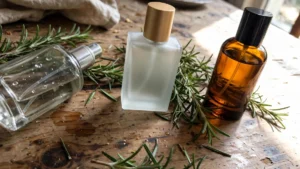
A rice perfume smells of the steam that rises from a pot of just-cooked rice, warm, starchy, softly powdery, and faintly nutty, with none of the sweetness of a dessert perfume and none of the sharpness of a citrus one. It is one of the quietest notes in perfumery, and also one of the most comforting, because almost everyone has breathed in that steam.
The strange part is that there is no rice in the bottle, at least not in the way there is lavender oil in a lavender perfume. Rice has no essential oil. The note is a fantasy accord, built by perfumers from creamy, powdery, and lightly nutty materials until the result reads as rice to the nose. That is why two rice perfumes can smell so different: one perfumer builds steamed jasmine rice, another builds basmati rice milk, and a third builds puffed rice with tea.
This guide explains what the rice note is, how it is made, where it sits in a perfume, and how to choose one.
Key takeaways
- A rice perfume smells of warm starch and steam, soft and powdery, with a faint nutty edge.
- Rice has no essential oil, so the note is always a built accord, not a distilled ingredient.
- Steamed rice, rice milk, rice powder, and puffed rice are four different accords with four different smells.
- Rice perfumes are quiet skin scents; most last four to six hours and sit close.
- Rice is not sweet on its own, and a rice perfume that smells sharp or sour at first may simply need an hour on skin.
What a rice perfume actually is
A rice perfume is a fragrance built around a rice accord, a blend of materials chosen to evoke the smell of cooked rice. The reference is always the kitchen: the steam over a pot, the warmth of a fresh bowl, the faint nuttiness of the grain itself. Perfumers do not extract that smell from rice. They recreate it with creamy lactonic materials, powdery orris, and nutty notes, until the nose accepts the result as rice.
The note is still a niche idea, led mostly by small houses: d’Annam with White Rice, BORNTOSTANDOUT with Dirty Rice, Floraïku with One Umbrella for Two. The mainstream exceptions are Kenzo Amour, which has carried rice and white tea since 2006, and Diptyque L’Eau Papier, which brought a rice steam accord to a wider audience in 2023. It is a quiet idea that perfume lovers keep returning to, because it smells like home.
What makes rice different from most perfume notes is that it has no natural reference material. A rose perfume can be checked against a rose. A rice perfume can only be checked against a memory, and memories differ, which is why the same word on a notes list can mean steamed rice in one perfume and rice pudding in another.
How the rice note is made and what to look for
The rice accord is assembled from parts. Orris, the root of the iris, gives it powder and a faint buttery nuttiness. White musks give it clean, skin-like softness. Sandalwood adds warmth and weight. Vanilla, coconut, or tonka can sweeten it into a dessert, while tea, citrus, or green notes can lift it into something fresher. Together, in the right proportions, they read as rice.
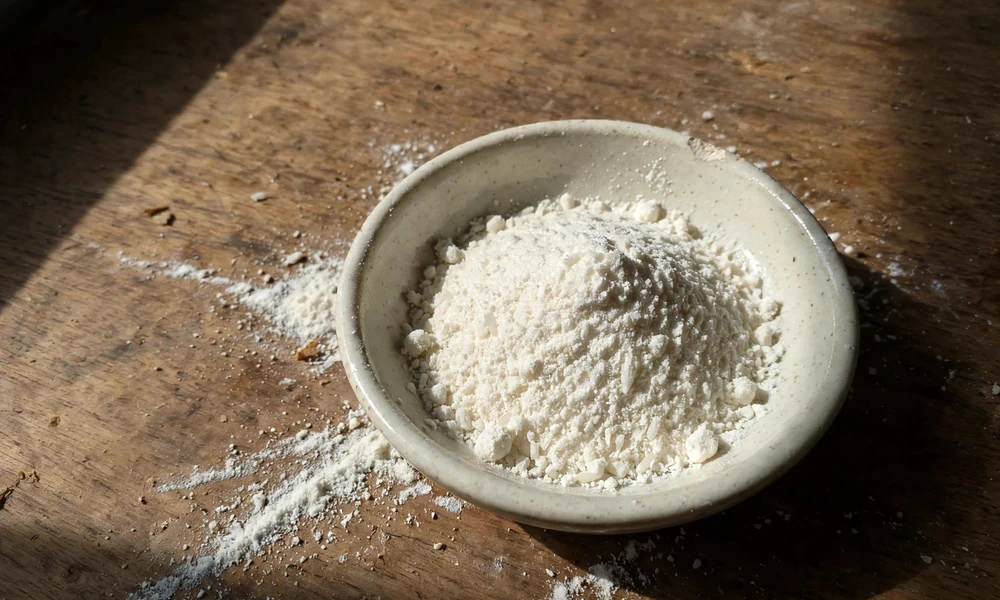
When you read a notes list, look for the kind of rice named. Rice and rice steam usually mean the clean, warm version. Basmati rice means a nuttier, milkier version. Rice powder means a matte, dry, powdery version. Puffed rice means a toasted, crisp version. If you like green notes more than grain, our bamboo perfume explainer covers the closest green cousin to rice, built on the same quiet, fresh idea.
9 things a rice perfume actually is
Rice has no essential oil, so perfumers build the note from scratch
What It Shows: The rice note is a fantasy accord, not an ingredient. No one distils rice into an oil, because the grain gives up almost nothing to steam distillation. Perfumers start with a memory of cooked rice and build toward it with orris, musk, sandalwood, and creamy lactonic materials.
What to consider: Because the note is built, two rice perfumes can smell very different, and neither is wrong. Best For: Understanding why rice perfumes vary so much from brand to brand. Material: Orris, white musk, sandalwood, and lactonic materials. Price Range: Approx. $36 to $290, from Demeter Rice Paddy to Celine La Peau Nue. Standout Feature: Rice is one of the few perfume notes with no natural extract at all.
Steamed rice and puffed rice are two different accords
What It Shows: Steamed rice is warm, damp, and soft, like the breath over a rice cooker. Puffed rice is dry, toasted, and crisp, like a rice cracker. They share a grain, but they smell like different foods, and perfumers use them for different effects.
What to consider: If you love d’Annam White Rice, you may not love a puffed-rice scent, and the reverse is just as true. Best For: Choosing between the clean version and the toasted version. Material: Steamed rice accord versus puffed rice accord, with tea and cedarwood. Price Range: Approx. $160 for d’Annam White Rice, approx. $240 for Floraïku One Umbrella for Two. Standout Feature: One grain, two completely different smells.
The rice note smells of starch and steam, not of sweetness
What It Shows: On its own, rice smells starchy, warm, and faintly nutty. It is not a sweet note. The sweetness people associate with rice perfumes comes from what is added around it: coconut, vanilla, tonka, or mango, as in By Kilian Moonlight in Heaven.
What to consider: A rice perfume that smells very sweet is a dessert perfume with rice in it, not a rice perfume. Best For: Anyone who wants rice without sugar. Material: Starchy accord, with coconut, vanilla, or tonka when sweetness is added. Price Range: Approx. $70 for Kenzo Amour, approx. $275 for By Kilian Moonlight in Heaven. Standout Feature: The grain itself is savoury, and the sugar is always borrowed.
Basmati and jasmine rice give perfumers different starting points
What It Shows: Basmati rice is nutty, aromatic, and slightly buttery, which is why BORNTOSTANDOUT built Dirty Rice around it with milk and almond. Jasmine rice is softer, cleaner, and more floral, which is why d’Annam built White Rice around it with pandan and jasmine.
What to consider: The variety of rice named on the notes list is a real clue to the character of the scent. Best For: Reading a notes list like a menu and knowing what to expect. Material: Basmati rice accord versus jasmine rice accord. Price Range: Approx. $180 for BORNTOSTANDOUT Dirty Rice, approx. $160 for d’Annam White Rice. Standout Feature: Two rice varieties, two different perfumes, one shared idea.
Rice opens as steam and dries down as powder
What It Shows: The rice accord changes over the hours. The opening is warm and damp, the steam phase, when the starch is at its clearest. The drydown is soft and matte, the powder phase, when orris and musk take over and the scent sits like powder on skin.
What to consider: Judging a rice perfume in the first five minutes means judging only the steam, not the whole scent. Best For: Anyone who has ever dismissed a rice perfume too quickly. Material: Steamed rice accord opening into orris, musk, and sandalwood. Price Range: Approx. $200 for Diptyque L’Eau Papier, which shows the shift clearly. Standout Feature: One note, two phases, and the second one is the point.
Milk, musk and sandalwood are the notes that make rice read clearly
What It Shows: Rice on its own is too faint to carry a perfume. Milk gives it creaminess, musk gives it skin and staying power, and sandalwood gives it warmth and weight. Without one of these, the rice accord reads as vague softness rather than as rice.
What to consider: A notes list with rice but no milk, musk, or wood is a warning sign that the rice may be hard to find. Best For: Reading notes lists and predicting how clear the rice will be. Material: Milk accord, white musk, and sandalwood. Price Range: Approx. $180 for BORNTOSTANDOUT Dirty Rice, which uses all three. Standout Feature: Rice needs a frame, and these three notes are the frame.
Rice and tea share a kitchen, but they do different jobs in a bottle
What It Shows: Rice and tea are often paired, in Kenzo Amour with white tea and in Floraïku One Umbrella for Two with tea, because both come from the same kitchen and the same calm mood. But they do opposite jobs: tea lifts a perfume and makes it fresh, while rice grounds it and makes it warm.
What to consider: A rice-and-tea perfume will smell lighter and fresher than a rice-and-milk one. Best For: Choosing between a fresh rice scent and a warm one. Material: White tea or green tea beside a rice accord. Price Range: Approx. $70 for Kenzo Amour, approx. $240 for Floraïku One Umbrella for Two. Standout Feature: The same kitchen, two opposite effects.
A rice perfume is quiet by design, and overspraying will not make it loud
What It Shows: Rice perfumes are built as skin scents, with light molecules and soft musks instead of the heavy resins that carry a scent across a room. Adding more sprays does not add more rice. It adds more musk or vanilla, while the rice stays exactly where it was.
What to consider: If you want projection, rice is the wrong note, and no amount of spraying will fix that. Best For: Anyone frustrated by a rice perfume that seems to disappear. Material: Light rice accord over soft musk, with no heavy resins. Price Range: Approx. $36 for Demeter Rice Paddy, the lightest of all, to approx. $290 for Celine La Peau Nue. Standout Feature: The quietness is the design, not a defect.
Rice powder is the oldest use of the grain in beauty, and the perfume note borrows from it
What It Shows: Long before rice appeared in perfume, rice powder was used on skin in Asia as a mattifying powder, and in Europe as a face powder. The perfume note borrows that history: the soft, matte, skin-like finish that rice powder gives is exactly what the rice accord is trying to recreate.
What to consider: The powdery drydown of a rice perfume is not an accident. It is the oldest part of the idea. Best For: Understanding why rice perfumes feel matte rather than glossy. Material: Rice powder accord, orris, and white musk. Price Range: Approx. $290 for Celine La Peau Nue, which is built on rice powder. Standout Feature: A beauty ingredient centuries old, rebuilt as a perfume note.
How rice behaves on skin
On skin, rice starts warm and a little starchy, then softens over the first hour into the powdery drydown. Warm skin helps it, because heat lifts the steam phase and makes the rice clearer. Cold skin flattens it, which is why a rice perfume can smell faint on a winter morning and warm on a summer afternoon. The first minutes can also be misleading: on some skin, the starchy edge reads as faintly sour before it settles, and that sourness is not a fault in the perfume.
Rice also behaves differently on fabric than on skin. On a shirt or a scarf, the steam fades and the powder stays, so a rice perfume can be easier to smell on clothes the next morning than on your wrist the night before. If you want a green note with more presence on skin instead, our juniper perfume explainer covers a note built on resin and pepper rather than grain.
The caveats that matter
The main caveat is the quietness. A rice perfume will not fill a room, will not last twelve hours, and will not announce itself. If you buy one expecting the presence of an amber or an oud, you will be disappointed. The second caveat is the first hour: rice needs warm skin and time, and a paper-strip judgement is a judgement of the wrong thing. The third is heat: rice accords fade faster than most notes in a warm bathroom or a sunny car.
| Detail | What is known |
|---|---|
| What rice is | A built accord, not a distilled oil; no rice is pressed or steamed into the bottle |
| What it smells like | Warm starch, steam, soft powder, a faint nutty edge |
| How long it lasts | Usually 4 to 6 hours on skin; longer on clothes |
| Who should test first | Anyone sensitive to powdery or musky notes |
| What to avoid | Overspraying, and pairing with heavy leather or oud |
| When it fades | Heat thins it; cold keeps it close to the skin |
| When to replace it | If it turns sour, sharp, or flat and dusty |
| What it does not do | It does not project, and it is not a dessert gourmand on its own |
If your skin is sensitive to fragrance, patch-test on the inner arm for a day before wearing a rice perfume on your neck or chest. Rice itself is not a common irritant, but the musks, synthetics, and spices that support it can be. If you are pregnant, breastfeeding, or on prescription skincare, ask your clinician before adding any new fragrance.
Checklist: before you buy a rice perfume
Use these checks before you buy, and again after a full day of wearing.
- Smell it on skin, not on paper, and wait a full hour before you decide.
- Read the notes list for the kind of rice: steam, milk, powder, or puffed.
- Choose the rice style first: steam, milk, or dessert.
- Spray once and resist adding more.
- Test it in the season you will actually wear it.
- Start with a sample or the smallest bottle.
Frequently asked questions
What does a rice perfume actually smell like?
It smells of the steam above a pot of freshly cooked rice, warm, starchy, softly powdery, and faintly nutty. On its own the grain is not sweet; any sweetness comes from coconut, vanilla, or mango layered around it. The nearest everyday comparison is a warm kitchen rather than a florist.
Is a rice perfume a gourmand perfume?
Not quite. A gourmand perfume is built to smell edible, like caramel, chocolate, or vanilla. A rice perfume smells like a staple food: warm and starchy rather than sweet. Some, like By Kilian Moonlight in Heaven, lean gourmand because of the mango and coconut, but the rice itself is not a dessert note.
Why do rice perfumes smell so quiet?
The accord is made of light molecules and built as a skin scent, not a room-filler. Most rice perfumes are built on soft musks and woods rather than the heavy resins that carry a scent across a room. The quietness is intentional, not a shortcoming.
Can I layer a rice perfume over a vanilla perfume?
Yes, and it works well. Vanilla gives rice the sweetness and weight it lacks on its own, and rice keeps the vanilla from becoming too heavy. Spray the vanilla first, then add one spray of the rice perfume on top. If you want a woody base instead, our cedarwood perfume explainer covers the note that pairs most naturally with rice after vanilla.
Does a rice perfume work in hot weather?
It can, but heat thins it. In very hot weather, a rice perfume may fade in two to three hours, and the steam phase can turn sharp on sweaty skin. Cooler days and evening wear suit it better. For summer, By Kilian Moonlight in Heaven holds up best, because the mango and tonka give it more weight.
Where should a first-time rice perfume buyer start?
Start with Kenzo Amour, which is widely available, affordable, and warm rather than minimal. If you want the purest rice smell, move on to d’Annam White Rice, which is the truest steamed-rice scent, but quieter and harder to find.
The bottom line
A rice perfume is a quiet, warm, starchy skin scent built from an accord, not an ingredient. It smells like steam and powder, lasts four to six hours, and stays close. The best ones, d’Annam White Rice for literal steam, Kenzo Amour for warm powder, and BORNTOSTANDOUT Dirty Rice for milky basmati, each show a different face of the same grain.
Choose by the kind of rice you like, test on skin, give it an hour, and judge it on comfort rather than projection. Rice will never be a loud note. Its charm is that it smells like home.