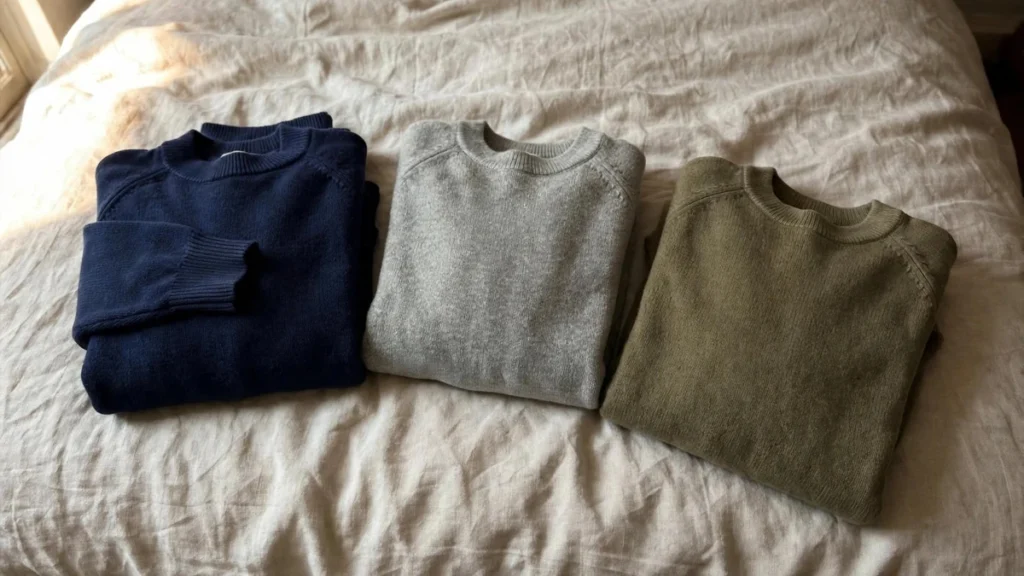
Cotton is the knit most men reach for first, and the one they complain about most. A pure cotton sweater feels soft and breathable on day one, then slowly loses its shape, bags at the elbows, and looks tired by the end of the season. That is why cotton blends have taken over the men’s knitwear rail. A little cashmere adds softness, a little wool adds warmth and structure, a little linen adds air, and the cotton keeps the whole thing easy to wear and easy to wash.
The problem is the label. Two sweaters can both say “cotton blend” and behave completely differently. One might be 90 percent cotton with a whisper of cashmere, which is really a cotton sweater with a nicer hand. Another might be 50 percent cotton and 50 percent wool, which is really a wool sweater that happens to breathe. The blend ratio, not the brand name, decides how warm it is, how it drapes, how it washes, and how long it keeps its shape.
Below are nine cotton-blend sweaters for men worth considering in 2027, from an affordable everyday crew neck to a proper luxury knit. Each one is described by what it is good at, what to watch for, and who it suits best, so you can choose by the blend and the fit, not just by the label on the chest.
Key takeaways
- A cotton blend keeps cotton’s breathability and easy care while the second fibre adds softness, warmth, or structure that pure cotton lacks.
- Read the blend ratio before you buy: the second fibre’s share decides how warm, how soft, and how much care the sweater needs.
- Cotton-cashmere is the softest everyday choice, cotton-wool is the warmest, and cotton-linen is the coolest for warm weather.
- Wash cotton blends cold, dry them flat, and fold them in a drawer, because hangers stretch a soft knit out of shape.
- No blend makes a cheap knit last forever, and a sweater that pills heavily in the first month is unlikely to improve with age.
What a cotton-blend sweater actually is
A cotton-blend sweater is a knit made mostly from cotton, with a second fibre mixed in before the yarn is spun. The cotton gives the sweater its breathable, skin-friendly feel and its easy washability. The second fibre changes the character. Cashmere makes it softer and warmer without weight. Wool adds insulation and helps the knit spring back into shape. Linen adds airflow and a dry, crisp hand that suits warm days. Acrylic, when used in a small share, adds durability and keeps the price down, though it can make the knit feel less natural.
The ratio matters more than the name. A 95 percent cotton, 5 percent cashmere sweater will feel almost like pure cotton, just slightly softer. A 70 percent cotton, 30 percent cashmere sweater will feel noticeably plusher and warmer. A 50-50 cotton-wool blend will behave like a light wool sweater that breathes better than pure wool. Always check the label, because two sweaters from the same brand can sit at opposite ends of that range.
Men buy cotton blends for a simple reason: they are the most forgiving knits to live with. They are warm enough for three seasons, light enough to layer under a jacket without bulk, and far easier to wash than pure wool or pure cashmere. A cotton blend is the sweater you reach for on a cool morning, wear all day, and wash without a second thought, which is exactly why it is worth choosing carefully rather than grabbing the first one on the rail.
How we chose these sweaters and what to look for
Look first at the blend and the ratio. For everyday wear, cotton-cashmere at around 85 to 95 percent cotton is the sweet spot: soft, breathable, and easy to care for. For colder days, cotton-wool at 50 to 70 percent cotton gives real warmth without the itch some men get from pure wool. For warm weather, cotton-linen at 55 to 70 percent cotton stays cool and dries quickly. If the label does not give a ratio, or the second fibre is under 5 percent, treat it as a pure cotton sweater with a marketing name.

Look next at the knit and the fit. A fine-gauge knit layers neatly under a blazer or a jacket, while a chunkier knit works better on its own with jeans. The shoulders should sit exactly on your shoulder line, the cuffs should meet your wrist bone, and the hem should sit on your belt line without riding up when you raise your arms. A cotton blend stretches slightly with wear, so a snug fit on the first try usually relaxes into the right fit after a few wears. Our roundup of the best cotton blend sweaters for women follows the same blend-first logic, and it is a useful comparison if you are buying for someone else as well.
Finally, look at the finishing. Ribbed cuffs and a ribbed hem help a soft knit keep its shape. A reinforced collar stops the neckline sagging. Neat, even stitching with no loose threads is a sign the sweater was made to last. Price is a rough guide: a good cotton blend starts at a modest price, but the cheapest ones often use a low cotton share and a lot of acrylic, which pills fast and feels clammy. Paying a little more for a named blend, with the ratio printed clearly, usually buys you a sweater you will still be wearing next year.
The 9 best cotton blend sweaters for men of 2027
Sunspel Cotton Cashmere Crew Neck Sweater
What we like: A fine-gauge crew neck in a cotton-cashmere blend that feels soft without feeling heavy, with a clean, classic cut that layers well under a jacket. What to consider: Premium price for a simple crew neck, and the pale colours show marks easily. Best for: Smart everyday wear. Material: Cotton-cashmere blend. Price range: About £130–£160. Standout feature: A fine, even knit that keeps its shape wash after wash.
John Smedley Cotton Blend Sweater
What we like: A long-established British knitwear maker with a fine-gauge cotton blend, a neat fit, and a collar that holds its shape. What to consider: The fit is slim, so size up if you prefer room, and the range of colours is conservative. Best for: Smart layering. Material: Cotton blend with a fine merino share. Price range: About £120–£150. Standout feature: A beautifully finished collar that never sags.
GAP Cotton-Blend Crewneck Sweater
What we like: An affordable everyday crew neck with a soft hand, a relaxed fit, and a wide range of colours that makes it easy to find your shade. What to consider: The knit is looser than a premium brand, so it can bag slightly at the elbows over time. Best for: Everyday casual wear. Material: Cotton-acrylic blend. Price range: About £35–£50. Standout feature: The best value everyday crew neck in this roundup.
Everlane Cotton Blend Sweater
What we like: A clean, modern crew neck in a cotton blend with recycled fibres, a straight fit, and a transparent price that is easy to understand. What to consider: Limited colour range, and the fit is boxier than a traditional crew neck. Best for: Minimal, modern outfits. Material: Cotton blend with recycled fibres. Price range: About £60–£80. Standout feature: A straight, modern cut that suits layering over a shirt.
Bonobos Cotton Blend Crew Neck Sweater
What we like: A well-cut crew neck with a slightly longer body that stays tucked when you want it to, in a soft cotton blend that holds its colour. What to consider: Fewer stockists outside the US, and the darker colours can fade if washed hot. Best for: Smart-casual days. Material: Cotton-nylon blend. Price range: About £70–£95. Standout feature: A longer body that suits taller men.
AllSaints Cotton Blend Knit Sweater
What we like: A modern, slightly edgy knit with a fine gauge, a slim fit, and dark, muted colours that work well with black denim and boots. What to consider: The slim fit runs small, so check the size guide, and the dark dyes need cold washing. Best for: Evening and city wear. Material: Cotton-wool blend. Price range: About £80–£110. Standout feature: A fine-gauge knit with a clean, urban look.
Reiss Cotton Blend Sweater
What we like: A polished, tailored crew neck in a soft cotton blend, with a neat shoulder line and a fit that works under a suit jacket. What to consider: Premium high-street price, and the lighter shades need careful washing. Best for: Work and smart occasions. Material: Cotton-cashmere blend. Price range: About £95–£125. Standout feature: A tailored shoulder that sits neatly under tailoring.
Percival Cotton Blend Jumper
What we like: A British-made jumper with a relaxed, slightly boxy cut, a soft cotton blend, and a ribbed collar that keeps its shape. What to consider: The relaxed fit is not for everyone, and the range is small, so colours sell out. Best for: Relaxed weekend wear. Material: Cotton-wool blend. Price range: About £85–£115. Standout feature: A ribbed collar that stays neat all day.
Asket Cotton Blend Sweater
What we like: A no-frills crew neck in a cotton blend with a traceable supply chain, a true-to-size fit, and a restrained colour palette. What to consider: No flashy details, and the palette is deliberately narrow. Best for: A capsule wardrobe. Material: Cotton blend with organic cotton. Price range: About £65–£85. Standout feature: A traceable, honest basic that does one job well.
Which cotton blend sweater is right for you
Start with the weather you actually live in. If your winters are mild and your summers are warm, a cotton-cashmere or cotton-linen blend will cover most of the year. Cotton-cashmere is the softest and most versatile, while cotton-linen is the coolest and driest on warm days. If your winters are properly cold, a cotton-wool blend is the better buy, because the wool share adds real insulation and helps the knit hold its shape through the season.
Then think about how you will wear it. A fine-gauge crew neck in a dark colour is the most flexible sweater a man can own: it goes under a blazer, over a shirt, and with jeans or chinos. A chunkier knit is better as a standalone piece on cold days, when you want warmth without a coat. A quarter-zip cotton blend is a useful middle ground, warmer than a crew neck and easier to take on and off, which suits commuting and travel.
Finally, match the blend to your skin. Men with sensitive skin often find cotton-cashmere the most comfortable, because the cashmere softens the cotton and the blend sits gently against the neck. Men who run hot should look for cotton-linen, which breathes better than any other blend here. Men who want one sweater to last for years should look for a higher cotton share with a small amount of nylon, which adds durability without changing the feel. The best linen blend sweaters for men are worth a look if breathability is your top priority, because linen is the coolest fibre in this whole family of blends.
The caveats that matter
Cotton blends are forgiving, but they are not indestructible. The most common problem is pilling, which happens when the second fibre is short or the knit is loose. A little pilling on the first few wears is normal, but heavy pilling in the first month is a sign the yarn was cheap, and it will not improve. A fabric shaver or a cashmere comb will tidy a light pill, but it will not save a badly made sweater.
| Detail | What is known |
|---|---|
| Best blend for everyday wear | Cotton-cashmere, around 85 to 95 percent cotton, soft and easy to care for |
| Best blend for cold weather | Cotton-wool, 50 to 70 percent cotton, warm and holds its shape |
| Best blend for warm weather | Cotton-linen, 55 to 70 percent cotton, cool and quick to dry |
| How to wash it | Cold water, gentle cycle, inside out, and dry it flat on a towel |
| What causes pilling | Short fibres and loose knits, especially where a bag strap rubs |
| How to store it | Folded in a drawer, never on a hanger, which stretches the shoulders |
| When to replace it | When the elbows bag, the collar sags, or pilling will not come off |
| What it does not do | It does not replace a heavy wool sweater in deep cold, or a linen shirt in high heat |
If you have sensitive skin, patch-test a new blend against your neck and wrists before a full day of wear, and wash it once before the first outing. That first wash softens the knit and removes any finishing chemicals from the factory, which is often what causes itching rather than the fibre itself. The best wool blend sweaters for men are the natural next step if you want more warmth than a cotton blend can give, because wool is the fibre that does the heavy lifting when the temperature drops.
Checklist: buying a cotton blend sweater honestly
Use these checks before you buy, and again after the first wash.
- Check the blend ratio on the label: the second fibre should be named, with a percentage.
- Check the fit: shoulders on the shoulder line, cuffs at the wrist bone, hem on the belt line.
- Check the knit: even stitching, no loose threads, and a collar that springs back when pulled.
- Check the feel: rub the knit against your wrist and neck, where itching shows first.
- Wash it once before the first big outing, cold and inside out, then dry it flat.
- Store it folded in a drawer, not on a hanger, so the shoulders keep their shape.
Frequently asked questions
Is a cotton blend sweater warm enough for a cold morning?
It depends on the blend. A cotton-wool blend is warm enough for most cold mornings, especially under a coat. A cotton-cashmere blend is warm for mild cold, and a cotton-linen blend is not a cold-weather sweater at all. Choose the second fibre by the coldest morning you will actually face.
Which cotton blend is best for a man with sensitive skin?
Cotton-cashmere is usually the kindest, because the cashmere softens the cotton and the blend sits gently against the skin. Wash it once before wearing, and avoid blends with a high acrylic share, which can feel clammy and irritate sensitive skin.
Can a man put a cotton blend sweater in the washing machine?
Yes, on a cold, gentle cycle, turned inside out, in a mesh bag if you have one. Never use hot water or a fast spin, and never tumble dry it. Dry it flat on a towel, reshaped to its original size, and it will keep its shape far longer.
Do cotton blend sweaters shrink in the wash?
They can, mainly from heat. Hot water and a hot dryer are the usual causes, not the wash itself. Wash cold, skip the dryer, and dry flat, and a good cotton blend should hold its size. If it does shrink slightly, a gentle stretch while damp often brings it back.
How should a man store a cotton blend sweater?
Folded in a drawer, with tissue between layers if you are stacking several knits. Never hang a cotton blend sweater, because the weight pulls the shoulders out of shape. Keep it out of direct sun in the wardrobe so the colour stays even.
Are cotton blend sweaters better than pure cotton for everyday wear?
For most men, yes. Pure cotton is soft and breathable, but it bags at the elbows, loses its shape, and looks tired quickly. A blend keeps cotton’s comfort and adds softness, warmth, or structure, so the sweater looks better for longer and needs less fussing.
The bottom line
The best cotton blend sweater for men in 2027 is not the most expensive or the softest on the rail. It is the one whose blend matches the weather you live in, whose fit sits right on your shoulders, and whose label tells you exactly what is in it. For most men, that means a cotton-cashmere crew neck in a dark colour, washed cold and dried flat.
Buy one good blend, wear it for a month, and judge it on how it looks after five washes, not on how it feels in the shop. A cotton blend that still sits neatly on your shoulders after a season of wear is the one worth buying again.