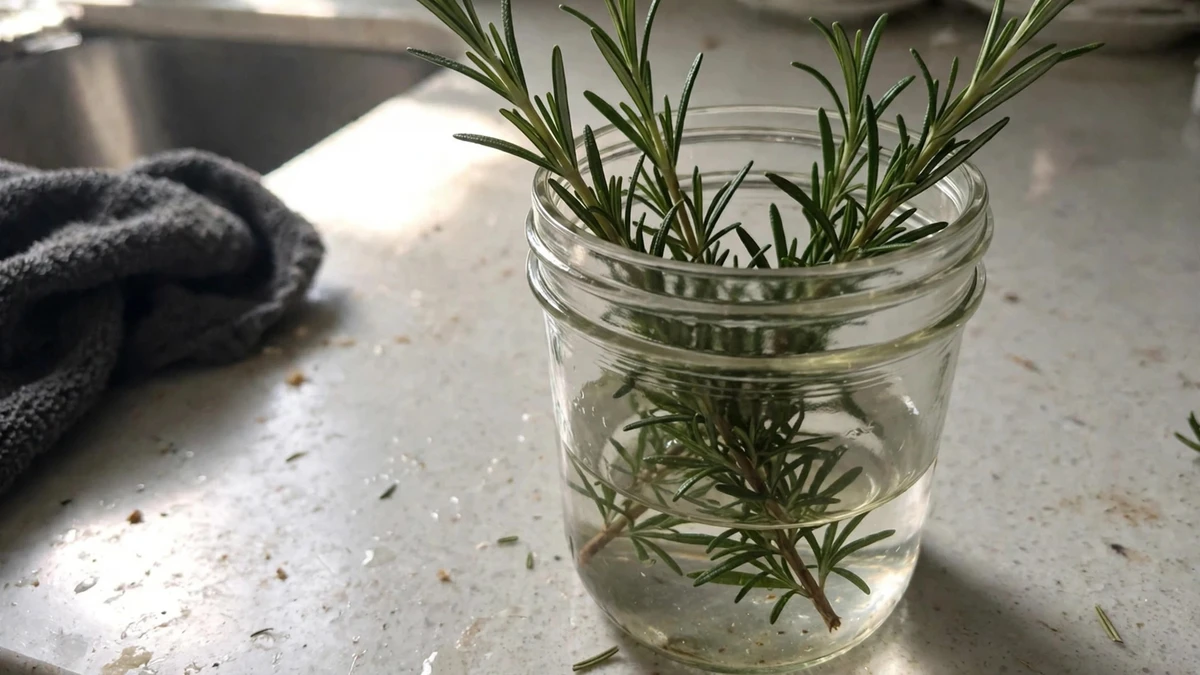
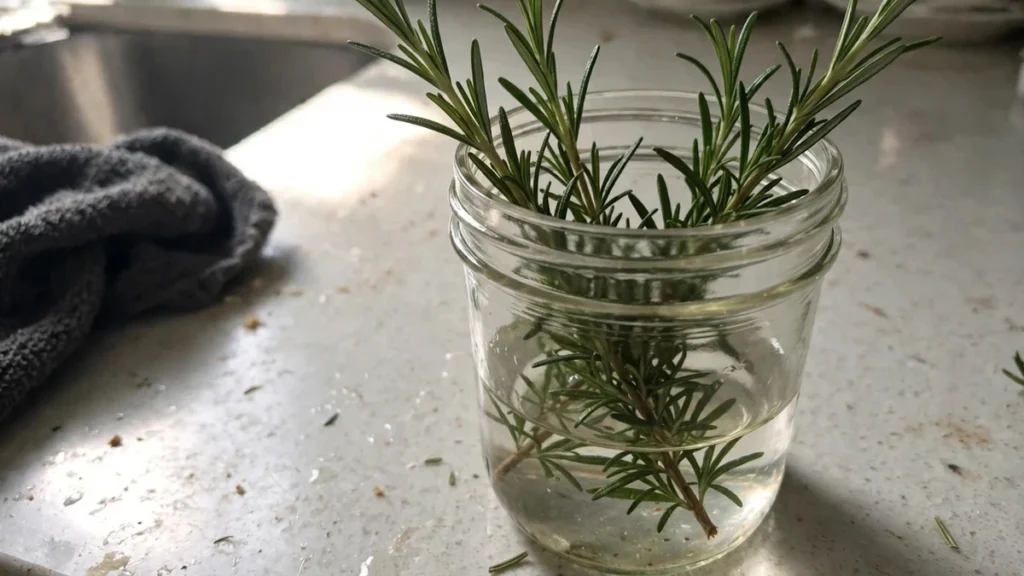
A rosemary perfume is a fragrance in which rosemary is a real, listed note, not just a word on the box. The herb gives the perfume a green, woody character with a cool, camphorous edge, and it is one of the oldest ingredients in perfumery, with a history that reaches back to a 14th-century court favourite.
The confusion around rosemary perfumes comes from the kitchen. Most people know rosemary as a cooking herb, so they expect a rosemary perfume to smell like a roast. The perfumer treats rosemary as an aromatic, not a flavour, pairing it with bergamot, lavender, vetiver or cedar so that the herb reads as clean and green rather than savoury.
This guide explains what a rosemary perfume actually is, how the note is made, what it does inside a fragrance, and how to choose one that suits you. It is written for anyone who has smelled rosemary in a cologne and wondered what they were smelling, and for anyone thinking of buying their first herbal perfume.
Key takeaways
- A rosemary perfume is a fragrance with rosemary as a real listed note, and the herb gives it a green, woody smell with a cool camphor edge.
- Rosemary oil is steam-distilled from the leaves and flowering tops, and a molecule called 1,8-cineole is what makes it smell camphorous.
- Rosemary usually opens a perfume and fades within the first hour, but its dry green character carries into the heart of the scent.
- The best partners for rosemary are citrus, lavender, vetiver and cedar, and the balance between the herb and its partners decides the character.
- Rosemary does not suit everyone, and too much of it can smell medicinal, so test on skin before buying a full bottle.
What a rosemary perfume actually is
A rosemary perfume is built around rosemary essential oil, which is steam-distilled from the leaves and flowering tops of the rosemary plant. The oil is pale, thin and strongly aromatic, and its character comes mainly from 1,8-cineole, a molecule also found in eucalyptus and bay leaf.
Rosemary is almost always a top note, which means it is one of the first things you smell when you spray, and one of the first things to fade. In most compositions it is strongest for the first thirty to sixty minutes, then it steps back and lets the heart notes take over. The dry, green quality it leaves behind colours the rest of the fragrance, which is why a rosemary perfume still smells green and clean hours after the opening has gone.
It is worth knowing that there is no single rosemary smell. The oil changes with the variety of the plant, the place it grew, and the season it was harvested. Rosemary from the Mediterranean coast tends to be softer and sweeter, while rosemary from higher, drier ground is sharper and more camphorous.
How to tell if a perfume really has rosemary
Start with the published note list. A genuine rosemary perfume lists rosemary, or its Latin name Rosmarinus officinalis, among its notes, usually in the top. If the note list mentions only citrus, lavender and woods, and rosemary appears nowhere, then the perfume may smell herbal in a general way, but it is not a rosemary perfume. Marketing copy is not a reliable guide, because the word herbal is used loosely, and many fresh perfumes are described as herbal without containing rosemary at all.
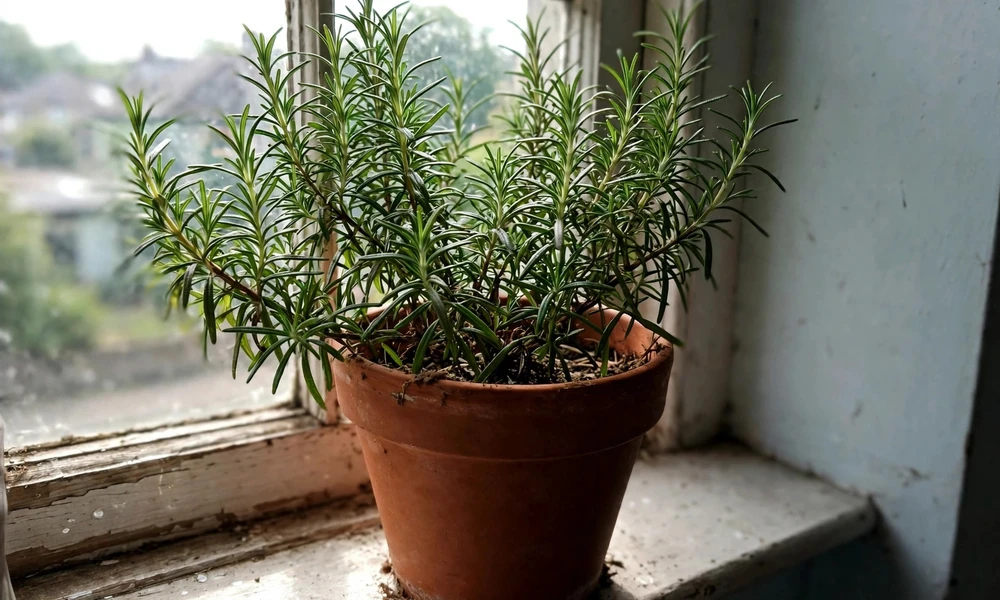
Next, smell the opening on a paper strip and then on skin. Real rosemary announces itself in the first minute as a green, woody sharpness with a cool edge, distinct from the bright sweetness of citrus and the soft floral character of lavender. If you cannot pick the herb out, it may be there in a small dose, acting as a seasoning rather than a feature. A guide to what a basil perfume is describes a similar test for basil, and the method is the same: the note list first, then the opening on skin.
Finally, check the drydown after two hours. A perfume with real rosemary will still smell dry and green at that point, even after the sharp opening has faded.
Nine things rosemary does in a fragrance
Rosemary oil is steam-distilled from the flowering tops, and 1,8-cineole gives it its camphor edge
What it shows: The oil is made by passing steam through the leaves and flowering tops of the plant, and the resulting oil is dominated by 1,8-cineole, the same molecule that gives eucalyptus its cool, medicinal character. Best for: Anyone who wants to know what they are actually smelling. Material: Steam-distilled essential oil. Price range: Rosemary oil is relatively affordable, so it does not push a perfume into the luxury price bracket on its own. Standout feature: The camphor edge is the signature, and it is what separates rosemary from softer green herbs.
What to consider: The oil varies by origin, so a rosemary perfume from one house can smell sharper or softer than another. That variation is normal, and it is one reason to test before buying rather than trusting a note list alone.
The camphor in rosemary is the same molecule that makes eucalyptus smell medicinal
What it shows: It comes from 1,8-cineole, which is also the main molecule in eucalyptus oil, and which the nose reads as cool, clean and slightly medicinal. Best for: Understanding why rosemary smells fresh rather than sweet. Material: 1,8-cineole, a naturally occurring molecule in the oil. Price range: The molecule is present in the natural oil, so there is no extra cost attached to it. Standout feature: One molecule explains most of what makes rosemary distinctive.
What to consider: If you dislike eucalyptus or camphor smells, you may find rosemary too medicinal, especially in warm weather when the camphor edge stands out more. A lighter dose, or a composition with more lavender, will soften it.
Rosemary opens a perfume and then steps aside, but its green freshness stays in the heart
What it shows: Rosemary is a top note, so it is strongest in the first hour and then fades, but it does not vanish without trace. Best for: People who like a fresh opening that settles rather than disappears. Material: A top note with a dry green drydown. Price range: Top-note character does not change the price, but it does mean a rosemary cologne will need reapplying sooner than a heavy oriental. Standout feature: The opening is the event, and the green drydown is the memory of it.
What to consider: Do not judge a rosemary perfume on the first spray alone. The opening is the sharpest part, and the fragrance you will actually live with is the one that appears after an hour.
Rosemary and lavender are the classic Provençal pairing, and perfumers still use it
What it shows: Lavender softens and sweetens the composition, while rosemary sharpens it, and together they create the clean, herbal character that defines the classic French cologne. Best for: Anyone shopping for a classic fresh fragrance. Material: Two herbs from the same landscape, used together. Price range: The pairing is common in both affordable and luxury perfumes, so it does not signal a price level. Standout feature: The oldest and most reliable partnership in herbal perfumery.
What to consider: The balance matters. The best versions keep the two in conversation rather than letting one dominate.
Rosemary makes citrus sharper, which is why it sits beside bergamot in classic colognes
What it shows: Bergamot and lemon are bright and sweet on their own, and rosemary gives them a green, slightly bitter edge that makes the opening feel crisp rather than juicy. Best for: Lovers of fresh, citrus colognes who want more character than citrus alone. Material: Rosemary oil beside cold-pressed bergamot oil. Price range: Bergamot is the more expensive ingredient, so the pairing is common in mid-priced and luxury colognes. Standout feature: Rosemary is the note that turns a pleasant citrus into a proper cologne.
What to consider: Citrus fades fast, and rosemary fades with it, so a citrus and rosemary opening is a short-lived pleasure.
Hungary water made rosemary a court favourite in the 1300s
What it shows: Hungary water, a rosemary-based scented water made for Queen Elisabeth of Hungary in the 14th century, is often described as the first modern perfume, and rosemary was its main ingredient. Best for: Anyone who likes a fragrance with a real story behind it. Material: Rosemary steeped in alcohol, the ancestor of the modern cologne. Price range: The history costs nothing, but modern rosemary colognes inspired by it range from affordable to luxury. Standout feature: Rosemary was a luxury ingredient six hundred years before the modern perfume industry existed.
What to consider: The history is real, but it does not make every rosemary perfume good.
Heat turns rosemary sharper, and cold makes it softer and woodier
What it shows: In warm weather the 1,8-cineole stands out, and the perfume smells brighter, sharper and more camphorous. In cold weather the woody, pine-like side of the oil comes forward, and the same perfume smells softer, drier and more grounded. Best for: Choosing the right rosemary perfume for the season you will wear it in. Material: The same oil, read differently by the nose at different temperatures. Price range: Temperature does not change the price, but it changes which bottle you should buy. Standout feature: One perfume, two personalities, depending on the weather.
What to consider: Test a rosemary perfume in the conditions you will wear it in.
Rosemary loves vetiver and cedar, and the pair reads dry, green and clean
What it shows: Vetiver and cedar are dry, woody notes, and they give rosemary something solid to lean on. Both pairings pull the herb away from the kitchen and toward a clean, masculine character. Best for: People who want rosemary in a dry, woody frame rather than a bright citrus one. Material: Rosemary oil over vetiver root oil or cedarwood oil. Price range: Vetiver and cedar are mid-priced ingredients, so these pairings appear across the price range. Standout feature: The driest, most grown-up way to wear rosemary.
What to consider: Vetiver dominates a composition, so the rosemary can become a supporting player.
Too much rosemary turns a perfume medicinal, so balance is the whole skill
What it shows: Rosemary is a powerful note, and a small overdose turns a fresh perfume into something that smells like a medicine cabinet. Best for: Understanding why some rosemary perfumes smell wonderful and others smell like a chemist shop. Material: A note that needs a light hand and careful dosing. Price range: Balance is a matter of skill, not money, and affordable rosemary perfumes can be as well balanced as expensive ones. Standout feature: Rosemary rewards restraint more than almost any other note.
What to consider: If a rosemary perfume smells medicinal on you, it may be the dose, not the note.
Who rosemary perfumes suit best
Rosemary perfumes suit people who like fresh, clean scents with character. If you find soft florals too sweet and heavy orientals too warm, rosemary offers a middle path: green, dry and crisp, with enough personality to be interesting.
They also suit warm weather and daytime wear. The fresh, green character feels natural in spring and summer, and the clean drydown works well in an office or outdoors. A guide to what a bamboo perfume is describes another green note with a similar seasonal shift, and comparing the two is a good way to learn whether your nose prefers rosemary’s woody sharpness or bamboo’s watery freshness.
Rosemary perfumes do not suit everyone. If you dislike herbal or medicinal smells, if eucalyptus gives you a headache, or if you prefer your fragrance soft, sweet and powdery, then rosemary will probably not be your note. That is not a failing.
The caveats that matter
Rosemary is a strong character, and it does not suit every nose or every occasion. The camphor edge that makes it smell fresh can also make it smell medicinal, especially in warm weather or when too much is sprayed.
| Detail | What is known |
|---|---|
| What rosemary is | A steam-distilled oil from the leaves and flowering tops, rich in 1,8-cineole |
| What it smells like | Green, woody and slightly camphorous, with a cool herbal sharpness |
| Where it sits in a perfume | Usually a top note, strongest in the first hour, then fading into a dry green heart |
| Best partners | Citrus, lavender, vetiver and cedar, which balance the sharpness |
| How temperature changes it | Heat makes it sharper and more camphorous, cold makes it softer and woodier |
| Who should test carefully | Anyone who dislikes medicinal or herbal smells, or is sensitive to strong camphor |
| How long it lasts | The note itself fades within an hour, but the green drydown can last several hours |
| What it is not | It is not a food smell, not a floral, and not a sweet note, whatever the marketing says |
Rosemary perfume is a fragrance, not a treatment. It will not help with headaches, hair growth or memory, whatever you may read online, and it should not be used as a substitute for medical advice.
Checklist: buying a rosemary perfume honestly
Use these checks before you buy, and again after a week of wear.
- Check the note list: rosemary should be listed as a real note, not just mentioned in the marketing copy.
- Check the opening on skin: spray once on your wrist and wait ten minutes, because rosemary is sharpest in the first five.
- Check the drydown: smell it again after two hours, when the rosemary has settled and the base shows itself.
- Check the season: try it in the weather you will actually wear it in, because heat makes the camphor edge stronger.
- Check the dose: one spray is often enough, and two is a maximum for most rosemary colognes.
- Check the partners: notice whether the citrus, lavender or woods beside the rosemary make it smell better or harsher.
Frequently asked questions
Does a rosemary perfume smell like a kitchen herb garden?
Not quite. A rosemary perfume smells green and herbal, but the perfumer pairs the herb with citrus, lavender or woods so that it reads as a cologne, not a kitchen. The smell is closer to a herb garden after rain than to a chopping board, and it is cleaner and cooler than the herb smells when it is cooking.
Is rosemary perfume only for men?
No. Most classic rosemary perfumes were marketed to men, but the note itself is unisex, and many women wear rosemary colognes for their clean, green character. Our guide to what a juniper perfume is covers another green note that was also marketed mainly to men and is worn by everyone.
Can I wear a rosemary perfume to the office?
Yes, and it is one of the better office choices, because rosemary smells clean and groomed rather than loud or sweet.
Does rosemary fade faster than other herb notes?
Rosemary fades at about the same speed as other top notes, within the first hour. What lasts is the dry, green character it leaves behind, which can carry for several hours.
What should I layer with a rosemary perfume?
Layer it with a simple citrus or a clean musk, and keep it simple. Do not layer two strong herbal perfumes together, because the camphor edges will double up and the result will smell medicinal.
Is rosemary perfume a good first herb perfume?
Yes, it is one of the best first herb perfumes, because it is widely available, affordable at the classic end, and easy to understand. Start with a light cologne, wear it for a week, and see whether the green, woody character suits you before exploring sharper herbs such as basil or clary sage.
The bottom line
A rosemary perfume is a fragrance built around a real, steam-distilled herb oil, and its character comes from 1,8-cineole, the molecule that gives it a cool, camphorous edge. It is green, woody and fresh, it opens a perfume and then steps aside, and it pairs best with citrus, lavender, vetiver and cedar.
The right rosemary perfume is the one that balances the herb with partners you enjoy, in a concentration you will actually wear. Test it on skin, give it an hour, and judge it on the drydown, not the first spray.