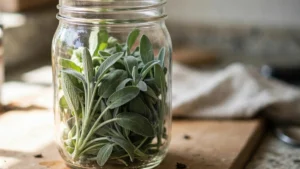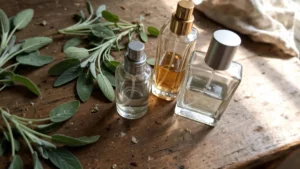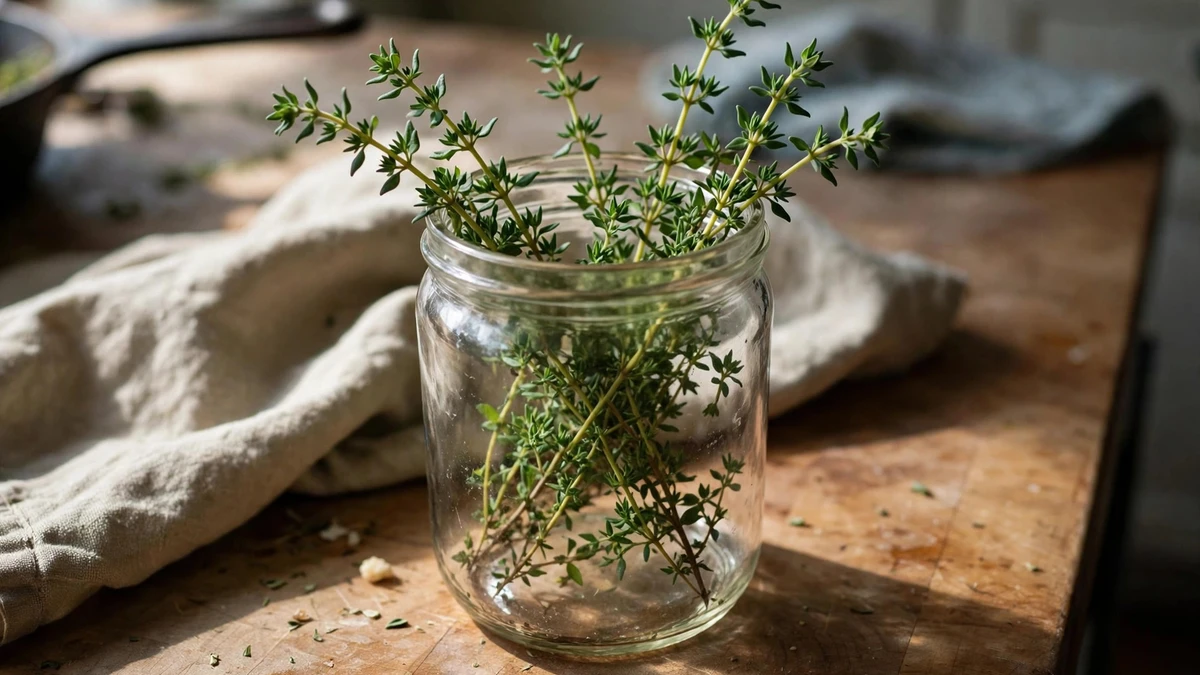

A thyme perfume is a perfume built around thyme, the small, woody herb that grows on dry hillsides around the Mediterranean. It is one of the rarest notes in perfumery, not because it smells bad, but because it is hard to use: it is green and dry, warm and faintly medicinal, and it sits in a narrow band between fresh and savoury that takes skill to hold. When it works, it gives a perfume a dry, herbal character that nothing else quite matches.
Most people have never smelled a thyme perfume, and that is not surprising. Thyme appears on very few notes lists, and when it does, it is usually in older, masculine-leaning classics rather than in the scents that fill a department store today.
This guide explains what a thyme perfume actually is, how the note is made, what it does in a fragrance, and who it suits. It is written for anyone curious about herbal perfumes, whether you already love rosemary and basil or you are meeting the herb family for the first time.
Key takeaways
- A thyme perfume is built around thyme, a green, dry, warm herb note with a faintly medicinal edge.
- Thyme is rare in perfumery: only a few perfumes list it, and most thyme-leaning scents are herbal neighbours.
- Thyme usually sits in the top of a perfume, arriving early and fading within the first hour or two.
- It pairs best with lavender, citrus and soft woods, and it turns louder and drier in warm weather.
- Thyme does not make a perfume smell like food, but overspraying can push its warm edge toward savoury.
What a thyme perfume actually is
A thyme perfume is a fragrance in which thyme, or the thyme character, plays a leading role. In the strict sense, that means the notes list names thyme, which happens in only a handful of perfumes. In the wider sense, it means a perfume that smells the way thyme smells: dry, green, warm and herbal, even if the word thyme never appears on the box. Both kinds count, as long as you know which one you are buying.
The note itself comes from thyme oil, steam-distilled from the flowering tops of the plant, usually common thyme, Thymus vulgaris. The oil is rich in thymol, the compound that gives thyme its warm, medicinal smell, along with smaller amounts of carvacrol and linalool, which soften it.
Most thyme perfumes are aromatic or fougère scents, the family that also holds lavender, rosemary, sage and vetiver. They are usually eaux de toilette, light and fresh, and they are usually marketed to men, though nothing about the smell is inherently masculine. A thyme perfume is a daytime scent by nature: it suits spring and summer, open air and warm skin, and it sits close rather than filling a room. Our guide to what a rosemary perfume is covers the closest herb neighbour, and the two notes share a surprising amount of history.
How to tell if a perfume really has thyme
Start with the notes list, and read it honestly. If thyme is printed there, the perfume genuinely contains thyme oil or a thyme accord, and you can trust the label. Chanel Antaeus is the best-known example, and Santa Maria Novella Timo is the purest. If thyme is not listed, the perfume may still smell thyme-like, but it is a neighbour, not the real thing, and the price should reflect that.

Next, test on skin, not on paper. Thyme turns warmer and drier on skin, and paper can make it smell sharper and more medicinal than it really is. Spray once on your wrist, wait ten minutes, and then smell again. What you are looking for is a dry green note with a warm edge, not a sharp green note and not a sweet one. If it smells like a herb garden in the sun, that is thyme character. If it smells like a cleaning product, that is a synthetic green accord, and it is not the same thing.
Finally, check the drydown. Thyme itself fades within an hour or two, so the test is what it leaves behind. A good thyme perfume dries down to soft woods, musk and a faint herbal warmth, and it should still smell pleasant four hours later. A poor one dries down to nothing, or to a flat, soapy base, which means the thyme was a top-note decoration rather than part of the structure. Basil perfumes have the same problem, and the same test applies.
Nine things thyme does in a fragrance
Thyme oil comes from the flowering tops, and thymol is what makes it smell warm and medicinal
Thyme oil is steam-distilled from the leaves and flowering tops of the plant, harvested just as it comes into flower, when the oil is at its strongest. The main compound is thymol, which gives thyme its warm, medicinal character, the same quality that made thyme oil a traditional antiseptic long before it was a perfume ingredient. Perfumers use it in small doses, because the oil is powerful, and a little too much can turn a fresh perfume savoury.
Common thyme and lemon thyme are two different smells, and perfumers pick a side
There are dozens of thyme varieties, but two matter in perfumery. Common thyme, Thymus vulgaris, is the warm, earthy, medicinal one, and it is what most people mean when they say thyme. Lemon thyme, Thymus citriodorus, is brighter and greener, with a clear citrus edge that reads more like lemon verbena than like a herb. If a thyme perfume smells unexpectedly citrusy, it is probably the lemon variety doing the work.
Thyme sits in the top of a perfume and fades within the first hour
Thyme is a top note, which means it arrives first and leaves first. On skin it is strongest in the first thirty minutes, still present at the hour mark, and mostly gone by the second hour, leaving the heart notes to carry the rest of the wear. If you want to smell thyme all day, you will be disappointed, but if you judge it by the opening it gives you, it earns its place.
Thyme and rosemary are neighbours in the garden, but they do different jobs in a bottle
Thyme and rosemary grow side by side in a Mediterranean herb garden, and they often appear together in the same perfume, but they do different work. Rosemary is camphor and pine, sharp and bright, and it pushes a perfume upward, making citrus sharper and lavender cleaner. Thyme is earth and warmth, rounder and quieter, and it pulls a perfume downward, giving it depth and a dry, herbal base to stand on. A perfume with both will smell more complete than a perfume with either one alone, which is why the two are paired so often in classic aromatic formulas.
Too much thyme turns a perfume savoury, and that is the line perfumers watch
Thyme has a savoury edge that most other green notes do not have, and it is the note’s greatest risk. At a low dose, that edge reads as warmth and depth, the thing that makes a fresh perfume smell like a garden rather than a shower gel. At a high dose, it reads as food, and the perfume starts to smell like a kitchen rather than a fragrance. The dose is the whole skill, and it is also why a heavy hand with the spray can ruin a good thyme perfume.
Thyme loves lavender and citrus, and the trio reads clean rather than kitchen-like
Thyme’s best partners are lavender and citrus, and the three together are one of the classic combinations in perfumery. Lavender gives thyme a clean, floral lift, citrus gives it brightness, and thyme gives both of them a dry, herbal depth that stops the combination from smelling soapy. The result reads clean rather than kitchen-like, which is the whole point of the pairing. Soft woods in the base, cedar or vetiver, complete the picture.
Heat makes thyme louder and drier, and cold keeps it quiet and green
Thyme is one of the most weather-sensitive notes in perfumery. On a hot day, warm skin makes it louder and drier, and the medicinal edge comes forward, which is usually a good thing in summer, when a perfume needs to cut through heat. On a cold day, the same perfume will smell quieter and greener, and the thyme may barely register at all, which is why thyme perfumes can feel thin in winter.
Thyme was a strewing herb before it was a perfume note, and the history still shows
Long before thyme went into a perfume bottle, it was a strewing herb, scattered on the floors of houses and churches to sweeten the air and keep insects away, and a kitchen herb, hung in bunches to dry. That history still shows in the note: thyme smells like a lived-in place, a garden and a kitchen and a sunny room, rather than like a laboratory creation. It is one of the oldest scents in the European home, and that familiarity is part of its appeal. When you wear a thyme perfume, you are wearing a smell that people have lived with for centuries, not a molecule invented last year.
Thyme is one of the few notes that reads equally at home on men and women
Thyme has no obvious gender. It is not floral, so it does not read feminine in the traditional sense, and it is not leathery or smoky, so it does not read masculine either. It reads green, dry and warm, and those qualities suit anyone who likes herbal scents. If you like herbal scents and you have been put off by how masculine they are marketed, thyme is a good place to start.
Who thyme perfumes suit best
Thyme perfumes suit people who like dry, green, herbal scents and who prefer a perfume that sits close rather than filling a room. They are at their best on people who spend time outdoors, who like the smell of a garden, and who find sweet or floral perfumes too much. They also suit anyone who likes classic, old-school scents, because most thyme perfumes are either old classics or built in the classic style, and they reward a wearer who appreciates understatement.
They are less suited to people who want a big, long-lasting, room-filling perfume, because thyme is light and close by nature, and no amount of spraying will make it project like an amber or a gourmand. They are also less suited to the depths of winter, when the note goes quiet, and to people who dislike any hint of a medicinal edge, because that edge is part of what thyme is. If you love rosemary, basil or lavender, you will probably love thyme, and bamboo perfumes are another green note worth exploring if you like the fresh, natural end of the spectrum.
Age does not matter much with thyme. It is a note that suits a twenty-year-old as well as a sixty-year-old, because it is neither trendy nor old-fashioned, just green and dry. It is also a good first herb perfume, because it is softer than rosemary and less peppery than basil, so it is the gentlest introduction to the herbal family.
The caveats that matter
Thyme is gentle, but it still has one trap: using too much. Two sprays give you the fresh, herbal character; six sprays bring out the warm, savoury side, and the perfume starts to smell like a kitchen. Because most thyme scents are light, it is tempting to add more, so spray twice, wait thirty minutes, and only then decide whether you want another spray.
| Detail | What is known |
|---|---|
| What it is | A green, dry, warm herb note from thyme oil, steam-distilled from the flowering tops |
| Key compound | Thymol, which gives thyme its warm, faintly medicinal character |
| Where it sits in a perfume | Usually a top note: strongest in the first hour, then it settles into the heart |
| Best partners | Lavender, bergamot and other citrus, soft woods such as cedar and vetiver |
| Best season | Spring and summer, when warmth makes the note louder and drier |
| Who should be careful | People with sensitive skin should patch-test, as herbal oils can irritate reactive skin |
| How many sprays | Two to start; more can turn the warm edge savoury |
| What it does not do | It does not last all day or project far; most thyme scents are close and light |
If you have sensitive skin, patch-test any new perfume on your inner arm for a day before wearing it on your neck, because herbal oils can irritate reactive skin. For a discontinued bottle, check that the juice looks clear and smells fresh on opening.
Checklist: buying a thyme perfume honestly
Use these checks before you buy, and again after your first week of wearing.
- Read the notes list first: thyme on the list means a genuine thyme scent, while lavender, rosemary, sage and soft woods point to a close neighbour.
- Spray on your wrist, not a paper strip: skin brings out thyme’s warmth, while paper makes it smell harsher than it is.
- Keep it to two sprays at first: a small dose stays fresh, and a large dose turns savoury.
- Try it on a warm day first: thyme shows its best side in heat, so summer is the fairest test.
- For an older classic, verify the batch code and buy only from a seller you trust.
- Wait an hour before judging: the dry herbal heart is the part you will live with, not the opening.
Frequently asked questions
Does a thyme perfume smell like cooking?
Not with a light hand. Worn at two sprays, thyme smells like a dry herb garden, not a meal. The food association only shows up when you spray too much and the warm edge takes over.
Is thyme perfume a good first herb perfume?
Yes, it is one of the gentlest ways in. Compared with rosemary it is softer, and compared with basil it is less peppery, so it suits a first herbal perfume. Start with Guerlain Eau de Guerlain or Maison Margiela At the Barber’s.
Can I wear a thyme perfume to the office?
Yes, they are well suited to it. Thyme scents stay close to the skin and smell clean, which is what you want at work. Pick a light bottle such as Eau de Guerlain or Chanel Pour Monsieur, keep it to two sprays, and leave the heavier leather scents for the evening.
How long does a thyme perfume last on skin?
An eau de toilette usually lasts four to six hours, and an eau de parfum such as Bracken Man or Pour Monsieur a little longer. The thyme note itself is gone within an hour or two, and the woods and musk underneath carry the rest of the wear.
What should I layer with a thyme perfume?
Stick to its natural partners: lavender, citrus and soft woods. A heavy sweet vanilla or a strong gourmand is the wrong partner, because sweetness and dry herbs together can smell muddy.
Is thyme the same as oregano in perfume?
No. They are cousins, but oregano is sharper, hotter and more pungent, and it almost never appears in perfume. Thyme is warmer, drier and rounder, which is why it works in a bottle and oregano usually does not.
The bottom line
A thyme perfume is a dry, green, warm herbal scent, and it is one of the rarest notes in perfumery. Only a few perfumes list thyme outright, and the best of them are Chanel Antaeus and Santa Maria Novella Timo, while the rest of the family is made up of herbal neighbours that share its character. It is a top note that arrives early and fades early, it loves lavender and citrus, and it is at its best on a warm day.
If you like herbal scents and you want something quieter and more grown-up than the usual fresh perfume, thyme is worth seeking out. Start with two sprays, wear it in warm weather, and judge it after an hour, when the dry herbal heart has settled. It will never be the loudest scent in the room, and that is exactly its appeal.