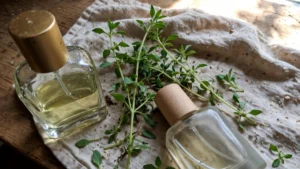
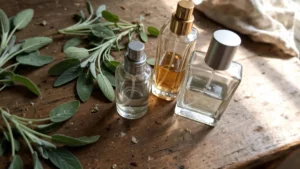
A sage perfume is a fragrance built around sage, the green, earthy herb, as a named note in its composition. It can be a modern cologne where sage is the star, or a classic fougère where clary sage works quietly in the heart. Either way, the sage is what gives the scent its dry, herbal character,
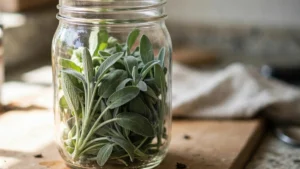
The confusion starts because sage is not one thing. Garden sage, the herb from the kitchen, smells sharp, green and slightly medicinal, close to rosemary. Clary sage, its softer cousin, smells warm, sweet and almost musky, Most perfumes use clary sage, and most of the time the bottle simply says sage,
This guide explains what sage actually does in a perfume, how to tell the two sages apart, and how to choose a sage scent that suits you.
Key takeaways
- A sage perfume is built around sage or clary sage as a named note, usually in the heart, where it gives the scent a dry, green, herbal spine.
- Clary sage is warm, sweet and musky; garden sage is sharp, green and camphor-like, and most perfumes use clary sage.
- Sage works as a bridge, connecting lavender to cedar, citrus to leather, and fresh openings to woody bases.
- The note has anchored the fougère family, the classic barbershop scent, for more than a century.
- No sage perfume smells like a fresh herb garden on its own, and a dusty, medicinal finish usually means the sage is overused or unbalanced, not that the note itself is at fault.
What sage actually does in a perfume
Sage in a perfume is a middle note, which means it appears after the bright opening has settled and stays through the dry-down. Its job is structural: it adds a dry, green, herbal quality that keeps a scent from feeling too sweet, too floral or too heavy. Without it, a lavender and cedar composition can feel like two separate ideas. With it, the same composition feels like one scent, because the sage connects the floral top to the woody base with a thread of green.
The smell itself is hard to pin down, because it changes with its company. Beside citrus and sea salt, sage smells fresh, clean and almost marine, like herbs growing near a coast. Beside lavender and coumarin, it smells warm, powdery and barbershop-clean. Beside leather and patchouli, it smells dark, dry and slightly animalic. That flexibility is why perfumers keep using it: the same material can do three different jobs, depending on what sits around it.
Sage does not dominate. Even in a perfume named after it, it rarely shouts. It works best when it is felt rather than noticed, a dry undertone that makes everything else smell more like itself. That is why it is so easy to miss, and why a first-time wearer can finish a whole bottle without realising that sage was the reason they liked it.
How to tell a real sage perfume from a herbal neighbour
Start with the notes list. A real sage perfume names sage or clary sage among its ingredients, usually in the heart. If the list mentions rosemary, thyme or basil but no sage, the scent may smell herbal, but it is not a sage perfume, and it will behave differently on skin. Rosemary is sharper and more camphor-like, thyme is savoury and dry, basil is sweet and peppery. Each has its own character, and confusing them is the most common mistake a shopper makes with herbal scents. Our guide to the thyme perfume explains how thyme differs from its herbal neighbours, and the rosemary perfume guide does the same for rosemary, while the basil perfume guide covers the sweetest of the green herbs.

Next, smell for the dry-down, not the opening. A real sage perfume will still smell green and dry several hours after spraying, when the citrus and the lavender have faded. If the scent turns sweet, powdery or purely woody, the sage was probably a minor player.
Finally, check the family. Most genuine sage perfumes belong to the fougère or the aromatic woody family, which means they are built on lavender, coumarin, cedar or vetiver. A sage perfume in a sweet gourmand or heavy amber is unusual, and often a sign the sage is decorative rather than structural. The family tells you what the perfumer was trying to do, and whether the sage is load-bearing or decorative.
9 facts about sage in perfume
Clary sage and garden sage are different plants, and perfumers use them differently
What it shows: Garden sage oil is sharp, green and camphor-like, while clary sage oil is warm, sweet and musky, with a hay-like softness.
What to consider: A bottle that simply says sage is almost always using clary sage, because garden sage can smell medicinal at perfume strength. Best For: Anyone choosing between a fresh and a warm sage scent. Material: Clary sage oil, steam-distilled from the flowering tops. Price Range: Less than most floral absolutes. Standout Feature: It explains why two sage perfumes can smell so different.
Sclareol is the molecule that gives clary sage its warm, musky sweetness
What it shows: Sclareol, the main compound in clary sage, is warm, sweet and slightly animalic, and it is also the starting material for amber-like aroma chemicals.
What to consider: Sclareol is warm and fixative, so clary sage can make a perfume last longer, but too much can turn a fresh scent dusty. Best For: Anyone who wonders why clary sage smells warm rather than green. Material: Sclareol, from clary sage. Price Range: Affordable. Standout Feature: One molecule explains the warmth and the staying power.
Sage sits in the heart, not the top, and holds a scent together for hours
What it shows: Sage is usually a heart note, appearing after the opening and lasting into the dry-down, carrying the scent from its bright beginning to its woody end.
What to consider: It is easy to miss in the first five minutes, so judging a sage perfume on its opening alone tells you little about the sage. Best For: Anyone who cannot smell the sage in a perfume. Material: Clary sage oil, used at heart-note strength. Price Range: Affordable. Standout Feature: The quietest note often holds the scent together.
The fougère family was built on sage, lavender and coumarin
What it shows: The fougère, the family that defined men’s cologne for a century, is built on lavender, coumarin and oakmoss, with clary sage as the herbal bridge. The first fougère, Houbigant’s Fougère Royale, used clary sage to connect its lavender top to its woody base.
What to consider: Modern fougères often replace oakmoss, but the sage and lavender pairing survives. Best For: Lovers of barbershop scents. Material: Clary sage, lavender and coumarin. Price Range: Fougères range from drugstore classics to luxury bottles. Standout Feature: Sage is in the original recipe for the most influential scent family.
Sage smells green and clean in the morning, and warm and animalic by evening
What it shows: Sage changes as it warms on skin. In the first hour it smells green, fresh and herbal, but as the day goes on the sclareol in clary sage develops a warm, musky, almost animalic quality.
What to consider: Ten minutes in a shop will not show its evening character, and heat speeds the change. Best For: Anyone surprised by how much a sage perfume changes. Material: Clary sage, developing on warm skin. Price Range: No extra cost; it is a property of the material. Standout Feature: Sage transforms on skin rather than simply fading.
Burning sage and wearing sage are two different traditions
What it shows: Burning sage, often called smudging, comes from Indigenous traditions in North America, where white sage is burned for ceremony and cleansing. Perfume sage is a different material, usually clary sage, used in tiny amounts for its smell, not its smoke.
What to consider: White sage is sacred to some Indigenous peoples, and wild harvesting raises real sustainability concerns. Most perfumes use farmed European clary sage instead. Best For: Anyone confusing perfume sage with burning sage. Material: Clary sage for perfume; white sage for ceremony. Price Range: Farmed clary sage is affordable. Standout Feature: Same plant family, different species, different purposes.
Sage loves lavender, and the pair has anchored men’s cologne for a century
What it shows: Lavender is floral, sweet and slightly powdery; sage is green, dry and herbal. Together they smell clean, classic and complete, which is why they appear together in fougères, barbershop scents and modern aromatic colognes alike.
What to consider: It can smell old-fashioned in a heavy fougère, but lighter versions feel more modern. Best For: Anyone who likes classic cologne. Material: Clary sage and lavender. Price Range: Affordable at every price point. Standout Feature: The longest-lived herbal pairing in perfumery.
White sage is sacred to some Indigenous peoples, and perfumers mostly use clary instead
What it shows: White sage is native to California and the Southwest, and sacred to several Indigenous peoples. Wild harvesting has put pressure on it, and perfumers almost never use it; they use clary sage, farmed in France, Italy and Eastern Europe.
What to consider: A perfume claiming white sage is unusual. Most bottles that say sage mean clary sage. Best For: Anyone who wants to wear sage respectfully. Material: Farmed clary sage, not wild white sage. Price Range: Widely available and affordable. Standout Feature: Perfume sage is a farmed European herb, not a sacred plant.
Too much sage turns a perfume dusty, so the best blends use it as a bridge
What it shows: Sage is powerful, and at high doses it can make a perfume smell dry, dusty and almost chalky, like an old herb drawer. The best sage perfumes use it in moderation, as a bridge between other notes, rather than as a solo act.
What to consider: A dusty finish usually means the sage is overused, not that sage is a bad note. Best For: Anyone who found a sage perfume dusty. Material: Clary sage, used in moderation. Price Range: Less material does not mean cheaper; it means better balanced. Standout Feature: The difference between great and dusty is often just the dose.
Which sage suits you: clary, garden, or white sage
If you like warm, smooth, musky scents, look for clary sage. It is the sage in most perfumes, and it is the one that pairs best with lavender, cedar and leather. A clary sage perfume will smell rounded from the first spray, and develop a warm, almost amber quality as the day goes on.
If you like sharp, green, herbal scents, look for garden sage. It is rarer in perfume, because it can smell medicinal at strength, but when it is used well, in a fresh cologne with citrus and sea salt, it gives a bracing quality clary sage cannot match. It is the better choice for hot weather, and for anyone who finds clary sage too soft or too sweet.
White sage is the third name you may see, and it is the one to treat with care. It is a sacred plant for some Indigenous peoples, and it is not a standard perfume material. A bottle that claims white sage is either using the name loosely, or raising real questions about sourcing and respect. The honest choice is to enjoy clary and garden sage in perfume, and to leave white sage to the traditions it belongs to.
The caveats that matter
Sage is a well-used, generally safe note, but it is not for everyone. The sharpest garden sage scents can smell medicinal if sprayed heavily or worn in the heat, and the richest clary sage fougères can feel dusty on very dry skin.
| Detail | What is known |
|---|---|
| What it is | A green, herbal note, usually clary sage, used in the heart of a perfume |
| What it smells like | Green, earthy and slightly camphor-like; clary sage is warm and musky, garden sage is sharp and green |
| Where it sits | Usually a middle note, lasting from the opening into the dry-down |
| Best season | Spring and summer for fresh sage scents; autumn and evening for rich fougères |
| Best pairings | Lavender, vetiver, cedar, geranium, citrus and leather |
| Who should test first | Anyone sensitive to herbal or camphor notes, and anyone who dislikes dry, dusty finishes |
| What to avoid | Heavy spraying in the heat, and pairing with very sweet gourmand scents |
| What it does not do | It does not smell like a fresh herb garden on its own, and it does not carry the ceremonial meaning of burning sage |
If you are pregnant, breastfeeding, or using prescription skincare, the usual advice applies: sage in a perfume is used in tiny amounts and is generally considered safe, but if you are sensitive to herbal notes, test on skin first. A single day of wear on the inner wrist tells you more than any review can.
Checklist: choosing a sage perfume honestly
Run through these checks before buying, and repeat them after a day of wear.
- Read the notes list: clary sage smells warm and smooth, while garden sage is sharper and greener.
- Check the family: most genuine sage perfumes are fougères or aromatic woods, built on lavender, cedar or vetiver.
- Test on skin, not paper: sage needs warmth to develop, and a paper strip will not show you the dry-down.
- Wear it for a full day before deciding: sage changes as it warms, and the evening character can be very different from the morning.
- Start with two sprays: that is enough to judge a sage scent, and heavier spraying can turn it medicinal.
- Buy for the season: light sage colognes suit spring and summer, and the rich fougères suit autumn evenings.
Frequently asked questions
What does sage smell like in perfume?
Green, earthy and slightly camphor-like, with a dry, herbal quality. Clary sage, the kind most perfumes use, is warmer and muskier, with a sweet, hay-like softness. Garden sage is sharper and greener, closer to rosemary.
Is sage a men’s note or unisex?
Both, in practice. Sage has anchored men’s cologne for a century, because of the fougère tradition, but it is also used in unisex scents like Wood Sage & Sea Salt, where it smells fresh and green. The note itself is not gendered; the composition around it decides how it reads.
What is the difference between sage and clary sage?
They are different plants. Garden sage is sharp, green and camphor-like. Clary sage is warm, sweet and musky, thanks to a molecule called sclareol. Most perfumes use clary sage, and most bottles that simply say sage mean clary sage.
Does sage perfume last long?
It depends on the base. Sage itself is a heart note, so it lasts several hours. A woody, leathery sage perfume, like Endymion, lasts six to eight hours. A light sage cologne, like Wood Sage & Sea Salt, lasts four to five hours and benefits from a top-up.
Can I wear sage perfume in summer?
Yes, if you choose the right one. Fresh sage scents, built on citrus, sea salt or vetiver, are good summer choices. Rich fougères are better saved for cooler weather.
Is sage safe for sensitive skin?
Sage in perfume is used in tiny amounts and is generally well tolerated, but anyone sensitive to herbal or essential-oil notes should test on skin first. Spray once on the inner wrist, wait a full day, and check for redness before wearing it more widely.
The bottom line
A sage perfume is a fragrance built around a green, herbal note that does its best work quietly, in the heart, holding lavender, cedar, vetiver and musk together. The most important thing to know is which sage you are smelling: clary sage is warm, smooth and musky, garden sage is sharp and green, and white sage belongs to a different tradition entirely.
Try a fresh sage cologne first if you are new to the note, move to a classic fougère once you know what sage smells like on your skin, and save the richest bottles for evenings. Use a light hand, test it on your own skin, and let the dry-down have a full day before you judge it. That is how a note that rarely gets its name on the bottle has anchored men’s cologne for more than a century.