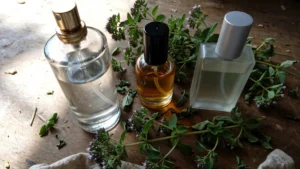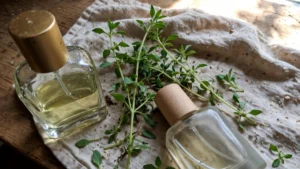

Marjoram is one of the quietest notes in perfumery, and that is exactly why it is worth understanding. It rarely appears on the front of a bottle, it almost never headlines a launch, and most people who love one could not name the note. They just know the scent feels clean, warm and slightly green at the same time, like a herb garden in late afternoon sun.
The confusion starts in the kitchen. Marjoram is a cooking herb, it sits next to oregano on the spice rack, and it shares a family with thyme and rosemary. Marjoram borrows a little from each of its relatives without ever sounding like any of them: it is greener than rosemary, softer than thyme, and warmer than basil.
This guide explains what a marjoram perfume is, where the note comes from, how it behaves on skin, and how to choose one.
Key takeaways
- Marjoram in perfume is sweet marjoram, Origanum majorana, a soft green herbal note with warm, faintly floral sweetness.
- The note usually sits between the opening and the heart, bridging bright citrus and deeper woods rather than leading either.
- Marjoram is not oregano: oregano is sharper and hotter, while marjoram is rounder and softer.
- It pairs best with citrus, lavender, woods and soft spices, and it softens sharp openings without adding sweetness.
- No marjoram perfume smells of cooking, but a heavy one can turn dusty, so test on skin and give it an hour.
What a marjoram perfume actually is
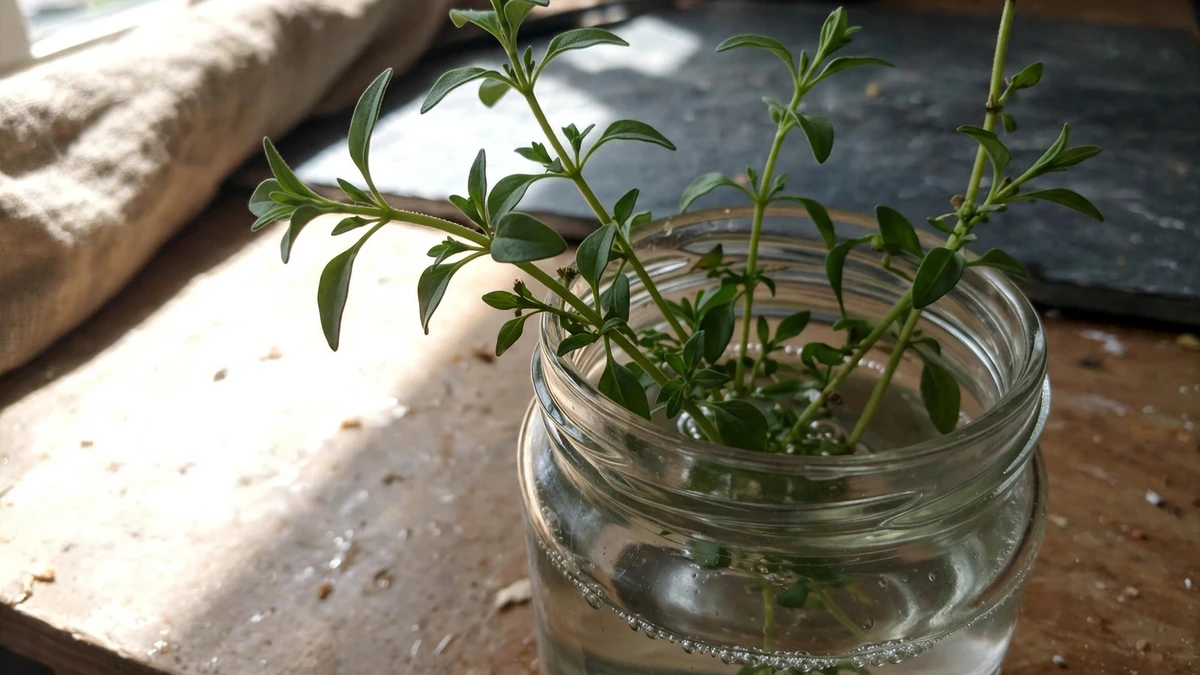
A marjoram perfume is built around the scent of sweet marjoram, a small Mediterranean herb with soft, grey-green leaves and a gentle, warm aroma. Perfumers use marjoram essential oil, distilled from the flowering tops, and sometimes a built accord. Either way, the character is the same: green and herbal, but warm rather than sharp.
What makes marjoram unusual is that it is neither a bright top note nor a deep base note. It lives in the middle of a perfume and behaves like a bridge. In the opening, it takes the edge off citrus and green notes. In the heart, it adds a warm herbal layer. In the drydown, it leaves a soft woody warmth.
It also helps to know what marjoram is not. It is not a floral, even though it has a faint floral sweetness. It is not a wood, even though it dries down warm and woody. And it is not oregano, though the two plants are close relatives. Oregano oil is sharp and almost medicinal; marjoram is the gentle one.
How to tell a marjoram perfume from the rest
The easiest way to recognise marjoram is to smell it against its relatives. Next to rosemary, the difference is immediate: rosemary is camphor-like, cool and almost medicinal, with a sharp, clean edge, while marjoram is warmer and rounder, with no camphor and no bite. Next to thyme, the gap is just as clear: thyme is savoury, dry and slightly smoky, while marjoram is softer and sweeter. Our guide to what a thyme perfume is compares the two directly.
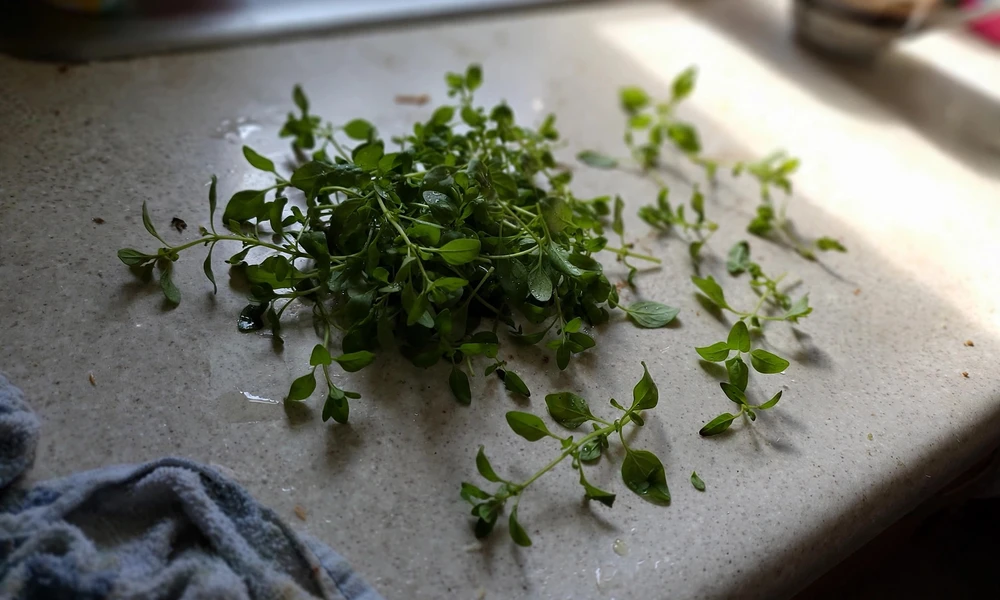
On a blotter, marjoram smells green, warm and faintly sweet, with a soft herbal body and almost no sharpness. On skin, it changes in the first hour: the green freshness lifts off, the warmth deepens, and a soft, slightly woody dryness comes forward. It should feel rounder and warmer after an hour.
Price is only a rough guide. Real marjoram oil is not expensive, so a marjoram perfume need not cost a fortune. What costs more is balance.
9 things to know about marjoram in perfume
Sweet marjoram and wild marjoram are different plants, and only one of them is the perfume note
Sweet marjoram, Origanum majorana, is the plant perfumers use: a tender Mediterranean herb with soft, grey-green leaves and a gentle scent. Wild marjoram, Origanum vulgare, is the plant most people know as oregano: hardier, sharper and hotter, and far less suited to perfume.
What It Shows: The note is a deliberate choice, not a generic herb. What to Consider: Sharp, hot or medicinal means oregano-like materials. Best For: Green-note lovers. Material: Marjoram essential oil, or a built accord. Price Range: Mid-range. Standout Feature: Its softness.
Marjoram oil comes from the flowering tops, and the harvest window is only a few weeks
Marjoram essential oil is steam-distilled from the leaves and flowering tops, harvested just as the flowers open, when the scent is at its softest. Harvest too early and the oil is thin and green. Harvest too late and the oil turns drier, losing its gentle character.
What It Shows: Real marjoram oil smells warm and rounded, not raw and green. What to Consider: Oil quality varies by harvest and origin. Best For: Lovers of natural herb notes. Material: Steam-distilled marjoram oil. Price Range: Moderate. Standout Feature: The short harvest window is why the best ones smell softer.
The note smells warm and green at once, which is why it reads as both fresh and cosy
Most green notes are either fresh or warm; marjoram is both. The freshness comes from its green, herbal top, like crushed leaves and cool air. The warmth comes from the soft, slightly sweet, almost woody body underneath.
What It Shows: Marjoram is a year-round note, not a seasonal one. What to Consider: In very hot weather the warmth can feel slightly heavy. Best For: Anyone who wants a green perfume that does not smell cold. Material: The whole marjoram oil. Price Range: Any. Standout Feature: The dual character is rare among herb notes.
Marjoram bridges the opening and the heart instead of sitting in either
Perfume notes are usually described as top, heart or base, and marjoram refuses to sit neatly in any one of them. It arrives with the opening, softening citrus and green notes, and it is still there an hour later, holding the heart together. Marjoram smooths the join between a sharp citrus opening and a heavy woody base.
What It Shows: Marjoram perfumes often feel smoother and more continuous than other green perfumes. What to Consider: It bridges rather than leads, so judge the whole perfume. Best For: People who dislike perfumes that change abruptly from bright to heavy. Material: Marjoram oil in the middle of the formula, at a modest dose. Price Range: Mid-range and above. Standout Feature: The bridge role is invisible when it works.
Marjoram is the quiet reason many classic men’s colognes smell clean
Classic men’s colognes, the barbershop-fresh kind built on citrus, lavender and woods, very often contain marjoram without saying so. The note is there to make the citrus smell less sharp, to give lavender a warm herbal bed, and to keep the woods from feeling too dry.
What It Shows: Marjoram is a workhorse note in classic masculine perfumery, even when it is not named. What to Consider: If classic colognes feel too sharp, look for marjoram. Best For: Fans of classic, clean, understated men’s scents. Material: Marjoram oil with citrus, lavender and cedarwood. Price Range: Every price, from drugstore to luxury. Standout Feature: The clean-but-not-soapy quality is its signature.
Oregano is marjoram’s loud cousin, and the two get confused for a reason
Oregano and marjoram share a genus and a garden bed. In the bottle the difference is unmistakable. Oregano oil is dominated by carvacrol, a sharp, hot, medicinal compound. Marjoram oil is dominated by softer compounds, including terpineol and linalool, which give it a warm, floral-green character with no heat.
What It Shows: The confusion is botany, not smell, and the nose tells them apart instantly. What to Consider: If a perfume labelled marjoram smells hot, sharp or pizza-like, it is not marjoram. Best For: Anyone put off herb perfumes by one sharp oregano-heavy scent. Material: Sweet marjoram oil, high in terpineol; oregano oil, high in carvacrol. Price Range: Any. Standout Feature: The absence of heat is the clearest sign.
Marjoram softens sharp citrus in the opening without sweetening it
Citrus notes are bright and beautiful, but they can be piercing, especially bergamot and grapefruit, which have a bitter, almost astringent edge. Perfumers often soften that edge with sweetness, but that changes the character of the perfume. Marjoram offers a different solution: it takes the sharpness off citrus without adding any sweetness at all.
What It Shows: Marjoram and citrus pair well because it works without sugar. What to Consider: If you dislike sweet perfumes but find citrus too sharp, try a marjoram-citrus blend. Best For: Lovers of fresh perfumes who want softness without sweetness. Material: Marjoram oil with bergamot, lemon or neroli. Price Range: Mid-range. Standout Feature: Softening without sweetening is a rare trick.
The note changes most in the first hour, then settles into a soft woody warmth
Marjoram is not a note that stays still. In the first minutes it is at its greenest, fresh and herbal. Over the next hour the green lifts away, the warmth deepens, and a soft, dry, slightly woody character comes forward. After that it settles into a gentle herbal warmth that lasts for hours.
What It Shows: Patience is part of testing a marjoram perfume. What to Consider: Test on skin, wait an hour, and check the drydown on your wrist. Best For: People who wear a perfume all day and want it to evolve gently. Material: The full marjoram oil, whose heavier compounds carry the warm drydown. Price Range: Any. Standout Feature: The first-hour transformation.
A marjoram perfume usually names another note first, and marjoram does the quiet work underneath
On the notes list, marjoram often sits buried in the middle, behind bergamot, lavender, cedarwood or a spice. Marjoram is a supporting note by nature, and it does its best work underneath a more prominent one, holding the blend together.
What It Shows: A low position on the notes list does not mean a small role. What to Consider: Judge it by how smooth and complete the blend feels. Best For: People who prefer understated, polished perfumes. Material: Marjoram oil at a supporting dose, usually below the headline notes. Price Range: Mid-range and above. Standout Feature: Its invisibility proves how well it works.
Which marjoram perfume suits you
If you like fresh, clean perfumes but find most of them too sharp or too soapy, start with a marjoram perfume built on citrus and lavender. The citrus gives freshness, the lavender gives a calm, classic frame, and the marjoram takes the edge off both. They suit daytime and office wear. Our guide to what a rosemary perfume is makes a useful contrast, because rosemary perfumes are the sharper, cooler alternative.
If you like warm, woody perfumes but find them too heavy or too dry, look for marjoram paired with cedarwood, sandalwood or vetiver. The woods give you the warmth and depth, and the marjoram keeps the blend green and breathable.
If you already love herb perfumes and want the softest of them, look for a marjoram perfume that pairs it with basil or a soft spice like cardamom. Basil is the closest relative in feel, and the two together make a warm, gentle green blend that never smells of food. Our guide to what a basil perfume is covers the basil side.
The caveats that matter
Marjoram is a gentle note, and gentle notes have gentle problems. The most common is dustiness. In too large a dose, or with too many dry woods, marjoram can turn powdery and flat, like a dried herb left in a jar too long. A good blend keeps the dose moderate and gives the marjoram something fresh, usually citrus, to balance it.
| Detail | What is known |
|---|---|
| What it is | Sweet marjoram, Origanum majorana, a soft green herbal note with warm, faintly floral sweetness |
| Where it sits | Between the opening and the heart, bridging citrus and woods rather than leading either |
| How it smells | Green and herbal at first, then warm, soft and slightly woody in the drydown |
| What it is not | Not oregano, which is sharper and hotter, and not rosemary, which is cooler and more camphor-like |
| Best pairings | Citrus, lavender, woods, and soft spices such as cardamom |
| How long it lasts | The green fades within the first hour; the warm herbal drydown lasts several hours |
| Who should test carefully | People who dislike powdery or dusty scents, and anyone sensitive to herbal notes |
| What it does not do | It does not project strongly or headline a perfume; it supports and smooths the notes around it |
Marjoram also rewards testing on skin and punishes testing on paper. On a blotter it stays green and bright for far longer than it does on skin, because there is no warmth to draw out the woody drydown. A perfume that smells sharp on paper can smell warm and rounded on your wrist an hour later. Spray it on your wrist, wear it for an hour, and judge it then.
Checklist: choosing a marjoram perfume honestly
Use these checks before you buy, and again after an hour.
- Check the notes list: marjoram should sit alongside citrus, lavender or woods.
- Check the opening: it should smell green and warm, not sharp, hot or medicinal.
- Check the first hour: the green should soften and warm up, not vanish or turn dusty and flat.
- Test on skin, not paper: spray your wrist, wait an hour, and judge the drydown, which is where marjoram does its real work.
- Check the balance: it should feel smooth and continuous, with no abrupt jump from bright to heavy.
- Start with one bottle: buy a small size first, and only commit to a full bottle once you know how it wears.
Frequently asked questions
Does a marjoram perfume smell like cooking?
No. Cooking marjoram smells stronger and more pungent because it is used in larger amounts and often heated. In perfume, marjoram is used at a supporting dose, blended with citrus, lavender and woods, so it reads as soft and warm, not as food.
Is marjoram a men’s note or a women’s note?
Neither, and both. Marjoram appears most often in classic men’s colognes, because it suits their clean, understated style, but there is nothing inherently masculine about it. It is a soft, warm, green note that works just as well in unisex or women’s perfume.
How long does a marjoram perfume last on skin?
The green freshness fades within the first hour, and the warm drydown usually lasts four to six hours on skin, longer on clothes. Longevity depends more on the whole blend: one built on woods and musk lasts longer than one built only on citrus and herbs.
What notes pair best with marjoram?
Citrus, especially bergamot and lemon, is the classic pairing, because marjoram softens citrus without sweetening it. Lavender is the second classic, because the two herbs share a calm, clean character. Woods, particularly cedarwood and sandalwood, give marjoram a warm base, and soft spices such as cardamom add warmth without heat.
Is marjoram the same as oregano in perfume?
No, and the difference is easy to smell once you know it. Oregano is sharp, hot and almost medicinal, dominated by carvacrol, and used only in trace amounts. Marjoram is soft, warm and green, dominated by gentler compounds such as terpineol and linalool, and can be used generously.
Can I wear a marjoram perfume in summer?
Yes, and it suits summer well, as long as the blend is light. A marjoram perfume built on citrus and lavender is fresh, clean and comfortable in heat, because the marjoram keeps the citrus from feeling sharp without adding any heaviness.
The bottom line
Marjoram is a perfume note for people who like their scents understated. It will not announce itself, it will not fill a room, and it will not be the first thing anyone notices about a perfume. What it does is make the perfume around it feel smoother, warmer and more complete, softening sharp citrus and warming cool lavender.
Choose a marjoram perfume the way you would choose a good herb: by smelling it fresh, giving it an hour, and judging it by how it wears rather than how it opens. Look for citrus or lavender alongside it, test it on skin, and watch for the warm, soft drydown that is the real signature of the note. If you find one that feels clean without smelling soapy, you have found a good marjoram perfume.