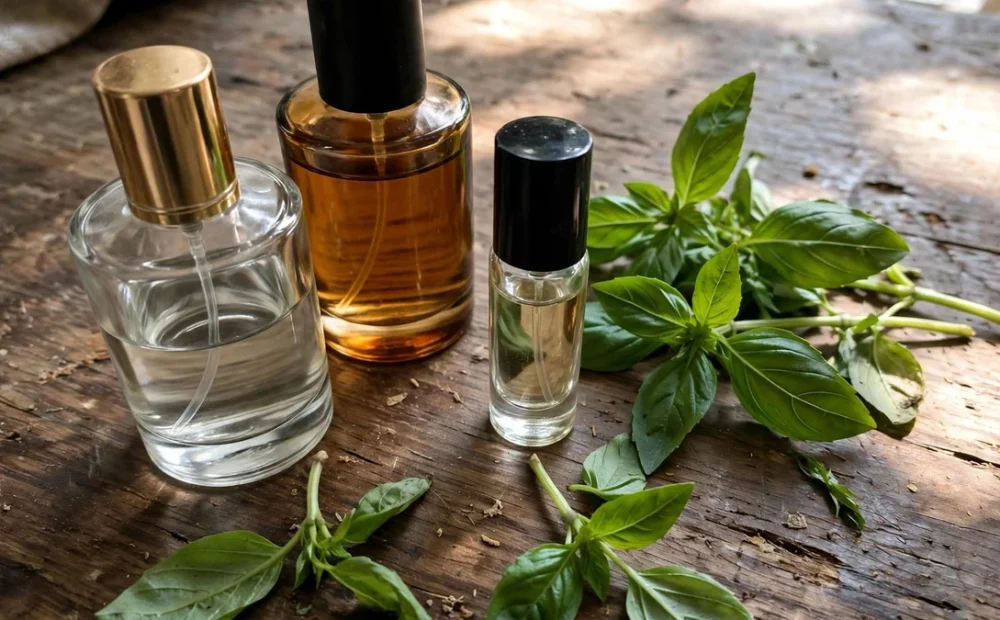
A bamboo perfume is a perfume built around a smell that barely exists in nature. The bamboo plant itself gives up almost no scent, so there is no bamboo oil to distil and no bamboo absolute to buy. What perfumers call bamboo is an accord, a careful blend of green, watery and woody molecules that together suggest the plant. When it works, it smells like a cool garden after rain.
Bamboo is one of the newest notes in perfumery, and it arrived with the modern clean fragrance movement. Older green notes came from real materials, galbanum resin, violet leaf, cut grass. Bamboo came from the laboratory, built to answer a simple question: what does fresh, green and calm smell like?
This guide explains what a bamboo perfume actually is, how the note is made, where it sits in a perfume, and how to choose one honestly.
Key takeaways
- A bamboo perfume is built around a synthetic accord, not a natural bamboo extract, because the plant gives up almost no scent of its own.
- The note smells green, watery and lightly woody, like a cool garden after rain, and it usually sits in the top or heart of a perfume.
- It arrives first and fades first, so it needs citrus, tea or a soft wood to read clearly and last on skin.
- It is one of the most office-safe and beginner-friendly notes, because it is quiet, fresh and rarely overpowering.
- No bamboo perfume smells exactly like a real bamboo grove, and the note varies more between brands than most notes do.
What a bamboo perfume actually is
A bamboo perfume is a perfume in which bamboo is a named note, usually in the top or the heart, and usually paired with citrus, green tea, white flowers or light woods. It is not a perfume made from bamboo. No part of the plant is distilled into the bottle, and no essential oil of bamboo exists in perfumery. The note is a construction, and every house builds it slightly differently, which is why two bamboo perfumes can smell quite different from each other.
The idea behind the note is simple. Bamboo is a plant that most people associate with calm, coolness and clean air, with tall green stems, shaded groves and rain. Perfumers took that association and built a smell to match it, using green molecules for the leafiness, watery notes for the coolness, and pale woods for the dry, papery character of the stem. The result is a note that feels fresh without being citrusy, green without being grassy, and woody without being heavy.
Most fresh notes are either bright, like citrus, or sharp, like cut grass. Bamboo is neither. It is soft and rounded, and it makes the notes around it feel calmer. A citrus perfume with bamboo feels cooler. A floral perfume with bamboo feels cleaner. A woody perfume with bamboo feels lighter.
How the bamboo note is made and what to look for
The bamboo accord is built from a handful of familiar materials. Green notes such as cis-3-hexenol give it the smell of crushed leaves. Watery notes such as calone give it the cool, aquatic character. Soft woods such as cedarwood and sandalwood give it the dry, pale backbone of the stem.
Look next at the partners. Citrus and green tea are the most reliable, because they share bamboo’s brightness and keep it from turning flat. White flowers such as lotus, jasmine and lily of the valley soften it and give it a watery, feminine character. Light woods give it staying power, and clean musk extends it into the evening.
Finally, look at the concentration. Bamboo is a light note, so it benefits from an eau de parfum, which gives the base more weight to hold it. A light eau de toilette can still be lovely, but it will usually need a second spray by midday. Our guide to what a juniper perfume is is a useful comparison, because juniper is another modern green note that is built rather than harvested, and it behaves in a similar way on skin.
9 facts about bamboo perfume
Bamboo is a grass, not a tree, and the note is built, not distilled
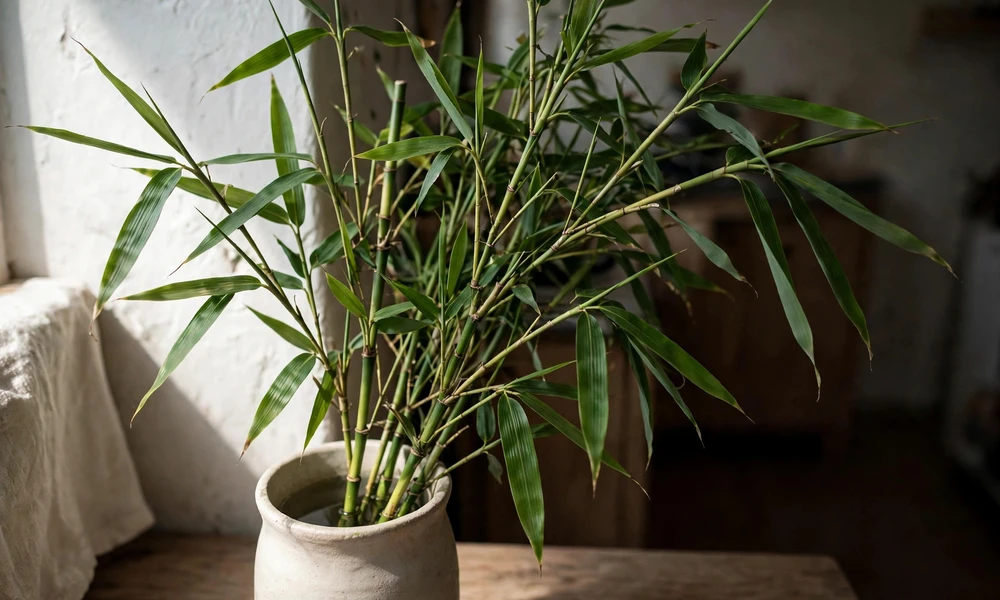
What it shows: Bamboo belongs to the grass family, and it grows fast, tall and hollow, with smooth green stems and narrow leaves. None of those parts yields a perfumery material, so the note in your bottle is entirely constructed from other molecules.
What to consider: Because the note is built, it varies more between brands than a natural note does. One house’s bamboo is watery, another’s is leafy, and a third’s is woody. Best for: Anyone who wants to understand why two bamboo perfumes can smell so different. Material: Green molecules, watery notes, pale woods, clean musk. Price range: The accord itself costs little, so price reflects the brand and the base, not the bamboo. Standout feature: A note with no natural source, built entirely from association.
The bamboo note smells like green water, not like wood
What it shows: The first thing most people notice about a bamboo perfume is a cool, watery greenness, closer to a pond than to a forest. The woodiness is there, but it is pale and dry, like split bamboo, not dark and resinous like cedar or sandalwood.
What to consider: If you are expecting a woody perfume, bamboo will surprise you with how light it is. If you are expecting an aquatic perfume, it will surprise you with how green it is. Best for: People who want freshness without citrus sharpness. Material: Watery notes, green leaf molecules, pale woods. Price range: Found at every price, from budget to niche. Standout feature: A green note that feels wet rather than leafy.
Bamboo leaves and bamboo shoots give different green notes
What it shows: Perfumers talk about two bamboos. The leaf version is greener, sharper and more herbal, with a hint of grass and tea. The shoot version is softer, rounder and slightly sweet, with a watery, almost cucumber-like freshness.
What to consider: A perfume that lists bamboo leaves will usually feel greener and drier. A perfume that leans on the shoot character will usually feel softer and more watery. Best for: Learning to tell the two green characters apart on your own skin. Material: Leaf molecules such as cis-3-hexenol, shoot accords with watery notes. Price range: Both versions appear at every price. Standout feature: One plant, two different green smells.
The note is usually a top note, so it arrives first and fades first
What it shows: Bamboo molecules are light, and light molecules evaporate fast. That is why bamboo is usually placed in the top or the heart of a perfume, where it shapes the opening, and why it is usually gone within an hour or two.
What to consider: Judge a bamboo perfume on its drydown, not its opening. The opening is the bamboo, but the drydown is what you will actually live with. Best for: People who love a bright opening and do not mind a quiet drydown. Material: Light green and watery molecules with a woody or musky base. Price range: Eau de parfum concentrations usually hold the note longer. Standout feature: A note that introduces the perfume and then hands it over.
Bamboo needs citrus or tea to read clearly on skin
What it shows: On its own, bamboo can be so quiet that it disappears into the skin. Citrus gives it brightness and lift, and tea gives it depth and a green, slightly bitter edge, and both make the bamboo easier to smell.
What to consider: A bamboo perfume with no citrus or tea partner can smell vague, like fresh air with no direction. Look for bergamot, mandarin, green tea or white tea in the notes. Best for: Anyone choosing their first bamboo perfume. Material: Bergamot, mandarin, green tea, white tea, lotus. Price range: The best partnerships appear at every price. Standout feature: A note that needs a friend to be heard.
Bamboo and vetiver are both green but do different jobs
What it shows: Vetiver is a root, and it smells smoky, earthy and dry, with a grassy edge that anchors a perfume from below. Bamboo is a stem, and it smells cool, watery and light, with a green edge that lifts a perfume from above. They are both green, but they pull in opposite directions.
What to consider: If you like vetiver, you may find bamboo too quiet, because it lacks the smoky depth. If you like bamboo, you may find vetiver too earthy, because it lacks the watery clarity. Best for: People deciding between two green notes. Material: Vetiver root, bamboo accord, cedarwood. Price range: Both notes appear at every price. Standout feature: Two greens, one that anchors and one that lifts.
Bamboo is the note that makes a perfume feel like a garden after rain
What it shows: The strongest association people have with bamboo is a shaded grove after rain, cool air, wet leaves, and the smell of water on green stems. Perfumers use that association deliberately, building the note to trigger it.
What to consider: That association is cultural as well as sensory, and it is stronger for people who have walked through a bamboo grove. If you have not, the note may simply read as fresh and green. Best for: Anyone who loves the feeling of a garden after rain. Material: Rain accord, green leaves, watery notes, pale woods. Price range: The garden character appears at every price. Standout feature: A note that smells like a place, not just a plant.
Bamboo shows up most in fresh and aquatic perfumes
What it shows: Because bamboo is cool and watery, it fits naturally into fresh and aquatic families, where it adds a green edge to citrus, sea notes and clean musk. It is rarer in oriental and gourmand perfumes, where its lightness gets buried.
What to consider: If you are shopping for a bamboo perfume, start in the fresh and aquatic sections. If you find it in a gourmand, expect it to be a subtle green anchor rather than a star. Best for: Lovers of fresh, clean and aquatic scents. Material: Citrus, sea notes, clean musk, green tea. Price range: Fresh and aquatic bamboo perfumes range from budget to luxury. Standout feature: The green note of the clean fragrance movement.
Bamboo lasts longer on clothes than on skin
What it shows: Skin is warm, and warmth speeds up evaporation, which is why light notes such as bamboo fade fast on the wrist. Clothes are cooler and still, so the same molecules evaporate more slowly, and a bamboo perfume can still be noticeable on a shirt the next morning.
What to consider: Spraying on clothes is a practical way to make a bamboo perfume last, but test it on a hidden area first, because some perfumes can stain delicate fabrics. Best for: Anyone frustrated by how quickly bamboo fades on skin. Material: The same light green and watery molecules, evaporating more slowly. Price range: No extra cost, just a change of habit. Standout feature: A note that behaves differently on fabric than on skin.
Where bamboo sits in a perfume’s structure
Bamboo most often sits in the top or the heart. In the top, it gives a bright, green opening that lasts twenty to forty minutes and sets a fresh tone for the perfume. In the heart, it gives a longer, greener character that shapes the middle of the wear, usually for two to three hours.
That placement matters because it changes what you should expect. A top-note bamboo will be gone by lunch, and the perfume you are left with is the base, so the base is what you are really buying. Our guide to what a pine perfume is is a useful comparison here, because pine is another green note that usually sits in the top or heart, and it fades in a similar way.
The base is what decides whether a bamboo perfume lasts. A base of cedarwood, sandalwood or clean musk will hold the freshness for hours. A base of nothing much will let it go.
The caveats that matter
Bamboo is a safe, gentle note, but it is not a strong one. The most common disappointment with bamboo perfumes is longevity. A scent that smells wonderful for the first hour can be gone by lunch, and that is not a fault in the bottle, it is the nature of the note. Light, green molecules evaporate fast, and bamboo is made of them.
| Detail | What is known |
|---|---|
| What it is | A built accord, not a natural extract, because the plant gives up almost no scent |
| What it smells like | Green, watery and lightly woody, like a cool garden after rain |
| Where it sits | Usually top or heart, so it arrives first and fades first |
| How long it lasts | Two to four hours on skin; longer on clothes and with a woody base |
| Best partners | Citrus, green tea, white flowers, cedarwood, sandalwood, clean musk |
| Best season | Spring and summer, but it works year-round as a fresh layer |
| Who should be careful | Anyone who wants a loud, long-lasting scent; bamboo is quiet by nature |
| What it does not do | It does not smell exactly like a bamboo grove, and it does not project far |
If you have sensitive skin, bamboo perfumes are usually a good choice, because they are rarely heavy on spice or strong woods, but always patch-test a new perfume on your inner arm first.
Checklist: buying a bamboo perfume honestly
Use these checks before you buy, and again after a full day of wear.
- Check where bamboo sits in the notes: top means bright and brief, heart means greener and longer, base means woody and soft.
- Check the partners: citrus, green tea and light woods support bamboo best; heavy amber and strong spice usually do not.
- Check the base: cedarwood, sandalwood or clean musk will hold the note longer than a thin base.
- Test on skin, not paper, and wait twenty minutes, because bamboo changes as it settles.
- Wear it for a full day before deciding, and check whether it is still there at lunch.
- Try a spray on clothes as well as skin, because bamboo often lasts longer on fabric.
Frequently asked questions
What is a bamboo perfume?
A bamboo perfume is a perfume in which bamboo is a named note, usually in the top or heart, paired with citrus, green tea, white flowers or light woods. It is not made from bamboo itself. The note is a built accord, because the plant gives up almost no scent of its own.
Does bamboo perfume smell like real bamboo?
Close, but not exactly. It smells like the idea of bamboo, cool, green and watery, like a garden after rain.
Is bamboo a top, heart or base note?
Usually a top or heart note, because its molecules are light and evaporate quickly. In the top it gives a bright, green opening. In the heart it gives a longer, greener character. In the base, which is rare, it gives a soft, woody drydown.
How long does a bamboo perfume last?
Usually two to four hours on skin, because the note is light. Perfumes with a woody or musky base last longer, and a spray on clothes can still be noticeable the next morning.
Can I wear bamboo perfume in winter?
Yes, but it behaves differently in cold air. It stays greener and sharper, and it projects less, so it can feel thin on its own.
Is bamboo perfume unisex?
Almost always, yes. Bamboo is a green, watery note with no strongly feminine or masculine character, and most bamboo perfumes are sold as unisex or in both men’s and women’s versions. Our guide to what a cedarwood perfume is is a useful next read, because cedarwood is the woody base that most bamboo perfumes rely on, and it is just as unisex.
The bottom line
A bamboo perfume is a modern, built note that smells like a cool garden after rain, green, watery and lightly woody, and it is one of the most beginner-friendly and office-safe notes you can wear. It is also one of the most delicate, so it needs citrus, tea or a soft wood to read clearly, and it needs a woody or musky base to last.
Start with a clear example, such as Bvlgari Omnia Crystalline, or with the pure note itself in Demeter Bamboo, and learn what bamboo smells like on your own skin before you spend more.