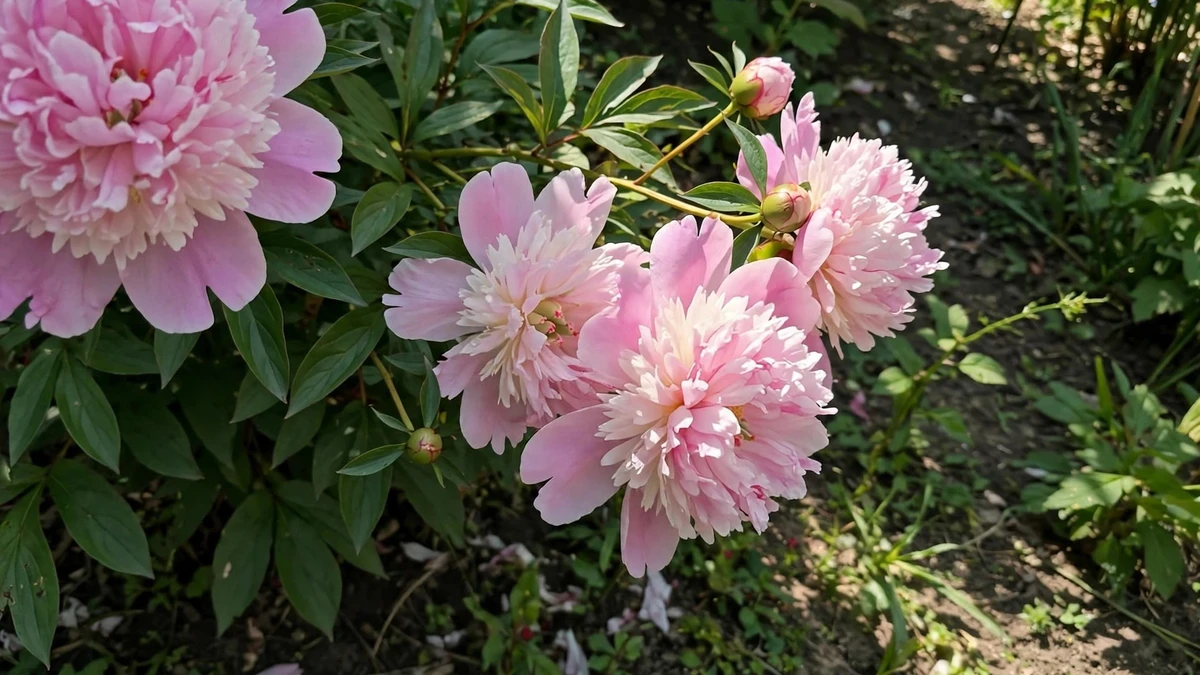
A peony farm escape is a trip built around a flower that refuses to be hurried. The blooms open when the soil and the weather say so, not when your holiday starts, and the farms that grow them work to a calendar written by the plants. That is the charm of it, and also the risk.
The trick is to plan around the peony, not around the destination. Tree peonies and herbaceous peonies bloom weeks apart, the cutting season runs on its own schedule, and the best hours of the day are the earliest ones, when the buds are still tight and the air is cool. A farm that understands this will tell you its usual peak week honestly, offer a cutting session at dawn, and give you a room on the land so you do not have to drive in from a town while the flowers are opening.
This guide walks through the nine steps that make a peony farm escape work, from learning the peony calendar to buying roots on your last morning. It is written for a first-timer, and it assumes you have never planned a flower-farm trip before, only that you are willing to let the bloom set the schedule.
Key takeaways
- Tree peonies bloom weeks before herbaceous peonies, so learn which kind the farm grows before you choose your dates.
- Book for the cutting window, not just the flowering peak, because the harvest is the most interesting part of the stay.
- Stay on the farm if you can, because the dawn cutting and the evening walk are the hours that make the trip.
- Peony farms are muddy, rural, and often far from towns, so sturdy shoes and a flexible schedule matter more than smart clothes.
- No farm can guarantee a exact bloom date, so build in a few days of slack and a plan for rain.
What a peony farm escape actually involves
A peony farm escape is a stay on, or beside, a working peony farm during bloom season. The farm grows peonies for cut flowers, for roots, or for both, and your days follow the farm’s rhythm. Mornings start before the sun is high, because peonies are cut while the buds are still cool and tight. Afternoons are slower, with grading, tea, and walks through the rows. Evenings are quiet, and often the best time to see the flowers, when the light turns soft and the scent returns.
The stay itself is usually simple. A farmhouse room, a converted barn, or a small lodge on the land, with meals from the farm kitchen and a host who is often the grower. The schedule belongs to the farm, the food comes from the kitchen garden, and the conversation at dinner is usually about the weather, the buds, and the trucks that leave at dawn.
What you are really booking is access to the work. On a good farm you will walk the rows with the grower, learn to read a bud, watch a stem being cut and conditioned, and see the grading table where a bloom is judged fit for export. Either way, the trip is about the flower, and the farm is the only place to see it properly.
How to plan a peony farm escape, step by step
Start with the calendar, not the map. Find out when peonies bloom in the region you are considering, and whether the farm grows tree peonies, herbaceous peonies, or both. Tree peonies open first, in mid-spring, with woody stems and enormous blooms. Herbaceous peonies follow a few weeks later, lower to the ground and far more numerous.

Next, choose the farm by what it offers, not by how it photographs. Ask whether guests can join the cutting, whether the grading shed is open to visitors, and whether the farm serves meals from its own kitchen. A farm that answers these questions clearly is a farm that welcomes guests into the work.
Finally, book the stay before the flights. The best peony farms have few rooms and book out a year ahead, especially in Luoyang, the Loire, and the Cotswolds. Our guide to planning a lotus farm escape follows the same order, because on a working flower farm the room is the scarce thing, not the flight.
The 9 steps that make a peony farm escape work
Learn the peony calendar first: tree peonies bloom weeks before herbaceous ones
What to do: Ask the farm which kind it grows, and its usual peak week for each, before you choose any dates.
What to avoid: Do not book by a festival date alone, because the festival may fall before or after the farm’s own peak. Best for: First-timers who want to see the flowers at their fullest. Time needed: An hour of research before you book. Standout tip: A farm with both tree and herbaceous peonies gives you the longest window and the best insurance against a shifted bloom.
Choose between tree peonies and herbaceous peonies before you pick a farm
What to do: Decide whether you want the enormous, short-lived blooms of a tree peony or the abundant cutting fields of a herbaceous peony.
What to avoid: Do not assume every peony farm grows both kinds, because many specialise in one. Best for: Travellers who know what they want to see. Time needed: One conversation with the farm. Standout tip: Tree peony farms suit slow looking, herbaceous farms suit cutting and grading, so pick the experience, not just the flower.
Book for the cutting window, not just the flowering peak
What to do: Ask when the farm cuts, and plan your stay to overlap with the cutting days, not just the days when the field looks fullest.
What to avoid: Do not arrive on the last day of the bloom, when the cutting is done and the field is past its best. Best for: Travellers who want to see the work, not just the flowers. Time needed: Two or three days on the farm. Standout tip: The cutting window is usually a few days before the visual peak, when the buds are tight enough to travel.
Watch a peony being cut and conditioned before it goes into a bucket
What to do: Stand beside the cutter, watch the angle of the cut, the stripping of the lower leaves, and the way the stem goes straight into cold water.
What to avoid: Do not cut a stem yourself without being shown how, because a wrong cut wastes a flower and can damage the plant. Best for: Anyone who wants to understand the craft. Time needed: One dawn morning. Standout tip: The conditioning matters as much as the cut: a stem that sits in cold water within minutes will open cleanly, one that waits will not.
Walk the rows at first light, when the buds are still tight
What to do: Set an alarm, walk the rows before breakfast, and look at the buds up close rather than from the path.
What to avoid: Do not wait until midday, when the heat has opened the blooms and the scent has faded. Best for: Photographers and early risers. Time needed: An hour before breakfast. Standout tip: The scent is strongest in the cool morning air, and the light is softer, so the first hour is the best hour for both looking and photographing.
Taste peony petal tea and peony root in the farm kitchen
What to do: Ask the farm whether it serves petal tea, and try the root preparations the kitchen offers, even if they are unfamiliar.
What to avoid: Do not eat raw petals or roots from the field without asking, because some preparations are traditional and some are simply not food. Best for: Travellers who like to taste a place. Time needed: One afternoon in the farm kitchen. Standout tip: Petal tea is light and floral, and it tastes best when the petals were picked that morning.
Join the grading table and learn what makes a stem export-grade
What to do: Ask to sit at the grading table, watch the stems being measured and sorted, and learn what the graders look for.
What to avoid: Do not handle the graded stems without being invited, because a bruised bud is a lost sale. Best for: Travellers who enjoy craft and detail. Time needed: A morning in the grading shed. Standout tip: Export grade is about bud size, stem length, and straightness, not about how open the flower is, because the flower opens after it travels.
Sleep in the farmhouse and let the bloom season set the pace
What to do: Book a room on the farm, eat with the household, and let the farm’s day set yours.
What to avoid: Do not stay in a town an hour away and drive in each day, because you will miss the dawn cutting and the evening walk. Best for: Travellers who want the full farm rhythm. Time needed: Two or three nights. Standout tip: The evenings are the quiet reward: the work is done, the light is soft, and the field is yours to walk in.
Buy your peony roots on the last morning, after you have seen them flower
What to do: Ask the farm which varieties it sells as roots, and buy them on your last morning, once you have seen the flowers they produce.
What to avoid: Do not buy roots on the first day, before you know which varieties you loved, and do not buy without checking the import rules for your home country. Best for: Gardeners who want to take the trip home. Time needed: An hour on the last morning. Standout tip: Roots bought from the farm that grew them, with the variety name written down, are worth more than any souvenir.
Which peony region to choose first
Choose Luoyang or Heze for your first peony farm escape if you want history and scale, and if you are comfortable travelling in China in spring. The Loire and the Cotswolds suit a first-timer who wants a gentler stay, with good food, gardens, and a slower pace.
Lisse suits a traveller who wants to ride a bicycle between fields, Hokkaido suits one who wants the Japanese garden tradition, and Alaska suits one chasing the last blooms of the year. The Adelaide Hills and Canterbury suit anyone free in October and November who wants a second peony season after the north has finished. Our guide to planning a tulip farm escape follows the same logic.
Whatever region you pick, sleep on the farm rather than in the nearest town. A city room cannot give you the dawn cutting, the grading shed, or the evening walk, and those hours are what make a peony farm escape worth the journey.
The caveats that matter
Peony season is brief and ruled by the weather. A chilly spring holds the buds back, a sudden warm spell hurries them open, and no grower can fix a date months in advance. Stay several nights rather than one where you can, and pick a farm with more than one variety, so a mistimed peak for one kind does not spoil the whole visit.
| Detail | What is known |
|---|---|
| Best time to go | Mid-April to early May in China and France, June in England and the Netherlands, July in Alaska, October and November in Australia and New Zealand |
| How long the bloom lasts | Two to three weeks per region, longer on farms that grow both tree and herbaceous peonies |
| How far ahead to book | Six to twelve months for the best farms in Luoyang, the Loire, and the Cotswolds |
| What to wear | Boots with grip, layers for the cold dawn, and clothes that can take mud |
| What to avoid | Booking a single night at the very start or end of the stated season, when the bloom is most uncertain |
| Children | Welcome on most farms, but the work is delicate and the rows are narrow, so younger children need close supervision |
| Photography | Allowed on most farms, but tripods and drones are usually restricted in the working rows |
| What a farm cannot promise | A exact bloom date, dry weather, or a full field on the day you arrive |
Anyone with pollen allergies should ask the farm first. Peony pollen is moderate rather than severe, yet a full field in bloom throws plenty of it into the air, and a long walk between the rows can set symptoms off. Pack antihistamines and sunglasses, and plan an indoor rest in the afternoon. Remember too that a working farm is not a hotel: menus are set, rooms are plain, and the farm’s timetable runs the day, not yours.
Checklist: before you book a peony farm escape
Use these checks before you book, and again a month before you travel.
- Ask for the variety list and the usual peak week for each kind, rather than trusting a single advertised season.
- Confirm your bed is on the farm itself, and whether the kitchen feeds you or you eat elsewhere.
- Find out if guests may cut and grade alongside the crew, or must keep to the paths.
- Pack boots that grip and layers you can peel off, since the rows are rough, wet, and uneven underfoot.
- Ask how a rainy day is handled, and whether the farm runs indoor sessions when the fields are soaked.
- Read the change policy before paying, so a bloom that moves by a week does not cost you the trip.
Frequently asked questions
How far ahead should I book a peony farm escape?
Six to twelve months ahead for the best farms, especially in Luoyang, the Loire, and the Cotswolds, where the guest rooms are few and the bloom weeks are short. Smaller farms in Alaska, Australia, and New Zealand can sometimes be booked three to six months ahead, but the same rule applies: the room is the scarce thing, so hold it first.
What does a peony farm escape usually cost?
Most farm stays run from around $90 to $580 a night, depending on the region and the room, with meals often included.
Are peony farm escapes suitable for children?
Usually yes. Children tend to love flowers this big, yet the work is delicate and the rows are tight. A farm that welcomes families will say so plainly, and small children need an adult close by near the cutting knives and grading tables.
What should I wear on a peony farm?
Boots with grip, layers for the cold dawn, and clothes that can take mud. Bring a hat and sunscreen for the late morning, plus a light waterproof jacket, since the rows are open to the sky and the weather can shift fast.
Can I visit a peony farm as a day trip?
Yes, day visits are offered by many farms, but the dawn cutting and the evening walk will pass you by, and those are the finest hours. Staying over is the right call for the full experience, while a day visit fits a traveller passing through rather than planning around the bloom. Our roundup of luxury peony farm retreats lists the farms where an overnight stay pays off, because the farm rewards the guest who lingers, not the one who hurries through.
Which peony farm region is best for a first visit?
The Loire Valley is the gentlest first visit, with good food, comfortable rooms, and a short journey from Paris. Choose the Loire for comfort, Luoyang for scale, and Alaska if you want the latest bloom of the year.
The bottom line
A peony farm escape works when you plan around the flower, not around a holiday date. Learn the calendar, choose between tree and herbaceous peonies, book for the cutting window, stay on the farm, and buy your roots on the last morning. Those nine steps are the whole trip, and they fit on a single page, but they are the difference between standing in a field of flowers at dawn and arriving a week late to a field of leaves.
Book early, pack for mud, and let the bloom set the schedule. A peony field in full flower lasts two or three weeks a year, and the farms in this guide are the places to see it properly, at dawn, in the rows, with the grower beside you.